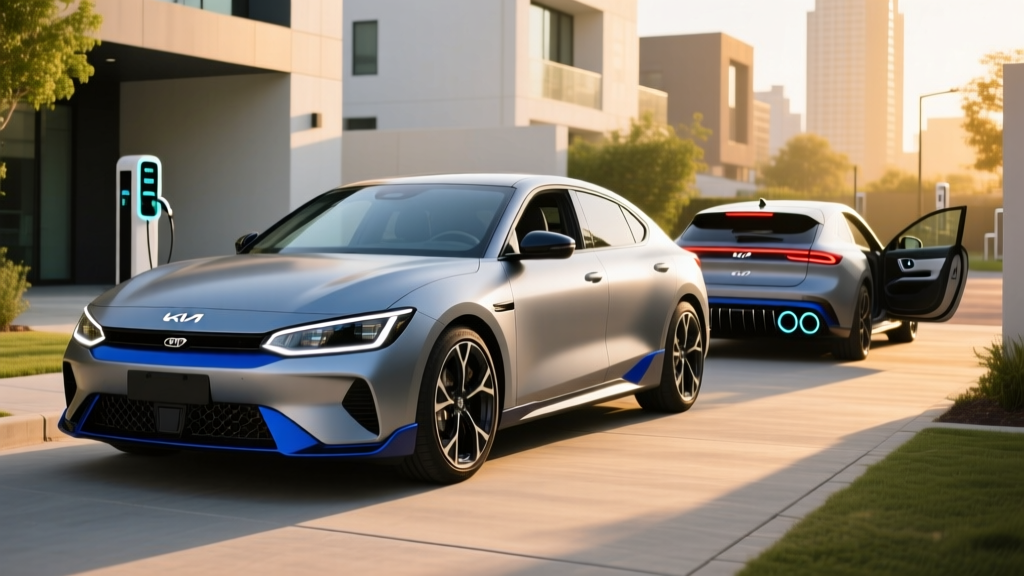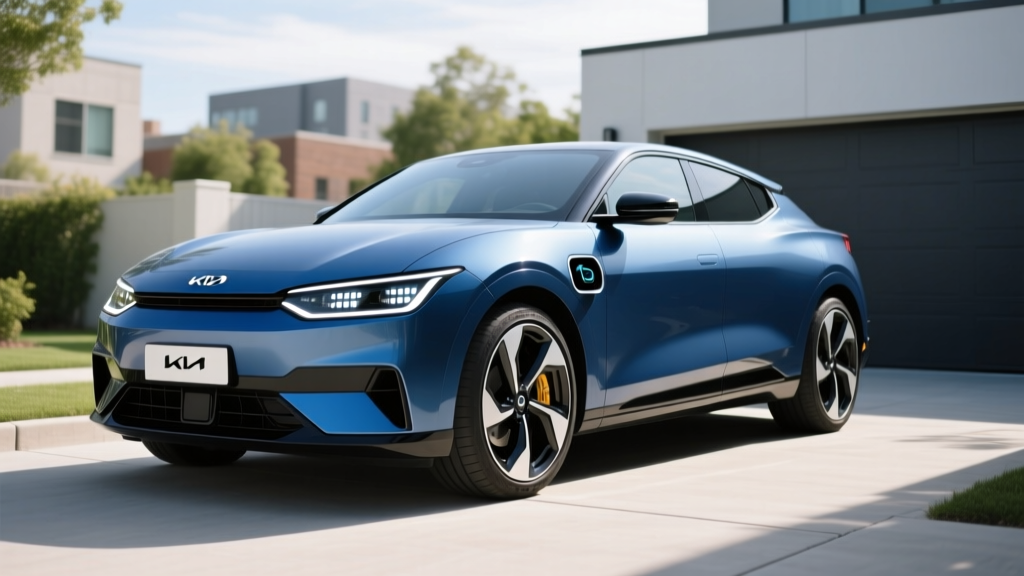
The Short Answer: Kia EV6 Tax Credit Eligibility in 2026
If you're shopping for a Kia EV6 and wondering whether it qualifies for the federal EV tax credit, the answer for 2026 is nuanced. The EV6's eligibility under IRS §30D depends on where the vehicle is assembled, where its battery cells and critical minerals are sourced, your household income, and the trim's MSRP — all factors that have shifted since the Inflation Reduction Act first reshaped the credit landscape.
As of the 2026 model year, the Kia EV6 is assembled at Kia's West Point, Georgia plant (production shifted from South Korea starting with the 2025 model year). This US assembly satisfies the first major §30D hurdle. However, battery-sourcing requirements — specifically the critical-minerals and battery-component thresholds — determine whether you receive the full $7,500, a partial $3,750, or nothing at all. These thresholds tighten annually, and Kia's supply-chain disclosures determine the exact credit tier.
§30D Federal Tax Credit Checklist for the 2026 Kia EV6
- Final assembly: Must occur in North America — 2026 EV6 qualifies (Georgia-built).
- MSRP cap: Vans, SUVs, and trucks are capped at $80,000; sedans at $55,000. The EV6 is classified as an SUV, so all trims under $80,000 MSRP qualify on price. The EV6 GT (~$62,000 MSRP) clears this bar.
- Buyer income cap: Modified adjusted gross income (MAGI) must not exceed $150,000 (single), $225,000 (head of household), or $300,000 (married filing jointly).
- Critical minerals requirement: A specified percentage of critical minerals must be sourced from the US or a free-trade-agreement country. This threshold increases yearly — check IRS §30D guidance for the current-year percentage.
- Battery component requirement: A specified percentage of battery components must be manufactured or assembled in North America. This threshold also escalates annually.
- Point-of-sale transfer: You can transfer the credit to the dealer at purchase, reducing your out-of-pocket cost immediately rather than waiting to claim it on your tax return.
- One credit per VIN: The vehicle must not have been previously titled or credited.
Bottom line: Verify the specific VIN's credit status on fueleconomy.gov before signing paperwork. Kia's battery-sourcing disclosures can shift mid-year, and a trim that qualified in January may see its credit tier change by summer. Always confirm with your dealer and a tax professional.
5-Year Total Cost of Ownership: Kia EV6 vs. Gas Equivalent
The tax credit is just the opening move. What really matters is what you spend — and save — over five years of ownership. Below is a realistic 5-year TCO model for a 2026 Kia EV6 Wind (AWD, 77.4 kWh usable battery, EPA-estimated 282 miles of range) compared against a comparably priced gas crossover (think a mid-trim Hyundai Tucson or Toyota RAV4 AWD at ~$38,000 MSRP, averaging 28 MPG combined).
| Cost Category | 2026 Kia EV6 Wind (AWD) | Gas Crossover (28 MPG) |
|---|---|---|
| Purchase price (MSRP) | $52,900 | $38,000 |
| Federal tax credit (§30D) | −$3,750 to −$7,500* | $0 |
| Effective purchase price | $45,400 – $49,150 | $38,000 |
| Fuel/charging (5 yrs, 12,000 mi/yr) | $4,140 – $5,400 | $10,714 |
| Maintenance (5 yrs) | $1,800 | $3,750 |
| Insurance (5 yrs) | $11,500 | $8,500 |
| Depreciation (est. 5-yr) | $22,000 – $25,000 | $14,000 |
| Total 5-yr cost | $84,840 – $91,850 | $74,964 |
| Cost per mile | $1.41 – $1.53 | $1.25 |
*Credit amount depends on battery-sourcing compliance at time of purchase. Assumes home Level 2 charging at $0.14/kWh average, with occasional DC fast charging at $0.35/kWh. Gas at $3.50/gallon. Depreciation estimates based on current EV resale trends.
The EV6 doesn't automatically win on pure dollars over five years — its higher purchase price and steeper depreciation eat into fuel and maintenance savings. The math flips in the EV's favor if you secure the full $7,500 credit, charge primarily at home on off-peak utility rates, and benefit from a state rebate. Over seven to ten years, the EV6's lower running costs compound into meaningful savings.
Charging vs. Gas: The Per-Mile Cost Reality
Electricity costs vary enormously depending on how and where you charge. Here's the actual math for the EV6, which has an EPA-rated efficiency of roughly 117 MPGe combined (approximately 29 kWh per 100 miles for the AWD Wind trim):
| Charging Scenario | Rate | Cost per 100 Miles | Cost per Mile |
|---|---|---|---|
| Home Level 2 (off-peak utility rate) | $0.11/kWh | $3.19 | $0.032 |
| Home Level 2 (national avg residential) | $0.16/kWh | $4.64 | $0.046 |
| Public DC fast charging (Electrify America, EVgo) | $0.35–$0.48/kWh | $10.15–$13.92 | $0.10–$0.14 |
| Gas equivalent (28 MPG at $3.50/gal) | — | $12.50 | $0.125 |
If you charge at home on a standard residential rate, the EV6 costs roughly 3–5 cents per mile to "fuel" — a fraction of the gas crossover's 12.5 cents. But if you rely heavily on public DC fast chargers, your per-mile cost can actually exceed gasoline. This is the single biggest variable in EV ownership economics: home charging access is the difference between massive savings and paying a premium.
For a driver covering 12,000 miles annually with 80% home charging and 20% public fast charging, expect an annual fuel cost of roughly $828–$1,080 for the EV6 versus $1,500 for the gas equivalent. That's $420–$672 in annual savings — meaningful, but not transformative on its own.
Maintenance Savings: Where EVs Genuinely Shine
The EV6's electric powertrain eliminates dozens of maintenance items that gas-car owners take for granted. No oil changes, no spark plugs, no timing belts, no transmission fluid flushes, no exhaust system repairs. Regenerative braking significantly reduces brake pad and rotor wear — many EV owners report original brake pads lasting 80,000+ miles.
| Maintenance Item | Kia EV6 | Gas Crossover |
|---|---|---|
| Oil changes (5 yrs / 60,000 mi) | $0 | $600–$900 |
| Brake pad replacement | $0 (regen extends life) | $400–$600 |
| Transmission fluid service | $0 | $200–$350 |
| Air filter / cabin filter | $150 | $250 |
| Coolant flush | $150 (battery thermal mgmt) | $200 |
| Tire rotation & replacement | $1,500 (EV tires wear faster, heavier vehicle) | $1,200 |
| Miscellaneous (wipers, 12V battery) | $350 | $350 |
| Total 5-yr maintenance | ~$1,800 | ~$3,750 |
Net maintenance savings over five years: roughly $1,950. The main offset is tire cost — the EV6's 4,500+ lb curb weight and instant torque accelerate tire wear. Budget for premium all-season or EV-specific tires (like the Michelin Pilot Sport EV or Hankook iON) at replacement time.
Kia's warranty provides strong protection: the EV6 includes a 5-year/60,000-mile basic warranty and a 10-year/100,000-mile battery and powertrain warranty — one of the best in the segment. If battery degradation exceeds 30% capacity loss within the warranty period, Kia will repair or replace the pack.
Insurance Costs: The Uncomfortable Truth
EV insurance premiums are typically 15–25% higher than comparable gas vehicles, and the EV6 is no exception. Based on national averages, expect to pay $2,100–$2,500 per year for full coverage on an EV6 Wind, versus $1,600–$1,900 for a gas crossover. Over five years, that's an additional $2,500–$3,500 in insurance costs.
Why the premium? Several structural reasons:
- Higher repair costs: EV collision repair requires high-voltage safety certification. Battery pack damage often results in total-loss declarations because shops lack the equipment or training to safely open and repair sealed packs.
- Parts cost: EV-specific components (power electronics, charge port assemblies, battery modules) carry higher replacement costs than mechanical gas-car parts.
- Vehicle value: The EV6's higher MSRP means higher comprehensive and collision payouts.
- Specialized labor: Fewer body shops are certified for high-voltage work, concentrating repair demand and raising labor rates.
Shop aggressively. Insurers like Geico, Progressive, and Tesla's own insurance program (available in some states) have started offering EV-specific rate structures. Bundling home and auto, maintaining a clean driving record, and selecting higher deductibles can narrow the gap substantially.
Depreciation and Resale Value: The Elephant in the Room
EV depreciation has been a rough ride for early adopters. Industry-wide, EVs lost value faster than gas cars in 2023–2025, driven by aggressive Tesla price cuts that cascaded through the used market, rapid technology improvements making older models feel outdated, and consumer uncertainty about long-term battery health.
The Kia EV6 has held value somewhat better than average among non-Tesla EVs, thanks to its strong design, 800V architecture (enabling ultra-fast DC charging up to 240 kW, achieving 10–80% in approximately 18 minutes), and Kia's reputation for reliability. But expect 45–55% depreciation over five years, compared to 35–40% for a popular gas crossover like the RAV4.
On a $52,900 EV6 Wind, that translates to roughly $24,000–$29,000 in value lost over five years, versus $13,000–$15,000 for the gas equivalent. This is the single largest cost disadvantage of EV ownership today — and it's where the tax credit does the most work. A $7,500 credit effectively reduces your depreciation loss by that same amount.
Leasing can sidestep depreciation risk entirely. Kia frequently offers competitive EV6 lease deals, and the lessor absorbs the resale-value hit. If you plan to upgrade every three years, leasing often pencils out better than buying — and some leases pass through the §30D credit as a capitalized-cost reduction.
State, Local, and Utility Incentives
Important: State, local, and utility incentives vary dramatically by jurisdiction and change frequently. The examples below illustrate what's available — always verify current programs through your state energy office, utility provider, and the Alternative Fuels Data Center.
Beyond the federal credit, many buyers can stack additional incentives:
- State rebates: California's Clean Fuel Reward (up to $1,000 at point of sale), Colorado's $5,000 state tax credit, New York's Drive Clean Rebate (up to $2,000), and Massachusetts' MOR-EV program (up to $3,500) can significantly reduce net cost.
- Utility rebates: Many utilities offer $250–$1,000 rebates for purchasing an EV, plus additional rebates for installing a Level 2 home charger. Check with your local provider — programs from PG&E, ConEdison, Xcel Energy, and others are common.
- HOV lane access: States including California, Colorado, Virginia, and Maryland offer single-occupant HOV lane access for EV owners — a non-monetary benefit worth thousands in time savings for commuters.
- Home charger installation credits: The federal §30C Alternative Fuel Infrastructure Tax Credit covers 30% of home charging equipment and installation costs, up to $1,000, subject to census-tract eligibility.
- Reduced registration fees: Some states charge EVs higher annual registration fees to offset lost gas-tax revenue (Ohio: $200, Illinois: $248). Others offer reduced fees. Factor this into your state-specific math.
Real-World Range and Efficiency Context
The 2026 Kia EV6 Wind AWD carries a 77.4 kWh usable battery (84.0 kWh gross, NMC chemistry) and an EPA-estimated range of 282 miles. Efficiency is rated at approximately 117 MPGe combined, or 29 kWh/100 mi.
EPA range: 282 miles (Wind AWD) / 310 miles (RWD Long Range)
Real-world expectations: In mixed highway driving at 70–75 mph, expect 240–260 miles from the AWD trim. In cold weather (below 30°F), range drops 15–25%, yielding roughly 210–240 miles. The EV6's heat pump (standard on most trims) mitigates winter losses better than many competitors, but physics is physics — plan for 220 miles of usable range on a freezing January road trip.
Charging performance remains a standout: the EV6's 800V architecture supports DC fast charging at up to 240 kW on compatible chargers, achieving a 10–80% charge in approximately 18 minutes. On a 150 kW charger (more common in the Electrify America and EVgo networks), expect 10–80% in roughly 25 minutes. Level 2 home charging at 10.9 kW (48A) replenishes the battery in about 7.3 hours — easily overnight.
The EV6 GT trim (576 HP, 0–60 in 3.4 seconds) sacrifices range for performance: EPA-estimated 206 miles, with real-world highway range closer to 170–185 miles. The GT is a thrilling machine but demands more frequent charging stops on road trips.
Frequently Asked Questions
Does the Kia EV6 qualify for the full $7,500 federal tax credit in 2026?
It depends on battery-sourcing compliance at the time of your purchase. The EV6 is assembled in Georgia (satisfying the North American assembly requirement) and its MSRP falls below the $80,000 SUV cap. However, the critical-minerals and battery-component sourcing thresholds tighten each year under §30D. Some EV6 VINs may qualify for the full $7,500, others for $3,750, and some may not qualify at all if sourcing requirements aren't met. Always verify on fueleconomy.gov for the specific model year and ask your dealer for the manufacturer's battery-sourcing certification.
Can I transfer the tax credit to the dealer at point of sale?
Yes. Under current IRS rules, you can elect to transfer the §30D credit to the dealer at the time of purchase, which reduces your out-of-pocket cost or down payment immediately. This is especially valuable if you don't have enough tax liability to use the full credit on your return. The dealer must be registered with the IRS Energy Credits Online portal.
How much does it really cost to own a Kia EV6 over 5 years?
Based on our analysis, total 5-year ownership for a 2026 EV6 Wind AWD ranges from approximately $85,000–$92,000 depending on tax credit eligibility, charging habits, and insurance rates. That compares to roughly $75,000 for a similarly equipped gas crossover. The gap narrows to $5,000–$10,000 with the full $7,500 credit and favorable state incentives, and it shrinks further over longer ownership horizons as fuel and maintenance savings compound.
Is the EV6 more expensive to insure than a gas car?
Yes, typically 15–25% more per year. Expect $2,100–$2,500 annually for full coverage, driven by higher repair costs for high-voltage components, elevated parts prices, and the vehicle's higher MSRP. Shop multiple insurers — rates vary widely for EVs, and some carriers have begun offering EV-competitive pricing.
How well does the Kia EV6 hold its value?
EV depreciation remains higher than the gas-car average. Expect the EV6 to retain roughly 45–55% of its MSRP after five years, compared to 60–65% for popular gas crossovers. The EV6's 800V charging architecture, strong warranty, and Kia brand reputation help it hold value better than some EV competitors. Leasing is a viable strategy to avoid depreciation risk if you plan to upgrade frequently.
Do I save money on maintenance with the EV6?
Yes — approximately $1,950 over five years compared to a gas equivalent. The EV6 eliminates oil changes, spark plugs, transmission fluid service, and exhaust repairs. Regenerative braking dramatically extends brake pad life. The main increased cost is tire replacement, as the EV6's weight and torque accelerate wear. Kia's 10-year/100,000-mile battery and powertrain warranty provides long-term peace of mind.
Our take: The Kia EV6 is one of the most compelling electric crossovers on the market — fast-charging, well-built, and practical. Whether it saves you money over five years depends heavily on securing the federal tax credit, charging primarily at home, and finding competitive insurance rates. Run your own numbers with your local electricity rate, commute distance, and state incentives before deciding. The savings are real, but they're not automatic.