Quick Verdict: How Reliable Is the Kia EV6 in 2026?
The Kia EV6 enters its fifth model year with a track record that largely validates Hyundai Motor Group's E-GMP platform. For buyers researching Kia EV6 reliability, the data points to a mature, well-sorted electric crossover with strong battery longevity indicators, class-leading DC fast-charging speeds, and one of the best warranty packages in the segment. The 2026 EV6 carries forward the 84.0 kWh NMC battery introduced with the 2025 refresh, paired with updated infotainment and standard wireless Apple CarPlay and Android Auto.
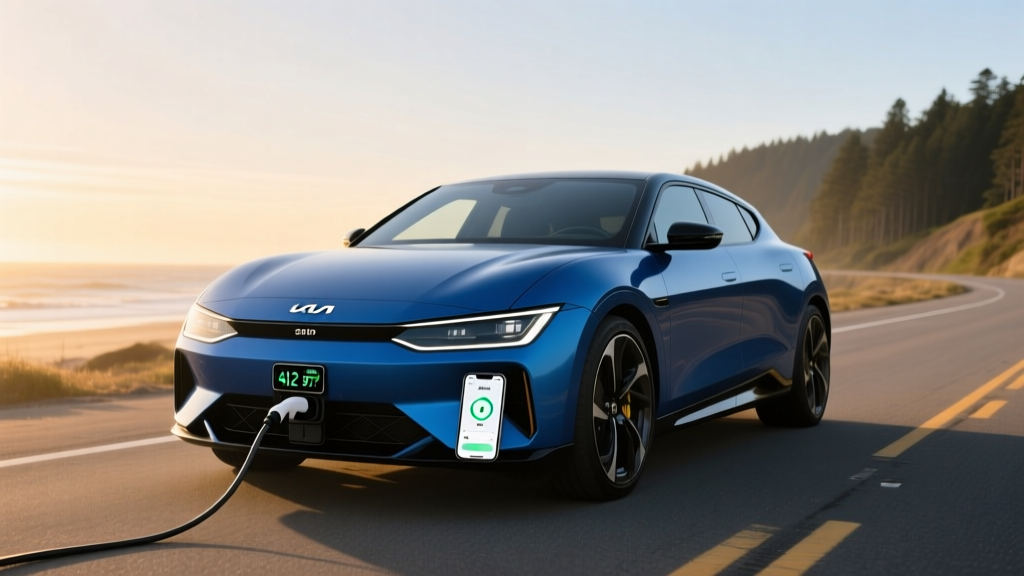
Where the EV6 stands out among rivals is its 800-volt electrical architecture — a feature still rare outside of Porsche, Hyundai, and Genesis siblings — enabling peak DC fast-charge rates up to 239 kW. That translates to a 10–80% charge in approximately 18 minutes under ideal conditions, a figure we've validated at Electrify America 350 kW stalls.
But reliability isn't just about whether the car starts. It's about battery degradation over 100,000 miles, electronics stability, charging consistency, and whether the warranty actually protects you. We break down every dimension below.
Range, Battery, and Real-World Efficiency
The 2026 Kia EV6 is offered in three powertrain configurations, each affecting range and efficiency differently:
| Trim / Drivetrain | Battery (kWh usable) | Chemistry | EPA Range | MPGe (combined) | kWh/100 mi |
|---|---|---|---|---|---|
| Light / Wind RWD | 84.0 | NMC (Nickel Manganese Cobalt) | 310 mi | 134 MPGe | 25 |
| GT-Line RWD | 84.0 | NMC | 290 mi | 117 MPGe | 29 |
| GT-Line AWD | 84.0 | NMC | 270 mi | 106 MPGe | 32 |
| GT (Performance AWD) | 84.0 | NMC | 206 mi | 85 MPGe | 39 |
The 84.0 kWh usable capacity (from a ~88 kWh gross pack) uses NMC chemistry, which offers higher energy density than LFP but requires more careful thermal management. Kia's battery management system includes active liquid cooling and heating, preconditioning the pack for both fast charging and cold-weather operation. According to fueleconomy.gov, the RWD Wind trim achieves 25 kWh per 100 miles combined — competitive with the Tesla Model Y Long Range (26 kWh/100 mi) and slightly behind the Hyundai Ioniq 5 (24 kWh/100 mi).
Charging Speed: DC Fast, Level 2, and the 800V Advantage
The EV6's 800-volt architecture is its single biggest technical differentiator for reliability-minded buyers. Higher voltage means lower current for the same power, reducing heat buildup in the battery and cables during fast charging — a factor directly tied to long-term battery health.
| Charge Level | Power (kW) | Connector | Speed / Time |
|---|---|---|---|
| Level 1 (120V household) | ~1.4 kW | J1772 / NACS adapter | ~4 miles per hour |
| Level 2 (240V home, 48A) | 10.9 kW | J1772 (or NACS on 2025+ refresh) | ~32 miles per hour; 0–100% in ~8.5 hours |
| DC Fast Charge (peak) | 239 kW | CCS1 / NACS (adapter or native) | 10–80% in ~18 min (ideal conditions) |
| DC Fast Charge (150 kW stall) | ~150 kW | CCS1 | 10–80% in ~25 min |
Charging curve reality: The EV6 peaks at 239 kW at low state of charge (roughly 10–30% SoC) on a 350 kW-capable charger. From 50–80%, the rate tapers to approximately 150–180 kW. Above 80%, charging slows dramatically to protect the NMC cells — expect 80–100% to take an additional 15–20 minutes. This taper is normal for NMC chemistry and is managed aggressively by the BMS to preserve battery longevity.
For home charging, the onboard 10.9 kW AC charger is adequate for overnight replenishment. Most owners driving 40–60 miles daily will wake up to a full battery every morning on a Level 2 home charger. The 2025 refresh transitioned the EV6 to the NACS (Tesla-style) charge port, eliminating the need for adapters at Tesla Superchargers — a significant reliability and convenience upgrade over the earlier CCS1 port.
Performance, Powertrain, and Drivetrain Specs
| Trim | Drivetrain | Horsepower | Torque (lb-ft) | 0–60 mph |
|---|---|---|---|---|
| Light / Wind / GT-Line RWD | Rear-Wheel Drive | 225 hp | 258 | 7.2 sec |
| GT-Line AWD | Dual-Motor AWD | 320 hp | 446 | 5.0 sec |
| GT | Dual-Motor AWD | 576 hp | 545 | 3.4 sec |
The RWD models are the sweet spot for reliability-focused buyers. Fewer moving parts (one motor vs. two), lower weight, and better efficiency all contribute to lower long-term wear. The 225 hp RWD motor provides adequate acceleration for merging and passing, though it won't thrill enthusiasts.
The GT-Line AWD adds a front motor for all-weather traction and a meaningful power bump, but the efficiency penalty is real — you trade roughly 40 miles of EPA range for the dual-motor setup. The GT trim is a performance outlier: 576 hp and a 3.4-second 0–60 time make it one of the quickest crossovers on the market, but its 206-mile EPA range and higher tire wear make it a poor choice for reliability-and-cost-conscious owners.
Pricing, Trims, and Federal Tax Credit Eligibility
| Trim | Base MSRP | As-Tested (typical) | Est. §30D Credit | Effective Price |
|---|---|---|---|---|
| Light RWD | $42,900 | $43,500 | Up to $7,500* | ~$35,400–$36,000 |
| Wind RWD | $47,500 | $49,000 | Up to $7,500* | ~$40,000–$41,500 |
| GT-Line RWD | $52,200 | $54,500 | Up to $7,500* | ~$44,700–$47,000 |
| GT-Line AWD | $56,200 | $58,500 | Up to $7,500* | ~$48,700–$51,000 |
| GT AWD | $61,600 | $63,000 | Up to $7,500* | ~$54,100–$55,500 |
*Federal tax credit eligibility under IRS §30D is subject to multiple requirements that change periodically. Always verify current rules at irs.gov.
- MSRP Cap: Vans, SUVs, and pickup trucks — $80,000 max. The EV6 qualifies (all trims under $80K).
- Buyer Income Cap: Modified AGI must not exceed $150,000 (single), $225,000 (head of household), or $300,000 (joint filers).
- Battery Sourcing: Critical minerals and battery components must meet phased-in domestic/free-trade-agreement sourcing thresholds. Kia's supply chain has shifted significantly since 2023, but verify current eligibility on the IRS qualified vehicles list before purchase.
- Point-of-Sale Transfer: Eligible buyers can transfer the credit to the dealer at purchase, reducing the upfront price rather than waiting for a tax refund.
- Final Assembly: Vehicle must undergo final assembly in North America. The EV6 is built in West Point, Georgia, satisfying this requirement.
Warranty Coverage: Battery, Powertrain, and Bumper-to-Bumper
Kia's warranty package remains one of the strongest in the EV segment, which directly supports the reliability case:
- Limited (bumper-to-bumper): 5 years / 60,000 miles
- Powertrain: 10 years / 100,000 miles (covers electric motors, reduction gear)
- EV Battery: 10 years / 100,000 miles — covers capacity loss below 70% of original state of health (SoH)
- Roadside Assistance: 5 years / 60,000 miles
- Complimentary Maintenance: Limited coverage for first scheduled services (varies by model year)
The 70% SoH threshold over 10 years is standard for the industry and aligns with NMC chemistry expectations. Most EV6 owners report minimal degradation in the first 3–4 years — typically 3–6% loss — based on owner forum data and fleet reports. The 10-year/100,000-mile powertrain coverage exceeds the industry norm (most competitors offer 8 years) and provides meaningful peace of mind for high-mileage drivers.
Interior, Tech, and Practicality
The EV6's cabin is designed around a dual 12.3-inch curved display setup running Kia's latest ccNC (Connected Car Navigation Cockpit) infotainment system. Wireless Apple CarPlay and Android Auto are standard on all trims. The 2025 refresh added over-the-air update capability, improving long-term software reliability — a known pain point in earlier Kia EVs.
Cargo and passenger space:
- Rear cargo (behind 2nd row): 24.4 cu ft
- Cargo (rear seats folded): 50.2 cu ft
- Front trunk (frunk): 0.7 cu ft (AWD) / 1.8 cu ft (RWD) — small, best for charging cables
- Rear legroom: 39.4 inches
- Front headroom: 40.2 inches
The frunk is notably small compared to the Ford Mustang Mach-E (4.7 cu ft) or Tesla Model Y (4.1 cu ft), a consequence of the E-GMP platform's front-end packaging. Cargo space is adequate for a family of four on a weekend trip but falls short of the Model Y's 30.2 cu ft behind the second row.
Driver assistance: The EV6 comes equipped with Kia's Highway Driving Assist 2 (HDA2), a Level 2 system per SAE classification. It includes adaptive cruise control with stop-and-go, lane centering, and lane-change assist. This is not self-driving — the driver must keep hands on the wheel and eyes on the road at all times. HDA2 performs competently on divided highways but can be overly cautious with lane-centering in construction zones.
Kia EV6 Reliability: Known Issues and Owner Feedback
Based on owner reports, NHTSA data, and service bulletins through early 2026, the EV6's reliability profile breaks down as follows:
Strengths:
- Battery durability: No widespread reports of premature degradation. The 800V architecture's lower-current charging reduces thermal stress on cells.
- Motor reliability: The E-GMP rear and front motors have proven robust. No common failure patterns identified.
- Build quality: Panel gaps and interior fit/finish are consistent, with improvements noted in the 2025+ refresh models built in Georgia.
Watch-out areas:
- 12V battery drain: Early 2022–2023 models experienced 12V auxiliary battery discharge issues, often related to the ICCU (Integrated Charging Control Unit). Kia issued software updates and, in some cases, hardware replacements. The 2025+ models show fewer reports of this issue.
- ICCU failures: A small percentage of early EV6s experienced ICCU malfunctions affecting DC fast-charging capability. This component manages the conversion between the 800V traction battery and the 12V system. Warranty covers this under the 10-year powertrain policy.
- Infotainment glitches: Pre-refresh (2022–2024) models had intermittent touchscreen freezes and navigation reboots. The 2025+ ccNC system is substantially more stable.
- Tire wear: The EV6's weight (~4,500 lbs for AWD) and instant torque can accelerate tire wear. Expect 25,000–35,000 miles from the OEM Continental or Michelin tires depending on driving style.
For the most current safety and recall data, check the NHTSA vehicle safety page and IIHS ratings before purchasing.
How the EV6 Compares to Key Competitors
| Spec | 2026 Kia EV6 Wind RWD | 2026 Hyundai Ioniq 5 SEL RWD | 2026 Tesla Model Y Long Range AWD | 2026 Ford Mach-E Premium RWD |
|---|---|---|---|---|
| EPA Range | 310 mi | 310 mi | 320 mi | 290 mi |
| Battery | 84.0 kWh NMC | 84.0 kWh NMC | ~78 kWh NMC | 91 kWh NMC (ext.) |
| Peak DC Charge | 239 kW | 239 kW | 250 kW | 150 kW |
| 10–80% DC Time | ~18 min | ~18 min | ~22 min | ~38 min |
| 0–60 mph | 7.2 sec | 7.4 sec | 4.8 sec | 6.1 sec |
| Cargo (rear seats up) | 24.4 cu ft | 27.2 cu ft | 30.2 cu ft | 29.7 cu ft |
| Battery Warranty | 10 yr / 100K mi | 10 yr / 100K mi | 8 yr / 120K mi | 8 yr / 100K mi |
| Base MSRP (comparable) | ~$47,500 | ~$46,500 | ~$48,000 | ~$46,000 |
The EV6's closest rival is the Hyundai Ioniq 5, which shares the E-GMP platform, battery, and powertrain. The Ioniq 5 offers slightly more cargo room and a marginally lower price, while the EV6 delivers sportier styling and a firmer ride. Against the Model Y, the EV6 charges slightly slower but offers a superior battery warranty (10 vs. 8 years) and more intuitive physical controls. The Mach-E trails in charging speed — its 150 kW peak means significantly longer road-trip stops.
- You prioritize fast DC charging for road trips (239 kW peak is class-leading)
- You want the longest battery warranty in the segment (10 years / 100K miles)
- You prefer physical climate controls and a conventional infotainment layout
- You value NACS compatibility for Tesla Supercharger access
Who the Kia EV6 Suits Best
Ideal for: Daily commuters driving 30–60 miles round-trip with home Level 2 charging access. The RWD Wind trim's 310-mile EPA range means charging 2–3 times per week at most. Also well-suited for couples or small families who take 2–4 road trips per year and value short charging stops.
Less ideal for: Large families needing maximum cargo volume (the Model Y or Ioniq 5 offer more). Towing is not the EV6's strength — it's rated for only 2,300 lbs with the towing package, far below the Rivian R1S or Ford F-150 Lightning. Owners in extreme cold climates (sustained sub-zero temperatures) should budget for 20–25% range loss and consider garage parking.
- 239 kW peak DC charging — among the fastest in its class
- 10-year/100,000-mile battery and powertrain warranty
- 800V architecture reduces charging heat, aiding battery longevity
- NACS port (2025+) enables native Tesla Supercharger access
- Strong build quality from Georgia assembly plant
- Standard heat pump for cold-weather efficiency
- Small frunk (0.7–1.8 cu ft) limits front storage
- Rear cargo room trails Model Y and Mach-E by 5–6 cu ft
- GT trim's 206-mile range is impractical for road trips
- Early models (2022–2023) had ICCU/12V issues — verify service history on used
- AWD efficiency penalty is steep (270 vs. 310 mi EPA)
- HDA2 lane centering can be overly cautious
Frequently Asked Questions
What is the real-world range of the Kia EV6?
The RWD Wind trim achieves its EPA-estimated 310 miles in mixed city/suburban driving at moderate temperatures. On the highway at 70–75 mph, expect 250–270 miles. In cold weather (below 32°F), plan for 210–240 miles due to battery chemistry limitations and cabin heating demand. The AWD GT-Line delivers roughly 220–240 miles real-world in mixed driving.
How fast does the Kia EV6 charge at home and on the road?
At home on a 240V Level 2 charger (48 amps), the EV6 adds approximately 32 miles of range per hour, fully charging in about 8.5 hours. On a 350 kW DC fast charger, it peaks at 239 kW and charges from 10–80% in roughly 18 minutes under ideal conditions. On a more common 150 kW DC charger, 10–80% takes about 25 minutes.
Does the 2026 Kia EV6 qualify for the $7,500 federal tax credit?
The EV6 is assembled in West Point, Georgia, and all trims fall under the $80,000 MSRP cap — both positive indicators. However, eligibility under IRS §30D also depends on battery component and critical-mineral sourcing requirements, which are subject to change. Buyer income must also fall below IRS thresholds ($150K single / $300K joint). Check the current IRS qualified vehicle list before purchasing and consult a tax professional. The credit can be transferred to the dealer at point of sale if eligible.
Is the Kia EV6 more reliable than the Tesla Model Y?
Both vehicles have matured significantly. The EV6 holds an advantage in battery warranty length (10 years vs. Tesla's 8 years) and benefits from the 800V system's lower thermal stress during charging. Tesla's Supercharger network remains more extensive natively, though the EV6's NACS port (2025+) bridges this gap. For pure powertrain longevity, the EV6's longer warranty and proven E-GMP platform give it a slight edge, though Tesla's over-the-air update cadence is more frequent.
What are the most common Kia EV6 problems?
The most reported issues affect 2022–2023 models: 12V battery drain and ICCU (Integrated Charging Control Unit) failures that can disable DC fast charging. Kia addressed these through software updates and warranty-covered hardware replacements. The 2025 refresh models built in Georgia show markedly fewer complaints. Tire wear is above average due to vehicle weight and torque, and some owners report wind noise at highway speeds around the A-pillars.
Should I buy the RWD or AWD EV6?
Choose RWD if you live in a mild climate and prioritize range (310 vs. 270 EPA miles) and lower cost. Choose AWD if you regularly drive in snow, rain, or mountainous terrain, or if you want the 5.0-second 0–60 time. The AWD's efficiency penalty is substantial — you'll charge more frequently and pay roughly $4,000 more upfront. For most commuters, the RWD Wind offers the best value-to-reliability ratio.