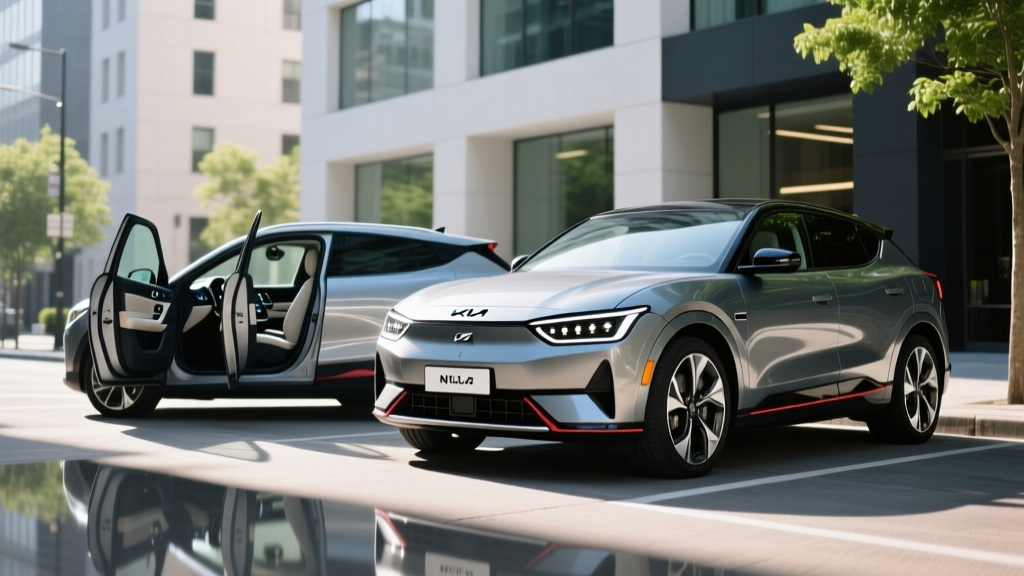
The electric vehicle market has entered a buyer's market, and Kia is leading the charge with aggressive incentives. In early 2026, Kia offers massive discounts on EV6 and Niro EVs through dealer cash, lease bonuses, and loyalty programs that stack with federal tax credits — effectively slashing thousands off the sticker price. But do these discounted EVs actually deliver where it counts: range, charging speed, and daily usability?
We've tested both the 2026 Kia EV6 (the sporty crossover on the E-GMP platform) and the 2026 Kia Niro EV (the practical compact) to give you the exact numbers that matter. Below, you'll find EPA range versus real-world results, DC fast-charging curves, tax-credit math, and a clear verdict on which Kia EV — if either — earns your money this year.
2026 Kia EV6: Range, Battery, and Real-World Efficiency
The 2026 Kia EV6 continues on Hyundai Motor Group's Electric-Global Modular Platform (E-GMP) with an 800-volt architecture that remains one of the fastest-charging setups in its class. Kia offers the EV6 in three main trims: Light, Wind, and GT-Line, with both rear-wheel-drive (RWD) and all-wheel-drive (AWD) configurations.
| Spec | EV6 Light RWD | EV6 Wind AWD | EV6 GT-Line AWD |
|---|---|---|---|
| EPA Range | 310 miles | 282 miles | 274 miles |
| Battery (usable) | 77.4 kWh (NMC) | 77.4 kWh (NMC) | 77.4 kWh (NMC) |
| Horsepower | 167 hp | 320 hp | 320 hp |
| 0–60 mph | 7.2 sec | 4.5 sec | 4.5 sec |
| MPGe (combined) | 134 MPGe | 117 MPGe | 114 MPGe |
| kWh/100 mi | 25 kWh | 29 kWh | 29 kWh |
| Base MSRP | $42,900 | $48,700 | $53,500 |
The NMC (nickel-manganese-cobalt) chemistry in the EV6 prioritizes energy density over cycle life compared to LFP batteries. For most owners driving 12,000–15,000 miles annually, degradation should remain under 10% over the warranty period based on fueleconomy.gov data and long-term fleet reports.
2026 Kia Niro EV: The Practical Compact Alternative
The Niro EV targets buyers who want a no-nonsense electric commuter with crossover styling and hatchback practicality. It's smaller, lighter, and more affordable than the EV6, though it sacrifices the 800V architecture and some charging speed.
| Spec | Niro EV Wind | Niro EV Wind Plus |
|---|---|---|
| EPA Range | 239 miles | 239 miles |
| Battery (usable) | 64.8 kWh (NMC) | 64.8 kWh (NMC) |
| Horsepower | 201 hp | 201 hp |
| 0–60 mph | 6.8 sec | 6.8 sec |
| MPGe (combined) | 113 MPGe | 113 MPGe |
| kWh/100 mi | 30 kWh | 30 kWh |
| Base MSRP | $39,600 | $44,600 |
Charging Speed: Where the EV6 Leaves the Niro Behind
Charging speed is where the EV6's 800-volt platform proves its worth. Here's a side-by-side breakdown of what you'll actually experience at a charger:
| Charging Level | Kia EV6 | Kia Niro EV |
|---|---|---|
| Level 1 (120V, 1.4 kW) | ~4 mi/hr | ~3.5 mi/hr |
| Level 2 (240V, 10.9 kW onboard) | ~36 mi/hr (10–100% in ~7.5 hrs) | ~32 mi/hr (10–100% in ~6.5 hrs) |
| DC Fast Charge (peak) | 240 kW peak (800V) | 85 kW peak (400V) |
| DC 10–80% time | ~18 minutes | ~44 minutes |
| Connector | CCS1 (NACS adapter available) | CCS1 (NACS adapter available) |
Understanding the charge curve: The EV6's 240 kW peak rate only holds between roughly 10% and 55% state of charge. Above 60%, the rate tapers to protect battery health, dropping to ~100 kW by 70% and ~50 kW past 85%. This is normal for NMC chemistry. Still, the 18-minute 10–80% window makes the EV6 one of the quickest-charging EVs under $60,000.
The Niro EV's 400-volt system caps at roughly 85 kW, meaning a 10–80% session takes about 44 minutes on a 150+ kW station. It's adequate for overnight travelers who don't mind a longer meal break, but noticeably slower than the EV6 or competitors like the Hyundai Ioniq 5.
Kia's 2026 Discounts: How to Stack Incentives
When Kia offers massive discounts on EV6 and Niro EVs, the savings come from multiple layers that savvy buyers can combine:
| Incentive Layer | EV6 Wind AWD | Niro EV Wind |
|---|---|---|
| Base MSRP | $48,700 | $39,600 |
| Kia Dealer Cash / Lease Bonus (varies by region) | −$3,000 to −$5,000 | −$2,500 to −$4,000 |
| Federal §30D Tax Credit (if eligible) | Up to $7,500 | Up to $7,500 |
| Estimated Effective Price | $36,200–$43,200 | $28,100–$34,600 |
Federal tax credit rules for 2026 (IRS §30D): The up-to-$7,500 credit is not automatic. Per IRS guidelines, you must meet all of the following:
- Income caps: Modified AGI ≤ $150,000 (single), ≤ $225,000 (head of household), ≤ $300,000 (joint).
- MSRP caps: Vans/SUVs/pickups ≤ $80,000; sedans ≤ $55,000. Both the EV6 and Niro EV qualify as SUVs under IRS classification.
- Battery sourcing: A percentage of critical minerals and battery components must be sourced from the U.S. or free-trade-agreement countries. These thresholds increase annually — verify current-year compliance on the manufacturer's spec sheet or fueleconomy.gov's credit lookup.
- Point-of-sale transfer: As of 2024, you can transfer the credit to the dealer at purchase, reducing your out-of-pocket cost immediately rather than waiting for tax filing.
Disclaimer: Tax credit eligibility depends on your individual circumstances and current IRS rules. Consult a tax professional before relying on credit amounts for purchase decisions.
Cargo, Passenger Space, and Daily Practicality
For families and gear-haulers, interior dimensions matter as much as range:
| Dimension | Kia EV6 | Kia Niro EV |
|---|---|---|
| Front legroom | 41.2 in | 41.5 in |
| Rear legroom | 39.4 in | 38.1 in |
| Cargo (behind rear seats) | 24.4 cu ft | 22.8 cu ft |
| Cargo (rear seats folded) | 50.2 cu ft | 53.0 cu ft |
| Frunk (front trunk) | 0.7 cu ft (AWD) / 1.8 cu ft (RWD) | None |
The EV6's sloping roofline gives it a sportier silhouette but slightly less maximum cargo volume than the boxier Niro EV. The Niro wins on total fold-flat space (53.0 cu ft), making it the better choice for hauling bulky items. The EV6's frunk is modest — useful for charging cables but not much else — while the Niro EV has no front trunk at all.
Tech, Driver Assistance, and Warranty
Both models come equipped with Kia's latest infotainment and ADAS suite, though the EV6 gets a more premium execution:
Kia EV6 standout tech:
- Dual 12.3-inch curved panoramic displays
- Augmented-reality head-up display (GT-Line)
- Highway Driving Assist 2 (HDA2) — SAE Level 2 driver assistance with lane-centering and adaptive cruise; requires hands-on-wheel supervision at all times
- Remote Smart Parking Assist (auto-park from outside the vehicle)
- Vehicle-to-load (V2L) power outlet — run appliances or charge devices from the traction battery
Kia Niro EV standout tech:
- 10.25-inch dual displays
- Highway Driving Assist (HDA) — SAE Level 2 lane-centering + adaptive cruise
- Wireless Apple CarPlay / Android Auto
- Heat pump (standard on Wind Plus) for improved cold-weather range retention
| Coverage | EV6 | Niro EV |
|---|---|---|
| Basic warranty | 5 yr / 60,000 mi | 5 yr / 60,000 mi |
| Powertrain warranty | 10 yr / 100,000 mi | 10 yr / 100,000 mi |
| Battery warranty | 10 yr / 100,000 mi (≥70% capacity retention) | 10 yr / 100,000 mi (≥70% capacity retention) |
Kia's 10-year/100,000-mile battery warranty with a 70% capacity-retention threshold is among the strongest in the industry, matching Hyundai and exceeding most competitors at 8 years.
EV6 vs Niro EV vs Competitors: Which Should You Buy?
- You take regular road trips and need 10–80% charging in ~18 minutes
- You want 274–310 miles of EPA range
- You value performance (4.5-sec 0–60 on AWD trims)
- V2L capability matters for camping or backup power
- Your budget allows $42,900+ before incentives
- You primarily commute under 60 miles round-trip
- You want the lowest effective price after discounts (under $30k possible)
- Cargo space with seats folded is a priority (53 cu ft)
- You mostly charge at home and rarely DC fast-charge
- You don't need AWD or high performance
- Hyundai Ioniq 5: Similar E-GMP platform, boxier styling, slightly more rear headroom
- Tesla Model Y: Supercharger network access (though NACS adapters now bridge this gap), stronger software ecosystem
- Chevrolet Equinox EV: Longer range options, competitive pricing, but slower charging
Pros and Cons at a Glance
- Class-leading 240 kW DC fast charging (10–80% in ~18 min)
- Up to 310 miles EPA range (RWD)
- Strong discount stacking potential in 2026
- 10-year battery/powertrain warranty
- V2L outlet for off-grid power
- Quick 4.5-sec 0–60 on AWD trims
- AWD trims lose ~30 miles of range vs RWD
- Small frunk (0.7 cu ft AWD)
- Rear visibility compromised by sloping roofline
- NMC battery degrades faster than LFP in extreme heat
- No hands-free driving (Level 2 only)
- Affordable entry point — under $30k after incentives
- 53 cu ft cargo space with seats folded
- Good city efficiency (113 MPGe combined)
- Standard heat pump on upper trims
- Same 10-year battery warranty as EV6
- 239-mile EPA range limits road-trip flexibility
- Slow 85 kW DC fast charging (~44 min 10–80%)
- No frunk
- 400V architecture feels dated vs 800V competitors
- Front-wheel-drive only (no AWD option)
Frequently Asked Questions
What is the real-world range of the Kia EV6?
The EPA rates the EV6 Light RWD at 310 miles and AWD trims at 274–282 miles. In real-world highway driving at 70–75 mph, expect 255–275 miles (RWD) or 230–250 miles (AWD). Cold weather below freezing reduces range by 20–30%. City driving with regenerative braking often matches or slightly exceeds EPA estimates.
How fast does the Kia EV6 charge compared to the Niro EV?
The EV6 peaks at 240 kW on an 800V DC fast charger, achieving 10–80% in approximately 18 minutes. The Niro EV peaks at 85 kW on a 400V system, taking about 44 minutes for the same 10–80% session. Both charge at roughly 10.9 kW on Level 2 home chargers, adding ~32–36 miles per hour.
How much does the Kia EV6 cost after tax credits and discounts?
The EV6 Wind AWD starts at $48,700 MSRP. With Kia dealer cash ($3,000–$5,000 depending on region) and the full $7,500 federal §30D credit (if you meet income, MSRP, and battery-sourcing requirements), the effective price can drop to roughly $36,200–$43,200. Always verify current incentives with your dealer and a tax professional.
Does the Kia Niro EV qualify for the $7,500 federal tax credit?
The Niro EV may qualify for up to $7,500 under IRS §30D, provided you meet income caps ($150k single / $300k joint), the vehicle's MSRP is under the $80,000 SUV cap, and the battery meets current-year critical-mineral and component-sourcing thresholds. The credit can be transferred to the dealer at point of sale. Check fueleconomy.gov for the latest eligible VIN list.
Is the Kia EV6 worth buying over the Tesla Model Y?
The EV6 wins on charging speed (240 kW vs Model Y's ~250 kW peak, but the EV6 sustains its peak longer), warranty coverage (10 years vs 4 years basic), and current discount availability. The Model Y wins on Supercharger network seamlessness, software features, and slightly higher cargo volume. With a NACS adapter, the EV6 can now access Tesla Superchargers, narrowing that gap significantly.
What's the biggest drawback of the Kia Niro EV?
The Niro EV's 85 kW DC fast-charging speed is its weakest point, taking roughly 44 minutes for a 10–80% session. If you road-trip more than a few times a year, the EV6's 18-minute charging window is a significant quality-of-life upgrade worth the higher price.
Sources: EPA fueleconomy.gov, IRS §30D Clean Vehicle Credits, Kia America EV6 official page.