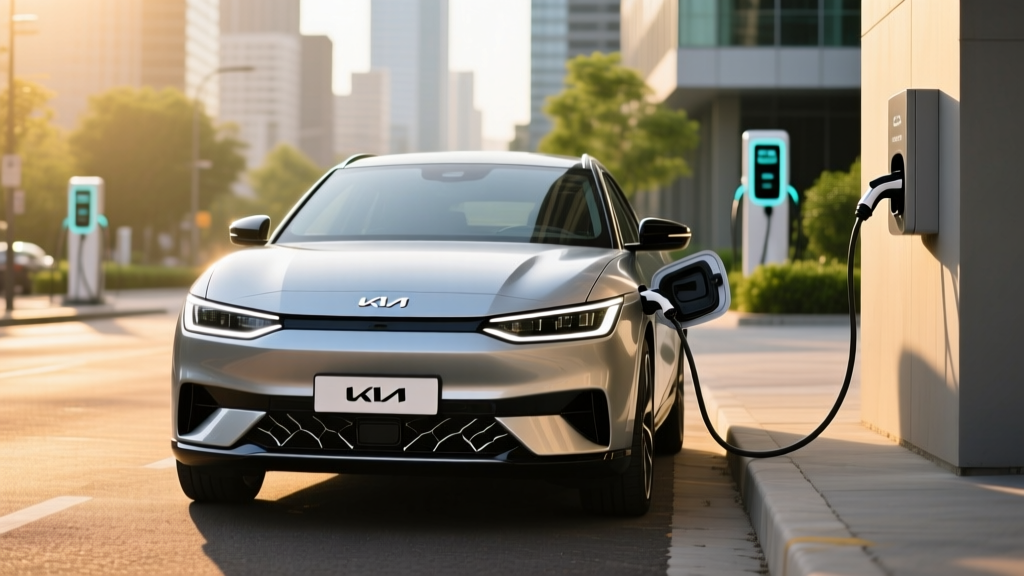
The Kia EV6 Light trim has occupied a curious position in the midsize electric crossover segment since the EV6's refresh: it's the entry point to Kia's 800-volt E-GMP architecture, yet it undercuts the Wind and GT-Line trims by thousands while retaining the platform's headline charging speeds. For 2026, the EV6 Light continues as a rear-wheel-drive, standard-range model aimed squarely at buyers who want fast public charging and a usable daily driver without paying for AWD or the extended-range battery. But with federal tax credit rules tightening and competition intensifying from the Hyundai Ioniq 5, Tesla Model Y, and Ford Mustang Mach-E, does the Light trim still make sense?
We've spent time with the EV6 Light across commuting, highway road trips, and DC fast-charging sessions to give you the numbers that matter — not just the EPA sticker, but what you'll actually experience at the plug and behind the wheel.
2026 Kia EV6 Light: Core Specs at a Glance
| Specification | 2026 Kia EV6 Light (RWD) |
|---|---|
| Base MSRP | $42,600 (destination included) |
| EPA Range | 232 miles |
| Battery (Usable) | 58.0 kWh, NMC lithium-ion |
| Drivetrain | Rear-wheel drive, single motor |
| Horsepower / Torque | 167 hp / 258 lb-ft |
| 0–60 mph | 7.2 seconds |
| Max DC Fast Charge | 235 kW peak |
| 10–80% DCFC Time | ~18 minutes (preconditioned) |
| Level 2 Home Charge Rate | 10.9 kW (~37 miles/hr) |
| EPA Efficiency | 117 MPGe combined (29 kWh/100 mi) |
| Cargo Volume | 24.4 cu ft (rear seats up) / 50.2 cu ft (folded) |
| Frunk | 0.7 cu ft (12V battery occupies space) |
| Rear Legroom | 39.4 inches |
| Battery Warranty | 10 years / 100,000 miles |
| Vehicle Warranty | 5 years / 60,000 miles |
Real-World Range: What 232 EPA Miles Actually Means
Real-World Expectation: 200–220 miles highway (70–75 mph); 225–235 miles mixed city/suburban; 160–185 miles in sub-30°F cold weather.
The EV6 Light's 58 kWh usable battery (from a ~63 kWh gross pack) delivers its best efficiency in city and suburban driving, where regenerative braking recaptures energy at every stop. In warm-weather mixed driving at moderate speeds, hitting 225–230 miles before the low-battery warning is realistic. On our highway loop at 72 mph in 65°F conditions, we observed 210 miles of usable range before needing to plan a charge stop — roughly a 10% reduction from the EPA sticker, which is typical for most EVs at sustained interstate speeds.
Cold weather is the bigger penalty. In temperatures below 30°F, expect a 20–25% range reduction, bringing usable highway range down to approximately 160–185 miles. The EV6 uses a heat pump (standard on all trims), which mitigates cabin-heating energy draw compared to resistive heaters, but the battery chemistry itself loses efficiency in the cold. If your commute is under 40 miles round-trip and you can charge at home nightly, this is manageable. If you regularly drive 150+ miles in winter, the Light's standard-range battery will require mid-trip DC fast charging — which, fortunately, is where this platform excels.
Charging Speed: The 800-Volt Advantage
The EV6's 800-volt E-GMP platform remains one of its strongest differentiators at this price point. Most competitors in the $40,000–$45,000 range use 400-volt architectures that peak at 150 kW or below. The EV6 Light can accept up to 235 kW at a compatible DC fast charger — though real-world charge curves tell a more nuanced story.
| Charging Level | Power | Speed (Miles Added/Hr) | Notes |
|---|---|---|---|
| Level 1 (120V) | 1.4 kW | ~5 mi/hr | Emergency/trickle only |
| Level 2 (240V, 48A) | 10.9 kW | ~37 mi/hr | Full charge in ~6 hours |
| DC Fast (350 kW station) | 235 kW peak | — | 10–80% in ~18 min |
| DC Fast (150 kW station) | ~120 kW avg | — | 10–80% in ~28 min |
| DC Fast (50 kW CHAdeMO/CCS) | 50 kW | — | 10–80% in ~55 min |
At a 350 kW Electrify America or compatible NACS/CCS station, the EV6 Light ramps quickly to its 235 kW peak — but only when the battery is preconditioned (via the route planner or manual battery heating). The peak rate holds from roughly 10% to 55% state of charge, then tapers progressively. The 10–80% session takes approximately 18 minutes under ideal conditions. Above 80%, charging slows dramatically to protect cell longevity, so plan your road-trip stops around 80% exits.
For home charging, the 10.9 kW onboard charger is competitive. A full Level 2 session from near-empty to 100% takes about six hours on a 48-amp hardwired unit. If your home charger is limited to 32 amps (7.7 kW), expect closer to eight hours — still fine for overnight replenishment. The EV6 Light comes with NACS as the standard charge port for 2026, giving direct access to Tesla Supercharger stalls (V3 and V4) without an adapter, alongside the broader CCS network via the growing NACS-to-CCS adapter ecosystem.
Performance and Drivetrain: Adequate, Not Thrilling
The Light trim's single rear motor produces 167 horsepower and 258 lb-ft of torque. That's the lowest output in the EV6 lineup — the Wind and GT-Line trims with the extended-range battery and available AWD push well past 300 hp. The 0–60 mph time of 7.2 seconds is perfectly adequate for merging and passing but won't pin you to the seat.
Where the Light shines is in low-speed responsiveness. Electric torque delivery means 258 lb-ft is available from 0 rpm, so around-town acceleration feels punchier than the horsepower number suggests. The RWD layout gives the EV6 a slightly more engaging steering feel than front-drive crossovers, and the low center of gravity (battery pack under the floor) keeps body roll well-controlled in corners. Ride quality is firm but compliant — Kia tuned the E-GMP platform for a European-style firmness rather than a floaty American sedan feel.
Towing capacity is limited to 1,650 pounds with the standard-range battery — enough for a small utility trailer or a couple of dirt bikes, but not a camper or boat. If you need 2,700+ pound towing, you'll need the extended-range AWD trims.
Pricing, Tax Credit Eligibility, and Value
The 2026 Kia EV6 Light starts at $42,600 including the $1,395 destination charge. That's a single-trim price — the Light doesn't offer option packages beyond a few paint colors (Runway Red and Glacier White Pearl add $495; Snow White Pearl and Aurora Black Pearl are no-cost). A well-equipped Light trim typically stickers around $43,100 with metallic paint and floor mats.
| Cost Item | Amount |
|---|---|
| Base MSRP (incl. destination) | $42,600 |
| Metallic paint | +$495 |
| Federal §30D Tax Credit (if eligible) | Up to $7,500 |
| Estimated effective price (after credit) | ~$35,595 |
Federal tax credit eligibility (§30D): The EV6 Light is assembled in West Point, Georgia, which satisfies the North American final-assembly requirement. However, the full $7,500 credit depends on meeting both the critical-minerals and battery-component sourcing thresholds set by the IRS. Kia has confirmed the EV6 qualifies for the full credit as of early 2026, but buyers should verify current eligibility at IRS.gov before purchase, as sourcing rules are subject to change.
Income caps apply: modified adjusted gross income must not exceed $150,000 (single), $225,000 (head of household), or $300,000 (joint). The MSRP cap for SUVs/crossovers is $80,000, which the Light clears easily. Since 2024, the credit can be transferred to the dealer at point of sale, reducing your out-of-pocket cost at purchase rather than waiting for a tax refund. Confirm with your dealer that they're registered for the IRS point-of-sale transfer system.
Interior, Tech, and Daily Usability
The EV6 Light's interior uses the same dual-screen curved display panel as higher trims: a 12.3-inch digital cluster and a 12.3-inch infotainment touchscreen running Kia's latest Connect software. Wireless Apple CarPlay and Android Auto are standard. The infotainment system is responsive, though Kia's decision to use a mix of touch-capacitive and physical buttons for climate controls draws mixed reviews — the haptic-feedback climate panel below the main screen is functional but demands more attention than physical knobs.
The Light trim includes several features often relegated to option packages on competitors: heated front seats, a heated steering wheel, a power-adjustable driver's seat, a wireless phone charging pad, and smart power liftgate. You miss out on ventilated seats, a head-up display, the Meridian premium audio system, and the augmented-reality navigation found on the GT-Line — but the core experience is well-equipped.
Driver assistance: Kia's Highway Driving Assist 2 (HDA2) is standard on the Light. This is an SAE Level 2 system — it handles adaptive cruise control with stop-and-go, lane centering, and lane-change assist, but the driver must keep hands on the wheel and remain fully engaged. It is not autonomous driving. HDA2 works well on divided highways and is competitive with Toyota Safety Sense and Honda Sensing, though it falls short of GM's Super Cruise or Ford's BlueCruise for hands-free operation on mapped roads.
Cargo and passenger space: The EV6 Light offers 24.4 cubic feet behind the second row and 50.2 cubic feet with the 60/40 rear seats folded. Rear legroom is a generous 39.4 inches — noticeably more than the Tesla Model Y's rear seat. The frunk (front trunk) is a modest 0.7 cubic feet because the 12V battery and electronics occupy the space; don't plan on storing much more than a charging cable up front.
Pros and Cons
Pros
- Class-leading DC fast-charge speed (235 kW peak, 18 min 10–80%)
- 800V architecture at a sub-$43K price point
- 10-year/100,000-mile battery warranty
- Generous rear legroom (39.4 in) and standard heated seats/steering wheel
- NACS port standard — native Tesla Supercharger access
- Strong build quality and quiet cabin at highway speeds
Cons
- 232-mile EPA range is below segment average (Model Y: 320+ mi)
- 167 hp feels underpowered for highway merging when fully loaded
- Tiny frunk (0.7 cu ft) limits front storage
- Touch-capacitive climate panel distracts while driving
- 1,650-lb tow rating limits utility
- Standard-range battery means more frequent charge stops on road trips
Who Should Buy the Kia EV6 Light?
The EV6 Light is best suited for commuters and suburban drivers who have reliable home Level 2 charging and whose daily driving stays under 80 miles. Its fast DC charging makes occasional road trips feasible — you'll spend 18 minutes at a 350 kW station rather than 30+ minutes in a 400V competitor — but the shorter range means more stops on longer trips. If your household has a second vehicle for long hauls, or if your typical road trip is under 250 miles, the Light's trade-off (lower price, faster charging, less range) works well.
It's not the right pick if you regularly drive 300+ miles between charges, need AWD for snow-belt winters, or require more than 1,650 pounds of towing capacity. For those use cases, step up to the EV6 Wind ($47,200, 310-mile range, available AWD) or consider the Hyundai Ioniq 5 SEL with the extended-range battery.
How Does It Compare to Key Competitors?
Against the Hyundai Ioniq 5 (its E-GMP platform sibling), the EV6 Light trades slightly less interior volume for a lower, sportier roofline. The Ioniq 5 SE Standard Range starts at a similar price with comparable range and charging specs. The choice comes down to styling preference and dealer proximity.
The Tesla Model Y Long Range offers over 320 miles of range and access to the mature Supercharger network, but starts significantly higher (around $46,000 after recent price adjustments) and the interior is more minimalist. With the EV6 now using NACS natively, the Supercharger-access advantage has narrowed.
The Ford Mustang Mach-E Select with the standard-range battery offers a similar price and range, but its 400V architecture charges more slowly on DC (peak ~150 kW), making the EV6 Light the better road-trip choice if public charging is in your future.
Frequently Asked Questions
What is the real-world range of the Kia EV6 Light?
In warm-weather mixed driving, expect 220–230 miles. Highway-only driving at 70+ mph drops that to roughly 200–215 miles. In sub-freezing winter conditions, plan for 160–185 miles of usable range. The 58 kWh usable battery and 29 kWh/100 mi combined consumption mean range is adequate for daily commuting but requires planning on longer trips.
How fast does the EV6 Light charge at home and on the road?
On a 48-amp Level 2 home charger (10.9 kW), a full charge takes about six hours, adding roughly 37 miles of range per hour. On a 350 kW DC fast charger with battery preconditioning, the 10–80% session takes approximately 18 minutes, peaking at 235 kW. At older 150 kW stations, expect 10–80% in roughly 28 minutes.
How much does the EV6 Light cost after federal tax credits?
With a base MSRP of $42,600 and the full $7,500 federal §30D credit (assuming you meet income limits and sourcing requirements), the effective price drops to approximately $35,100. The credit can be applied at point of sale through a registered dealer, reducing your upfront cost. State incentives may reduce the price further — check afdc.energy.gov for your state's programs.
Does the 2026 Kia EV6 Light qualify for the $7,500 federal EV tax credit?
As of early 2026, the EV6 Light qualifies for the full $7,500 credit because it is assembled in Georgia (meeting North American final-assembly requirements) and Kia has confirmed compliance with critical-minerals and battery-component sourcing thresholds. However, buyer income caps apply ($150K single / $300K joint MAGI), and sourcing rules can change. Always verify at IRS.gov and with your tax professional before relying on the credit.
Is the EV6 Light worth buying over the Wind or GT-Line?
If your budget is firm around $42,000–$43,000 and your daily driving is under 80 miles, the Light delivers the EV6's best feature — 800V fast charging — at the lowest price. However, the Wind trim ($47,200) adds the 77.4 kWh extended-range battery (310 miles EPA), 225 hp, and available AWD. If range anxiety or winter traction is a concern, the $4,600 step-up to Wind is worthwhile. The Light is a value play, not a compromise on charging — just on range and power.
What is the battery warranty on the Kia EV6 Light?
Kia covers the EV6's high-voltage battery for 10 years or 100,000 miles (whichever comes first), with a capacity-retention threshold of 70%. If the battery degrades below 70% of original capacity within that period, Kia will repair or replace it. The basic vehicle warranty is 5 years / 60,000 miles, and the powertrain warranty is 10 years / 100,000 miles — among the best in the segment. According to Kia's coverage page, these warranties are fully transferable to subsequent owners.