Quick Verdict: The Entry-Level EV6 Still Punches Above Its Weight
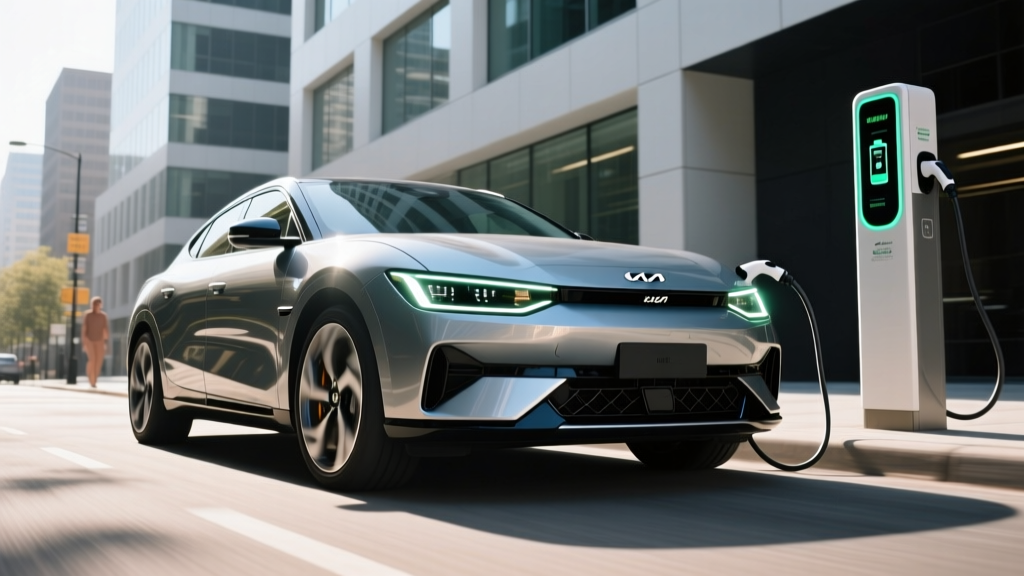
The Kia EV6 Light remains the gateway into Hyundai Motor Group's acclaimed E-GMP platform — an 800-volt architecture that delivers class-leading DC fast-charging speeds in a crossover that starts under $43,000. For 2026, the EV6 Light retains the 77.4 kWh usable battery and rear-wheel-drive layout that made it a fueleconomy.gov efficiency leader, while continuing to offer the 10-80% charge in roughly 18 minutes that separates E-GMP vehicles from nearly every rival at this price point.
The Light trim trades away some range and features compared to the Wind and GT-Line variants, but it preserves the core EV6 strengths: rapid charging, a flat floor, generous interior space, and a well-tuned ride. If you're shopping the mid-$40K EV crossover segment and don't need all-wheel drive, the EV6 Light demands a serious look.
Range, Efficiency, and Real-World Expectations
The 2026 Kia EV6 Light carries an EPA-estimated range of 232 miles on its 77.4 kWh usable battery pack (NMC lithium-ion chemistry). That's the RWD Light Long Range figure — the most common configuration buyers choose at this trim.
EPA Sticker: 232 miles
Expect on a 70-mph highway trip (mild weather): ~205–215 miles
Expect in winter/cold conditions (below 32°F): ~165–190 miles depending on cabin heat use and whether you precondition
City/regenerative driving (mild weather): Can match or slightly exceed 232 miles
The EV6's efficiency shines in stop-and-go driving thanks to strong regenerative braking (adjustable via steering-wheel paddles), but highway speeds above 70 mph and cold temperatures reduce range meaningfully. Plan road trips around 180-mile legs to keep a comfortable buffer.
Efficiency-wise, the EV6 Light Long Range RWD earns an EPA-estimated 134 MPGe combined, translating to roughly 26 kWh per 100 miles. That's competitive with the Hyundai Ioniq 5 and slightly behind the Tesla Model Y RWD, but the Kia's 800V charging architecture often makes up the difference on longer trips.
Charging: 800-Volt Architecture Changes the Game
This is where the EV6 Light separates itself from rivals like the Volkswagen ID.4, Toyota bZ4X, and Subaru Solterra. The E-GMP platform's 800-volt electrical system allows peak DC fast-charging rates that most competitors simply can't match.
| Charging Method | Max Power / Rate | Time / Speed |
|---|---|---|
| DC Fast Charge (Peak) | ~235 kW (800V station) | 10–80% in ~18 minutes |
| DC Fast Charge (50 kW station) | 50 kW | 10–80% in ~73 minutes |
| Level 2 (Home/Public 240V) | 10.9 kW onboard charger | ~7 hours (10–100%); ~30 miles per hour of charging |
| Level 1 (120V household) | ~1.4 kW | ~3–4 miles per hour; not practical for daily use |
Charging-curve reality: The EV6 peaks near 235 kW only when connected to a 350 kW-capable charger (like Electrify America or EVgo's newest stations) and with the battery preconditioned. The curve tapers significantly above 80% SoC — a 10–90% session will take closer to 30–35 minutes, not 18. For daily driving, charging to 80% at home on Level 2 is the sweet spot for long-term battery health.
Preconditioning matters: Use the EV6's navigation-based battery preconditioning (set your charger as a destination) to warm the battery before arrival. In cold weather, this can cut your 10–80% time nearly in half compared to arriving with a cold pack. The EV6 also includes a battery heater for winter charging optimization.
Connector note for 2026: Kia has transitioned to the NACS (Tesla-style) charge port on 2025+ EV6 models, granting native access to the Tesla Supercharger network without an adapter. CCS1 adapters are available for legacy Electrify America and other CCS stations. Verify your local charging infrastructure before purchase.
Performance and Driving Dynamics
| Specification | Value |
|---|---|
| Drivetrain | Rear-Wheel Drive (single motor) |
| Horsepower | 225 hp |
| Torque | 258 lb-ft |
| 0–60 mph | ~7.2 seconds (manufacturer est.) |
| Top Speed | 115 mph (electronically limited) |
| Towing Capacity | Not rated for towing |
The RWD EV6 Light isn't a performance EV — that's what the GT-Line and GT trims are for — but 225 hp and instant electric torque make it genuinely quick off the line and confident for highway merging. The single-motor RWD layout keeps weight lower and efficiency higher than AWD variants.
Ride quality is a standout. The E-GMP platform's low center of gravity and multi-link rear suspension deliver composed handling without the harshness that plagues some EV crossovers. Steering is precise if somewhat light, and the regenerative braking system (with i-Pedal one-pedal mode) is among the most intuitive in the segment.
Interior Space, Cargo, and Technology
Passenger space: The EV6's flat floor (enabled by the skateboard battery layout) creates impressive interior room. Rear-seat legroom measures approximately 39.0 inches, and the cabin feels airier than its exterior dimensions suggest. Front headroom and legroom are generous at ~40.9 and ~41.7 inches respectively.
Cargo volume: Behind the rear seats, you get ~24.4 cubic feet of cargo space, expanding to roughly 50.2 cubic feet with the 60/40 rear seats folded. The front trunk (frunk) on RWD models adds approximately 1.8 cubic feet — enough for a charging cable bag or small groceries, but not a major storage area.
Infotainment and tech: The EV6 Light comes equipped with dual 12.3-inch displays (instrument cluster and infotainment), wireless Apple CarPlay and Android Auto, and Kia Connect services. The Light trim uses physical buttons for climate control (a welcome choice over the touch-capacitive panels on higher trims that draw criticism for usability). An augmented-reality head-up display is reserved for higher trims.
Driver assistance: Kia's Highway Driving Assist 2 (HDA2) provides SAE Level 2 adaptive cruise control with lane-centering, including lane-change assist. This is a driver-supervision system — not self-driving. The driver must keep hands on the wheel and remain attentive. The EV6 also includes forward collision-avoidance assist, blind-spot monitoring, rear cross-traffic alert, and safe exit assist as standard.
Pricing, Trims, and Federal Tax Credit Eligibility
| Trim | Drivetrain | Base MSRP (est.) | Est. After §30D Credit* |
|---|---|---|---|
| Light Long Range | RWD | $42,900 | ~$35,400 |
| Wind | RWD / AWD | $47,500 / $51,400 | ~$39,900+ (if eligible) |
| GT-Line | AWD | $54,900 | ~$47,400 (if eligible) |
| GT | AWD (dual motor) | $61,600 | Not eligible (MSRP cap) |
*Federal tax credit estimates assume full §30D eligibility. Actual credit varies based on battery sourcing, buyer income, and current IRS rules. See eligibility checklist below.
The EV6 Light Long Range RWD at ~$42,900 is the value play in the lineup. It includes the essential hardware — the 77.4 kWh battery, 800V charging, and comprehensive safety suite — without the premium for AWD or luxury features.
Does the 2026 EV6 Light Qualify for the Federal Tax Credit?
The EV6 Light falls under the $55,000 MSRP cap for SUVs/crossovers under IRS §30D rules, making it potentially eligible for up to $7,500 in federal tax credits — split between a critical minerals component ($3,750) and a battery components component ($3,750). However, eligibility depends on multiple factors that change frequently.
- MSRP Cap: Vehicle must be under $55,000 (SUV/crossover classification) — EV6 Light qualifies ✓
- Buyer Income Limits: AGI must not exceed $150,000 (single), $225,000 (head of household), or $300,000 (joint filers)
- Battery Sourcing (Critical Minerals): A percentage of critical minerals must be sourced from the US or FTA partners — check current-year IRS qualified vehicle list for the specific VIN/build date
- Battery Components: A percentage of battery components must be manufactured or assembled in North America — this threshold increases annually
- Point-of-Sale Transfer: As of 2024+, eligible buyers can transfer the credit to the dealer at purchase for an immediate price reduction rather than waiting for tax filing
- Consult a tax professional: Rules and sourcing requirements shift — always verify eligibility with your tax advisor and the dealer before finalizing a purchase
Korean-built EV note: The EV6 is manufactured in South Korea. Under §30D's North American final-assembly requirement as originally written, this would disqualify it. However, the commercial vehicle leasing loophole (§45W) and subsequent rule adjustments have allowed some foreign-built EVs to qualify under specific conditions. Check the current IRS qualified vehicles list and confirm with your dealer whether the specific build you're purchasing qualifies for the full, partial, or no credit.
Warranty and Long-Term Ownership
| Coverage Area | Duration |
|---|---|
| Basic (Bumper-to-Bumper) | 5 years / 60,000 miles |
| Powertrain | 10 years / 100,000 miles |
| EV Battery | 10 years / 100,000 miles (retains ≥65% capacity) |
| Roadside Assistance | 5 years / 60,000 miles |
Kia's 10-year/100,000-mile battery warranty is among the best in the industry, guaranteeing that the high-voltage battery will retain at least 65% of its original capacity over that period. Real-world data from early E-GMP owners (2022–2024 models) suggests NMC degradation is tracking well — most owners report 3–5% capacity loss over the first 30,000–50,000 miles, with the curve flattening significantly after the initial break-in period.
For long-term ownership peace of mind, the 10-year powertrain coverage extends beyond most competitors' 8-year/100,000-mile battery warranties (Tesla, Ford, VW). If you plan to keep the EV6 past the 5-year basic warranty, consider Kia's extended coverage options or a third-party EV-specific plan.
EV6 Light vs. Key Competitors
| Specification | Kia EV6 Light LR RWD | Hyundai Ioniq 5 SE Std Range RWD | Tesla Model Y RWD | Volkswagen ID.4 Pro |
|---|---|---|---|---|
| EPA Range | 232 mi | 245 mi | ~320 mi | ~275 mi |
| Battery (usable) | 77.4 kWh (NMC) | 77.4 kWh (NMC) | ~60 kWh (LFP) | 82 kWh (NMC) |
| Max DC Charge | ~235 kW | ~235 kW | ~170 kW | ~135 kW |
| 10–80% Time | ~18 min | ~18 min | ~25 min | ~30 min |
| 0–60 mph | ~7.2 sec | ~7.4 sec | ~5.8 sec | ~8.5 sec |
| Starting MSRP | ~$42,900 | ~$42,900 | ~$44,990 | ~$43,995 |
| Architecture | 800V E-GMP | 800V E-GMP | 400V | 400V MEB |
The EV6 Light's closest rival is its corporate cousin, the Hyundai Ioniq 5, which shares the E-GMP platform and nearly identical charging performance. The Ioniq 5 offers slightly more range in comparable trims and a more spacious cargo area, while the EV6 wins on exterior styling and a sportier driving feel. The Tesla Model Y leads in range and Supercharger network access but trails significantly in DC charge speed and interior material quality. The VW ID.4 offers strong cargo space and a comfortable ride but charges considerably slower on DC.
- You prioritize the fastest DC charging speeds in the segment for road trips
- You prefer a sportier, more engaging driving experience over maximum cargo space
- You value Kia's 10-year/100,000-mile warranty coverage
- You want physical climate controls and a conventional infotainment layout
- You need 300+ miles of range — consider the Tesla Model Y or EV6 Wind/GT-Line with the larger battery option
- You need AWD for snow/ice — step up to the EV6 Wind AWD or Ioniq 5 AWD
- Cargo space is paramount — the Ioniq 5 and ID.4 offer more cubic feet behind the rear seats
- Tax credit eligibility is a dealbreaker — verify current §30D sourcing rules, as the Korean-built EV6's eligibility can be uncertain
Pros and Cons
- Class-leading 800V DC fast charging (~18 min 10–80%)
- Excellent ride quality and composed handling for the segment
- Generous 10-year/100,000-mile battery and powertrain warranty
- Flat floor creates spacious rear-seat legroom
- Physical climate controls (unlike some competitors' touch-only panels)
- Strong regenerative braking with adjustable levels and i-Pedal mode
- Comprehensive standard safety suite (HDA2, blind-spot, rear cross-traffic)
- 232-mile EPA range trails Tesla Model Y and some rivals
- Small frunk (~1.8 cu ft) limits front storage utility
- Korean assembly complicates federal tax credit eligibility — verify before purchase
- No towing rating — not suitable for trailer hauling
- Infotainment lacks the polish and app ecosystem of Tesla's interface
- Rear visibility is compromised by thick C-pillars (mitigated by camera-based rear view)
Who Should Buy the 2026 Kia EV6 Light?
The EV6 Light is ideal for daily commuters and suburban drivers who have access to home Level 2 charging and want a well-rounded EV crossover without paying a premium for AWD or luxury features. Its 232-mile range comfortably covers most daily driving needs (the average American drives ~37 miles per day), and the 800V charging architecture makes road trips practical with strategic 15–20 minute stops at high-power chargers.
It's less suited for high-mileage road trippers who regularly drive 300+ miles between stops (consider the EV6 Wind with available extended-range options or the Model Y), cold-climate buyers without a garage (the range penalty is real — budget for ~170 miles in deep winter), or families needing maximum cargo capacity (the Ioniq 5 or ID.4 offer more room).
For the buyer who wants fast charging, a premium driving experience, and strong warranty coverage at a sub-$45K starting price, the 2026 Kia EV6 Light earns a confident recommendation.
Frequently Asked Questions
What is the real-world highway range of the Kia EV6 Light?
Expect approximately 205–215 miles on a flat highway at 70 mph in mild weather. In cold conditions (below freezing), highway range can drop to 165–190 miles depending on temperature, cabin heat usage, and whether you precondition the battery. The 232-mile EPA figure is achievable in mixed city/highway driving in moderate temperatures.
How fast does the EV6 Light charge at home?
On a Level 2 home charger (240V, 48-amp circuit), the EV6's 10.9 kW onboard charger adds roughly 30 miles of range per hour. A full 10–100% charge takes about 7 hours. Most owners charge overnight and wake up to a full battery every morning. Installation of a 48-amp Level 2 charger typically costs $800–$2,000 including electrical work, depending on panel capacity and conduit runs.
Does the Kia EV6 Light qualify for the $7,500 federal EV tax credit?
The EV6 Light meets the $55,000 MSRP cap for crossovers under §30D. However, because it is assembled in South Korea, its eligibility for the full $7,500 credit depends on current IRS rules regarding final assembly, battery component sourcing, and critical minerals. Kia has worked to qualify certain builds, and the credit can sometimes be applied as a point-of-sale reduction. Always check the IRS qualified vehicle list and confirm with your dealer and tax professional before purchase.
Is the EV6 Light better than the Hyundai Ioniq 5?
They share the same E-GMP platform, battery, and charging hardware, so performance and charging speeds are nearly identical. The Ioniq 5 offers slightly more cargo space and a more retro-modern design, while the EV6 has a sportier profile, slightly firmer tuning, and physical climate buttons. Choose based on styling preference and interior layout — you can't go wrong with either.
Can I tow with the Kia EV6 Light?
No. The EV6 Light is not rated for towing. If you need towing capability, consider the EV6 GT-Line AWD (rated for up to ~2,700 lbs in some markets) or look at the Ford Mustang Mach-E or Rivian R1S for serious towing needs.
What is the EV6's battery chemistry, and does it affect longevity?
The EV6 uses NMC (nickel-manganese-cobalt) lithium-ion cells. NMC offers higher energy density than LFP (lithium iron phosphate), which is why the EV6 achieves competitive range in a relatively compact package. NMC batteries typically experience slightly faster early-life degradation than LFP but stabilize well. Kia's 10-year/100,000-mile warranty (65% capacity retention guarantee) provides strong long-term protection. For daily charging, keeping SoC between 20–80% will maximize battery life.
Does the EV6 Light have a heat pump?
Yes. The 2026 EV6 includes a heat pump system as standard, which significantly improves cold-weather efficiency by scavenging waste heat from the drivetrain and outside air rather than relying solely on resistive cabin heating. This helps mitigate winter range loss compared to EVs without heat pumps.