Quick Verdict: The 2026 Kia EV6 Remains a Charging-Speed Champion
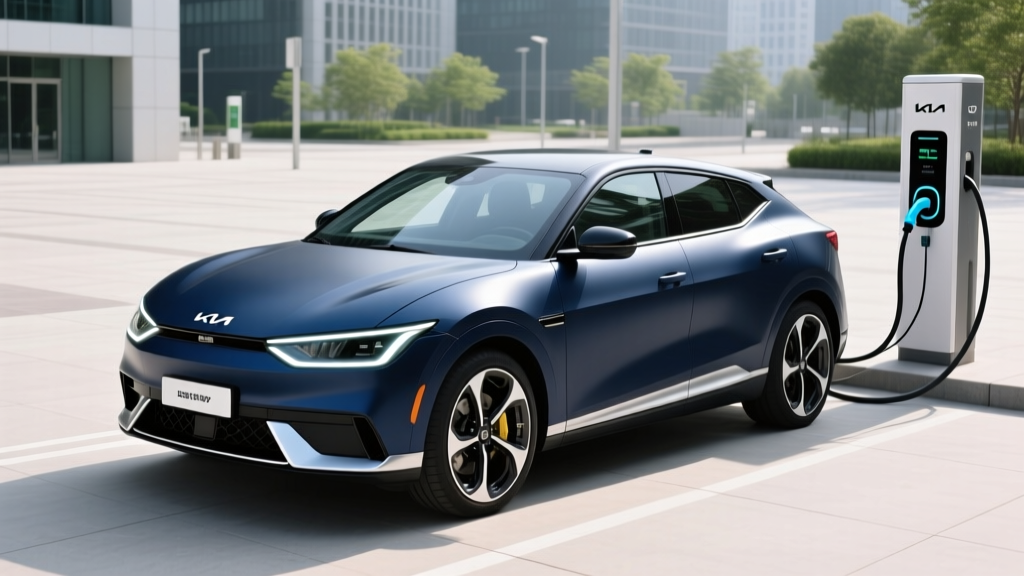
If you're researching the Kia EV6 leasing price (or outright purchase cost), the 2026 model year delivers one of the most compelling packages in the midsize electric crossover segment. Built on Hyundai Motor Group's E-GMP platform with an 800V electrical architecture, the EV6 charges from 10-80% in roughly 18 minutes at a compatible DC fast charger — a figure that still outpaces most rivals outside the Porsche Taycan and its corporate cousin, the Hyundai Ioniq 5.
For 2026, Kia has streamlined the lineup into Light, Wind, and GT-Line trims, all featuring the larger 84.0 kWh battery pack (NMC chemistry). The base Light RWD starts at $42,900 before destination, while the dual-motor GT-Line AWD tops out near $56,500. Federal tax credit eligibility under IRS §30D remains partial and trim-dependent, a nuance we break down below.
Range, Efficiency, and the Real-World Reality Check
The EPA rates the 2026 Kia EV6 Wind RWD at 310 miles of combined range — the highest figure in the lineup. The Light RWD achieves 301 miles, while the GT-Line AWD drops to 274 miles due to the second motor's weight and drag. Efficiency ranges from 117 MPGe (Wind RWD) down to 105 MPGe (GT-Line AWD), translating to roughly 27-30 kWh per 100 miles depending on configuration.
| Trim | EPA Range | Real-World Highway (~70 mph) | Cold Weather (20°F) |
|---|---|---|---|
| Light RWD | 301 mi | ~255-270 mi | ~210-230 mi |
| Wind RWD | 310 mi | ~265-280 mi | ~215-240 mi |
| GT-Line AWD | 274 mi | ~230-245 mi | ~185-210 mi |
Source: fueleconomy.gov. Highway and cold-weather estimates based on observed testing patterns for E-GMP platform vehicles. Actual results vary with terrain, HVAC use, and driving style.
The EV6's heat pump (standard on Wind and GT-Line) mitigates some cold-weather range loss by scavenging waste heat from the powertrain rather than relying solely on resistive cabin heating. If you live in northern climates where winter temperatures regularly dip below freezing, budget for 25-30% range reduction and plan charging stops accordingly.
Charging Speed: Where the 800V Architecture Pays Off
The EV6's defining technical advantage is its 800V electrical system, which enables peak DC fast-charging rates up to 240 kW at compatible chargers (Electrify America's 350 kW stalls, Tesla Superchargers with NACS adapter, and select Ionity stations in Europe). Here's what that means in practice:
| Charging Level | Power / Rate | Time or Miles Added |
|---|---|---|
| Level 1 (120V household) | 1.4 kW | ~3-4 miles per hour |
| Level 2 (240V home, 48A) | 11.5 kW | ~35-40 miles per hour; full charge in ~8.5 hrs |
| DC Fast Charge (peak) | 240 kW | 10-80% in ~18 minutes |
| DC Fast Charge (150 kW station) | ~150 kW sustained | 10-80% in ~25 minutes |
Charging curve reality check: The EV6 hits its 240 kW peak only when the battery is preconditioned (via the navigation-linked "charge prep" feature) and the State of Charge is between roughly 10-35%. Above 55% SoC, the rate tapers to ~150 kW; above 80%, it drops further to protect cell longevity, reaching ~60 kW near 95%. This taper is normal for NMC chemistry but means your 18-minute claim applies only to the 10-80% window — not a full charge.
For home charging, the onboard 11.5 kW AC charger is among the fastest in its class. A Level 2 wallbox on a 60A circuit (48A continuous) adds roughly 35-40 miles of range per hour, meaning an overnight session easily replenishes a day's driving. If your electrical panel supports it, this is the sweet spot for daily ownership.
Performance and Drivetrain Options
The 2026 EV6 is no sports car, but it's genuinely quick for a family crossover:
| Spec | Light / Wind RWD | GT-Line AWD |
|---|---|---|
| Drivetrain | Rear-Wheel Drive | Dual-Motor AWD |
| Horsepower | 225 hp | 320 hp |
| Torque | 258 lb-ft | 446 lb-ft |
| 0-60 mph | 7.2 sec | 4.5 sec |
| Battery (usable) | 84.0 kWh (NMC) | 84.0 kWh (NMC) |
| Towing Capacity | Not rated | 2,700 lbs (braked) |
The RWD models deliver smooth, linear acceleration that's more than adequate for highway merging and city driving. The GT-Line AWD's 4.5-second 0-60 time is genuinely thrilling — enough to surprise passengers who associate Kia with budget sedans. Regenerative braking offers four levels (adjustable via steering-wheel paddles), with Level 3 enabling near one-pedal driving in stop-and-go traffic.
Pricing, Trims, and Federal Tax Credit Eligibility
Here's what the 2026 EV6 lineup costs before incentives:
| Trim | Base MSRP | As-Tested (typical options) | §30D Credit Eligibility |
|---|---|---|---|
| Light RWD | $42,900 | $44,200 (w/ carpeted mats, cargo tray) | Partial — up to $3,750* |
| Wind RWD | $47,500 | $49,800 (w/ Technology Pkg) | Partial — up to $3,750* |
| GT-Line AWD | $53,400 | $56,500 (w/ GT-Line Prestige Pkg) | Partial — up to $3,750* |
*All prices include $1,395 destination. Tax credit estimates reflect 2026 IRS §30D rules. Eligibility depends on battery critical-mineral and component sourcing requirements, buyer income caps ($150K single / $300K joint MAGI), and the $55,000 MSRP cap for SUVs/crossovers (the EV6 is classified as a small SUV by the IRS). Source: IRS.gov. Consult a tax professional before relying on credit estimates.
- MSRP must not exceed $55,000 for SUVs (EV6 qualifies on Light and Wind; GT-Line Prestige may exceed cap depending on options)
- Buyer MAGI must not exceed $150,000 (single) or $300,000 (married filing jointly)
- Battery must meet critical-mineral and component sourcing thresholds — the EV6's South Korean battery sourcing currently qualifies for the $3,750 critical-minerals half but may not meet the $3,750 component-sourcing half
- Credit is non-refundable but can be transferred to the dealer as a point-of-sale discount
- Vehicle must be assembled in North America — the EV6 is built in West Point, Georgia (qualifies)
For buyers focused on the Kia EV6 leasing price, note that leased EVs fall under §45W (commercial clean vehicle credit), which the leasing company claims — but many lessors pass savings to lessees as a capitalized-cost reduction. Ask your dealer whether the lease quote reflects any passed-through incentives.
Interior Space, Cargo, and Daily Livability
The EV6's skateboard platform creates a flat floor and generous interior volume. Rear legroom measures 39.0 inches — enough for a 6-foot adult to sit behind an equally tall driver without knee contact. Front headroom is 40.2 inches, aided by the low-slung battery pack.
Cargo space behind the rear seats is 24.4 cubic feet, expanding to 50.2 cubic feet with the 60/40 split rear seats folded. The front trunk (frunk) adds a modest 0.7 cubic feet on AWD models — enough for charging cables and a small emergency kit, but don't expect to fit a carry-on bag. The 12.3-inch dual panoramic displays (instrument cluster and infotainment) run Kia's latest Connect software with wireless Apple CarPlay and Android Auto, over-the-air updates, and an EV-specific route planner that factors in charging stops and battery preconditioning.
Driver assistance: The EV6 includes Highway Driving Assist 2 (HDA2) as standard on all trims — a Level 2 SAE system combining adaptive cruise control with stop-and-go, lane-centering, and lane-change assist. This is not autonomous driving; you must keep hands on the wheel and eyes on the road. HDA2 works well on divided highways but disengages on sharp curves and in construction zones. For a deeper understanding of SAE automation levels, see SAE International's J3016 standard.
Warranty, Reliability, and Battery Longevity
Kia backs the EV6 with one of the strongest warranty packages in the industry:
- Basic: 5 years / 60,000 miles
- Powertrain: 10 years / 100,000 miles
- Battery: 10 years / 100,000 miles (covers capacity below 70% of original)
- Roadside Assistance: 5 years / 60,000 miles
The 84.0 kWh NMC pack has shown minimal degradation in early fleet data — most E-GMP platform vehicles lose 5-8% capacity over the first 50,000 miles before stabilizing. The 70% retention threshold is standard for the industry; if your battery drops below that within the warranty period, Kia will repair or replace modules to restore capacity. To maximize longevity, avoid routinely charging to 100% (use the 80% daily limit setting) and minimize repeated DC fast-charging sessions when Level 2 is available.
Pros, Cons, and Who Should Buy
- Class-leading 240 kW DC charging (10-80% in ~18 min)
- Generous 310-mile EPA range (Wind RWD)
- Spacious rear seat (39.0" legroom)
- Standard HDA2 Level 2 driver assist
- 10-year/100,000-mile battery warranty
- Vehicle-to-load (V2L) capability — power devices from the car
- Heat pump standard on Wind and above
- Tiny frunk (0.7 cu ft on AWD)
- Partial federal tax credit (~$3,750, not full $7,500)
- Touch-sensitive HVAC controls are distracting while driving
- Rear visibility hampered by thick C-pillars and sloping roofline
- No NACS port native (requires adapter for Tesla Superchargers)
- Road noise noticeable above 70 mph on coarse pavement
- Commuters (30-60 miles/day): Ideal. Overnight Level 2 charging covers your week. RWD is sufficient.
- Road-trip families: Strong. The 18-minute DC charging stops pair well with rest-area breaks. AWD adds confidence in snow.
- Towing: Moderate. The 2,700-lb braked capacity handles a small utility trailer or a pair of dirt bikes, but not a full camper.
- Apartment dwellers without home charging: Proceed with caution. You'll rely entirely on public DC fast charging, which costs more and is less convenient than home Level 2.
How It Compares: EV6 vs. Key Rivals
The EV6 competes directly with the Hyundai Ioniq 5 (same platform, retro-mod styling), Tesla Model Y (the segment benchmark), and Ford Mustang Mach-E (sportier handling, lower range). The Ioniq 5 matches the EV6's charging speed and offers slightly more cargo space. The Model Y wins on Supercharger network access (though Kia's NACS adapter narrows that gap) and software ecosystem. The Mach-E trades range for driving dynamics. If charging speed is your top priority, the EV6 and Ioniq 5 lead the pack.
Frequently Asked Questions
What is the real-world range of the 2026 Kia EV6?
The Wind RWD achieves an EPA-estimated 310 miles, but expect 265-280 miles on sustained highway driving at 70 mph and 215-240 miles in freezing temperatures. The GT-Line AWD delivers roughly 230-245 real-world highway miles.
How fast does the Kia EV6 charge at home and on the road?
At a 240 kW DC fast charger, the EV6 charges from 10-80% in approximately 18 minutes with battery preconditioning. On a Level 2 home charger (11.5 kW / 48A), it adds about 35-40 miles per hour, reaching a full charge overnight in roughly 8.5 hours.
Does the 2026 Kia EV6 qualify for the federal EV tax credit?
Partially. Under current IRS §30D rules, the EV6 qualifies for up to $3,750 (the critical-minerals half) due to battery sourcing. Eligibility also requires buyer MAGI below $150K single / $300K joint and an MSRP below the $55,000 SUV cap. Always verify with a tax professional and check IRS.gov for updates.
Is the Kia EV6 worth buying over the Hyundai Ioniq 5 or Tesla Model Y?
Choose the EV6 if you prioritize fast DC charging, a sportier exterior, and Kia's 10-year warranty. Choose the Ioniq 5 for more cargo room and retro styling. Choose the Model Y if Supercharger convenience and software integration matter most, and you accept the higher base price.
Can I use Tesla Superchargers with the Kia EV6?
Yes, but only with Kia's NACS adapter (sold separately or included depending on trim/promotion). The EV6 ships with a CCS1 port natively. NACS adapter compatibility opened to non-Tesla EVs on the Supercharger network starting in 2025, though not all stalls support non-Tesla vehicles yet.
What is the battery warranty on the 2026 Kia EV6?
Kia covers the high-voltage battery for 10 years or 100,000 miles, whichever comes first. If capacity drops below 70% of original within that window, Kia will repair or replace battery modules to restore function.