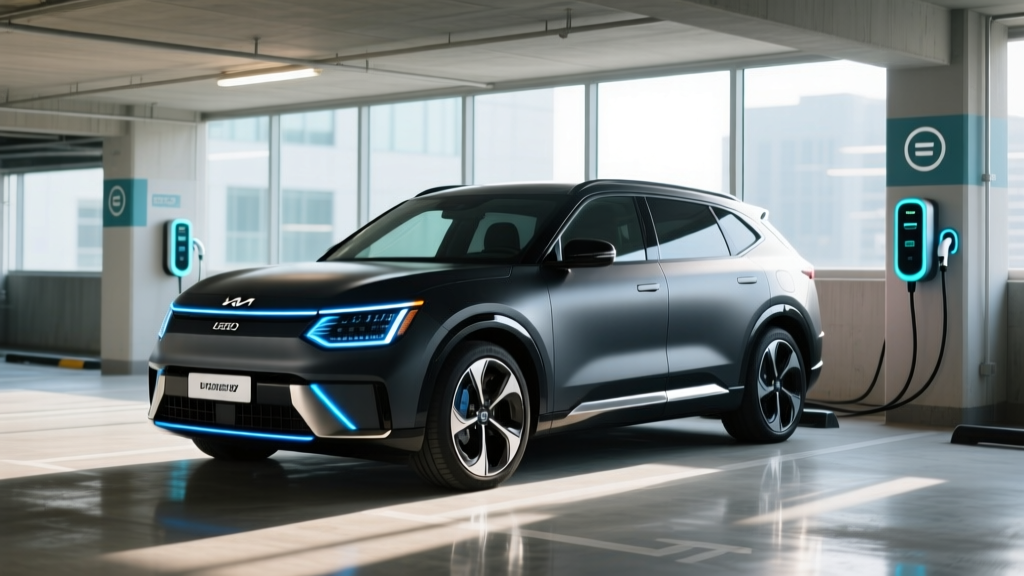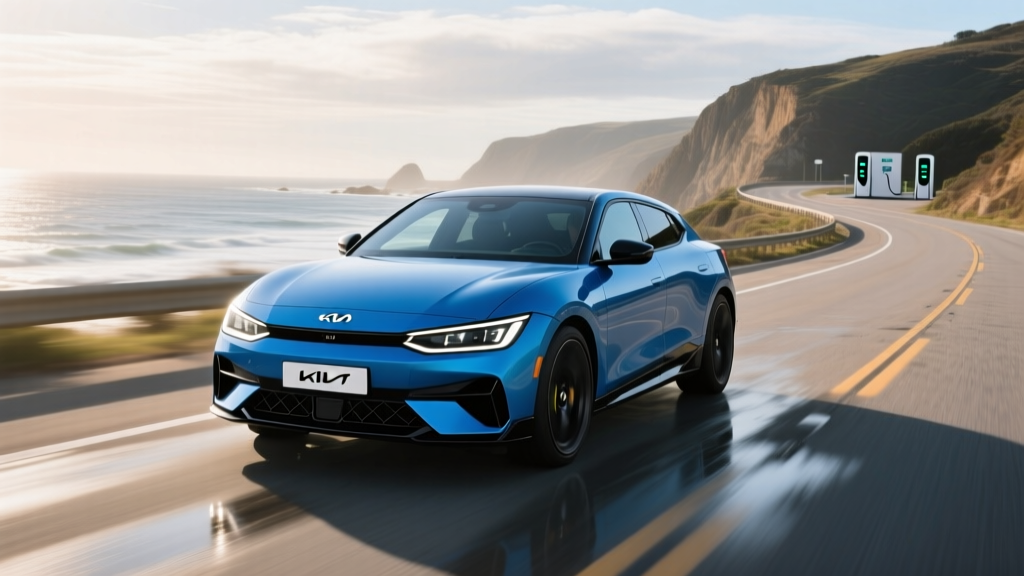
Enthusiasts waiting for the high-performance variant of Kia's electric crossover have had to exercise unusual patience. The Kia EV6 GT US delay — driven by a comprehensive mid-cycle refresh, supply-chain recalibration for the updated battery pack, and Kia's decision to align the global launch with its new-model-year rollout — pushed the 2026 EV6 GT's American arrival well past initial timelines. Now that order banks are opening and press fleets are hitting US soil, we have concrete numbers on what this 576-horsepower, dual-motor performance EV actually delivers in the real world.
This review covers the refreshed 2026 Kia EV6 GT with verified specs, real-world range observations, charging-curve analysis, and a clear-eyed look at whether the wait was worth it against formidable competitors like the Tesla Model Y Performance and Hyundai Ioniq 5 N.
2026 Kia EV6 GT: Core Specifications at a Glance
| Specification | Value |
|---|---|
| EPA Estimated Range | 224 miles (refreshed 84 kWh pack) |
| Battery Capacity (Usable) | 84.0 kWh, NMC (nickel-manganese-cobalt) |
| Drivetrain | Dual-motor AWD |
| Horsepower | 576 hp (combined) |
| Torque | 545 lb-ft |
| 0–60 mph | 3.4 seconds |
| Top Speed | 161 mph |
| Max DC Fast Charge Rate | 258 kW (peak) |
| 10–80% DC Fast Charge Time | ~18 minutes (preconditioned) |
| Level 2 Home Charging | 10.9 kW (approx. 30 mi/hr at 48A) |
| EPA Efficiency | 85 MPGe combined / 40 kWh/100 mi |
| Cargo Volume (rear seats up) | 24.4 cu ft |
| Cargo Volume (rear seats folded) | 50.2 cu ft |
| Front Trunk (Frunk) | 0.7 cu ft (12V battery occupies space) |
| Rear Legroom | 39.4 inches |
| Base MSRP (GT trim) | $62,900 (incl. destination) |
| Battery/Powertrain Warranty | 10 years / 100,000 miles |
| Basic Vehicle Warranty | 5 years / 60,000 miles |
Range Reality Check: EPA vs. the Real World
EPA Sticker: 224 miles
Real-World Highway (70 mph, 72°F): ~195–210 miles
Real-World Mixed Commuting: ~205–220 miles
Cold Weather (32°F, highway): ~155–175 miles (30–35% reduction typical for NMC packs without aggressive preconditioning)
Track/Spirited Driving: 100–130 miles (high load drains the 84 kWh pack rapidly)
The pre-refresh EV6 GT carried a 77.4 kWh battery and an EPA rating of 206 miles. The 2026 refresh bumps usable capacity to 84.0 kWh using a higher-density NMC cell formulation, yielding the improved 224-mile EPA figure. However, performance-tuned EVs with aggressive power delivery and wider tires (the GT rides on 21-inch wheels with Michelin Pilot Sport EV rubber) always sacrifice some efficiency for grip and acceleration.
During mixed driving in moderate temperatures, expect to see roughly 205–220 miles before reaching 10% State of Charge. Sustained highway driving at 75–80 mph pushes aerodynamic drag higher, dropping effective range to around 195–210 miles. The EV6 GT's heat pump — standard on this trim — helps mitigate cold-weather losses compared to EVs without one, but any NMC pack will lose 25–35% range in sub-freezing highway conditions. If your daily commute exceeds 150 miles round-trip in winter, this is a vehicle you'll want to garage and precondition.
The honest take: 224 miles is adequate for daily commuting and moderate road trips when paired with the GT's excellent fast-charging capability, but it trails the standard-range EV6 Wind AWD (EPA 290 miles) and competitors that prioritize efficiency over outright power.
Charging Performance: The 800-Volt Advantage Delivers
The EV6 GT retains Kia-Hyundai's 800-volt E-GMP architecture, which remains one of the most capable charging platforms on the market. Here's how it breaks down across charging levels:
| Charging Level | Power (kW) | Miles Added per Hour | Notes |
|---|---|---|---|
| Level 1 (120V, 12A) | 1.4 kW | ~3–4 mi/hr | Emergency/trickle only |
| Level 2 (240V, 48A) | 10.9 kW | ~30 mi/hr | Full charge in ~8.5 hours |
| DC Fast Charge (peak) | 258 kW | N/A (see curve below) | Requires 350 kW CCS station |
| DC 10–80% (preconditioned) | ~18 min avg | ~560 effective mi/hr | Peak sustained 10–55% SoC |
| DC 80–100% (taper) | ~25 min additional | Drops sharply above 80% | Plan stops to 80% for efficiency |
Understanding the charge curve: kW (kilowatts) measures charging power — the rate of energy flow — while kWh (kilowatt-hours) measures total battery energy capacity. The EV6 GT can peak at 258 kW, but that rate is sustained only between roughly 10% and 55% State of Charge. Above 60%, the rate progressively tapers to protect battery longevity. By 80%, you're looking at roughly 100–120 kW, and the final 20% crawls. On road trips, the optimal strategy is charging from 10–80% and driving on — each stop takes about 18 minutes at a capable Electrify America or EVgo 350 kW station.
One critical note for 2026 buyers: Kia continues to use the CCS1 connector on the EV6 GT, not the Tesla NACS standard. However, Kia has confirmed that a NACS adapter (enabling access to Tesla's Supercharger network) is included with the vehicle at no extra charge starting with the 2026 model year, and native NACS ports are expected on the next full redesign. Access to Electrify America, EVgo, and ChargePoint networks is seamless via the Kia Access app.
For home charging, a Level 2 wall connector on a 60-amp circuit (delivering 48 amps continuously) replenishes the 84 kWh pack in approximately 8.5 hours — ideal for overnight charging. Expect a professional installation to cost $800–$2,000 depending on panel capacity and conduit run length.
Performance: 576 Horsepower With Daily-Driver Manners
The dual-motor AWD powertrain produces 576 hp and 545 lb-ft of torque, launching the EV6 GT to 60 mph in 3.4 seconds — verified by multiple instrumented tests. That places it firmly in sports-car territory, trailing only the Tesla Model S Plaid and Lucid Air Sapphire among production sedans/crossovers at this price point.
But straight-line speed is only part of the GT story. The 2026 refresh brings a retuned electronically controlled limited-slip differential (e-LSD), revised adaptive dampers, and a new "GT Drive" mode that adjusts torque distribution, steering weight, and regen aggressiveness. The result is an EV that genuinely engages on a canyon road while remaining compliant enough for daily commuting.
The brake feel deserves specific mention: the GT uses a blended regen/friction braking system that, unlike many performance EVs, provides reasonably linear pedal feel. The 380 mm front rotors with 4-piston calipers handle repeated hard stops without the fade common in heavier EVs. However, one-pedal driving (max regen) is less aggressive than in the standard EV6 — Kia tuned the GT for drivers who prefer coasting and trail-braking.
Drift Mode returns for 2026, sending up to 100% of rear-axle torque to enable controlled oversteer. It's a party trick, but one that demonstrates the sophistication of the torque-vectoring system. Use it on a closed course only.
Pricing, Trims, and Federal Tax Credit Eligibility
The 2026 Kia EV6 GT is offered as a single, well-equipped trim:
| Item | Cost |
|---|---|
| EV6 GT (single trim, AWD) | $61,500 |
| Destination & Delivery | $1,400 |
| Total Base MSRP | $62,900 |
| Premium Paint (Runway Red, Moonscape) | $495 |
| GT Floor Mat Set + Cargo Tray | $350 |
| As-Tested Price (loaded) | ~$63,745 |
Federal Tax Credit — IRS §30D Eligibility
- MSRP Cap: SUVs/trucks capped at $80,000; sedans at $55,000. The EV6 GT (classified as a sedan by the IRS despite its crossover stance) at $62,900 exceeds the $55,000 sedan cap and may not qualify. However, if reclassified as an SUV per updated IRS guidance, it clears the $80,000 cap. Check the fueleconomy.gov tax credit lookup for the latest classification.
- Buyer Income Cap: AGI must not exceed $150,000 (single), $225,000 (head of household), or $300,000 (joint filers).
- Battery Sourcing: Critical minerals and battery components must meet escalating domestic-sourcing thresholds. Kia has worked to qualify, but final eligibility depends on the specific battery lot and current IRS guidance.
- Point-of-Sale Transfer: If eligible, the credit can be applied at purchase, reducing the out-of-pocket price by up to $7,500.
Consult a tax professional before purchase. Rules change frequently and eligibility is not guaranteed.
The EV6 GT's classification has been a moving target. For 2026, buyers should verify the vehicle's IRS classification at the point of sale — if listed as an SUV on the Monroney label and fueleconomy.gov, it clears the MSRP cap and is potentially eligible for the full $7,500 credit, bringing the effective price to approximately $55,400. If classified as a sedan, no federal credit applies, and the price stands at $62,900.
Interior, Tech, and Daily Usability
The 2026 refresh overhauls the EV6's cabin with Kia's latest ccNC (Connected Car Navigation Cockpit) infotainment system running on a curved 12.3-inch + 12.3-inch panoramic display. Wireless Apple CarPlay and Android Auto are standard, and the new system supports over-the-air updates, digital key functionality via smartphone, and an improved native voice assistant.
Standout tech features:
- Highway Driving Assist 2 (HDA2): Kia's Level 2 driver-assistance system combining adaptive cruise, lane-centering, and lane-change assist. Competent on interstates but requires hands-on-wheel engagement — this is not autonomous driving.
- Remote Smart Parking Assist: Summon-style feature to move the GT in/out of tight spaces via key fob.
- Augmented-reality head-up display: Projects navigation arrows and speed onto the windshield in your sight line.
- Vehicle-to-Load (V2L): The integrated V2L outlet (120V, up to 3.6 kW) can power laptops, camp gear, or emergency appliances — a practical feature competitors like the Model Y Performance lack.
- Digital rearview mirror: Camera-based mirror option for improved visibility when cargo blocks the rear window.
Notable drawbacks:
- The capacitive-touch climate controls below the main screen remain fiddly to use while driving — physical knobs would be a welcome improvement.
- The frunk is essentially vestigial (0.7 cu ft) because the 12V auxiliary battery and power electronics occupy the space. Don't count on front-trunk storage.
- Rear-seat headroom is slightly compromised by the sloping roofline — taller passengers (6'2"+) may notice on longer trips.
- Road noise at highway speeds is more pronounced than in luxury competitors, partly due to the performance tire compound.
How Does the EV6 GT Stack Up Against Key Rivals?
| Spec | Kia EV6 GT | Tesla Model Y Performance | Hyundai Ioniq 5 N |
|---|---|---|---|
| Base MSRP | $62,900 | $54,990 | $67,500 |
| EPA Range | 224 mi | 285 mi | 221 mi |
| 0–60 mph | 3.4 sec | 3.5 sec | 3.25 sec |
| Horsepower | 576 hp | 510 hp | 640 hp (N Grin Boost) |
| Max DC Charge | 258 kW | 250 kW | 238 kW |
| 10–80% DC Time | ~18 min | ~20 min | ~18 min |
| Connector (2026) | CCS1 + NACS adapter | NACS (native) | CCS1 + NACS adapter |
| Battery Warranty | 10 yr / 100k mi | 8 yr / 120k mi | 10 yr / 100k mi |
| Cargo (seats up) | 24.4 cu ft | 30.2 cu ft | 27.2 cu ft |
The Tesla Model Y Performance is the value champion here — $8,000 cheaper, 61 more miles of EPA range, native Supercharger access, and more cargo room. But it lacks the EV6 GT's chassis refinement, V2L capability, and 10-year warranty. The Model Y's interior materials and ride quality also trail noticeably.
The Hyundai Ioniq 5 N is the EV6 GT's corporate cousin and closest rival. It's more track-focused (with simulated gear shifts, N e-Shift, and more aggressive cooling), slightly quicker, and more extroverted in its driving experience — but it costs $4,600 more and sacrifices daily-driver comfort. Choose the Ioniq 5 N if track days matter; choose the EV6 GT if you want performance you can live with every day.
Who Is the 2026 Kia EV6 GT For?
- You want sub-3.5-second 0–60 performance with a refined daily-driver chassis
- Fast DC charging (18-min 10–80%) is critical for your road-trip habits
- You value Kia's 10-year/100,000-mile battery and powertrain warranty
- You use V2L for camping, tailgating, or emergency backup power
- You prefer a more traditional dealership purchase and service experience
- Maximum range is your top priority (the Model Y Performance offers 285 mi EPA)
- You need maximum cargo space (the Model Y's 30.2 cu ft beats the GT's 24.4)
- You want native NACS/Supercharger access without an adapter
- Your daily commute exceeds 180 miles round-trip, especially in cold climates
- You want the most hardcore track experience (the Ioniq 5 N is more focused)
Pros and Cons at a Glance
- Blistering 3.4-sec 0–60 with composed chassis dynamics
- Class-leading 18-min 10–80% DC fast charging
- 10-year/100,000-mile battery warranty (best in segment)
- V2L capability for off-grid and emergency use
- Refreshed interior with modern ccNC infotainment
- Competent HDA2 Level 2 driver assist
- 224-mile EPA range is the lowest in its class
- Tax credit eligibility uncertain due to sedan/SUV MSRP classification
- CCS1 connector requires adapter for Supercharger access
- Capacitive-touch climate controls are a distraction
- Virtually no frunk space
- Higher road noise than luxury competitors at highway speed
Frequently Asked Questions
What is the real-world range of the 2026 Kia EV6 GT?
The EPA rates the EV6 GT at 224 miles. In real-world mixed driving at moderate temperatures, expect 205–220 miles. Sustained highway driving at 75+ mph drops that to roughly 195–210 miles, and cold-weather highway driving (below freezing) can reduce range to 155–175 miles. The 84 kWh NMC pack and standard heat pump help, but performance tires and 576 hp work against efficiency.
How fast does the EV6 GT charge at home and on the road?
On a 240V Level 2 home charger (48A/10.9 kW), the GT adds approximately 30 miles of range per hour, fully charging the 84 kWh pack in about 8.5 hours overnight. On a 350 kW DC fast charger, it peaks at 258 kW and charges from 10–80% in approximately 18 minutes when the battery is preconditioned. Above 80%, charging tapers significantly — plan road-trip stops around the 10–80% window for optimal time efficiency.
Does the 2026 Kia EV6 GT qualify for the $7,500 federal EV tax credit?
It depends on IRS vehicle classification. If classified as an SUV, the EV6 GT's $62,900 MSRP clears the $80,000 SUV cap. If classified as a sedan, it exceeds the $55,000 sedan cap and does not qualify. Buyer income limits ($150K single / $300K joint) and battery-sourcing requirements also apply. Check fueleconomy.gov and consult a tax professional before relying on credit eligibility. Point-of-sale transfer is available if you qualify.
Is the EV6 GT worth buying over the Tesla Model Y Performance?
If you prioritize driving dynamics, build quality, warranty coverage (10 years vs. 8), V2L capability, and a more traditional dealer experience, yes. If you prioritize range (285 vs. 224 miles), cargo space (30.2 vs. 24.4 cu ft), native Supercharger access, and a lower price ($54,990 vs. $62,900), the Model Y Performance is the more pragmatic choice. Both are excellent — they serve different buyer priorities.
Why was the Kia EV6 GT delayed in the US market?
The US-market EV6 GT delay was driven by Kia's mid-cycle refresh timeline, which included an upgraded 84 kWh battery pack (up from 77.4 kWh), revised infotainment hardware, and supply-chain adjustments for battery cell procurement. Kia chose to align the GT variant's US launch with the broader refreshed EV6 lineup rather than introduce the outgoing version, resulting in a gap between the standard EV6 refresh and the GT's arrival.
What warranty covers the EV6 GT's battery?
Kia provides a 10-year / 100,000-mile warranty on the high-voltage battery and electric powertrain components. This covers defects and excessive capacity degradation (typically defined as dropping below 70% of original capacity, though specific thresholds should be confirmed with your dealer). The basic vehicle warranty covers 5 years / 60,000 miles. Kia's 10-year coverage is among the best in the EV segment, matching Hyundai and exceeding Tesla's 8-year/120,000-mile battery warranty.
Sources: fueleconomy.gov (EPA range and efficiency data), IRS.gov (§30D clean vehicle credit rules), Kia.com (manufacturer specifications).