Quick Verdict: The Performance EV Bargain That Still Punches Hard
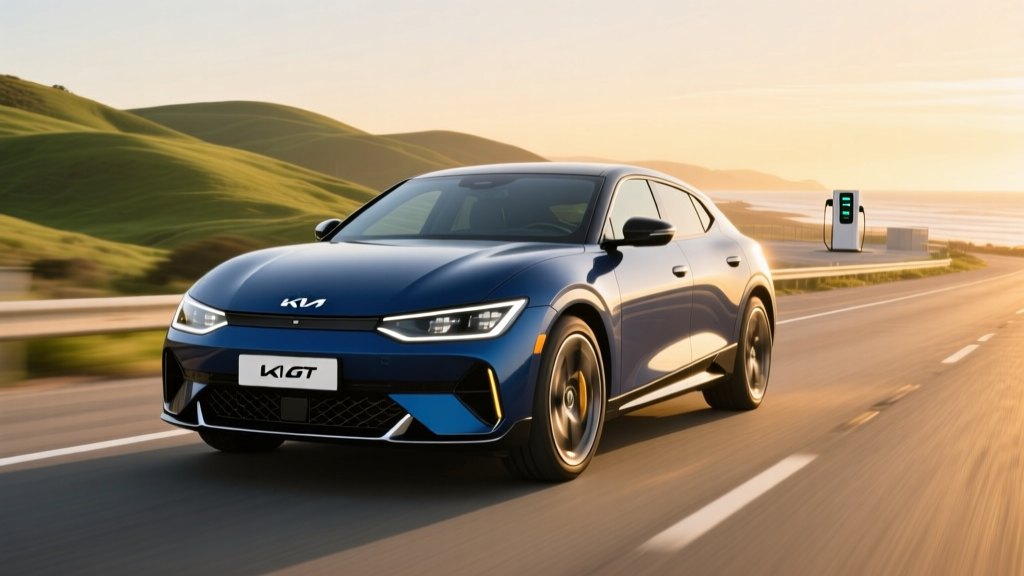
The Kia EV6 GT occupies a rare space in the electric-vehicle market: a 576-horsepower dual-motor performance crossover that undercuts the Tesla Model Y Performance and Porsche Taycan on price while delivering supercar-rivaling acceleration. For 2026, Kia has refreshed the EV6 line with an updated infotainment system, slightly revised battery management, and standard NACS (North American Charging Standard) ports, eliminating the CCS adapter hassle that plagued early adopters. But the GT variant still trades range for power — its 206-mile EPA estimate is the shortest in the EV6 lineup, and real-world highway driving shrinks that figure further. If you prioritize 0-60 thrills and 800-volt fast charging over cross-country road-trip range, the EV6 GT remains one of the most compelling performance EVs available.
Range, Efficiency, and Real-World Expectations
Real-World Highway (70 mph, moderate temps): ~175–190 miles
Cold-Weather Estimate (below 30°F): ~145–165 miles
Combined Efficiency: 85 MPGe / 40 kWh per 100 miles
The EV6 GT's 77.4 kWh usable battery pack (NMC chemistry — nickel manganese cobalt) is the same unit found in the EV6 GT-Line AWD, but the GT's more aggressive power delivery, stickier performance tires, and lack of a heat-pump-optimized thermal strategy in earlier builds all conspire to reduce efficiency. The EPA's 206-mile figure is achievable in mixed suburban driving with liberal regenerative braking, but sustained highway speeds above 70 mph will drop range to roughly 175–190 miles depending on temperature and elevation changes.
In cold weather, expect a 20–30% reduction. The EV6 GT does include a battery preconditioning function for DC fast charging, but unlike the Hyundai Ioniq 5 N (its platform sibling), it does not offer a dedicated heat pump as standard in all markets — verify your trim's thermal management spec before purchasing in northern climates. According to fueleconomy.gov, the EV6 GT returns 85 MPGe combined, which translates to roughly 40 kWh per 100 miles — thirstier than the EV6 Wind RWD (134 MPGe) but competitive with other performance AWD EVs in this class.
Charging: 800-Volt Architecture Still Sets the Pace
The EV6 GT's 800-volt electrical architecture remains one of its strongest advantages over 400-volt competitors like the Ford Mustang Mach-E GT and Volkswagen ID.4 GTX. This allows peak DC fast-charge rates that most rivals simply cannot match at public stations.
| Charging Level | Power / Rate | Time / Miles Added |
|---|---|---|
| Level 1 (120V household) | ~1.4 kW | ~4–5 miles per hour |
| Level 2 (240V home / public) | 10.9 kW (max onboard) | ~32–36 miles per hour; full charge ~7.5 hours |
| DC Fast Charge (peak) | Up to 240 kW | 10–80% in ~18 minutes (ideal conditions) |
| DC Fast Charge (sustained avg) | ~160–180 kW | 10–80% real-world ~22–25 minutes |
Charging-curve reality check: The "18-minute" 10–80% claim assumes a 350 kW-capable charger, optimal battery temperature (preconditioned), and a low starting state of charge. In practice, the EV6 GT peaks near 240 kW between roughly 15–45% SoC, then tapers progressively. Expect 22–25 minutes for a 10–80% session at a well-maintained Electrify America or Tesla Supercharger (NACS) station. Above 80%, charging slows dramatically to protect the NMC cells — a 10–100% session can take 40+ minutes, so plan your stops around 80% unless you need the full capacity.
For 2026, the EV6 GT ships with a native NACS port, granting access to Tesla's Supercharger network without an adapter. This is a major practical improvement over the 2023–2024 CCS-equipped models that required a third-party adapter for Supercharger access.
Performance: 3.4 Seconds Changes How You Think About Crossovers
| Spec | 2026 Kia EV6 GT |
|---|---|
| Drivetrain | Dual-motor AWD |
| Horsepower | 576 hp (combined) |
| Torque | 545 lb-ft |
| 0–60 mph | 3.4 seconds |
| Top Speed | 161 mph (electronically limited) |
| Battery (usable) | 77.4 kWh, NMC chemistry |
| EPA Range | 206 miles |
| EPA Efficiency | 85 MPGe / 40 kWh/100 mi |
| Max DC Charge Rate | 240 kW (peak) |
| Level 2 Charge Rate | 10.9 kW |
| Cargo (rear seats up) | 24.4 cu ft |
| Cargo (rear seats folded) | 50.2 cu ft |
| Rear Legroom | 39.4 inches |
| Base MSRP (GT) | $62,900 (before incentives) |
| Battery Warranty | 10 years / 100,000 miles |
| Basic Warranty | 5 years / 60,000 miles |
The GT's dual-motor setup — a 218-hp front motor and a 358-hp rear motor — delivers all 576 horses simultaneously in GT mode with launch control engaged. The 3.4-second 0–60 time slots it between a Tesla Model Y Performance (3.5 sec) and a Porsche Taycan 4S (3.8 sec), yet the EV6 GT undercuts both on starting price. Kia's electronic limited-slip differential and torque-vectoring rear motor give the GT genuine cornering composure that heavier performance EVs lack, and the Michelin Pilot Sport 4S tires (255/40R21) provide tenacious grip.
Drive modes include Eco, Normal, Sport, and GT, plus a customizable My Mode. GT mode firms up the adaptive dampers, sharpens throttle response, and enables a simulated e-LSD feel. The regenerative braking paddle shifters behind the wheel allow six levels of regen, including i-Pedal mode for full one-pedal driving down to a stop — though the GT's regen blending is slightly less seamless than the standard EV6's in everyday commuting.
Pricing, Tax Credits, and Ownership Cost
| Trim | MSRP | Est. After §30D Credit* |
|---|---|---|
| EV6 GT (sole trim) | $62,900 | $55,400 (if eligible) |
*Federal §30D tax credit eligibility requires meeting all IRS criteria — see checklist below. Credit can be applied at point of sale for 2026.
The EV6 GT is offered as a single, fully loaded trim at $62,900 for 2026. There are no stripped-down GT variants — every GT includes the dual-motor powertrain, 21-inch wheels, adaptive suspension, GT-specific interior with suede and leather sport seats, head-up display, Highway Driving Assist 2 (Level 2 driver assistance), surround-view monitor, and the updated 12.3-inch dual-screen infotainment cluster with wireless Apple CarPlay and Android Auto.
- MSRP cap: SUVs/crossovers must be ≤ $80,000 — the EV6 GT at $62,900 qualifies ✓
- Buyer income cap: Modified AGI ≤ $150,000 (single) / $300,000 (joint) — verify with your tax professional
- Battery sourcing: Critical minerals and battery components must meet escalating domestic-content thresholds — check the latest IRS eligible vehicle list before purchasing, as eligibility can change mid-year
- Point-of-sale transfer: You can transfer the credit to the dealer at purchase for an immediate price reduction, or claim it on your tax return
- One credit per vehicle, one per taxpayer per year
Critical caveat: Tax credit eligibility for the EV6 GT has fluctuated as Kia's battery supply chain has evolved. As of early 2026, the EV6 GT built for the U.S. market (from the West Point, Georgia plant) is expected to qualify for the full $7,500 credit, but battery-sourcing rules tighten annually. Always confirm your specific VIN on the IRS portal before signing a purchase agreement.
Interior, Tech, and Daily Livability
The EV6 GT's cabin is driver-focused without feeling austere. The dual 12.3-inch curved displays (instrument cluster and infotainment) run Kia's latest ccNC operating system, which is noticeably faster and more responsive than the 2023-generation software. Wireless phone charging, a 14-speaker Meridian audio system, and a GT-specific augmented-reality head-up display (with navigation overlays and speed projected onto the windshield) are all standard.
Practicality holds up well for a performance vehicle. The 24.4 cubic feet of cargo space behind the rear seats expands to 50.2 cu ft with the 60/40 split rear seats folded — enough for a weekend's worth of gear for a family of four. Rear legroom at 39.4 inches is generous, and the flat floor (no transmission tunnel) makes the middle seat usable for short trips. The front trunk (frunk) on AWD GT models is a small 0.7 cu ft — enough for charging cables but not much else.
Driver assistance: Highway Driving Assist 2 (HDA2) is Kia's Level 2 system, combining adaptive cruise control with stop-and-go, lane-centering, and lane-change assist. It performs well on divided highways but requires hands on the wheel at all times. This is not a hands-free system like GM's Super Cruise or Ford's BlueCruise — keep your expectations aligned with SAE Level 2 capabilities.
How It Stacks Up Against Key Competitors
| Spec | 2026 Kia EV6 GT | 2026 Tesla Model Y Perf. | 2026 Hyundai Ioniq 5 N |
|---|---|---|---|
| 0–60 mph | 3.4 sec | 3.5 sec | 3.4 sec |
| Horsepower | 576 hp | 456 hp | 641 hp (w/ N Grin Boost) |
| EPA Range | 206 mi | 277 mi | 221 mi |
| Max DC Charge | 240 kW | 250 kW | 240 kW |
| 10–80% DC Time | ~18 min | ~15 min | ~18 min |
| Battery | 77.4 kWh NMC | ~78 kWh NMC | 84 kWh NMC |
| Base MSRP | $62,900 | $54,990 | $67,500 |
| Cargo (rear up) | 24.4 cu ft | 30.2 cu ft | 27.2 cu ft |
| Battery Warranty | 10 yr / 100k mi | 8 yr / 120k mi | 10 yr / 100k mi |
The EV6 GT's closest rival is the Hyundai Ioniq 5 N, which shares the same E-GMP platform but leans harder into track-focused dynamics with simulated gear shifts, a larger 84 kWh battery, and 641 hp in N Grin Boost mode. The Ioniq 5 N is the more engaging driver's car on a closed course, but it costs $4,600 more and sacrifices some ride comfort. The Tesla Model Y Performance wins on range (277 mi) and Supercharger convenience, but its interior quality and warranty coverage lag behind Kia's offering.
- 3.4-second 0–60 at a sub-$63K price point
- 800V architecture enables genuine 240 kW DC fast charging
- Industry-leading 10-year/100,000-mile battery warranty
- Native NACS port (2026) — no adapter for Superchargers
- Composed handling with adaptive dampers and torque vectoring
- Strong standard equipment — no options to add
- 206-mile EPA range is the shortest in its class
- Cold-weather range loss is significant without standard heat pump
- Small 0.7 cu ft frunk on AWD models
- Single GT trim — no lower-priced or longer-range GT option
- Efficiency (40 kWh/100 mi) raises charging costs on long trips
- Insurance premiums run 15–25% higher than EV6 Wind AWD
Who Should Buy the Kia EV6 GT?
- You want sub-3.5-second acceleration without spending Porsche or BMW iX M60 money
- Your daily commute is under 80 miles round-trip and you charge at home
- You value Kia's 10-year battery warranty and strong build quality
- You take road trips 2–3 times per year and can plan around ~175-mile highway range
- You regularly drive 200+ miles between charging stops (consider the EV6 Wind RWD at 310 mi or a Tesla Model Y)
- You live in a cold climate and need maximum winter range (the Ioniq 5 N's heat pump and larger battery help)
- You need maximum cargo space for family hauling (the Model Y offers 30+ cu ft)
Frequently Asked Questions
What is the real-world range of the Kia EV6 GT?
The EPA rates the EV6 GT at 206 miles combined. In real-world highway driving at 70 mph in moderate temperatures, expect 175–190 miles. In cold weather below 30°F, range can drop to 145–165 miles due to battery resistance and cabin heating demands.
How fast does the EV6 GT charge at home and on the road?
At home on a 240V Level 2 charger, the EV6 GT accepts up to 10.9 kW, adding roughly 32–36 miles per hour and reaching a full charge in about 7.5 hours. On a DC fast charger, it peaks at 240 kW and can go from 10–80% in approximately 18 minutes under ideal conditions, or 22–25 minutes in typical real-world sessions.
Does the 2026 Kia EV6 GT qualify for the federal EV tax credit?
The EV6 GT's $62,900 MSRP is well under the $80,000 SUV cap for §30D eligibility. However, you must also meet income limits (≤ $150K single / $300K joint modified AGI) and the vehicle must meet battery-sourcing requirements, which tighten each year. Check the IRS eligible vehicle list for your specific purchase date and confirm with a tax professional.
Is the EV6 GT worth it over the Tesla Model Y Performance?
The EV6 GT offers faster acceleration (3.4 vs 3.5 sec), a longer battery warranty (10 vs 8 years), and a more premium interior at a comparable price. The Model Y Performance counters with significantly more range (277 vs 206 mi), more cargo space, and the mature Supercharger network. If range is your top priority, the Model Y wins. If driving dynamics, build quality, and warranty matter more, the EV6 GT is the stronger pick.
What battery chemistry does the EV6 GT use?
The EV6 GT uses an NMC (nickel manganese cobalt) lithium-ion battery with 77.4 kWh of usable capacity. NMC offers higher energy density than LFP (lithium iron phosphate), which is necessary for the GT's performance targets, but it requires more careful charge management — Kia recommends keeping daily charging between 20–80% and only charging to 100% before long trips.
How much does it cost to charge the EV6 GT?
At the national average residential electricity rate of ~$0.16/kWh, a full home charge costs roughly $12.40 (77.4 kWh × $0.16). At a public DC fast charger averaging $0.40/kWh, a 10–80% session (~54 kWh) costs approximately $21.60. Given the GT's 40 kWh/100 mi efficiency, your per-mile electricity cost is about $0.064 at home — roughly one-third the cost of a 25 MPG gas car at $3.50/gallon.
Is the EV6 GT's driver assistance self-driving?
No. Highway Driving Assist 2 (HDA2) is an SAE Level 2 system, meaning it provides steering, acceleration, and braking assistance but requires the driver to remain fully engaged with hands on the wheel and eyes on the road at all times. It is not autonomous and will disengage if driver attention is not detected.