Quick Answer: What Kia's Electric Hot Hatch Images Actually Tell You
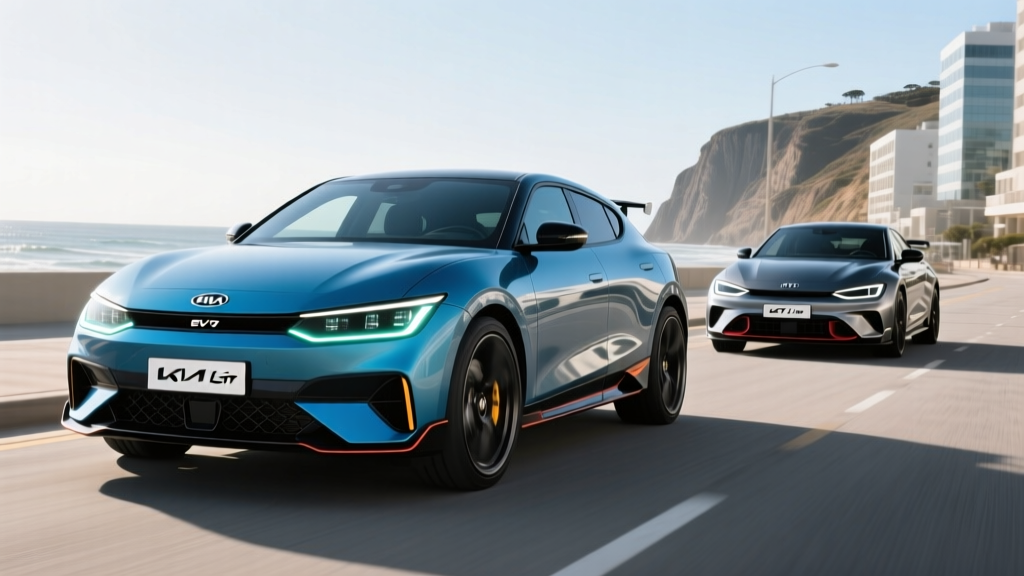
When you search for Kia electric hot hatch images, you're mostly looking at the Kia EV6 GT and GT-Line trims — Kia's performance-oriented variants of the EV6 crossover-hatch. These images showcase aggressive body cladding, dual-motor AWD powertrains, and sport-tuned suspensions. But photos don't reveal the numbers that matter: the EV6 GT delivers 576 horsepower, a 3.4-second 0-60 mph time, and a 206-mile EPA range from its 77.4 kWh (usable) NMC battery. The GT-Line offers a milder 320 hp with up to 282 miles EPA. Both ride on Hyundai Motor Group's E-GMP 800V architecture, enabling peak 240 kW DC fast charging and a 10-80% session in roughly 18 minutes under ideal conditions. Starting MSRP sits at $52,725 for the GT-Line AWD and $62,725 for the GT (2025 model year pricing; 2026 adjustments expected).
The EV6 GT and GT-Line: Kia's Hot Hatch Identity in Photos and Specs
Kia doesn't market a standalone "electric hot hatch" the way Mini does with the Cooper SE or the way the old VW Golf GTI defined the gas segment. Instead, Kia channels hot-hatch energy into the EV6 lineup's upper trims. Images of the EV6 GT reveal a lower, wider stance than the standard EV6, with distinctive front and rear bumpers, neon-green brake calipers, 21-inch alloy wheels, and a suede/vegan-leather sport interior with bucket seats. The GT-Line sits between the base Wind trim and the full GT, adding cosmetic aggression — unique wheels, gloss-black trim, and sport seats — without the GT's dual-motor power output.
Here's the spec breakdown that images alone can't convey:
| Specification | EV6 GT-Line AWD | EV6 GT |
|---|---|---|
| Powertrain | Dual-motor AWD | Dual-motor AWD |
| Horsepower | 320 hp | 576 hp |
| Torque | 446 lb-ft | 545 lb-ft |
| 0-60 mph | 5.1 sec | 3.4 sec |
| Battery (usable) | 77.4 kWh NMC | 77.4 kWh NMC |
| EPA Range | 282 mi | 206 mi |
| MPGe (combined) | 106 MPGe | 85 MPGe |
| Max DC Fast Charge | 240 kW (peak) | 240 kW (peak) |
| 10-80% DC Charge | ~18 min (ideal) | ~18 min (ideal) |
| Level 2 Charge Rate | 10.9 kW | 10.9 kW |
| Base MSRP | $52,725 | $62,725 |
| Battery Warranty | 10 yr / 100,000 mi | 10 yr / 100,000 mi |
The GT's 206-mile EPA range is the trade-off for its 576 hp output and performance-oriented tire compound. In real-world highway driving at 70-75 mph, expect roughly 175-190 miles before needing a charge. In cold weather (below 30°F), that figure can drop to 150-165 miles due to battery resistance and cabin heating load. The GT-Line's 282-mile EPA figure translates to approximately 240-260 real-world highway miles in moderate temperatures.
Real-World Range Reality Check
EV6 GT: EPA 206 mi → Expect ~175-190 mi highway (moderate temps), ~150-165 mi in cold weather.
EV6 GT-Line AWD: EPA 282 mi → Expect ~240-260 mi highway (moderate temps), ~210-230 mi in cold weather.
Source: fueleconomy.gov
EV6 GT vs. Gas Hot Hatches and Performance Crossovers: A Data Comparison
The images might suggest Kia is chasing the Golf GTI or the Toyota GR Corolla, but the EV6 GT competes more directly with performance crossovers like the Porsche Macan, BMW X3 M, and Tesla Model Y Performance. Let's compare the numbers:
| Metric | Kia EV6 GT | BMW X3 M40i | Toyota GR Corolla |
|---|---|---|---|
| Horsepower | 576 hp | 382 hp | 300 hp |
| 0-60 mph | 3.4 sec | 4.4 sec | 4.9 sec |
| EPA Range / Tank | 206 mi | ~380 mi | ~340 mi |
| Fuel/Energy Cost per Mile | ~$0.045 (home) | ~$0.16 | ~$0.13 |
| Annual Fuel/Energy (12k mi) | ~$540 | ~$1,920 | ~$1,560 |
| Starting MSRP | $62,725 | $61,495 | $37,595 |
| Maintenance (5-yr est.) | ~$1,800 | ~$5,200 | ~$3,800 |
The EV6 GT's energy cost advantage is substantial: at a national average residential electricity rate of ~$0.16/kWh and the GT's efficiency of roughly 36 kWh/100mi, home charging costs approximately $0.045 per mile. The BMW X3 M40i, requiring premium fuel at ~$4.20/gallon and averaging 24 mpg combined, costs about $0.16 per mile. Over 12,000 miles annually, that's a $1,380 per-year energy savings for the Kia.
Maintenance savings compound further. The EV6 GT has no oil changes, no transmission fluid, no spark plugs, and regenerative braking significantly extends pad life. Over five years, expect to spend roughly $1,800 on the Kia versus $5,200 on the BMW, based on typical dealer service schedules.
Charging the EV6 GT: What 800V Architecture Actually Means
One detail that images of the EV6 GT's charge port don't communicate is the significance of its 800-volt electrical architecture. Most EVs on the road operate on 400V systems. The E-GMP platform's 800V setup allows the EV6 GT to accept higher charge power without excessive current, which reduces heat and enables sustained fast charging.
| Charge Level | Power | Miles Added per Hour | Typical Use Case |
|---|---|---|---|
| Level 1 (120V) | ~1.4 kW | ~4-5 mi/hr | Emergency / overnight trickle |
| Level 2 (240V, 48A) | 10.9 kW | ~32-36 mi/hr | Home / workplace daily |
| DC Fast (350 kW station) | 240 kW peak | ~170 mi in 18 min (10-80%) | Road trips |
| DC Fast (150 kW station) | ~150 kW sustained | ~110 mi in 18 min (10-80%) | Common public chargers |
Critical nuance on the charge curve: The EV6 GT peaks at 240 kW only at low state-of-charge (typically 10-30%) and on a 350 kW-capable station. Above 60% SoC, the rate tapers significantly — expect ~80-100 kW in the 60-80% range. This means the published "18-minute 10-80%" figure assumes ideal thermal conditions and a high-power charger. At a more common 150 kW Electrify America or EVgo station, you'll see 10-80% in roughly 25-28 minutes.
For home charging, a Level 2 wallbox at 10.9 kW will replenish the 77.4 kWh battery from empty to full in approximately 7.5 hours — practical for overnight charging if you drive 40-60 miles daily.
Ownership Costs: Purchase, Charging, Insurance, and Depreciation
Looking at EV6 GT images is the easy part. Budgeting for ownership requires harder numbers.
| Cost Category | 5-Year Total | Notes |
|---|---|---|
| Purchase Price (MSRP) | $62,725 | Before incentives, taxes, fees |
| Federal Tax Credit (§30D) | Up to $7,500 | Subject to income, sourcing, and MSRP caps — see IRS rules |
| Home Level 2 Charger Install | $800 - $2,200 | Varies by panel capacity and run length |
| Energy (home, 60k mi total) | ~$2,700 | At $0.16/kWh, 36 kWh/100mi avg |
| Maintenance | ~$1,800 | Tire rotations, cabin filter, wipers, brake fluid |
| Insurance (est. avg) | ~$12,500 | ~$2,500/yr — performance EV premiums run 15-25% higher |
| Estimated Depreciation | ~$25,000 | ~40% over 5 years — performance EVs depreciate faster |
| Total (before credit) | ~$105,525 | |
| Total (with full credit) | ~$98,025 |
A few realities worth flagging:
- Federal tax credit eligibility is not guaranteed. Under current IRS §30D rules, the $7,500 credit requires meeting critical-mineral sourcing and battery-component manufacturing thresholds, buyer income caps ($150K single / $300K joint), and the vehicle must be under the $80,000 MSRP cap for SUVs (the EV6 is classified as an SUV by the IRS). The credit can now be transferred to the dealer at point of sale. Verify current-year eligibility on irs.gov before committing.
- Insurance costs more. The EV6 GT's 576 hp output and performance-EV repair costs push premiums higher than a comparable gas crossover. Get quotes before purchasing.
- Depreciation is steeper for performance EVs. The EV6 GT loses value faster than the standard Wind trim, partly because the range penalty (206 mi) limits its used-market appeal.
Common Misconceptions About the EV6 GT (and Hot-Hatch EVs Generally)
| Myth | Fact |
|---|---|
| "The EV6 GT has 300+ miles of range." | EPA-rated at 206 miles. Performance tires, dual-motor draw, and sport tuning reduce efficiency to 85 MPGe combined. |
| "It charges at 350 kW." | Peak rate is 240 kW, and only on a 350 kW-capable station at low SoC. Sustained rate is lower. |
| "It qualifies for the full $7,500 tax credit." | Eligibility depends on battery sourcing, buyer income, and annual IRS updates. Verify before purchase. |
| "It's a true hot hatch like a GTI." | At 4,700+ lbs, it's a performance crossover. The instant torque delivers GTI-rivaling acceleration, but the weight is felt in corners. |
| "I can charge it anywhere." | The EV6 uses the CCS1 connector. As Kia transitions to NACS for 2025+ models, adapter availability and Supercharger access vary by model year. |
What First-Time EV Buyers Should Know Before Choosing the EV6 GT
If the EV6 GT's images pulled you in, here's what you need to assess before signing:
1. Home charging access is essential. The EV6 GT's 206-mile range means public-charging-only ownership is stressful unless you live near reliable DC fast chargers and accept the time and cost premium. A Level 2 home charger is nearly mandatory. Budget $800-$2,200 for installation (equipment + licensed electrician + permit), and confirm your electrical panel has capacity for a 48-amp circuit.
2. Your commute dictates viability. A 50-mile round trip leaves roughly 150 miles of buffer — comfortable in moderate weather, tight in sub-freezing climates. If your daily drive exceeds 80 miles, the GT-Line's 282-mile range is the more practical choice.
3. Cold weather is real. The NMC battery in the EV6 GT loses roughly 15-25% of its range in sustained below-freezing temperatures. Kia includes a battery preconditioning feature for DC fast charging — use it. Preconditioning warms the battery to optimize charge acceptance, cutting 10-80% times by several minutes in winter.
4. The GT's ride is firm. Sport-tuned adaptive dampers and 21-inch wheels with low-profile tires mean you'll feel road imperfections more than in the Wind or GT-Line trims. Test-drive on roads you actually commute on, not just smooth dealer lots.
Decision Framework: Which EV6 Trim Is Right for You?
- Choose the EV6 GT if: You prioritize sub-4-second acceleration, track-day capability, and accept a ~200-mile real-world range as the trade-off. You have reliable home Level 2 charging and a daily commute under 60 miles.
- Choose the EV6 GT-Line AWD if: You want the sporty aesthetic and AWD traction with a more livable 282-mile EPA range and 320 hp. You value daily usability over maximum performance.
- Choose the EV6 Wind RWD if: Range and value are your top priorities. The Wind RWD offers up to 310 miles EPA at a significantly lower MSRP, with the same E-GMP charging architecture.
- Look elsewhere if: You need 300+ miles of range, you lack home charging access, or you regularly drive in rural areas with sparse DC fast-charging infrastructure.
Where to Find Reliable EV6 GT Images and Specs
For official high-resolution images and accurate specifications, refer to Kia's official EV6 page. For independent efficiency and range data, the EPA's fueleconomy.gov database provides verified numbers by trim. Safety ratings are available through NHTSA and IIHS.
Is the Kia EV6 GT actually a hot hatch?
Functionally, it's a performance crossover-hatch. At 4,700 lbs, it's heavier than traditional hot hatches (the Golf GTI weighs ~3,150 lbs), but its 576 hp and 3.4-second 0-60 deliver hot-hatch-rivaling straight-line performance. The hatchback cargo area (24.4 cu ft behind rear seats) adds practicality that pure hot hatches lack.
What connector does the EV6 GT use for charging?
The 2024-2025 EV6 GT uses a CCS1 connector for DC fast charging and a J1772 inlet for Level 2. Kia has announced a transition to the NACS (Tesla) connector for future model years, but current EV6 GT owners will need a CCS-to-NACS adapter to access Tesla Supercharger stations where permitted.
Does the EV6 GT qualify for the $7,500 federal tax credit?
It may, but eligibility depends on current-year IRS §30D requirements: buyer income caps ($150K single, $300K joint filing), the vehicle's MSRP must be under $80,000 (the EV6 is classified as an SUV), and the battery must meet critical-mineral and component-sourcing thresholds that change annually. Always verify on irs.gov and consult a tax professional before relying on the credit.
How long does the EV6 GT battery last?
Kia warrants the battery for 10 years or 100,000 miles against capacity loss below 70%. Based on NMC chemistry degradation data from the E-GMP platform, most owners can expect 85-90% capacity retention at 100,000 miles under normal use. Avoid routinely charging to 100% or leaving the vehicle at very low SoC for extended periods to maximize longevity.
Can I daily-drive a 206-mile-range EV?
Yes, if your daily round trip is under 60-70 miles and you charge at home overnight. The average American drives ~37 miles per day, which the EV6 GT handles easily with significant buffer. Range becomes a concern primarily on road trips exceeding 180 miles, where you'll need to plan at least one DC fast-charge stop.