The Real Price Behind Kia EV6 Deals in 2026
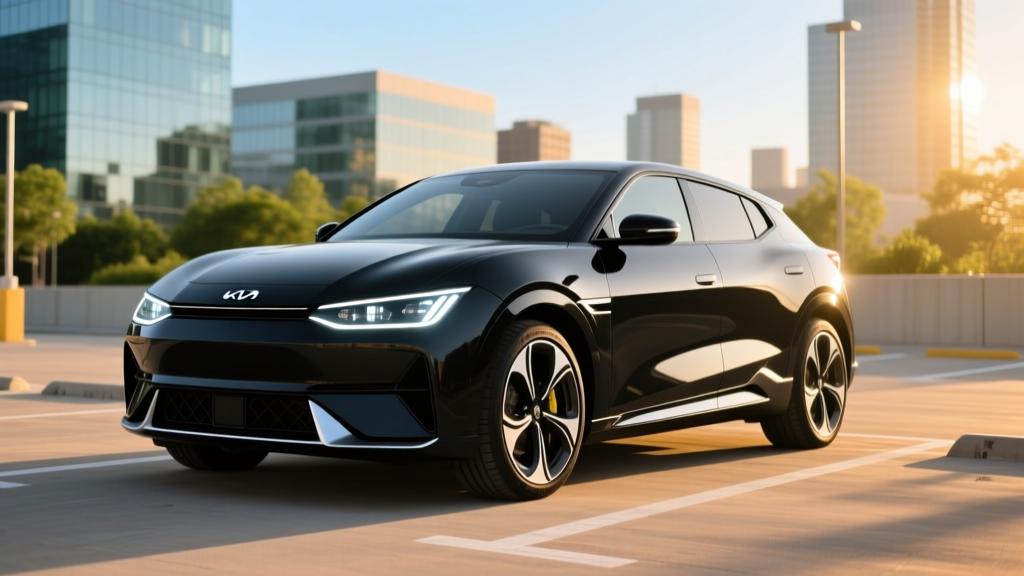
Search for Kia EV6 deals and you'll find lease specials, dealer discounts, and headlines about the $7,500 federal tax credit. But a compelling monthly payment doesn't tell you what the EV6 actually costs to own over five years. The 2026 Kia EV6 — now equipped with the NACS charge port as standard and refreshed styling — starts at $42,900 MSRP for the Light RWD trim and climbs to $61,600 for the GT. Before you sign, you need the full picture: electricity versus gasoline at the pump, insurance premiums that run 15-25% higher than comparable ICE crossovers, maintenance savings from regenerative braking, and depreciation curves that have stabilized but still lag Toyota's best.
This guide runs the numbers on the volume-selling 2026 EV6 Wind AWD ($48,500 MSRP, 77.4 kWh usable NMC battery, EPA 282 miles, 320 hp) against a similarly priced gas crossover, the Hyundai Tucson AWD ($35,500 MSRP, 28 MPG combined). We'll map out exactly which buyers qualify for the §30D credit at point of sale, where state and utility incentives stack on top, and what your five-year total cost of ownership actually looks like.
5-Year Total Cost of Ownership: EV6 Wind AWD vs Gas Crossover
Total cost of ownership (TCO) is where EV deals either pay off or quietly bleed money. Below is a five-year/75,000-mile projection for the 2026 Kia EV6 Wind AWD versus a well-equipped gas AWD crossover. Assumptions: 15,000 miles/year, home Level 2 charging at the U.S. average residential rate of $0.16/kWh, gasoline at $3.45/gallon, and the EV6 buyer qualifying for the full $7,500 §30D credit applied at point of sale.
| Category | 2026 EV6 Wind AWD | Gas AWD Crossover |
|---|---|---|
| Purchase Price (MSRP) | $48,500 | $35,500 |
| Federal §30D Credit (at POS) | -$7,500 | $0 |
| Net Effective Purchase | $41,000 | $35,500 |
| Fuel / Electricity (5 yr) | $4,875 | $9,250 |
| Maintenance (5 yr) | $1,650 | $4,100 |
| Insurance (5 yr) | $11,250 | $8,750 |
| Estimated Depreciation | -$21,500 | -$15,000 |
| Net 5-Year Cost | $37,275 | $42,600 |
Verdict: With the full $7,500 credit applied, the EV6 Wind AWD comes out roughly $5,300 ahead over five years despite a higher sticker, higher insurance, and steeper depreciation. Without the credit — or if you're pushed into DC fast charging at $0.40+/kWh on the road — that advantage narrows or disappears. Your mileage, literally and financially, will vary.
Federal Tax Credit: Do You Actually Qualify for §30D?
The IRS §30D Clean Vehicle Credit is the single biggest lever in any Kia EV6 deal, but it is not automatic. For 2026, the credit remains up to $7,500 — split into two $3,750 halves tied to battery-component manufacturing and critical-mineral sourcing requirements. The 2026 EV6, built in West Point, Georgia, with a U.S.-sourced battery pack, currently qualifies for the full $7,500 for eligible buyers. Here is the checklist:
- MSRP Cap: The EV6 must sticker at or below $80,000 for SUVs (the EV6 is classified as an SUV by the IRS). All 2026 trims — Light ($42,900), Wind ($46,100 RWD / $48,500 AWD), GT-Line ($53,500), and GT ($61,600) — clear this cap.
- Buyer Income Cap (AGI): Modified adjusted gross income must not exceed $150,000 single, $225,000 head of household, or $300,000 married filing jointly. Check your prior-year or current-year AGI — whichever is lower.
- Battery Sourcing: At least a set percentage of critical minerals must be U.S.-sourced or from a free-trade-agreement partner. Kia confirms the 2026 U.S.-built EV6 meets both halves of the requirement.
- Point-of-Sale Transfer: As of 2024, you can transfer the credit to the dealer at purchase, reducing your out-of-pocket cost on day one instead of waiting for a tax refund. The dealer must be IRS-registered.
- New Vehicle, Original Use: You must be the first registered owner; the car cannot have been previously titled.
- One Credit Per Taxpayer Per Year: You cannot claim §30D on more than one new EV in the same tax year.
Caveat: Sourcing rules and eligible-vehicle lists have shifted multiple times since 2023. Always verify the EV6's current status on the fueleconomy.gov §30D lookup before signing, and consult a tax professional if your income is near the cap.
State, Local, and Utility Incentives That Stack on Top
The federal credit is the headline, but stacking state and utility incentives is where the best Kia EV6 deals materialize. These vary dramatically by ZIP code and change frequently — always verify current programs before purchase.
- Colorado: Up to $5,000 state tax credit for EVs under $80,000 MSRP, stackable with §30D.
- California (CVRP): Income-restricted rebates up to $7,000 for qualifying buyers; utility rebates (PG&E, SCE) of $500-$1,500 for home charger install.
- Massachusetts (MOR-EV): Up to $3,500 rebate at point of sale.
- New York (Drive Clean): Point-of-sale rebate up to $2,000 (income and price caps apply).
- Utility Home Charger Rebates: Many municipal utilities (Austin Energy, SMUD, Xcel Energy) offer $300-$1,000 toward Level 2 hardware and installation — check the AFDC state-laws database for your ZIP.
A buyer in Colorado stacking the $7,500 federal credit, $5,000 state credit, and a $500 utility charger rebate on a $48,500 EV6 Wind AWD effectively pays $35,500 — undercutting the gas crossover on purchase price alone.
Charging vs Gasoline: The Per-Mile Math
The EV6 Wind AWD is EPA-rated at 117 MPGe combined (roughly 29 kWh/100 miles). At the U.S. average residential electricity rate of $0.16/kWh, that translates to about $0.046 per mile on home charging. The 28 MPG combined gas crossover at $3.45/gallon costs $0.123 per mile. Here's how that scales:
| Scenario | EV6 (per mile) | Gas Crossover (per mile) | Annual Savings (15k mi) |
|---|---|---|---|
| 100% Home Level 2 ($0.16/kWh) | $0.046 | $0.123 | $1,155 |
| 50% Home / 50% DCFC ($0.40/kWh) | $0.082 | $0.123 | $615 |
| 100% DC Fast Charging ($0.48/kWh) | $0.139 | $0.123 | -$240 |
The critical insight: EV fuel savings depend almost entirely on where you charge. Home charging delivers a decisive advantage. If your living situation forces you onto DC fast chargers as your primary fuel source — common in apartment-heavy cities — the EV6 actually costs more per mile than gasoline. This is the #1 deal-breaker for would-be EV buyers that dealer brochures gloss over.
For road trips, the EV6's 800V architecture allows a peak charge rate of 240 kW on 350 kW CCS/NACS stations, delivering a 10-80% charge in approximately 18 minutes. Note that sustained rate is lower — expect ~140 kW average across the 10-80% window due to charge-curve taper above 60% SoC.
Maintenance Savings: Where the EV6 Quietly Wins
Electric drivetrains eliminate oil changes, spark plugs, timing belts, and most of the fluid services that add up on gas vehicles. Regenerative braking — particularly strong in the EV6's i-Pedal one-pedal mode — cuts brake pad wear by 50-70% in typical driving.
| Service | EV6 Cost | Gas Crossover Cost |
|---|---|---|
| Oil Changes | $0 | $600 |
| Brake Pads (front & rear) | $350 | $900 |
| Transmission / Coolant Service | $150 | $450 |
| Tire Rotation & Replacement | $900* | $800 |
| Cabin Air, Wipers, Misc. | $250 | $350 |
| Total | $1,650 | $3,100+ |
*Tire note: The EV6's instant torque and heavier curb weight (~4,500 lb) wear tires 15-25% faster than equivalent gas crossovers. Budget for EV-specific touring tires (Michelin Pilot Sport EV, Hankook iON) at $250-$320 per corner.
Kia's warranty backs the EV6's battery and drive motors for 10 years / 100,000 miles, with a capacity-retention threshold of 70% State of Health — if the pack degrades below that within the warranty window, Kia replaces or remediates it. The basic vehicle warranty is 5 years / 60,000 miles.
Insurance Reality: The Cost EV Buyers Underestimate
EV insurance premiums are structurally higher than gas-vehicle premiums, and the EV6 is no exception. Industry data from the Insurance Information Institute and carrier filings place the 2026 EV6 Wind AWD at an average annual premium of $2,250 nationally, versus roughly $1,750 for the comparable gas crossover — a $500/year gap, or $2,500 over five years.
Why the premium? Three factors: (1) higher MSRP means higher comprehensive/collision payouts, (2) EV repair after collision requires high-voltage-certified technicians and OEM battery handling protocols, and (3) parts supply chains for EV-specific components (battery trays, power electronics) remain less mature. The gap has narrowed since 2022 as more body shops earn EV certification, but it persists.
Cost-cutting tips: Get quotes from at least three carriers before purchase. Insurers like Geico, Progressive, and USAA (if eligible) often discount EVs 5-10%. Bundling home/auto and raising deductibles from $500 to $1,000 can shave $200-$400/year. Some carriers offer specific EV endorsements that cover home-charger replacement — worth asking about.
Depreciation and Resale: EVs Are Stabilizing, Not Collapsing
Early EV depreciation was brutal — first-generation Nissan Leafs and Bolts shed 60%+ of value in three years. The 2024-2025 price wars and Tesla's aggressive cuts dragged used-EV values down further. As of 2026, the market has largely stabilized, but EVs still depreciate faster than segment-leading gas vehicles like the RAV4 Hybrid.
Current projections from Kelley Blue Book and Recurrent Auto place the 2026 EV6 Wind AWD at a ~44% retained value after 5 years / 75,000 miles, or roughly $21,500 residual. The gas crossover holds closer to 58%, or $20,500. In absolute dollars the gap is narrow (~$1,000), but as a percentage, EV depreciation remains steeper — driven by faster tech obsolescence (newer models with 350+ mile range, faster charging) and lingering used-buyer anxiety about battery health.
Factors that help the EV6 hold value: its 800V architecture (future-proofing for faster chargers), the 10-year battery warranty that transfers to second owners, and Kia's strong brand reputation. Factors that hurt: the switch to NACS means 2022-2023 CCS-equipped used EV6s now require an adapter for Tesla Superchargers, softening demand for older model years.
Frequently Asked Questions
How much does it really cost to own a 2026 Kia EV6 over 5 years?
For the EV6 Wind AWD with the full $7,500 §30D credit applied at purchase, our model shows a net 5-year cost of approximately $37,275 including depreciation, fuel, insurance, and maintenance — about $5,300 less than a comparably equipped gas AWD crossover over the same period. Without the credit, the EV6 costs roughly $2,200 more to own. Your specific numbers depend on local electricity rates, insurance ZIP code, and annual mileage.
Do I qualify for the federal tax credit on the 2026 EV6?
You likely qualify if your modified AGI is under $150,000 (single) or $300,000 (married filing jointly), and the vehicle's MSRP is under $80,000 — both conditions all 2026 EV6 trims and most buyers meet. The 2026 U.S.-built EV6 currently satisfies battery-sourcing and critical-mineral requirements for the full $7,500. Verify current eligibility on fueleconomy.gov and consult a tax professional, as rules and eligible-vehicle lists can shift.
How much do I save on fuel and maintenance vs a gas car?
With 100% home charging at $0.16/kWh, the EV6 costs about $0.046/mile versus $0.123/mile for a 28 MPG gas crossover — a savings of roughly $1,155 per year at 15,000 miles. Maintenance savings add another ~$500/year. Combined, you save approximately $1,650/year, or $8,250 over five years, assuming home charging. Heavy reliance on DC fast charging erases the fuel savings.
Are EVs more expensive to insure than gas vehicles?
Yes. Expect to pay 15-25% more for the same coverage on an EV6 versus a gas crossover — roughly $500/year more nationally. The reasons are higher replacement cost, specialized high-voltage repair requirements, and EV-specific parts supply chains. Shopping multiple carriers and raising deductibles can offset some of this gap.
How well does the Kia EV6 hold its value?
The 2026 EV6 Wind AWD is projected to retain approximately 44% of MSRP after 5 years / 75,000 miles, which is competitive among mainstream EVs but trails top gas crossovers (55-60%). The 10-year/100,000-mile battery warranty and 800V architecture help support resale. Buying at a lower trim with the tax credit applied maximizes your equity position at trade-in or sale.
Is home charging required to make the EV6 financially worthwhile?
Not strictly required, but financially decisive. If more than 50% of your charging happens on DC fast chargers at $0.35-$0.50/kWh, your per-mile cost rises to $0.08-$0.14, erasing most or all of the fuel-cost advantage over gasoline. Apartment dwellers without access to Level 2 charging should consider a PHEV (like the Kia Sportage PHEV) instead, or negotiate building management for charger installation before committing to a BEV.
Does the EV6 qualify for HOV lane access?
In most states with HOV-lane incentive programs (California, Colorado, Virginia, Maryland), the EV6 qualifies for clean-air decals or plates granting single-occupant HOV access. California's Clean Air Vehicle decadal program has specific income and application requirements — check your state DMV for current rules and expiration dates.
Bottom Line: When a Kia EV6 Deal Is Actually a Deal
A compelling Kia EV6 deal in 2026 requires three conditions to align: (1) you qualify for and apply the $7,500 §30D credit at point of sale, (2) you have reliable access to home or workplace Level 2 charging at residential electricity rates, and (3) your insurance quotes come in within 20% of your current gas-vehicle premium. When all three hold, the EV6 Wind AWD delivers a five-year TCO roughly $5,000 lower than a comparable gas crossover, with dramatically better daily driving refinement, instant torque, and one-pedal regenerative braking.
When one or more of those conditions fails — you exceed the income cap, you live in an apartment without charging access, or your insurance ZIP codes push premiums above $2,800/year — the math tilts back toward a hybrid like the Sportage HEV or a fuel-efficient gas crossover. Run your own numbers using your local utility rate, your insurance quote, and the current IRS §30D guidance before signing. The best EV deal is the one that survives a spreadsheet.