Quick Verdict: The EV6 Earns Its Spot in the Crossover EV Market
The Kia EV6 remains one of the most capable electric crossovers on the market heading into the 2026 model year. Built on Hyundai Motor Group's E-GMP platform with an 800-volt electrical architecture, it delivers class-leading DC fast-charging speeds, a usable EPA range of up to 310 miles, and a cabin that punches above its price class in material quality. For 2026, Kia has refreshed the palette, tweaked the battery management software for slightly better cold-weather performance, and added a new GT-Line exterior appearance package. But the real question buyers are asking isn't just about paint — it's whether the EV6 still holds up against the Tesla Model Y, Hyundai Ioniq 5, and Ford Mustang Mach-E in range, charging, and total ownership cost. Here's the full data.
2026 Kia EV6 Colors: The Full Exterior & Interior Palette
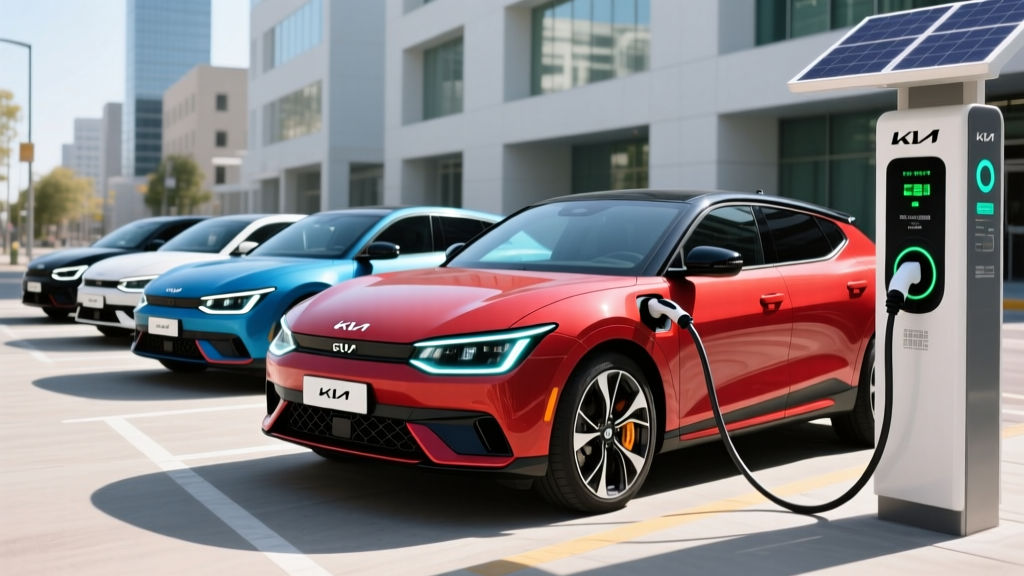
Color selection is one of the most-searched topics for EV6 shoppers, and for 2026 Kia has streamlined the lineup while adding two new options. Here's what's available across trims:
| Exterior Color | Available Trims | Cost |
|---|---|---|
| Snow White Pearl | Light, Wind, GT-Line, GT | Standard |
| Panthera Metal | Light, Wind, GT-Line | Standard |
| Glacier White Pearl Matte | GT-Line, GT | $695 |
| Runway Red | Wind, GT-Line, GT | $395 |
| Moonscape Matte Gray (NEW) | GT-Line, GT | $695 |
| Aurora Black Pearl | All trims | $395 |
| Yacht Blue (NEW) | Wind, GT-Line | $395 |
| Gravity Blue Matte | GT only | $695 |
| Ascot Green | Light, Wind | $395 |
Interior colorways are trim-dependent: the Light trim comes with a Black or Gray cloth/leatherette mix, Wind adds Black or Gray leather, GT-Line offers Black with white accent stitching or a Terracotta Brown option, and the GT gets exclusive Black with Neon Green stitching and suede inserts.
Buyer tip: Matte finishes (Glacier White, Moonscape Gray, Gravity Blue) require hand-washing and specific care products — avoid automatic brush car washes. If you use touchless or hand-wash services regularly, the standard pearl and metallic finishes are more practical long-term.
Range, Battery & Real-World Efficiency
The 2026 EV6 continues with the same E-GMP platform battery options, but software calibration for 2026 yields marginally improved efficiency figures on the Light and Wind trims.
| Spec | EV6 Light (RWD) | EV6 Wind / GT-Line (AWD) | EV6 GT (AWD) |
|---|---|---|---|
| Battery (usable) | 58.0 kWh (Standard Range) / 77.4 kWh (Long Range) | 77.4 kWh | 77.4 kWh |
| Chemistry | NMC 811 | NMC 811 | NMC 811 |
| EPA Range | 232 mi (SR) / 310 mi (LR RWD) | 282 mi | 206 mi |
| MPGe (combined) | 117 MPGe (LR RWD) | 106 MPGe | 85 MPGe |
| kWh/100 mi | 29 (LR RWD) | 32 | 40 |
| Horsepower | 167 hp (SR) / 225 hp (LR) | 320 hp | 576 hp |
| 0–60 mph | 7.3 sec (LR RWD) | 5.1 sec | 3.4 sec |
| Drivetrain | RWD, single motor | Dual-motor AWD | Dual-motor AWD |
Real-World Range Expectations
EPA sticker: 310 miles (Long Range RWD)
Expect in practice: 260–280 miles on mixed highway driving at 70–75 mph. In sustained cold weather (below 30°F), plan for 200–230 miles unless you precondition the battery while plugged in. The AWD Wind trim's real-world highway range drops to roughly 235–255 miles. The GT, with its performance-oriented tuning, averages around 170–190 miles on the highway.
Kia's 2026 battery management update improves cold-soak preconditioning slightly — the car now begins warming the pack at a lower temperature threshold when a DC fast-charger is set as your navigation destination. This helps, but doesn't eliminate, winter range loss.
Charging Speed: DC Fast, Level 2 & Home Setup
The EV6's 800-volt architecture remains its most significant technical advantage over competitors still running 400-volt systems (like the Ford Mustang Mach-E and Volkswagen ID.4). Here's the full charging breakdown:
| Charging Level | Power | Time / Rate | Connector |
|---|---|---|---|
| Level 1 (120V household) | ~1.4 kW | ~3–4 mi/hr added | J1772 (via adapter) |
| Level 2 (240V home) | 10.9 kW max onboard | ~32–36 mi/hr; full charge in ~7.5 hr (77.4 kWh) | J1772 / CCS1 |
| DC Fast Charge | 240 kW peak | 10–80% in ~18 min (under ideal conditions) | CCS1 (NACS via adapter) |
| DC Fast (50 kW station) | 50 kW | 10–80% in ~60 min | CCS1 / CHAdeMO |
Charging-curve reality check: The "240 kW peak" figure is just that — a peak. In real-world testing at Electrify America 350 kW dispensers, the EV6 sustains roughly 200–230 kW from 10% to about 55% state of charge, then tapers progressively: ~150 kW to 70%, ~90 kW to 80%, and drops below 50 kW above 85%. The 18-minute 10–80% claim assumes a warm battery (above 68°F), a capable 150+ kW charger, and starting at or below 10% SoC. In colder conditions without adequate preconditioning, expect 10–80% to take 25–35 minutes.
Home charging setup: The EV6's 10.9 kW onboard charger is one of the fastest in its class (the Model Y accepts 11.5 kW on a 48-amp circuit; the Ioniq 5 matches at 10.9 kW). On a standard 40-amp Level 2 home charger (the most common residential install), you'll see about 9.6 kW and wake up to a full battery every morning for under 8 hours of charging. Budget $800–$2,000 for a quality Level 2 home station and professional installation, with the high end accounting for a possible 200-amp panel upgrade.
Pricing, Trims & Federal Tax Credit Eligibility
2026 Kia EV6 pricing starts at $42,900 for the Light Standard Range and climbs to $61,600 for the GT. Here's the trim-by-trim breakdown with estimated post-credit pricing:
| Trim | MSRP | Est. After §30D Credit* | Destination |
|---|---|---|---|
| Light SR (RWD) | $42,900 | $35,400 | $1,375 |
| Light LR (RWD) | $46,500 | $39,000 | $1,375 |
| Wind (AWD) | $51,200 | $43,700 | $1,375 |
| GT-Line (AWD) | $54,800 | $47,300 | $1,375 |
| GT (AWD) | $61,600 | $54,100 | $1,375 |
*Estimated after-credit prices assume full $7,500 federal §30D credit eligibility. See tax-credit checklist below.
Federal §30D Tax Credit Checklist (2026 Rules)
- Vehicle MSRP cap: SUVs/crossovers must be under $80,000 — all EV6 trims qualify ✓
- Buyer income cap: Modified AGI ≤ $150,000 (single) / $300,000 (joint) / $225,000 (head of household)
- Battery sourcing: Critical minerals and battery components must meet phased-in percentage thresholds per IRS guidelines. Kia has confirmed 2026 EV6 models assembled at the Hyundai Motor Group Metaplant America (HMGMA) in Georgia meet current sourcing requirements, but always verify your specific VIN at the DOE's fueleconomy.gov before purchasing.
- Point-of-sale transfer: As of 2024, the credit can be transferred to the dealer at purchase, reducing your out-of-pocket cost immediately — you don't have to wait until tax filing.
- State incentives: Many states offer additional rebates ($1,000–$7,500) on top of federal credits. Check your state's energy office for current programs.
Interior, Cargo & Standout Technology
The EV6's cabin is where Kia makes its strongest value case. The dual 12.3-inch curved display panel dominates the dash, running Kia's latest Connect infotainment with wireless Apple CarPlay and Android Auto, over-the-air updates, and a digital key feature that lets you use your smartphone as a key fob.
Dimensions & Space
- Cargo (rear seats up): 24.4 cu ft
- Cargo (rear seats folded): 50.2 cu ft
- Front trunk (frunk): 0.7 cu ft (AWD) / 1.8 cu ft (RWD) — enough for a charging cable bag, not a suitcase
- Rear legroom: 39.4 inches
- Front legroom: 41.7 inches
- Wheelbase: 114.2 inches — longer than the Ioniq 5, which translates to slightly more rear-seat room
Standout Tech Features
- Vehicle-to-Load (V2L): The EV6 can power external devices up to 3.6 kW via an interior outlet and an exterior V2L adapter — enough to run a space heater, charge e-bikes, or power camping gear.
- Highway Driving Assist 2 (HDA2): Kia's Level 2 ADAS includes adaptive cruise with stop-and-go, lane-centering, and automatic lane-change assist. It's competent but requires hands-on-wheel attention — this is not a self-driving system.
- Remote Smart Parking Assist: On Wind and above, you can move the EV6 in and out of tight spaces using the key fob while standing outside the car.
- Augmented reality head-up display: Available on GT-Line and GT, projecting navigation arrows onto the windshield in your line of sight.
- 800V electrical architecture: Enables both ultra-fast DC charging and the V2L feature — a platform advantage over 400V rivals.
Notable Drawbacks
- Touch-sensitive climate controls: The haptic-touch panel below the main screens is fiddly to operate while driving. Physical knobs would be a welcome improvement.
- Rear visibility: The sloping roofline and thick C-pillars create a significant blind spot. The digital rearview mirror (available on GT-Line/GT) helps, but isn't standard on lower trims.
- Frunk size: At 0.7 cu ft on AWD models, the front trunk is nearly useless for storage — a missed opportunity given the platform's capability.
- GT ride quality: The performance GT's stiff suspension and 21-inch wheels transmit road imperfections noticeably. It's a trade-off for the handling.
Pros, Cons & Who Should Buy the EV6
Pros
- Best-in-class DC fast-charging speed (240 kW, 10–80% in ~18 min)
- 310-mile EPA range on the Long Range RWD
- 800V architecture enables V2L and future-proofs charging
- Spacious rear seat (39.4" legroom) with flat floor
- Strong 10-year/100,000-mile powertrain warranty
- Competitive pricing after federal tax credit
- Distinctive design stands out in a sea of rounded crossovers
Cons
- Touch-sensitive climate controls frustrate while driving
- Tiny frunk, especially on AWD trims
- GT's range (206 mi EPA) is poor for the price
- Rear visibility compromised by roofline design
- Some competitors offer more cargo volume (Model Y: 30.2 cu ft rear-up)
- No LFP battery option — NMC chemistry requires 20–80% daily charging discipline
Who the EV6 Suits Best
Commuters and road-trippers: The Long Range RWD (Light or Wind) is the sweet spot — 310 miles EPA, efficient at 29 kWh/100 mi, and the 240 kW charging makes 200-mile highway legs a 15-minute stop. If you commute under 60 miles daily and charge at home, you'll rarely visit a public charger.
Small families: Rear seat room is generous, and 24.4 cu ft of cargo handles strollers and groceries. For families needing maximum cargo space, the Hyundai Ioniq 5 (with its boxier shape) or Tesla Model Y edge ahead.
Performance seekers: The GT's 3.4-second 0–60 is thrilling, but the 206-mile range and stiff ride make it a weekend car, not a daily driver for most buyers.
Towing: The AWD trims are rated for 2,700 lbs (braked) — enough for a small utility trailer or a pair of jet skis, but not a camper. If towing is a priority, the Ford F-150 Lightning or Rivian R1S are better options.
Warranty & Long-Term Battery Outlook
Kia backs the 2026 EV6 with one of the strongest warranty packages in the EV segment:
- Basic warranty: 5 years / 60,000 miles
- Powertrain warranty: 10 years / 100,000 miles
- Battery warranty: 10 years / 100,000 miles, guaranteeing ≥70% capacity retention (per Kia's official coverage page)
The NMC 811 chemistry in the EV6 is well-proven across Hyundai Motor Group's EV fleet. Long-term data from Ioniq 5 and EV6 owners (the platform launched for the 2022 model year) shows typical degradation of 5–8% over the first 60,000 miles, with the curve flattening significantly after that. To maximize battery longevity, Kia recommends keeping daily charge between 20% and 80% using the built-in charge-limit setting, and using DC fast charging sparingly — reserve it for road trips, not daily top-ups.
Full battery replacement cost, if needed out of warranty, is estimated at $12,000–$18,000 depending on the pack size, based on current parts pricing. However, with the 10-year/100,000-mile warranty and the 70% retention guarantee, most original owners will never face this expense.
EV6 vs. Key Competitors: Quick Comparison
| Spec | 2026 Kia EV6 LR RWD | 2026 Hyundai Ioniq 5 RWD | 2026 Tesla Model Y LR AWD | 2026 Ford Mach-E ER RWD |
|---|---|---|---|---|
| EPA Range | 310 mi | 303 mi | 308 mi | 320 mi |
| Peak DC Charge | 240 kW | 240 kW | 250 kW | 150 kW |
| 10–80% DCFC | ~18 min | ~18 min | ~25 min | ~38 min |
| 0–60 mph | 7.3 sec | 7.4 sec | 4.8 sec | 6.1 sec |
| Base MSRP (comparable trim) | $46,500 | $45,850 | $48,990 | $45,995 |
| Cargo (rear seats up) | 24.4 cu ft | 27.2 cu ft | 30.2 cu ft | 29.7 cu ft |
| V2L | Yes (3.6 kW) | Yes (3.6 kW) | No | No |
| Battery Warranty | 10 yr / 100k mi | 10 yr / 100k mi | 8 yr / 120k mi | 8 yr / 100k mi |
The EV6's closest sibling, the Ioniq 5, shares the E-GMP platform and matches it on charging speed and powertrain warranty. The Ioniq 5 wins on cargo volume and slightly lower pricing, while the EV6 offers a longer wheelbase (more rear legroom), sportier styling, and V2L as standard on more trims. The Tesla Model Y leads in Supercharger network access and cargo space but charges slower and lacks V2L. The Mach-E trails significantly on DC fast-charging speed — a major road-trip disadvantage.
Frequently Asked Questions
What is the real-world range of the 2026 Kia EV6?
The Long Range RWD carries a 310-mile EPA estimate. In real-world highway driving at 70–75 mph, expect 260–280 miles. In cold weather (below 30°F) without preconditioning, plan for 200–230 miles. The AWD Wind trim delivers roughly 235–255 real-world highway miles.
How fast does the EV6 charge at home and on DC fast chargers?
On a Level 2 home charger (240V, 40-amp circuit), the EV6 charges at up to 10.9 kW, adding roughly 32–36 miles of range per hour — a full 77.4 kWh battery charges overnight in about 7.5 hours. On a DC fast charger, it peaks at 240 kW and can go from 10% to 80% in approximately 18 minutes under ideal conditions (warm battery, capable 150+ kW charger).
How much does the 2026 Kia EV6 cost after tax credits?
The Light SR starts at $42,900 MSRP. If you qualify for the full $7,500 federal §30D credit (income and battery-sourcing requirements met), your effective price drops to $35,400. The popular Wind AWD trim is $51,200 before credit, approximately $43,700 after. Always verify your specific VIN's credit eligibility at fueleconomy.gov before purchasing.
Does the 2026 Kia EV6 qualify for the federal EV tax credit?
All EV6 trims fall under the $80,000 MSRP cap for SUVs/crossovers. Eligibility for the full $7,500 depends on your income (≤$150k single / ≤$300k joint), the vehicle's battery sourcing compliance with current critical-mineral thresholds, and purchasing new from a dealer. Kia's Georgia-built 2026 EV6 models are expected to qualify, but confirm at the point of sale — the credit can now be transferred to the dealer for an instant price reduction.
Is the Kia EV6 worth buying vs. the Tesla Model Y or Hyundai Ioniq 5?
The EV6 is worth serious consideration if you prioritize fast DC charging, a premium interior, V2L capability, and a long powertrain warranty. Choose the Ioniq 5 if cargo volume and slightly lower pricing matter more. Choose the Model Y if Supercharger network access and maximum cargo space are your top priorities. The EV6's 800V charging advantage is most valuable for road-trippers who rely on public DC fast chargers.
What Kia EV6 colors are new for 2026?
For 2026, Kia adds Moonscape Matte Gray (available on GT-Line and GT) and Yacht Blue (available on Wind and GT-Line). The Gravity Blue Matte remains GT-exclusive. These join carryover colors including Snow White Pearl, Aurora Black Pearl, Runway Red, Panthera Metal, Ascot Green, and Glacier White Pearl Matte.