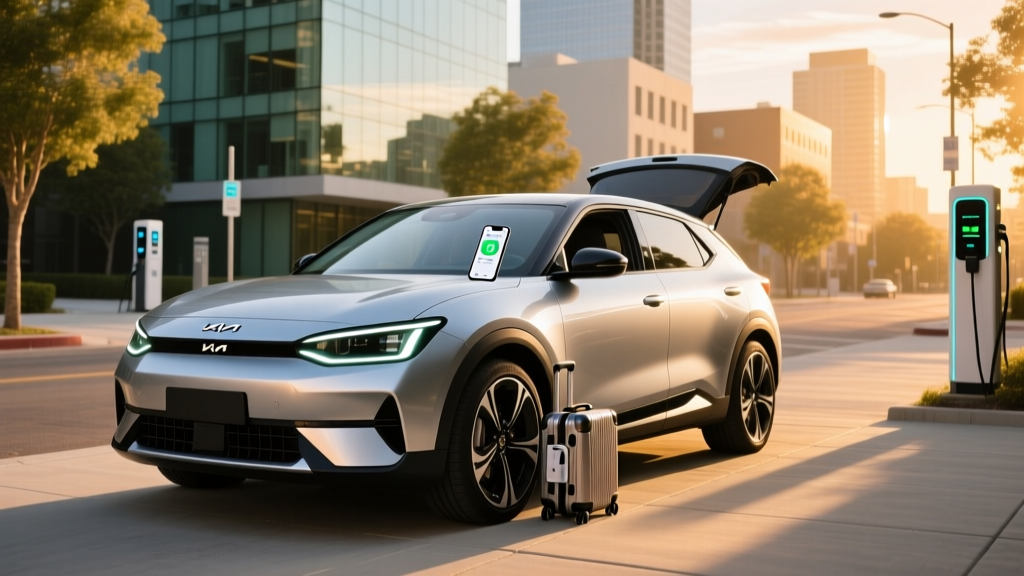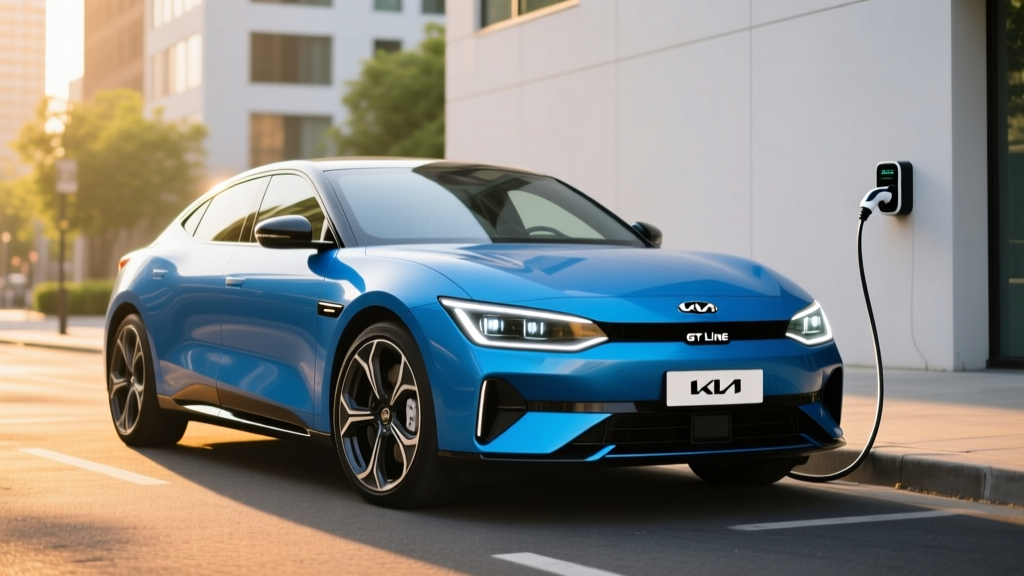
If you've been searching for a midsize electric crossover that blends striking design, rapid charging, and genuine practicality, the Kia EV6 has likely landed on your shortlist. But with multiple trims, shifting incentive rules, and the gap between EPA estimates and real-world driving, figuring out the true cost of ownership requires more than a glance at the sticker price.
This guide breaks down exactly how much a 2026 Kia EV6 costs across every trim, what you'll actually pay after federal tax credits, and whether the numbers add up against rivals like the Hyundai Ioniq 5, Tesla Model Y, and Ford Mustang Mach-E.
2026 Kia EV6 Pricing by Trim Level
The 2026 Kia EV6 carries over the refreshed styling and upgraded infotainment introduced for the 2025 model year, with minor pricing adjustments. Here's what each trim costs before destination charges, incentives, or dealer add-ons:
| Trim | Drivetrain | Battery | MSRP (before destination) | Destination | Total Starting Price |
|---|---|---|---|---|---|
| Light RWD | Rear-Wheel Drive | 58 kWh (Standard Range) | $42,900 | $1,375 | $44,275 |
| Wind RWD | Rear-Wheel Drive | 77.4 kWh (Long Range) | $48,500 | $1,375 | $49,875 |
| Wind AWD | Dual-Motor AWD | 77.4 kWh (Long Range) | $52,500 | $1,375 | $53,875 |
| GT-Line RWD | Rear-Wheel Drive | 77.4 kWh (Long Range) | $53,200 | $1,375 | $54,575 |
| GT-Line AWD | Dual-Motor AWD | 77.4 kWh (Long Range) | $57,200 | $1,375 | $58,575 |
| GT | Dual-Motor AWD (Performance) | 77.4 kWh (Long Range) | $63,500 | $1,375 | $64,875 |
All EV6 trims fall under the IRS §30D MSRP cap of $80,000 for SUVs and trucks — and yes, the EV6 qualifies as an SUV per the IRS vehicle classification, meaning even the top GT trim clears the price threshold. That's a meaningful advantage over sedans capped at $55,000.
Federal Tax Credit: Does the 2026 EV6 Qualify?
The IRS §30D Clean Vehicle Credit offers up to $7,500 for qualifying new EVs — but eligibility hinges on three moving targets: battery sourcing, critical minerals, and buyer income. Here's where the EV6 stands for 2026:
- Battery sourcing requirement: Kia has worked to localize battery cell production for the EV6 through its partnership with SK On at the BlueOval SK plant in Kentucky. Vehicles assembled with sufficient North American battery content can qualify for the $3,750 battery component portion of the credit.
- Critical minerals requirement: The $3,750 critical-minerals portion depends on where lithium, nickel, and cobalt are sourced. Kia's supply chain has been progressively shifting toward FTA-partner nations. Check the fueleconomy.gov credit lookup for the specific VIN-level eligibility at time of purchase.
- Buyer income caps: Adjusted gross income must not exceed $150,000 (single), $225,000 (head of household), or $300,000 (joint filers).
- Point-of-sale transfer: As of 2024, you can transfer the credit to the dealer at purchase, reducing your out-of-pocket cost immediately rather than waiting for tax filing.
| Scenario | MSRP + Destination | Credit Amount | Effective Price |
|---|---|---|---|
| Full $7,500 credit | $49,875 | −$7,500 | $42,375 |
| Partial $3,750 credit | $49,875 | −$3,750 | $46,125 |
| No credit (income cap exceeded) | $49,875 | $0 | $49,875 |
Real-World Range: What the EPA Number Doesn't Tell You
The EV6's EPA range varies significantly by trim and drivetrain. Here's what the sticker says — and what you should actually plan for:
Light RWD (58 kWh): EPA 232 miles — expect ~195–210 mi highway, ~170–185 mi in freezing temps
Wind / GT-Line RWD (77.4 kWh): EPA 310 miles — expect ~260–280 mi highway, ~220–245 mi in freezing temps
Wind / GT-Line AWD (77.4 kWh): EPA 282 miles — expect ~240–260 mi highway, ~200–220 mi in freezing temps
GT (77.4 kWh, performance tune): EPA 206 miles — expect ~175–190 mi highway, ~150–165 mi in freezing temps
Cold weather reduces range 15–30% depending on severity. Highway driving at 75+ mph drops efficiency ~10–15% vs. the combined EPA cycle. The EV6's heat pump (standard on Long Range trims) helps mitigate winter losses.
For the popular Wind RWD, 310 miles EPA is competitive with the segment. On a 70°F day with mixed city/highway driving, owners consistently report 285–305 miles. But plan your road trips around ~260 miles of usable range in warm weather and ~225 in winter to keep a comfortable buffer.
Charging Speed: DC Fast Charge and Home Level 2
The EV6's 800-volt architecture remains one of its strongest selling points. This platform enables peak DC fast-charging rates that most 400-volt competitors simply can't match.
| Charging Type | Long Range (77.4 kWh) | Standard Range (58 kWh) |
|---|---|---|
| Max DC Fast Charge (peak) | ~240 kW | ~180 kW |
| 10–80% DC Fast Charge | ~18 minutes (ideal conditions) | ~22 minutes (ideal conditions) |
| Level 2 Home Charging (240V, 48A) | 10.9 kW (~37 mi/hr) | 10.9 kW (~28 mi/hr) |
| Level 1 (120V, 12A) | ~1.4 kW (~5 mi/hr) | ~1.4 kW (~4 mi/hr) |
| Connector | CCS1 (NACS adapter available) | CCS1 (NACS adapter available) |
Charging-curve reality check: The "~18 minutes" figure applies under ideal conditions — battery preconditioned to optimal temperature, plugged into a 350 kW charger, and starting at 10% SoC. In practice, you'll see peak rates near 240 kW from roughly 10–35% SoC, then a taper to ~150 kW through 60%, and a further drop to ~80 kW above 80%. A realistic 10–80% session at a 150 kW Electrify America stall takes closer to 24–28 minutes.
At home on a Level 2 charger, the Long Range EV6 adds roughly 37 miles of range per hour. A full overnight charge from 20% to 100% takes about 7–8 hours, which is standard for the segment. If you're installing a home Level 2 station, budget $500–$1,200 for the charger hardware and $800–$2,500 for electrician installation depending on your panel capacity and run distance.
Performance and Efficiency
| Trim | Horsepower | Torque (lb-ft) | 0–60 mph | Drivetrain | MPGe (combined) |
|---|---|---|---|---|---|
| Light RWD | 167 hp | 258 | 7.3 sec | RWD | 117 MPGe |
| Wind / GT-Line RWD | 225 hp | 258 | 6.2 sec | RWD | 117 MPGe |
| Wind / GT-Line AWD | 320 hp | 446 | 4.5 sec | Dual-Motor AWD | 103 MPGe |
| GT | 576 hp | 545 | 3.4 sec | Dual-Motor AWD | 85 MPGe |
The Wind RWD at 225 hp and 6.2 seconds to 60 mph is more than adequate for daily driving and highway merging. The AWD models add genuine urgency — the GT-Line AWD's 4.5-second sprint matches many sports sedans. The GT, at 3.4 seconds, is a legitimate performance machine, but the efficiency penalty (85 MPGe, 206-mile range) is steep.
Efficiency-wise, the Long Range RWD models consume roughly 29 kWh per 100 miles — competitive with the Hyundai Ioniq 5 (28 kWh/100mi) and better than the Ford Mustang Mach-E Extended Range RWD (31 kWh/100mi). Check fueleconomy.gov for official efficiency data.
Cargo, Passenger Space, and Daily Practicality
The EV6's E-GMP platform gives it a flat floor and generous interior volume despite the sloping roofline:
- Cargo behind rear seats: 24.4 cu ft
- Cargo with rear seats folded: 50.2 cu ft
- Front trunk (frunk): 0.7 cu ft (AWD) / 1.8 cu ft (RWD) — enough for charging cables, not a grocery run
- Rear legroom: 39.5 inches
- Front headroom: 39.0 inches
- Rear headroom: 37.8 inches (the sloping roofline cuts into space for taller passengers)
The cargo area is competitive with the Ioniq 5 (27.2 cu ft rear / 56.2 cu ft folded), though the Ioniq offers slightly more volume thanks to its boxier shape. The EV6's frunk is notably small — a common complaint. If maximum cargo space is your priority, the Tesla Model Y (30.2 cu ft rear / 76.2 cu ft folded plus a larger frunk) has a clear advantage.
The EV6 does offer Vehicle-to-Load (V2L) capability via an interior outlet and an exterior adapter, letting you power devices, camping equipment, or even another EV in a pinch at up to 3.6 kW. This is a genuinely useful feature that Tesla doesn't offer.
Tech, Driver Assistance, and Standout Features
The 2026 EV6 features dual 12.3-inch curved displays running Kia's latest infotainment with wireless Apple CarPlay and Android Auto, over-the-air updates, and a head-up display with augmented-reality navigation on upper trims.
Driver assistance falls under Kia's Highway Driving Assist 2 (HDA2), which includes adaptive cruise control with stop-and-go, lane centering, and lane-change assist. This is an SAE Level 2 system — you must keep your hands on or near the wheel and remain fully engaged. It's competent for highway cruising but is not "self-driving." Kia does not currently offer a hands-free system comparable to GM's Super Cruise or Ford's BlueCruise.
Other notable tech: digital key via smartphone, remote smart parking assist (on GT-Line and GT), a fingerprint authentication system for driver profiles, and an EV-specific route planner that factors in charging stops and battery preconditioning.
Warranty Coverage
Kia's warranty remains one of the strongest in the industry:
- Basic vehicle: 5 years / 60,000 miles
- Powertrain: 10 years / 100,000 miles
- EV battery: 10 years / 100,000 miles (covers capacity below 70% of original)
- Roadside assistance: 5 years / 60,000 miles
The 70% battery capacity retention threshold is standard for the industry. In practice, the EV6's NMC battery has shown modest degradation in owner reports — typically 5–8% loss over the first 50,000 miles, which is well within warranty tolerance. The 800V architecture's thermal management system helps preserve long-term battery health.
Kia EV6 vs. Key Competitors
| Spec | Kia EV6 Wind RWD | Hyundai Ioniq 5 SEL RWD | Tesla Model Y Long Range RWD | Ford Mach-E Premium RWD ER |
|---|---|---|---|---|
| MSRP (w/ dest.) | $49,875 | $48,675 | $46,380 | $51,875 |
| EPA Range | 310 mi | 303 mi | 320 mi | 320 mi |
| Battery | 77.4 kWh NMC | 77.4 kWh NMC | ~78 kWh NMC | 91 kWh NMC |
| Peak DC Charge | ~240 kW | ~240 kW | ~250 kW | ~150 kW |
| 10–80% DC | ~18 min | ~18 min | ~22 min | ~38 min |
| 0–60 mph | 6.2 sec | 6.3 sec | 5.8 sec | 6.1 sec |
| Cargo (rear seats up) | 24.4 cu ft | 27.2 cu ft | 30.2 cu ft | 29.7 cu ft |
| V2L | Yes | Yes | No | No |
The EV6 trades punches with its platform-mate, the Ioniq 5, and both outpace the Mach-E on charging speed. The Model Y leads on cargo space and Supercharger network access, though Kia's CCS-to-NACS adapter (available from 2025 onward) opens Tesla Supercharger access to EV6 owners — a significant shift in the charging landscape.
Pros and Cons
- Class-leading DC fast-charge speed (800V architecture)
- 310-mile EPA range on Long Range RWD
- Striking design that stands out in a growing segment
- 10-year/100,000-mile battery and powertrain warranty
- V2L capability for camping and emergencies
- Strong real-world efficiency (~29 kWh/100mi)
- NACS adapter enables Supercharger access
- Small frunk (0.7–1.8 cu ft depending on drivetrain)
- Rear headroom tight for passengers over 6'2"
- Less cargo volume than Ioniq 5 or Model Y
- HDA2 is competent but not hands-free like BlueCruise
- Touch-capacitive climate controls frustrate some drivers
- GT trim's range (206 mi) is impractical for road trips
- Tax credit eligibility varies by VIN and sourcing — not guaranteed
Who Should Buy the Kia EV6?
Best for: Commuters and couples who want fast charging on road trips, value distinctive styling, and prioritize warranty coverage. The Wind RWD at ~$50K before credits is the sweet spot — 310 miles of range, rapid DC charging, and a comfortable daily driver.
Look elsewhere if: You need maximum cargo space (Model Y or Ioniq 5), require hands-free highway driving (Ford Mach-E with BlueCruise or GM vehicles with Super Cruise), or regularly tow heavy loads (the EV6 is rated for only 2,700 lbs with the towing package).
Frequently Asked Questions
What is the real-world range of the Kia EV6?
The Long Range RWD EV6 delivers an EPA-estimated 310 miles. In real-world mixed driving at moderate temperatures, expect 280–300 miles. Highway driving at 75 mph drops that to ~260–275 miles. In sub-freezing weather, plan for 220–250 miles depending on how aggressively you use cabin heat. The heat pump on Long Range trims helps, but physics is physics.
How fast does the EV6 charge at home and on the road?
On a DC fast charger, the Long Range EV6 peaks at ~240 kW and can go from 10–80% in about 18 minutes under ideal conditions (preconditioned battery, 350 kW station). Realistically, expect 24–28 minutes. At home on a Level 2 (240V/48A) charger, it pulls 10.9 kW and adds ~37 miles of range per hour, fully charging overnight in 7–8 hours.
How much does a Kia EV6 cost after tax credits?
The Wind RWD starts at $49,875 including destination. With the full $7,500 federal credit, your effective cost drops to ~$42,375. With a partial $3,750 credit, it's ~$46,125. State incentives (like California's CVRP or Colorado's $5,000 credit) can stack on top. Check your specific eligibility on IRS.gov and confirm VIN-level credit status with your dealer.
Does the Kia EV6 qualify for the federal EV tax credit?
It depends on your specific vehicle's battery sourcing and your income. The EV6 clears the $80,000 MSRP cap (classified as an SUV). Kia's increasing use of SK On's Georgia and Kentucky battery production improves eligibility for the $3,750 battery-component portion. The $3,750 critical-minerals portion depends on supply-chain sourcing that can vary by production batch. Your AGI must also fall under the IRS income limits. Always verify at the point of sale.
Is the Kia EV6 worth buying over the Hyundai Ioniq 5 or Tesla Model Y?
If you value charging speed, bold design, and Kia's warranty, the EV6 is an excellent choice. The Ioniq 5 offers slightly more cargo room and a lower starting price on comparable trims. The Model Y wins on cargo space, Supercharger convenience (though the gap is narrowing with NACS adapters), and software integration. Test-drive all three — the EV6's driving dynamics and design often tip the scale for buyers who prioritize those factors.
What battery chemistry does the EV6 use?
The 2026 EV6 uses NMC (nickel-manganese-cobalt) lithium-ion cells supplied by SK On. NMC offers higher energy density than LFP (lithium iron phosphate), which is why the EV6 achieves 310 miles from a 77.4 kWh pack. The trade-off: NMC batteries are best kept between 20–80% SoC for daily use to minimize long-term degradation. Set your charge limit to 80% for daily driving and only charge to 100% before long trips.