Quick Verdict: What Is the Kia EV5 and Can You Buy It?
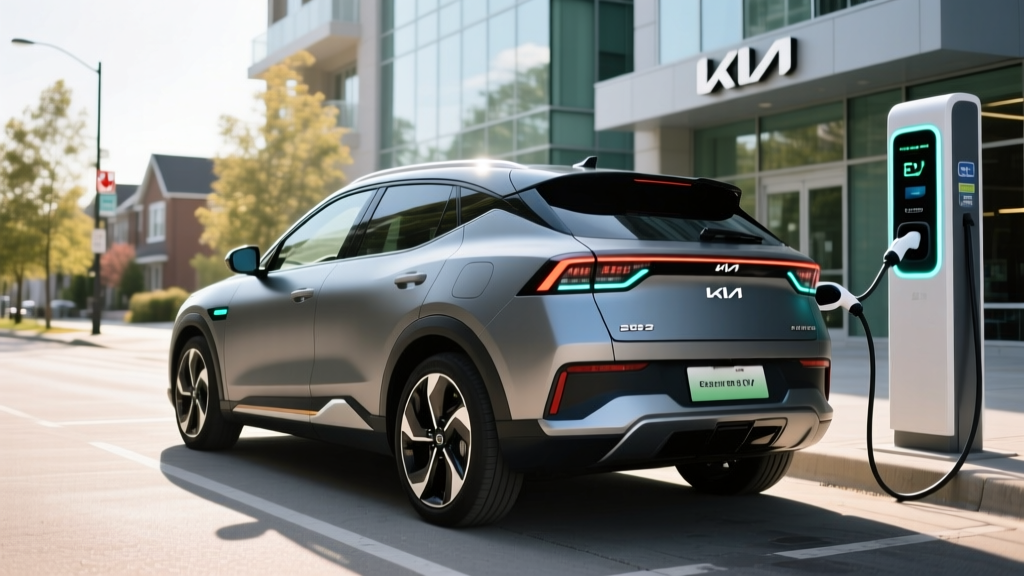
The Kia EV5 is a compact electric crossover built on Hyundai Motor Group's E-GMP platform, positioned below the EV6 and EV9 in Kia's electric lineup. First unveiled for the Chinese market in late 2023 and subsequently confirmed for broader Asian and select global markets, the EV5 has generated significant search interest among Canadian and American EV shoppers. As of early 2026, Kia has not officially confirmed the EV5 for sale in Canada or the United States.
This review covers the EV5's known specifications from markets where it is sold, translates those figures to North American expectations, and assesses whether Canadian buyers should wait — or look at alternatives already available at their local dealer.
Range, Battery, and Efficiency
The international-market Kia EV5 is offered with two battery pack sizes. The standard-range model uses a 58.3 kWh LFP (lithium iron phosphate) battery, while the long-range variant steps up to a 71.2 kWh LFP pack. Both are supplied by BYD's Blade battery architecture — a cell-to-pack design that improves volumetric efficiency and thermal stability.
LFP chemistry trades some energy density for longer cycle life, lower cost, and reduced fire risk compared to NMC (nickel manganese cobalt). For daily commuting and frequent charging to 100%, LFP is arguably the better choice — you don't need to baby the state of charge the way you would with an NMC pack.
| Specification | Standard Range | Long Range |
|---|---|---|
| Battery Capacity (usable) | 58.3 kWh | 71.2 kWh |
| Chemistry | LFP (BYD Blade) | LFP (BYD Blade) |
| CLTC Range | ~410 km (255 mi) | ~530 km (329 mi) |
| EPA-Equivalent Estimate* | ~210–225 mi | ~270–290 mi |
| Efficiency (est.) | ~28 kWh/100 mi | ~26 kWh/100 mi |
*EPA-equivalent estimates are approximated from CLTC figures using a typical 0.80–0.85 conversion factor. The EPA test cycle is more demanding than China's CLTC. Official EPA numbers will only be available if Kia certifies the EV5 for North America.
Charging Speed: DC Fast and Level 2
Charging performance is where the EV5's positioning becomes clear. It's competent but not class-leading — Kia has reserved the fastest charging for the EV6 and upcoming EV4.
| Charging Level | Standard Range (58.3 kWh) | Long Range (71.2 kWh) |
|---|---|---|
| Level 1 (120V, 12A) | ~1.4 kW / ~4 mi/hr | ~1.4 kW / ~4 mi/hr |
| Level 2 (240V, 48A) | ~10.9 kW / ~30 mi/hr | ~10.9 kW / ~30 mi/hr |
| DC Fast Charge (peak) | ~120 kW | ~150 kW |
| 10–80% DC Fast Charge | ~28 minutes | ~27 minutes |
| Connector | GB/T (China) / CCS2 (Australia) | GB/T (China) / CCS2 (Australia) |
A North American EV5 would almost certainly use the NACS (Tesla-style) connector, as Kia has committed to transitioning its entire EV lineup to NACS for the 2025+ model years in the US and Canada. That would grant access to Tesla Supercharger stations via native plug — a significant practical advantage over CCS-equipped competitors that still require adapters.
The ~150 kW peak DC rate on the long-range model means the EV5 charges at roughly 2C. That's adequate for road trips but noticeably slower than the EV6's 240 kW peak (800V architecture). On a typical DC fast charger, expect the charge curve to sustain ~130–150 kW from 10% to about 40% SoC, then taper to ~80 kW through 60%, and drop further above 80%. Charging from 80–100% on DC is slow — plan your stops around the 10–80% window for best time efficiency.
Performance and Drivetrain
The EV5 is tuned for efficiency and comfort rather than performance thrills. Here's what the international powertrain lineup looks like:
| Spec | RWD Standard | RWD Long Range | AWD (Long Range) |
|---|---|---|---|
| Motor Configuration | Single rear motor | Single rear motor | Dual motor (front + rear) |
| Horsepower | 201 hp (150 kW) | 215 hp (160 kW) | 301 hp (225 kW) |
| Torque | 229 lb-ft | 229 lb-ft | 354 lb-ft |
| 0–100 km/h (0–62 mph) | ~8.5 sec | ~8.2 sec | ~6.1 sec |
| Drivetrain | RWD | RWD | AWD |
| Towing Capacity | Not rated | Not rated | ~1,500 kg (3,300 lb) est. |
For Canadian conditions, the AWD variant is the one to watch. With ~301 hp and a 0–62 mph time around 6.1 seconds, it's quick enough for highway merging and confident in snow. The RWD models will likely be the volume sellers in milder markets, but any EV5 sold in Canada should offer AWD as an option given winter realities.
Interior, Cargo, and Technology
The EV5 rides on a dedicated EV platform with a flat floor and generous wheelbase (~2,900 mm / 114.2 in), which translates to strong interior volume for its compact-crossover footprint.
- Seating: 5 passengers; available with heated and ventilated front seats, heated rear seats on upper trims
- Cargo (behind rear seats): ~520 liters (18.4 cu ft)
- Cargo (rear seats folded): ~1,400 liters (49.4 cu ft)
- Frunk (front trunk): ~52 liters (1.8 cu ft) — enough for charging cables
- Rear legroom: ~980 mm (38.6 in) — competitive with the Hyundai Ioniq 5
The dashboard features a dual-screen setup with a 12.3-inch digital instrument cluster and a 12.3-inch infotainment touchscreen running Kia's latest Connect interface. Wireless Apple CarPlay and Android Auto are standard. Available features include a head-up display, digital key (NFC/UWB), and Kia's Highway Driving Assist 2 (HDA2) — a Level 2 driver-assistance system with adaptive cruise control, lane centering, and automated lane changes.
One notable feature for the Canadian market: the EV5 in Australia and other markets offers V2L (Vehicle-to-Load) capability, allowing you to power external devices — laptops, power tools, or a campsite — directly from the traction battery via an interior or exterior outlet. This is a practical feature for outdoor-oriented Canadian buyers.
Pricing, Trims, and Tax Credit Eligibility
Because Kia has not announced North American pricing, we can only estimate based on international-market MSRPs and typical Canadian markups.
| Market / Trim | Price (Local Currency) | Estimated CAD Equivalent |
|---|---|---|
| China — Standard Range Air | ¥149,800 CNY | ~$28,500 CAD |
| China — Long Range Earth | ¥174,800 CNY | ~$33,200 CAD |
| Australia — Air (RWD) | A$56,770 | ~$51,500 CAD |
| Australia — Earth (AWD) | A$64,770 | ~$58,800 CAD |
| Estimated Canada Base (if launched) | — | ~$45,000–$50,000 CAD |
| Estimated Canada AWD Top Trim | — | ~$55,000–$60,000 CAD |
The wide gap between Chinese and Australian pricing reflects different tax structures, homologation costs, and market positioning. A Canadian launch would likely price the EV5 between the EV6 (~$55,000 CAD base) and the Kia Niro EV (~$48,000 CAD base), targeting the $45,000–$55,000 CAD range depending on trim.
Warranty Coverage
Kia's warranty is one of the strongest in the industry. Based on Kia's standard EV coverage in markets where the EV5 is sold:
- Basic Vehicle Warranty: 5 years / 100,000 km (international); likely 5 years / 100,000 km in Canada (matching Kia Canada's current EV warranty)
- Battery & Powertrain Warranty: 8 years / 160,000 km — covers capacity loss below 70% of original state of health (SoH)
- Roadside Assistance: 5 years / 100,000 km
The 70% SoH threshold is standard across Hyundai Motor Group. In practice, LFP batteries degrade more slowly than NMC — real-world data from BYD Blade packs in Chinese taxis and fleet vehicles shows ~10% degradation after 200,000+ km. Most owners will never approach the warranty claim threshold under normal use.
Who Should Consider the Kia EV5 — And Who Should Look Elsewhere
✓ Pros
- LFP battery = long cycle life, can charge to 100% daily without stress
- Strong interior volume for a compact crossover footprint
- Expected competitive pricing under $50K CAD (base)
- V2L capability for outdoor and emergency power
- NACS connector (if launched in NA) = Supercharger access
- Kia's 8-year/160,000 km battery warranty
✗ Cons
- Not confirmed for Canada or the US — availability uncertain
- DC fast charging peaks at ~150 kW (slower than EV6, Ioniq 5)
- BYD battery sourcing may disqualify from US §30D credit
- Cold-weather range loss significant without heat pump
- No official EPA or NRCan range figures yet
- AWD availability and pricing for Canada unknown
Is the Kia EV5 Worth Waiting For in Canada?
If you're a Canadian EV shopper right now, the EV5 is a "wait and see" proposition. It fills a genuine gap in Kia's lineup — a compact, affordable electric crossover below the EV6 — and its LFP battery is well-suited to daily commuting. But until Kia Canada issues a formal launch announcement with NRCan-certified range, Canadian pricing, and iZEV eligibility, you cannot buy one or put down a deposit.
Consider the EV5 if: You want a compact electric crossover under $50K CAD, prefer LFP battery longevity, and can wait 12–18+ months for a potential launch.
Look elsewhere now if: You need an EV today. The Kia Niro EV (~$48,000 CAD, ~375 km NRCan range), Hyundai Ioniq 5 (~$55,000 CAD, ~480 km range, faster charging), and Volkswagen ID.4 (~$50,000 CAD, Canadian-built, iZEV-eligible) are all available now with known specs and incentives.
Frequently Asked Questions
When will the Kia EV5 be available in Canada?
Kia Canada has not announced a launch date. Industry speculation points to a possible 2027 model-year introduction, but this is unconfirmed. Kia typically announces new models 6–12 months before they reach dealerships.
What is the real-world range of the Kia EV5?
Based on international CLTC figures converted to EPA-equivalent estimates, the long-range EV5 should deliver roughly 270–290 miles (435–467 km) in mixed driving. Real-world highway range at 100+ km/h will be closer to 370–400 km, and Canadian winter driving may reduce that to 300–340 km without a heat pump.
Does the Kia EV5 qualify for Canadian EV incentives?
Not yet — the EV5 must be officially launched and added to Transport Canada's iZEV eligible list. If its base MSRP is under $55,000 CAD, it should qualify for the $5,000 federal rebate. Provincial rebates in BC ($4,000), Quebec ($7,000), and other provinces may stack on top.
How fast does the Kia EV5 charge?
The long-range EV5 peaks at approximately 150 kW on DC fast charging, reaching 10–80% in about 27 minutes. On a home Level 2 charger (240V, 48A), expect roughly 30 miles (48 km) of range added per hour, or a full charge overnight in about 7–8 hours.
Is the Kia EV5 better than the Kia EV6?
They serve different purposes. The EV6 is a midsize performance-oriented crossover with 800V architecture (240 kW DC charging, up to 499 km range). The EV5 is a more affordable, efficiency-focused compact crossover. If charging speed and performance matter most, the EV6 wins. If price and daily practicality are your priority, the EV5 would be the better value — if it launches.
Does the EV5 have a frunk?
Yes, but it's small — approximately 52 liters (1.8 cu ft), enough for storing charging cables and a small emergency kit. It's not large enough for a carry-on bag.