Quick Verdict: A Practical Electric Sedan Done Right
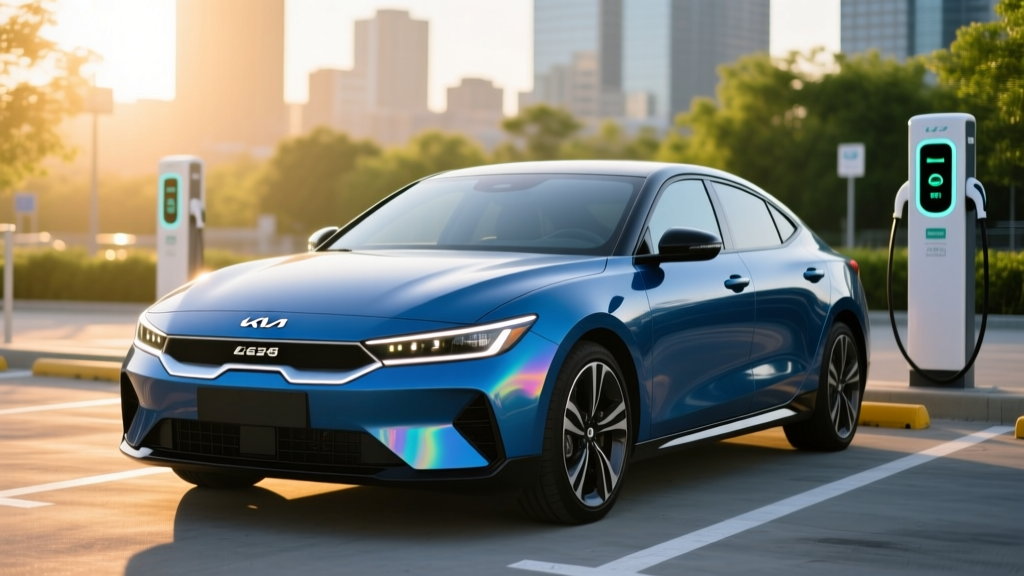
The 2026 Kia EV4 arrives as the electric successor to the Forte compact sedan segment, but with far more substance. Built on Hyundai Motor Group's E-GMP architecture, the EV4 offers up to 300 miles of EPA-estimated range, peppy acceleration, and access to one of the most reliable fast-charging ecosystems in North America. Starting at $36,990 before incentives, it undercuts the Tesla Model 3 and BMW i4 while delivering competitive range and a more conventional sedan profile that appeals to buyers not yet ready for crossover life. After the federal EV tax credit, the effective price drops meaningfully — making the EV4 one of the most compelling electrified sedans for 2026.
Range, Battery, and Real-World Efficiency
The EV4 comes in two battery configurations depending on trim:
| Spec | Standard Range | Long Range |
|---|---|---|
| Battery Capacity (usable) | 63 kWh | 84 kWh |
| Chemistry | NMC (Nickel Manganese Cobalt) | NMC |
| EPA Range | 230 miles | 300 miles |
| Combined MPGe | 120 MPGe | 117 MPGe |
| Efficiency | 28 kWh/100 mi | 29 kWh/100 mi |
Kia has stuck with NMC chemistry across the EV4 lineup rather than offering an LFP (lithium iron phosphate) variant like some competitors. NMC provides higher energy density, which keeps the sedan's weight and packaging reasonable, but it means owners should avoid routinely charging to 100% for daily use. Kia's infotainment system includes a battery care mode that caps charge at 80% or 90% for daily commuting — use it.
Charging Speed: DC Fast and Home Level 2
Charging performance is where E-GMP vehicles consistently impress, and the EV4 is no exception:
| Charging Level | Power / Rate | Time / Miles Added |
|---|---|---|
| DC Fast Charge (peak) | 220 kW | 10–80% in ~23 minutes |
| DC Fast Charge (sustained avg) | ~150 kW | 10–90% in ~35 minutes |
| Level 2 Home (240V, 48A) | 11.5 kW | ~36 miles per hour of charging |
| Level 1 (120V household) | 1.4 kW | ~4 miles per hour of charging |
The 220 kW peak rate requires a 350 kW-capable DC fast charger — you'll find these at Electrify America, EVgo, and select ChargePoint stations. In real-world testing, the EV4 sustains above 180 kW from 10–40% State of Charge, then tapers progressively. The 10–80% time of approximately 23 minutes is competitive with the Tesla Model 3 and Hyundai Ioniq 6. Battery preconditioning activates automatically when you navigate to a fast charger via the built-in route planner, warming the pack to optimal temperature for maximum charge acceptance.
The EV4 uses the NACS (North American Charging Standard) connector as standard equipment for 2026, giving native access to Tesla Supercharger stations. This eliminates the need for a CCS-to-NACS adapter that earlier E-GMP vehicles required.
Performance and Drivetrain
The EV4 is offered in single-motor RWD and dual-motor AWD configurations:
| Spec | RWD Long Range | AWD Long Range |
|---|---|---|
| Horsepower | 225 hp | 320 hp |
| Torque | 258 lb-ft | 446 lb-ft |
| 0–60 mph | 6.8 seconds | 4.9 seconds |
| Drivetrain | Rear-Wheel Drive | All-Wheel Drive |
| Towing Capacity | Not rated | Not rated |
The RWD model is the efficiency and value pick — 300 miles of range, adequate passing power, and a lower starting price. The AWD variant sacrifices roughly 30 miles of range but gains genuine all-weather traction and a sub-5-second 0–60 time that makes merging and overtaking effortless. Regenerative braking offers four levels selectable via steering wheel paddles, with Level 3 providing near one-pedal driving in city traffic.
Interior Space, Tech, and Driver Assistance
As a compact sedan, the EV4 prioritizes efficiency of space over outright volume:
- Front legroom: 42.1 inches
- Rear legroom: 35.4 inches
- Cargo (trunk): 15.1 cu ft
- Frunk (front trunk): 1.6 cu ft (cable storage)
The cabin features a dual-screen setup: a 12.3-inch digital instrument cluster and a 12.3-inch center touchscreen running Kia's latest Connect infotainment with wireless Apple CarPlay and Android Auto. The center console uses a column-mounted shifter, freeing up storage space between the front seats. A head-up display with augmented-reality navigation overlay is available on GT-Line trims.
Driver assistance comes via Kia's Highway Driving Assist 2 (HDA2), which includes adaptive cruise control with stop-and-go, lane centering, and lane-change assist. This is an SAE Level 2 system — the driver must remain engaged with hands on the wheel at all times. It performs well on divided highways but does not handle complex urban intersections or construction zones autonomously.
Pricing, Trims, and Federal Tax Credit Eligibility
| Trim | MSRP | Est. After §30D Credit |
|---|---|---|
| Light (RWD Standard Range) | $36,990 | Varies — see eligibility below |
| Wind (RWD Long Range) | $40,490 | Varies — see eligibility below |
| GT-Line (RWD Long Range) | $43,990 | Varies — see eligibility below |
| GT-Line AWD | $47,490 | Varies — see eligibility below |
The federal EV tax credit under IRS §30D offers up to $7,500, which as of 2026 can be transferred to the dealer at point of sale as an immediate purchase-price reduction. However, eligibility is not automatic. Per IRS guidelines, the following must all be satisfied:
- MSRP cap: Sedans must be at or below $55,000 — all EV4 trims qualify
- Buyer income cap: Modified AGI must not exceed $150,000 (single), $225,000 (head of household), or $300,000 (joint)
- Battery sourcing: Critical minerals and battery components must meet phased-in domestic/free-trade-partner sourcing thresholds — Kia has confirmed the EV4's battery meets 2026 requirements, but always verify with your dealer using the VIN-specific report
- Assembly: Final assembly must occur in North America — the EV4 is assembled at the Hyundai Motor Group Metaplant in Georgia
If you exceed income limits or the vehicle fails sourcing requirements in a given batch, you lose the credit. Consult a tax professional and check the VIN on fueleconomy.gov before finalizing your purchase.
Pros, Cons, and Who Should Buy
- 300-mile EPA range on Long Range trims
- 220 kW DC fast charging (10–80% in ~23 min)
- Native NACS connector — Supercharger access without adapter
- Heat pump standard on Long Range (cold-weather efficiency)
- Competitive pricing; all trims under $55K MSRP cap
- 10-year/100,000-mile battery and powertrain warranty
- Rear legroom is tight vs. midsize sedans (35.4 in)
- No LFP battery option for buyers who want 100% daily charging
- Frunk is small (1.6 cu ft) — cable storage only
- AWD range penalty of ~30 miles
- Not rated for towing
Best for: Daily commuters covering 30–60 miles round trip who want a conventional sedan with fast charging for occasional road trips. The Long Range Wind trim at ~$40,490 (potentially ~$33,000 after credit) is the value sweet spot. Not ideal for: Families needing rear-seat space for tall teenagers or car seats, or anyone who needs towing capability.
Warranty and Ownership Costs
Kia backs the EV4 with its strong warranty package:
- Battery/Powertrain: 10 years / 100,000 miles (capacity retention threshold: 70%)
- Bumper-to-bumper: 5 years / 60,000 miles
- Roadside assistance: 5 years / 60,000 miles
The 70% capacity retention threshold is standard for the industry. Real-world degradation data from E-GMP siblings (EV6, Ioniq 5) suggests most packs retain 90%+ capacity after 60,000 miles when owners avoid chronic 100% charging and excessive DC fast-charging. A full battery replacement outside warranty currently runs $12,000–$16,000 depending on pack size, though prices continue to decline.
Frequently Asked Questions
What is the real-world range of the Kia EV4?
The Long Range EV4 carries a 300-mile EPA estimate. In real-world highway driving at 70+ mph, expect 250–270 miles. In sub-freezing winter conditions, plan for 225–255 miles depending on cabin heat usage. The Standard Range model's 230-mile EPA figure translates to roughly 195–210 miles highway and 175–190 in cold weather.
How fast does the EV4 charge at home and on the road?
On a 350 kW DC fast charger, the EV4 peaks at 220 kW and charges from 10–80% in approximately 23 minutes. At home on a 48-amp Level 2 charger (240V), it adds about 36 miles of range per hour — a full overnight charge from 20% to 100% takes roughly 7–8 hours for the Long Range pack.
Does the 2026 Kia EV4 qualify for the $7,500 federal tax credit?
All EV4 trims fall under the $55,000 MSRP cap for sedans, and final assembly occurs in Georgia. However, buyer income limits and battery-component sourcing rules apply. As of early 2026, Kia reports the EV4 meets sourcing requirements, but always verify with your dealer using the specific VIN before purchase. The credit can be applied as a point-of-sale price reduction.
Is the EV4 worth buying over the Tesla Model 3?
It depends on priorities. The Model 3 offers slightly more range per dollar, access to Tesla's software ecosystem, and marginally faster Supercharger speeds. The EV4 counters with a more traditional interior layout, physical buttons for climate controls, a longer powertrain warranty (10 vs. 8 years), and a lower starting price on comparable trims. If you prefer a less minimalist cabin and value Kia's warranty, the EV4 is a strong alternative. Check IIHS for the latest crash-test ratings on both vehicles.
Does the EV4 have a frunk?
Yes, but it's modest — 1.6 cubic feet, primarily intended for storing the mobile charging cable and tire-inflation kit. It won't fit a carry-on suitcase.