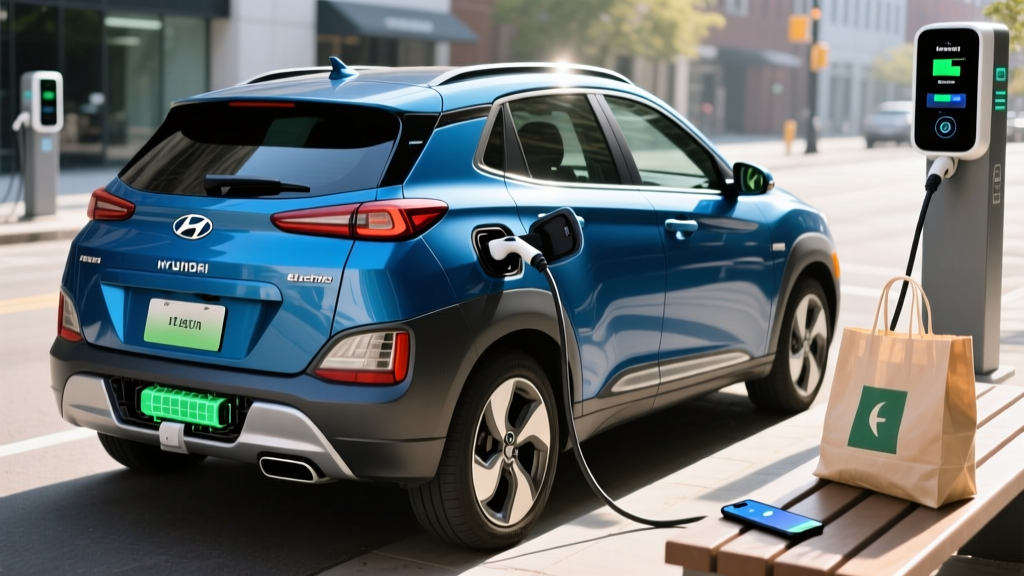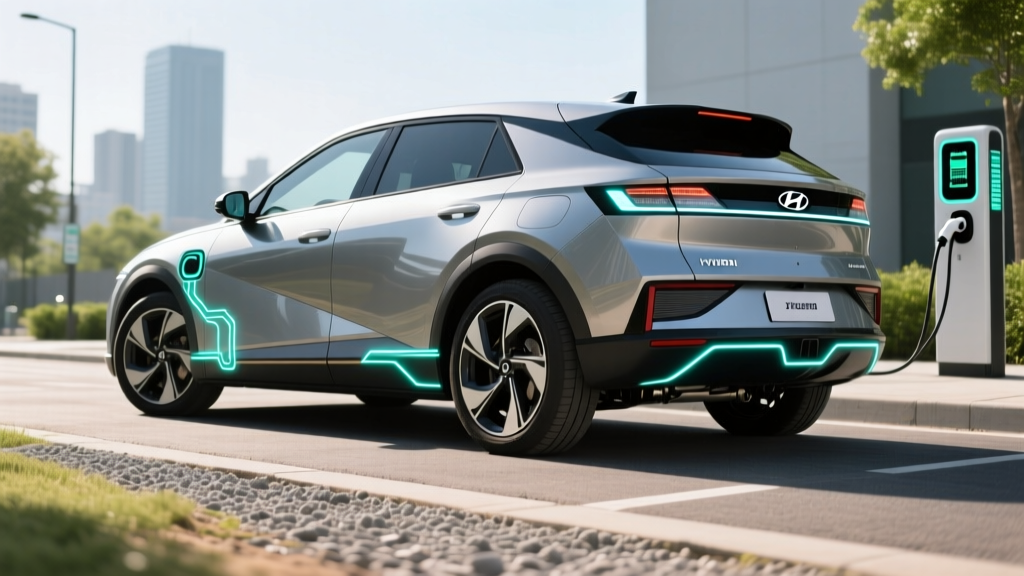
The Kia EV4 sedan arrives for the 2026 model year as Kia's answer to the Tesla Model 3 and Hyundai Ioniq 6 — a sleek, aerodynamic electric four-door built on the E-GMP platform. While the EV6 crossover and EV9 three-row SUV grabbed headlines, the EV4 fills a crucial gap: an affordable, efficient electric sedan with a tech-forward cabin. Below, we break down everything from the Kia EV4 interior materials and dimensions to real-world range, charging speeds, and whether this sedan qualifies for the federal EV tax credit.
2026 Kia EV4 at a Glance: Key Specifications
| Spec | Standard Range (RWD) | Long Range (RWD) | Long Range (AWD) |
|---|---|---|---|
| Battery (usable) | 58.3 kWh (LFP) | 81.4 kWh (NMC) | 81.4 kWh (NMC) |
| EPA Range | 270 mi (est.) | 340 mi (est.) | 310 mi (est.) |
| Horsepower | 201 hp | 225 hp | 320 hp |
| 0-60 mph | 7.4 sec | 6.8 sec | 5.1 sec |
| Drivetrain | RWD | RWD | AWD (dual-motor) |
| Max DC Fast Charge | 150 kW | 240 kW | 240 kW |
| 10-80% DC Time | ~30 min | ~18 min | ~18 min |
| Level 2 (Home) Rate | 10.9 kW (~37 mi/hr) | 10.9 kW (~37 mi/hr) | 10.9 kW (~37 mi/hr) |
| Combined MPGe | 134 MPGe (est.) | 130 MPGe (est.) | 115 MPGe (est.) |
| Base MSRP | $35,990 | $40,990 | $45,990 |
Note: Specs listed are Kia's preliminary/estimated figures for the 2026 model year as announced. Final EPA certification figures will be published on fueleconomy.gov closer to the on-sale date.
Kia EV4 Interior: Design, Materials, and Technology
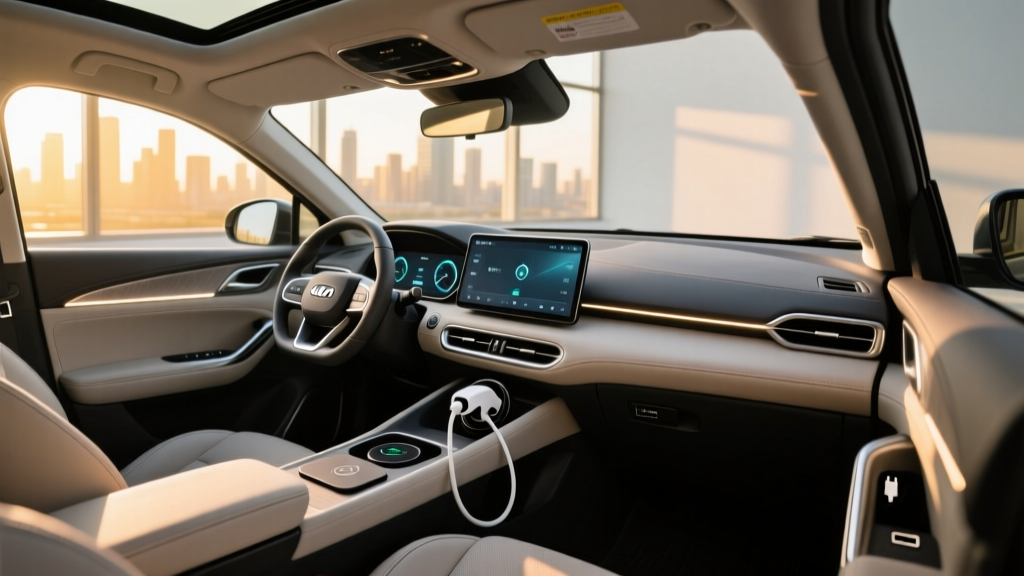
The keyword bringing most shoppers to this review — the Kia EV4 interior — is where this sedan makes its strongest pitch against the Model 3's minimalist cabin. Kia has opted for what it calls a "wide and slim" dashboard architecture, emphasizing horizontal lines and ambient lighting that stretches across the full width of the cabin.
Dual-Screen Infotainment and Digital Cluster
The centerpiece is a dual 12.3-inch display setup: a digital instrument cluster for the driver and a touchscreen infotainment panel angled slightly toward the driver. The system runs Kia's latest ccNC (Connected Car Navigation Cockpit) software, supporting wireless Apple CarPlay and Android Auto, over-the-air (OTA) updates, and Kia's Digital Key 2 (which lets you use your smartphone or smartwatch as a key fob via NFC and UWB).
Materials and Build Quality
Lower trims (Wind, S) use a high-quality cloth and bio-PU (polyurethane) leatherette combination. Upper trims (GT-Line, GT-Line S) upgrade to a vegan leather with contrast stitching and a suede-like headliner. Kia continues to use recycled PET fabrics and bio-based materials throughout — the door-panel trim incorporates recycled fishing-net fibers, a carryover from the EV6 and EV9 sustainability playbook.
Passenger Space and Cargo
Thanks to the E-GMP platform's flat floor and long wheelbase, interior volume punches above the sedan segment average:
- Front legroom: 42.5 inches
- Rear legroom: 37.8 inches
- Front headroom: 39.2 inches
- Rear headroom: 36.8 inches (slightly compromised by the sloping roofline)
- Trunk (rear cargo): 15.8 cu ft
- Frunk (front trunk): 1.8 cu ft — enough for a charging cable bag or small laptop
Rear headroom is the one ergonomic trade-off of the EV4's fastback roofline. Passengers over 6'2" may find it snug compared to the boxier EV6 crossover.
Driver-Assistance Technology
All 2026 EV4 models come standard with Kia's Highway Driving Assist 2 (HDA2), a Level 2 driver-assistance system per SAE classification. HDA2 includes adaptive cruise control with stop-and-go, lane-centering assist, and lane-change assist on highways. This is not a self-driving system — the driver must keep hands on the wheel and eyes on the road at all times.
Kia HDA2 is a Level 2 system. It does not drive the car autonomously. You remain the responsible driver at all times. Hands-off systems like GM's Super Cruise or Ford's BlueCruise (which allow eyes-off on mapped highways) are not offered on the EV4.
Range, Efficiency, and Real-World Expectations
- Standard Range (58.3 kWh): EPA est. 270 mi — Expect ~230-250 mi at sustained highway speeds (70-80 mph), and ~210-230 mi in sub-30°F winter conditions.
- Long Range RWD (81.4 kWh): EPA est. 340 mi — Expect ~285-310 mi highway, ~255-280 mi in cold weather.
- Long Range AWD (81.4 kWh): EPA est. 310 mi — Expect ~260-285 mi highway, ~230-255 mi in cold weather.
EPA estimates assume a mix of city and highway driving at moderate temperatures. Highway-only driving at 75+ mph and cold-weather battery conditioning reduce range 10-25% depending on severity.
The Standard Range model uses an LFP (lithium iron phosphate) battery, which trades some energy density for lower cost, longer cycle life, and the ability to regularly charge to 100% without accelerated degradation. The Long Range models use NMC (nickel manganese cobalt) chemistry for higher energy density, with Kia recommending an 80% daily charge limit to preserve longevity.
Efficiency Numbers
The RWD Long Range targets roughly 130 MPGe combined (approximately 26 kWh/100 mi), competitive with the Hyundai Ioniq 6 SE Long Range (140 MPGe) and slightly behind the Tesla Model 3 Long Range (134 MPGe EPA). The AWD variant drops to around 115 MPGe combined due to the second motor's parasitic drag and added weight.
Charging Speed: DC Fast, Level 2, and Level 1
The EV4's 800V-capable E-GMP architecture remains one of its biggest practical advantages. Here's what charging looks like across all three levels:
| Charging Level | Power / Rate | Miles Added per Hour | Notes |
|---|---|---|---|
| Level 1 (120V household) | ~1.4 kW | ~4-5 mi/hr | Emergency/top-up only; ~70+ hours for full charge |
| Level 2 (240V home/public) | 10.9 kW | ~37 mi/hr | Full charge overnight (~8-9 hours for Long Range) |
| DC Fast Charge (Long Range) | Peak 240 kW | ~650+ mi/hr (peak) | 10-80% in ~18 min on a 350 kW charger |
| DC Fast Charge (Standard Range) | Peak 150 kW | ~400+ mi/hr (peak) | 10-80% in ~30 min; LFC charging curve tapers above 80% |
Understanding the Charge Curve
The "240 kW peak" figure is not sustained across the entire session. Like all EVs, the EV4's charge rate tapers as the battery fills. Expect peak speeds between 10-40% SoC, a gradual taper from 40-60%, and a steep taper above 80%. Charging from 80-100% on DC fast charging can add another 20-25 minutes — plan your road-trip stops to 80% for maximum time efficiency.
The EV4 uses the NACS (North American Charging Standard) connector for 2026, granting native access to Tesla's Supercharger network without an adapter. This is a significant practical advantage over CCS1-equipped competitors still relying on adapter dongles.
Pricing, Trims, and Federal Tax Credit Eligibility
| Trim | Drivetrain | MSRP | Est. After §30D Credit* |
|---|---|---|---|
| Wind (Standard Range) | RWD | $35,990 | ~$28,490 |
| S (Long Range) | RWD | $40,990 | ~$33,490 |
| GT-Line (Long Range) | RWD | $43,990 | ~$36,490 |
| GT-Line S (Long Range AWD) | AWD | $45,990 | ~$38,490 |
*Federal tax credit amounts shown assume full $7,500 eligibility under IRS §30D. Actual credit depends on buyer income, vehicle MSRP cap compliance, battery-component sourcing, and critical-mineral requirements. The credit may be transferred to the dealer at point of sale as an immediate price reduction. Consult a tax professional for your specific situation.
§30D Tax Credit Checklist for the EV4
- MSRP cap: Sedans must be under $55,000 — all EV4 trims qualify.
- Buyer income cap: AGI must not exceed $150,000 (single), $225,000 (head of household), or $300,000 (joint).
- Battery sourcing: Vehicles must meet escalating critical-mineral and battery-component requirements that tighten annually. Kia's battery supply-chain compliance for 2026 will be confirmed closer to launch — check the IRS qualified-vehicle list before purchasing.
- Point-of-sale transfer: Eligible buyers can apply the credit as an instant discount at the dealership rather than waiting for a tax refund.
Warranty and Ownership Costs
Kia continues to offer one of the strongest warranty packages in the EV segment:
- Battery & Drive Unit: 10 years / 100,000 miles (covers capacity loss below 70% State of Health)
- Limited Vehicle Warranty: 5 years / 60,000 miles
- Powertrain: 10 years / 100,000 miles
- Roadside Assistance: 5 years / 60,000 miles
The 10-year/100,000-mile battery warranty with a 70% capacity-retention threshold is among the best in the industry, matching Hyundai's coverage and exceeding Tesla's 8-year/120,000-mile (70% SoH) warranty on the Model 3.
How Does the EV4 Compare to Key Competitors?
| Attribute | 2026 Kia EV4 LR RWD | 2026 Tesla Model 3 LR | 2026 Hyundai Ioniq 6 SEL |
|---|---|---|---|
| EPA Range | ~340 mi | 363 mi | 361 mi |
| Base MSRP (LR RWD) | $40,990 | $42,490 | $42,600 |
| Max DC Charge | 240 kW | 250 kW | 240 kW |
| 10-80% DC Time | ~18 min | ~15 min | ~18 min |
| Connector | NACS (native) | NACS (native) | NACS (2026) |
| Battery Warranty | 10 yr / 100k mi | 8 yr / 120k mi | 10 yr / 100k mi |
| Rear Legroom | 37.8 in | 35.3 in | 37.0 in |
- Choose the Kia EV4 if: You prioritize rear-seat comfort, a more traditional (and higher-quality) interior feel, Kia's 10-year warranty, and competitive pricing.
- Choose the Tesla Model 3 if: Maximum range and access to the broadest Supercharger network (though NACS adoption is closing this gap) are your top priorities, and you prefer a minimalist interior.
- Choose the Hyundai Ioniq 6 if: You want the highest EPA range figure in the segment and don't mind its polarizing exterior design and slightly tighter rear seat.
Pros and Cons
- Spacious rear seat for a fastback sedan (37.8" legroom)
- 800V architecture with 240 kW DC fast charging (Long Range)
- Native NACS connector — no adapter for Superchargers
- Industry-leading 10-year/100k-mile battery warranty
- LFP option (Standard Range) allows routine 100% charging
- Competitive pricing, all trims under $55k MSRP cap
- Sloping roofline cuts rear headroom for tall passengers
- Frunk is small (1.8 cu ft) — mostly cable storage
- No hands-free driving system (HDA2 requires hands on wheel)
- Standard Range model's 150 kW peak charge rate trails competitors
- AWD variant's range drops significantly vs. RWD
Who Is the Kia EV4 Best For?
Daily commuters will find the Long Range RWD's ~340-mile EPA range more than enough for week-long stretches between charges, especially paired with home Level 2 charging that adds ~37 miles per hour (a full overnight replenishment).
Small families benefit from the generous rear legroom — a rear-facing child seat fits without pushing the front passenger into the dashboard. The 15.8 cu ft trunk handles a full-size stroller with room for groceries.
Road-trippers should focus on the Long Range trims with 240 kW DC fast charging. A typical 200-mile leg between Supercharger or Electrify America stops means a 10-15 minute top-up to 80% — competitive with a gas-station stop when you factor in a restroom break.
Towing is not this car's role. Kia has not published a towing rating for the EV4, and as a sedan, it's not designed for trailer duty. Look to the EV6 (up to 3,500 lbs with tow package) or EV9 (up to 5,000 lbs) if towing matters.
Frequently Asked Questions
What is the real-world range of the Kia EV4?
The Long Range RWD carries an estimated 340-mile EPA rating. In real-world highway driving at 70-80 mph, expect approximately 285-310 miles. In freezing temperatures (below 30°F), range can drop to 255-280 miles due to battery-resistance increases and cabin-heating load. The EV4's available heat pump helps mitigate cold-weather losses compared to resistive-heater systems.
How fast does the Kia EV4 charge at home and on the road?
On a home Level 2 charger (240V, 48A), the EV4 charges at 10.9 kW, adding roughly 37 miles of range per hour — a full Long Range charge takes about 8-9 hours overnight. On a DC fast charger, the Long Range peaks at 240 kW and charges from 10-80% in approximately 18 minutes, provided you're using a 350 kW-capable station. The Standard Range peaks at 150 kW with a 10-80% time of about 30 minutes.
Does the Kia EV4 qualify for the federal EV tax credit?
All EV4 trims fall under the $55,000 sedan MSRP cap required by IRS §30D. However, full $7,500 credit eligibility depends on your adjusted gross income (caps of $150k single / $300k joint), and the vehicle's battery-component and critical-mineral sourcing meeting 2026 thresholds. Kia's compliance will be confirmed on the IRS qualified-vehicle list. The credit can be applied as a point-of-sale price reduction at the dealer.
Is the Kia EV4 worth buying over the Tesla Model 3 or Hyundai Ioniq 6?
If interior quality, rear-seat space, and warranty length rank high on your list, the EV4 makes a compelling case. The Model 3 still leads in EPA range (363 mi) and Supercharger network breadth (though the NACS gap is closing). The Ioniq 6 edges out on efficiency and range but sacrifices rear headroom. The EV4 sits in a strong middle ground: competitive range, a premium-feeling Kia EV4 interior, and Kia's class-leading 10-year warranty.
Does the Kia EV4 have a front trunk (frunk)?
Yes, but it's modest at 1.8 cubic feet — enough for a charging cable bag, tire-inflation kit, or small backpack. Don't expect to fit a carry-on suitcase. The main trunk offers 15.8 cubic feet, which is the primary cargo area.
What connector does the 2026 EV4 use?
The 2026 Kia EV4 uses the NACS (North American Charging Standard) connector natively, meaning it plugs directly into Tesla Superchargers and the growing number of NACS-equipped public chargers without an adapter. Level 2 public chargers with J1772 connectors will require the J1772-to-NACS adapter that Kia includes with the vehicle.
Sources: EPA Fuel Economy, IRS §30D Clean Vehicle Credits, Kia Motors America press materials. Specifications reflect preliminary 2026 model-year data and are subject to final EPA certification.