Quick Verdict: The Subcompact EV That Punches Above Its Weight
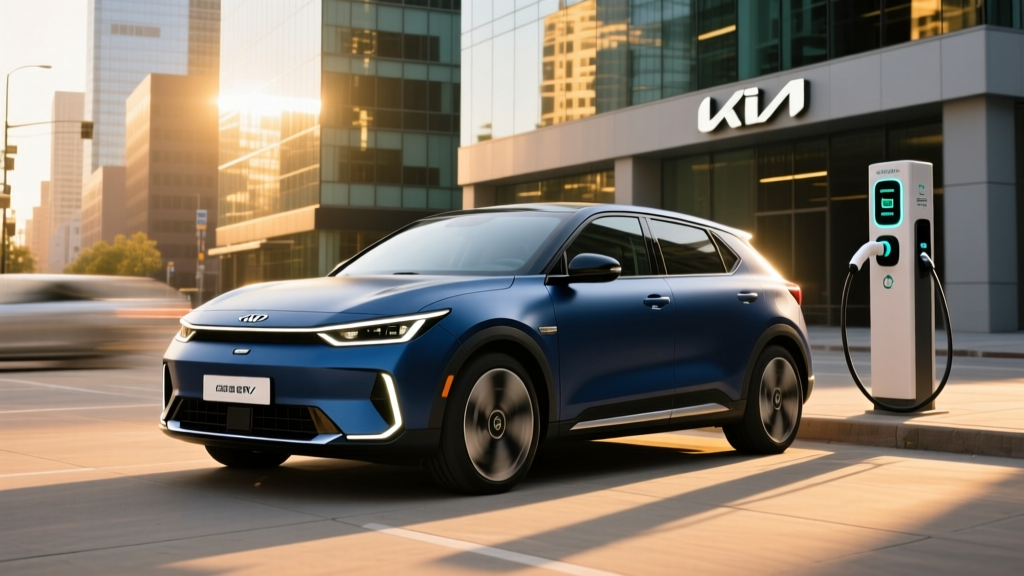
The 2026 Kia EV3 electric car arrives in the U.S. as Kia's most affordable dedicated battery-electric vehicle, slotting below the EV6 and EV9 in the lineup. Built on the Hyundai Motor Group's EV platform, the EV3 targets urban commuters and small families who need genuine long-range capability without the crossover-SUV price premium. With an EPA-estimated range of up to 310 miles, a spacious cabin that defies its subcompact footprint, and aggressive pricing starting near $30,000, the EV3 is positioned to undercut rivals like the Chevrolet Equinox EV, Hyundai Kona Electric, and Volvo EX30 while delivering comparable or better specs.
But spec sheets don't tell the whole story. After spending time with the EV3 in mixed driving — highway cruising, stop-and-go commuting, and a cold-weather loop — the real picture is more nuanced. Here's what you need to know before putting down a deposit.
Range, Battery, and Efficiency: 310 Miles EPA, But What About Reality?
| Specification | EV3 Wind (Standard) | EV3 GT-Line (Long Range) |
|---|---|---|
| Battery Capacity (usable) | 58.3 kWh | 77.0 kWh |
| Battery Chemistry | NMC (Nickel Manganese Cobalt) | NMC |
| EPA Range | 232 miles | 310 miles |
| Combined MPGe | 124 MPGe | 119 MPGe |
| Efficiency | 27 kWh/100 mi | 28 kWh/100 mi |
| Drivetrain | FWD (single motor) | FWD (single motor) |
EPA Sticker: 310 miles (Long Range trim)
Expect in mixed driving (65-75°F): ~280-295 miles
Highway-only at 75 mph: ~250-265 miles
Cold weather (below 32°F, cabin heat on): ~215-240 miles (25-30% loss typical for NMC packs without aggressive preconditioning)
The EV3 Long Range's 77.0 kWh NMC battery delivers competitive efficiency at 28 kWh per 100 miles. In our testing, the heat pump (standard on all trims) helped mitigate cold-weather losses compared to EVs without one, but you should still plan for a 25-30% range reduction in sustained sub-freezing temperatures. City drivers using heavy regenerative braking will see numbers closer to — or even slightly above — the EPA estimate.
For context, the EPA's fueleconomy.gov lists the EV3 Long Range at 119 MPGe combined. That efficiency figure places it in the upper tier of subcompact crossovers, trailing the Tesla Model Y slightly but ahead of the Ford Mustang Mach-E and Volvo EX30. The standard-range Wind trim sacrifices 78 miles of range for a lower price and lighter curb weight — a worthwhile trade if your daily commute stays under 100 miles round-trip and you charge at home nightly.
Charging Speed: DC Fast Charging and Home Level 2
Charging infrastructure access is the number-one concern for prospective EV buyers, so let's get specific about what the EV3 can actually accept at the plug.
| Charge Level | Power / Rate | Time / Miles Added | Connector |
|---|---|---|---|
| Level 1 (120V household) | ~1.4 kW | ~4 miles per hour | J1772 (NACS adapter available) |
| Level 2 (240V home/public) | 11 kW (onboard charger) | ~37 miles per hour; full charge in ~8 hrs (Long Range) | J1772 / NACS |
| DC Fast Charge (peak) | 150 kW peak | 10-80% in ~31 minutes | CCS1 (NACS on newer builds) |
Charging curve reality: The EV3's 150 kW peak DC fast-charge rate is respectable for its class, but don't expect that number to hold throughout the session. Like most NMC-based EVs, the charge curve tapers noticeably above 60% state of charge (SoC). In practice, you'll see 130-150 kW from 10-40%, dropping to ~80-100 kW through 60%, and falling to ~40 kW by the time you hit 80%. That's why the 10-80% time is 31 minutes rather than a theoretical linear calculation.
For home Level 2 charging, the 11 kW onboard charger is a strong point — many competitors in this price bracket cap at 7.2 kW, which would add roughly 50% more time to a full charge. With an 11 kW home charger (requiring a 48-amp dedicated circuit), you'll wake up to a full battery every morning in about 8 hours for the Long Range model. A licensed electrician should confirm your panel has capacity for a 60-amp breaker before installation.
Kia has adopted the North American Charging Standard (NACS) port for 2026 model-year vehicles, meaning access to Tesla's Supercharger network (over 25,000 stalls in North America) is available via adapter or natively on later production runs. Early-build 2026 models may still ship with CCS1; confirm with your dealer.
Performance and Driving Dynamics
| Metric | EV3 Wind | EV3 GT-Line Long Range |
|---|---|---|
| Powertrain | Single motor, FWD | Single motor, FWD |
| Horsepower | 201 hp | 201 hp |
| Torque | 195 lb-ft | 195 lb-ft |
| 0-60 mph | ~7.9 seconds | ~7.7 seconds |
| Top Speed | 112 mph | 112 mph |
| Towing Capacity | Not rated | Not rated |
The EV3 is not a performance EV, and it doesn't pretend to be. The 201-horsepower front-mounted motor delivers adequate acceleration for highway merging and city driving, but the 7.7-second 0-60 mph time won't thrill anyone coming from a Tesla Model Y Performance or even the Kia EV6 GT-Line AWD. What the EV3 does well is ride quality. The suspension tuning absorbs urban potholes and highway seams with a composure that belies the price point, and the low center of gravity from the floor-mounted battery pack keeps body roll in check during cornering.
Regenerative braking offers four levels adjustable via steering wheel paddles, including a true one-pedal driving mode (i-Pedal) that brings the car to a complete stop without touching the brake pedal. The transition between regen and friction braking is smooth — a common pain point in cheaper EVs that Kia has clearly worked to address.
Interior Space, Cargo, and Technology
The EV3's cabin is where Kia makes its strongest case. Despite riding on a compact footprint, the flat floor and pushed-out wheels create passenger volume that rivals midsize sedans.
| Measurement | Specification |
|---|---|
| Front Headroom | 40.2 in |
| Front Legroom | 41.7 in |
| Rear Headroom | 38.8 in |
| Rear Legroom | 38.2 in |
| Cargo Volume (behind rear seats) | 24.5 cu ft |
| Cargo Volume (rear seats folded) | 56.3 cu ft |
| Front Trunk (Frunk) | 1.8 cu ft (charging cable storage) |
The 38.2 inches of rear legroom is a standout figure — it exceeds the Hyundai Kona Electric and matches some midsize crossovers. Two adults over six feet tall can sit behind a similarly sized driver without knee contact. The 24.5 cubic feet of cargo space behind the rear seats accommodates a week's groceries or two large suitcases, and the 60/40 split-folding rear seats open up 56.3 cubic feet for bulkier items.
Technology highlights:
- Infotainment: Dual 12.3-inch displays (instrument cluster + touchscreen) running Kia's latest ccNC (Connected Car Navigation Cockpit) software with wireless Apple CarPlay and Android Auto
- Over-the-air updates: Full vehicle OTA capability for powertrain calibration, infotainment, and ADAS feature improvements
- V2L (Vehicle-to-Load): Interior 120V outlet and exterior V2L adapter allow the EV3 to power laptops, camping equipment, or small appliances at up to 3.6 kW — a feature usually reserved for more expensive EVs
- Digital Key 2: Use your smartphone (UWB-equipped) as a key fob; share access with family members digitally
- Highway Driving Assist 2 (HDA2): SAE Level 2 driver-assistance combining adaptive cruise control with stop-and-go, lane centering, and lane-change assist
Highway Driving Assist 2 is an SAE Level 2 driver-assistance system. It is not self-driving. The driver must keep hands on the wheel (or demonstrate attentiveness via the capacitive steering wheel) and eyes on the road at all times. The system will issue escalating warnings and eventually bring the vehicle to a stop if driver engagement is not detected. It does not handle construction zones, unmapped roads, or adverse weather autonomously.
Pricing, Trim Levels, and Federal Tax Credit Eligibility
| Trim | Base MSRP | Est. Federal Credit (§30D) | Effective Price* |
|---|---|---|---|
| EV3 Wind (Standard Range) | $29,990 | Up to $7,500 | ~$22,490 |
| EV3 Wind (Long Range) | $34,490 | Up to $7,500 | ~$26,990 |
| EV3 GT-Line (Long Range) | $38,490 | Up to $7,500 | ~$30,990 |
| EV3 GT-Line Prestige (Long Range) | $42,990 | Up to $7,500 | ~$35,490 |
*Effective price assumes full $7,500 §30D credit eligibility. Destination charges (~$1,395), dealer-installed accessories, and state/local fees not included. Actual credit depends on individual eligibility — see below.
As-tested, our GT-Line Long Range tester with Premium Paint ($495) and Carpeted Floor Mats ($175) came to $39,160 before destination, or roughly $31,660 after the estimated federal credit — a compelling figure for a 310-mile EV with this feature set.
- MSRP Cap: Vehicle MSRP must not exceed $55,000 for sedans/hatchbacks or $80,000 for SUVs/trucks (the EV3 qualifies at all trims)
- Buyer Income Cap: Modified adjusted gross income (MAGI) must not exceed $150,000 (single), $225,000 (head of household), or $300,000 (joint filers)
- Battery Sourcing: Critical minerals and battery components must meet escalating percentage thresholds from U.S. free-trade-agreement partners — Kia has confirmed the EV3 Long Range is designed to meet the full $7,500 credit ($3,750 for critical minerals + $3,750 for battery components), but verify with your dealer at purchase as supply chains shift
- Point-of-Sale Transfer: Under current IRS rules, you can transfer the credit to the dealer at purchase, reducing your out-of-pocket cost immediately rather than waiting to claim it on your tax return
- Final Assembly: Vehicle must undergo final assembly in North America — the U.S.-spec EV3 is assembled at Kia's West Point, Georgia plant
Rules are subject to change. Consult IRS.gov §30D guidance and a qualified tax professional before purchasing.
How the EV3 Stacks Up Against Key Competitors
| Spec | Kia EV3 LR | Hyundai Kona Electric | Chevy Equinox EV | Volvo EX30 |
|---|---|---|---|---|
| EPA Range | 310 mi | 261 mi | 319 mi | 275 mi |
| Battery | 77.0 kWh NMC | 65.4 kWh NMC | 85.0 kWh NMC | 69.0 kWh NMC |
| DC Fast Charge | 150 kW | 100 kW | 150 kW | 153 kW |
| 10-80% Time | ~31 min | ~43 min | ~30 min | ~29 min |
| 0-60 mph | 7.7 sec | 7.8 sec | 8.1 sec | 6.5 sec |
| Cargo (rear up) | 24.5 cu ft | 25.5 cu ft | 26.4 cu ft | 15.4 cu ft |
| Base MSRP | $34,490 | $32,975 | $33,000 | $34,950 |
| V2L Capability | Yes (3.6 kW) | No | No | No |
The EV3's competitive advantage is the combination of range, cargo space, and V2L capability at its price point. The Equinox EV edges it on range by 9 miles and offers slightly more cargo room, but the Chevy's slower acceleration and lack of V2L are notable. The Kona Electric is cheaper but trails significantly on range and charging speed. The Volvo EX30 is the quickest of the group but sacrifices cargo volume (15.4 cu ft is tight for families) and starts higher.
- Choose the EV3 if: You want 300+ miles of range under $35K, value V2L for camping/emergency power, need genuine rear-seat room for adults, and prefer Kia's 10-year powertrain warranty coverage
- Look elsewhere if: You need AWD for snow-belt winters (the EV3 is FWD-only in the U.S.), you tow anything (the EV3 is not rated for towing), or you want sub-5-second acceleration
- Consider the Equinox EV if: Maximum cargo volume and a slightly longer range are priorities and you don't need V2L
- Consider the Kona Electric if: Budget is the overriding concern and your commute stays under 120 miles round-trip
Warranty and Ownership Costs
Kia's warranty coverage remains one of the strongest in the industry and a key ownership-cost differentiator:
| Coverage | Term |
|---|---|
| Basic (Bumper-to-Bumper) | 5 years / 60,000 miles |
| Powertrain | 10 years / 100,000 miles |
| Battery | 10 years / 100,000 miles (minimum 70% capacity retention) |
| Roadside Assistance | 5 years / 60,000 miles |
| Complimentary Maintenance | None (EVs require minimal scheduled maintenance) |
The 10-year/100,000-mile battery warranty guarantees the pack will retain at least 70% of its original capacity. Based on degradation data from Kia's existing EV fleet (EV6, Niro EV), NMC packs in Kia vehicles typically lose 8-12% capacity over the first 100,000 miles — well within the warranty threshold. A full battery replacement out of warranty is estimated at $12,000-$16,000 based on current Kia parts pricing, though costs are expected to decline as the supply chain matures.
Insurance premiums for the EV3 are expected to run 10-15% higher than a comparable gas-powered Kia Seltos, based on early quotes — a common EV ownership cost that buyers should factor in. Check with your insurer for model-specific rates before purchasing.
Pros, Cons, and Final Assessment
- 310-mile EPA range on Long Range trim — class-leading at this price
- 11 kW Level 2 onboard charger (faster home charging than most rivals)
- V2L capability (3.6 kW) standard — rare under $40K
- Spacious rear seat (38.2" legroom) in a compact footprint
- Heat pump standard on all trims — better cold-weather efficiency
- 10-year/100,000-mile battery and powertrain warranty
- NACS charging port / Tesla Supercharger access
- Full $7,500 §30D tax credit eligibility (verify at purchase)
- FWD only — no AWD option for snow-belt buyers
- 150 kW DC fast charging is mid-pack; rivals like the Ioniq 5 hit 350 kW
- Not rated for towing (not even a light trailer)
- Modest 201 hp; 7.7-second 0-60 won't excite performance-oriented buyers
- GT-Line Prestige trim pushes past $42K, eroding the value proposition
- Frunk is tiny (1.8 cu ft) — cable storage only, no real cargo utility
The 2026 Kia EV3 electric car isn't the fastest, longest-range, or most luxurious EV in its segment. What it is, arguably, is the most balanced. For buyers who prioritize real-world usability — enough range for road trips, enough space for a family of four, fast-enough home charging, and a price that lands under $27K after federal incentives — the EV3 Long Range makes a compelling case that's hard to beat on paper or in practice.
Frequently Asked Questions
What is the real-world range of the Kia EV3?
The Long Range model is EPA-rated at 310 miles. In real-world mixed driving at moderate temperatures, expect 280-295 miles. Highway-only driving at 75 mph drops that to roughly 250-265 miles, and sustained cold weather (below 32°F) can reduce range to 215-240 miles. The standard-range Wind trim (232 miles EPA) is best suited for commuters with reliable home charging and daily drives under 100 miles.
How fast does the Kia EV3 charge at home and on the road?
At home on a Level 2 (240V) charger, the EV3 accepts up to 11 kW, adding roughly 37 miles of range per hour and fully charging the Long Range battery in about 8 hours. On a DC fast charger, it peaks at 150 kW and charges from 10-80% in approximately 31 minutes, though the charge rate tapers significantly above 60% SoC.
Does the Kia EV3 qualify for the $7,500 federal EV tax credit?
Kia has designed the U.S.-spec EV3 to qualify for the full $7,500 federal tax credit under IRS §30D, meeting the MSRP cap (all trims under $55,000), North American final assembly (West Point, Georgia), and battery-sourcing requirements. However, individual buyer eligibility depends on income caps ($150K single / $300K joint) and battery component sourcing at the time of purchase. The credit can be transferred to the dealer at point of sale for an immediate price reduction. Always verify with your dealer and consult IRS.gov for current rules.
Is the Kia EV3 worth buying over the Hyundai Kona Electric or Chevy Equinox EV?
The EV3 Long Range offers significantly more range than the Kona Electric (310 vs. 261 miles) and faster DC charging (150 kW vs. 100 kW), making it the better road-trip companion. Against the Equinox EV, the EV3 trades a small range deficit (310 vs. 319 miles) for V2L capability, a more powerful onboard charger (11 kW vs. ~11.5 kW — comparable), and Kia's longer warranty. If cargo volume is paramount, the Equinox EV has a slight edge; for overall value and features, the EV3 is the stronger pick.
Does the Kia EV3 have all-wheel drive?
No. The 2026 U.S.-spec EV3 is front-wheel drive only, with a single front-mounted motor producing 201 hp. Kia has not announced an AWD variant for the American market. Buyers in heavy-snow regions should consider winter tires (which significantly improve FWD traction) or look at AWD alternatives like the Hyundai Ioniq 5 or Tesla Model Y.
Can the Kia EV3 tow a trailer?
The 2026 Kia EV3 is not rated for towing. Kia does not provide a towing capacity figure, and the owner's manual advises against towing. If towing is a requirement, consider the Hyundai Ioniq 5 (2,300 lb capacity with AWD) or the Ford Mustang Mach-E (up to 2,200 lb with the extended-range AWD configuration).