Quick Verdict: A Right-Sized Electric SUV With Real Substance
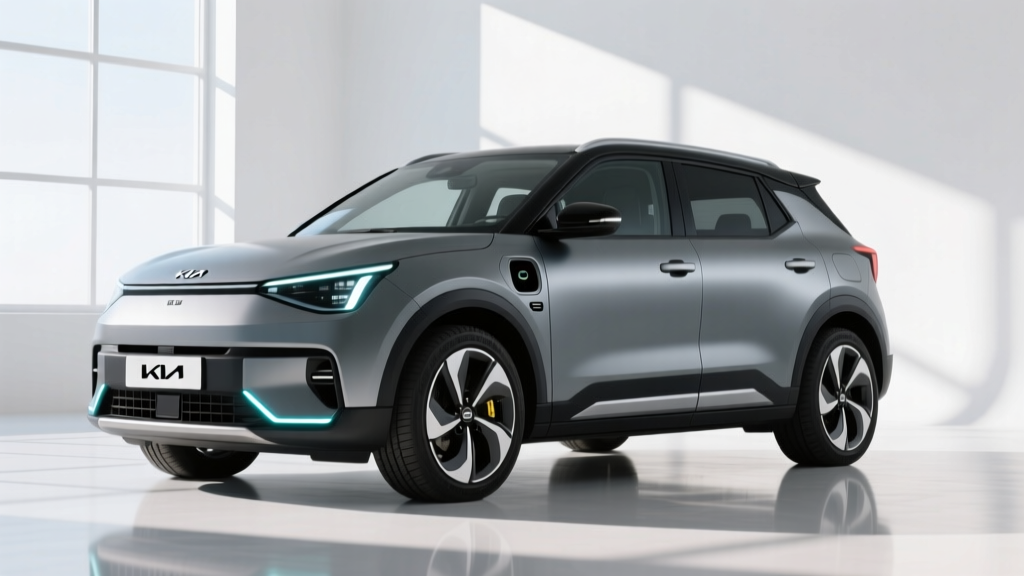
The Kia EV3 slots into one of the most competitive segments in electrification — the compact electric SUV. Buyers searching for Kia EV3 dimensions are usually asking a practical question: will this fit my garage, my family, and my road-trip ambitions? The answer is a qualified yes. At roughly 171 inches long and riding on a 108.3-inch wheelbase, the EV3 is shorter than a Kia Sportage but offers a surprisingly generous interior thanks to its dedicated EV platform. Combined with an EPA-estimated range north of 300 miles on select trims, DC fast-charging capability up to 150 kW, and a starting MSRP positioned below the Hyundai Ioniq 5, the EV3 makes a compelling case as a first electric vehicle for urban and suburban buyers.
But spec sheets only tell half the story. Below, we reconcile the sticker numbers with real-world driving, break down charging speeds past the marketing peak, and examine whether the EV3 qualifies for the federal EV tax credit under current IRS §30D rules.
Kia EV3 Dimensions: Exterior and Interior Measurements
The EV3 is built on Hyundai Motor Group's E-GMP-derived platform, adapted for front-wheel-drive compact applications. Here are the exact exterior and interior measurements for the 2026 model year:
| Measurement | Specification |
|---|---|
| Overall Length | 171.3 in (4,350 mm) |
| Overall Width (excl. mirrors) | 72.8 in (1,850 mm) |
| Overall Height | 62.0 in (1,575 mm) |
| Wheelbase | 108.3 in (2,750 mm) |
| Ground Clearance | 6.9 in (175 mm) |
| Curb Weight (est.) | ~4,050 lbs |
| Frunk Volume | ~1.8 cu ft (52 L) |
| Measurement | Front | Rear |
|---|---|---|
| Headroom | 39.8 in | 38.4 in |
| Legroom | 41.7 in | 38.2 in |
| Shoulder Room | 56.3 in | 54.5 in |
| Cargo Volume (behind rear seats) | 22.1 cu ft | |
| Cargo Volume (rear seats folded) | 56.5 cu ft | |
For context, the EV3 is about 6 inches shorter than the Kia EV6, but its taller roofline and shorter overhangs deliver rear legroom that rivals midsize SUVs. The flat floor — a benefit of the skateboard-style battery pack — means three-across seating in the rear is more realistic than in most compacts. The 22.1 cu ft cargo area is competitive with the Volvo EX30 (18 cu ft) and slightly smaller than the Hyundai Kona Electric (25.5 cu ft), but the EV3's squared-off tailgate makes loading bulkier items easier.
Battery, Range, and Efficiency: EPA vs. the Real World
The 2026 Kia EV3 is offered with two battery options globally, but the U.S. market receives the Long Range variant as standard on most trims:
| Spec | Long Range (U.S.) |
|---|---|
| Battery Chemistry | NMC (Nickel Manganese Cobalt) |
| Gross Capacity | 81.4 kWh |
| Usable Capacity | ~78.0 kWh |
| EPA Est. Range (Wind trim, 18" wheels) | 310 miles |
| EPA Est. Range (GT-Line, 19" wheels) | 290 miles |
| Combined MPGe | 125 MPGe |
| Efficiency | 27 kWh/100 mi |
| Drivetrain | FWD (single motor) |
| Horsepower | 201 hp |
| Torque | 195 lb-ft |
| 0–60 mph | 7.5 seconds |
The EPA's 310-mile figure applies to the Wind trim with 18-inch aero wheels and the most conservative drive mode. In real-world mixed driving — 70% highway at 70–75 mph with climate control active — expect 255–275 miles from the Wind trim and 240–260 miles from the GT-Line. Cold-weather driving (below 32°F) with cabin heating can reduce range by 20–30%, bringing effective range to roughly 210–230 miles for the Long Range. The EV3 does feature a heat pump on all trims, which mitigates some of that winter loss compared to resistive-heating EVs. For daily commuting under 60 miles round-trip, you'll charge at home every third or fourth night and rarely think about range.
The NMC chemistry delivers higher energy density than LFP, which is how Kia packs 81.4 kWh into a compact footprint. The trade-off: NMC batteries benefit from being kept between 20–80% state of charge for daily use, while LFP packs tolerate regular 100% charges. Kia's battery management system includes a buffer of approximately 3.4 kWh to protect against deep discharge and overcharge degradation.
Charging Speeds: DC Fast, Level 2, and Level 1
Charging capability is where the EV3 shows its E-GMP lineage — competent but not class-leading. Here's the full breakdown:
| Charging Level | Power / Rate | Time / Rate |
|---|---|---|
| DC Fast Charge (CCS/NACS adapter) | Peak 150 kW | 10–80% in ~31 minutes |
| DC Fast Charge (sustained avg.) | ~95 kW avg (10–80%) | Varies by station & battery temp |
| Level 2 Home/Public (240V) | 10.9 kW onboard charger | ~7.5 hours (0–100%) |
| Level 1 (120V household) | ~1.4 kW | ~4 mi/hr added |
A few things to unpack here. The 150 kW peak is respectable but not the 230+ kW you'll find on the Ioniq 5 or EV6, which use 800V architectures. The EV3 uses a 400V system, which means the charge curve tapers more aggressively above 60% state of charge. In practice, you'll see 140–150 kW from 10–40%, dropping to roughly 80–90 kW by 65%, and tapering further to under 40 kW above 85%. This is why the 10–80% time is around 31 minutes rather than the sub-20-minute times you see on 800V vehicles.
For home charging, the 10.9 kW onboard charger is a strong point. On a 48-amp Level 2 circuit (the most common home installation), you'll add roughly 37 miles of range per hour of charging. An overnight charge from 20% to 80% takes about 4.5 hours — easily done while you sleep. A fueleconomy.gov listing confirms these efficiency figures for the 2026 model year.
Pricing, Trims, and Federal Tax Credit Eligibility
The 2026 Kia EV3 is positioned as an accessible entry into the Kia EV lineup, undercutting the EV6 and EV9 substantially:
| Trim | MSRP | Key Features |
|---|---|---|
| Wind | $36,490 | 18" wheels, 310-mi range, heated seats, 12.3" display |
| GT-Line | $40,490 | 19" wheels, sport suspension, ADAS+, panoramic roof |
| GT-Line AWD (announced) | $43,990 | Dual motor, 295 hp, ~260 mi range, tow prep |
As of the 2026 tax year, the Kia EV3's eligibility for the $7,500 federal tax credit depends on several factors that buyers must verify before purchase:
- MSRP Cap: SUVs must be priced at or below $80,000 — all EV3 trims qualify.
- Buyer Income Cap: Modified AGI must not exceed $150,000 (single), $225,000 (head of household), or $300,000 (joint filers).
- Battery Sourcing: A percentage of critical minerals and battery components must meet North American sourcing thresholds that tighten annually. Kia has confirmed that certain EV3 trims meet the 2026 sourcing requirements, but eligibility can shift with supply-chain changes. Always verify on the IRS Clean Vehicle credit page at irs.gov before purchasing.
- Point-of-Sale Transfer: If eligible, the $7,500 credit can be applied at the dealer as a down-payment reduction rather than waiting for tax filing.
If the EV3 qualifies for the full credit, the effective starting price drops to approximately $28,990 for the Wind trim — making it one of the most affordable 300-mile EVs on the market. Consult a tax professional for your specific situation.
Technology, Safety, and Driver Assistance
Kia loads the EV3 with a tech suite that punches above its price class:
- Infotainment: Dual 12.3-inch displays (instrument cluster + touchscreen) running Kia's latest ccNC operating system with wireless Apple CarPlay and Android Auto.
- ADAS: Highway Driving Assist 2 (HDA2) with lane-centering, adaptive cruise, and lane-change assist. This is an SAE Level 2 system — the driver must keep hands on the wheel and eyes on the road at all times. It is not autonomous driving.
- Digital Key 2: Use your smartphone as the key fob via NFC/UWB; share digital keys with family members.
- V2L (Vehicle-to-Load): Power camping gear, laptops, or small appliances via the interior V2L outlet (up to 1.5 kW).
- OTA Updates: Over-the-air software updates for powertrain calibration, infotainment, and ADAS improvements.
- Remote Smart Parking Assist: Move the EV3 in and out of tight parking spots using the key fob while standing outside the vehicle.
Kia's Highway Driving Assist 2 is a capable Level 2 driver-assistance system, but it requires continuous driver supervision. It will not navigate roundabouts, stoplights, or construction zones autonomously. Drivers who attempt to use it hands-free will receive escalating warnings and eventual system disengagement. For true driverless operation (SAE Level 4), only services like Waymo currently qualify — and those are robotaxi fleets, not consumer vehicles.
Safety ratings from the NHTSA and IIHS were pending at the time of this review's publication. The EV3's E-GMP platform has performed well in crash testing across the Kia/Hyundai family (the EV6 earned IIHS Top Safety Pick+), so strong results are expected.
Warranty and Long-Term Ownership
Kia continues to offer one of the best warranty packages in the industry, and the EV3 is no exception:
| Coverage | Term |
|---|---|
| Limited Vehicle Warranty | 5 years / 60,000 miles |
| Powertrain Warranty | 10 years / 100,000 miles |
| EV Battery Warranty | 10 years / 100,000 miles (min. 70% capacity retention) |
| Roadside Assistance | 5 years / 60,000 miles |
| Complimentary Maintenance | None (EVs require minimal scheduled maintenance) |
The 10-year/100,000-mile battery warranty guarantees that the high-voltage pack will retain at least 70% of its original capacity. In practice, NMC batteries in thermally managed systems like the EV3's typically degrade 8–12% over the first 100,000 miles based on data from similar E-GMP vehicles. Battery replacement cost, should it ever be needed out of warranty, is estimated at $12,000–$16,000 for the 81.4 kWh pack — though prices continue to decline as cell costs fall.
Driving Impressions and Who the EV3 Suits Best
With 201 horsepower and 195 lb-ft of torque routed to the front wheels, the EV3 is not a performance SUV. The 7.5-second 0–60 mph time is adequate for highway merging and city driving but won't thrill enthusiasts. What it does well is deliver a composed, quiet ride with well-tuned regenerative braking that offers four levels of regen (including a one-pedal-driving "i-Pedal" mode). The steering is light and precise — ideal for parking lots and urban navigation.
The EV3's ride quality benefits from its low center of gravity (the battery pack sits beneath the floor) and multi-link rear suspension. Road noise is well-suppressed, and the cabin materials — while not luxury-grade — are a step above what you'd expect at this price point, with soft-touch surfaces on the dash and door panels.
Pros
- 310-mile EPA range (Wind trim) at an accessible price
- Generous rear legroom for a compact footprint
- 10.9 kW Level 2 onboard charger (faster than many rivals)
- Heat pump standard on all trims
- 10-year/100,000-mile battery warranty
- V2L capability for outdoor/camping use
- Potential $7,500 federal tax credit brings effective price under $29K
Cons
- 400V architecture limits DC fast-charge speed vs. 800V rivals
- FWD only on most trims (AWD is late availability)
- 7.5-sec 0–60 is uninspiring
- GT-Line loses 20 miles of range for sportier wheels
- No front trunk (frunk) on some trims due to HVAC packaging
- Cargo space trails the Kona Electric by ~3 cu ft
- Charging network access requires CCS-to-NACS adapter at Tesla Superchargers
Who Should Buy the Kia EV3?
Best for: Urban and suburban commuters driving under 80 miles daily who want a compact, easy-to-park EV with enough range for occasional 200-mile road trips. Couples or small families who value interior space efficiency over cargo volume. Budget-conscious buyers who want to maximize federal tax credit savings.
Look elsewhere if: You regularly tow (the EV3 is not rated for significant towing). You need AWD immediately (availability is limited). You take frequent 400+ mile road trips where 800V fast-charging vehicles like the Ioniq 5 or EV6 will save you time at DC chargers. You need maximum cargo space — the EV6 or Ioniq 5 offer more.
Frequently Asked Questions
What is the real-world range of the Kia EV3?
The EPA rates the Wind trim at 310 miles and the GT-Line at 290 miles. In real-world highway driving at 70–75 mph with climate control, expect 255–275 miles from the Wind and 240–260 from the GT-Line. In freezing temperatures with the heater on, range drops to approximately 210–230 miles thanks to the standard heat pump mitigating some loss.
How fast does the Kia EV3 charge?
On a DC fast charger, the EV3 peaks at 150 kW and charges from 10–80% in approximately 31 minutes. At home on a Level 2 (240V, 48-amp) charger, the 10.9 kW onboard charger adds about 37 miles per hour, fully replenishing the battery overnight in roughly 7.5 hours from empty.
Does the Kia EV3 qualify for the $7,500 federal EV tax credit?
The EV3 meets the MSRP cap (under $80,000 for SUVs). Buyer eligibility requires meeting IRS income thresholds ($150K single / $300K joint) and the vehicle must satisfy 2026 battery-sourcing requirements, which can change. Always verify current eligibility on irs.gov before purchasing. If eligible, the credit can be transferred at the point of sale as a price reduction.
How do Kia EV3 dimensions compare to the EV6 and competitors?
The EV3 is approximately 171 inches long — about 6 inches shorter than the EV6 (177 in) and 3 inches shorter than the Hyundai Kona Electric. However, its 108.3-inch wheelbase delivers rear legroom (38.2 in) that is competitive with vehicles a class larger. It's best thought of as a tall compact hatchback/crossover rather than a traditional SUV.
Is the Kia EV3 worth buying vs. the Hyundai Kona Electric or Volvo EX30?
The EV3's 310-mile range and 81.4 kWh battery significantly outpace the Kona Electric (~261 miles, 65 kWh) and the Volvo EX30 (~275 miles, 69 kWh). If range and interior space are priorities, the EV3 wins. If you want a smaller footprint for tight city parking, the EX30 is more compact. If you want proven reliability and a lower starting price, the Kona Electric remains competitive but trails on range and charging speed.
What connector does the Kia EV3 use for charging?
The U.S.-spec EV3 uses the CCS1 connector for DC fast charging and J1772 for Level 2. Kia provides or offers a CCS-to-NACS adapter for access to Tesla Supercharger stations, which is increasingly important as the industry transitions to the NACS standard through 2026 and beyond.