Quick Answer: Will the Kia EV2 Come to the USA?
As of early 2026, Kia has not officially confirmed the EV2 for the U.S. market. The subcompact electric crossover was unveiled in concept form and is expected to launch in Europe and South Korea first. If it arrives stateside, likely as a 2027 or 2028 model, expect a starting MSRP around $27,000–$32,000, an EPA-estimated range of roughly 220–260 miles, and a battery in the 58–65 kWh range. U.S. buyers looking for an affordable Kia EV today should consider the Kia EV6 (starting ~$42,500) or the upcoming Kia EV3, which is closer to U.S. confirmation.
What Is the Kia EV2?
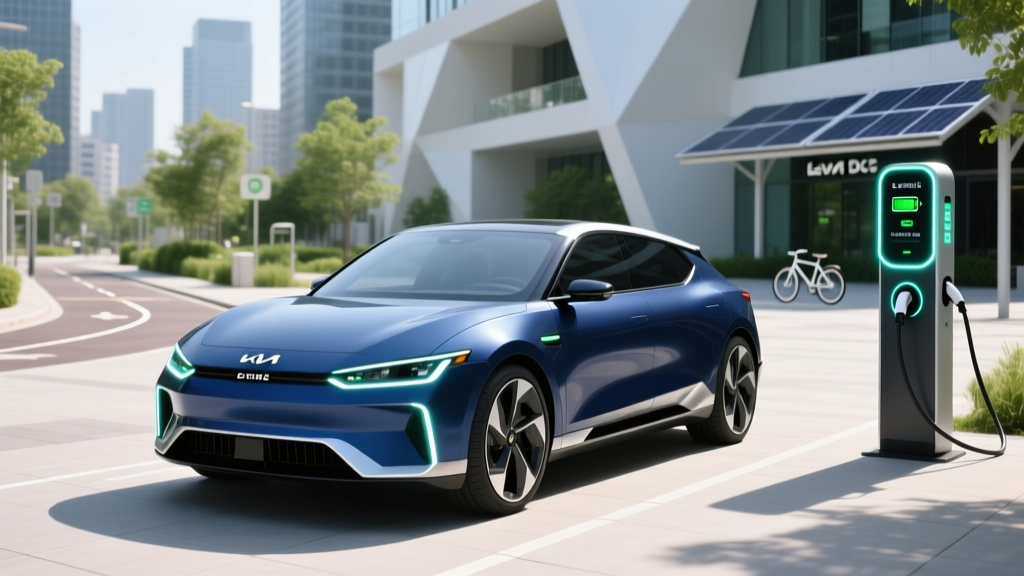
The Kia EV2 is the smallest member of Kia's expanding EV lineup, slotting below the EV6, EV9, and the mid-size EV3/EV4 models in the pipeline. Built on a dedicated EV platform (likely a shortened version of Hyundai Motor Group's E-GMP or the newer eM platform), the EV2 targets urban and suburban drivers who want an affordable, compact electric crossover with modern tech and reasonable range.
In concept form, the EV2 measures roughly 169 inches long — comparable to a Kia Seltos or Hyundai Venue — making it one of the smallest dedicated EVs in the Kia family. The production version is expected to retain the concept's upright, boxy silhouette, maximizing interior space within a small footprint.
Projected Specs: Range, Battery, and Charging
Because the EV2 is not yet on sale in any market, the figures below are preliminary estimates based on Kia's platform strategy, European regulatory filings, and industry analysis. Final U.S. specs may differ.
| Specification | Estimated (U.S. Spec) |
|---|---|
| Battery Capacity (usable) | ~58–65 kWh (LFP or NMC TBD) |
| EPA Range (est.) | 220–260 miles |
| Real-World Highway Range | ~180–220 miles (70°F); ~150–190 miles (30°F) |
| Peak DC Fast Charge Rate | ~120–150 kW |
| 10–80% DC Charge Time (est.) | ~28–35 minutes |
| Level 2 (240V) Charge Rate | ~7.2–10.9 kW |
| Level 2 Full Charge Time | ~6–9 hours |
| Motor Output | ~150–201 hp (FWD single motor) |
| 0–60 mph (est.) | ~7.5–9.0 seconds |
| Drivetrain | Front-wheel drive (AWD unlikely) |
Real-world range caveat: EPA estimates assume a mix of city and highway driving at moderate temperatures. On sustained highway trips at 70+ mph, expect to use 80–85% of the EPA sticker. In freezing temperatures (below 32°F), range drops 20–30% depending on cabin heat usage — a heat pump, if standard, would help mitigate this.
Charging curve reality: The peak DC rate (e.g., 150 kW) is only sustained between roughly 10–50% state of charge. Above 60%, the rate tapers significantly — often below 50 kW past 80%. This means the 10–80% time is a more useful metric than peak kW alone.
Expected Pricing and Tax Credit Eligibility
The EV2's most compelling attribute, if it reaches U.S. shores, will be its price. Kia has signaled that the EV2 targets the affordable EV segment — an area with thin competition in 2026 beyond the Chevrolet Equinox EV, Nissan Leaf successor, and base Hyundai Kona Electric.
| Trim (Projected) | Est. MSRP | After §30D Credit (if eligible) |
|---|---|---|
| Base (Light / Air) | $27,000–$29,000 | $19,500–$21,500 |
| Mid (Wind / GT-Line) | $30,000–$33,000 | $22,500–$25,500 |
| Top (Limited) | $34,000–$37,000 | $26,500–$29,500 |
Federal tax credit (§30D) considerations: The up-to-$7,500 clean vehicle credit requires meeting several conditions that change annually:
- MSRP cap: SUVs/crossovers must be priced at or below $80,000 (the EV2 clears this easily).
- Buyer income cap: AGI must not exceed $150,000 (single), $225,000 (head of household), or $300,000 (joint).
- Battery sourcing: Critical minerals and battery components must meet escalating domestic-content thresholds. By 2027, these requirements are stringent, and many foreign-built EVs fail to qualify.
- Assembly location: The EV2 would likely be built in South Korea or Europe — which could disqualify it from the full credit unless Kia shifts production to a U.S. plant (as they did with the EV9 in Georgia).
The point-of-sale transfer option allows dealers to apply the credit as a down-payment reduction at purchase, but only if the vehicle qualifies. Check fueleconomy.gov for the latest qualifying vehicle list before committing.
Kia EV2 vs. Gas Subcompact vs. Hybrid: Cost Comparison
Is a sub-$30,000 EV actually cheaper to own than a gas-powered Kia Seltos or a Toyota Corolla Cross Hybrid? Here's a five-year ownership projection assuming 12,000 miles/year, $3.50/gallon gas, and $0.14/kWh home electricity.
| Cost Factor (5 Years) | Kia EV2 (est.) | Kia Seltos (Gas) | Corolla Cross Hybrid |
|---|---|---|---|
| Purchase Price (MSRP) | $29,500 | $27,500 | $30,500 |
| Federal Tax Credit | −$7,500 (if eligible) | $0 | $0 |
| Effective Purchase Price | $22,000 | $27,500 | $30,500 |
| Fuel/Energy (60,000 mi) | $2,520 (home charging) | $7,350 | $4,725 |
| Maintenance (5 yr) | $1,200 | $3,800 | $3,200 |
| Insurance (est. avg) | $8,500 | $7,000 | $7,200 |
| 5-Year Total Cost | $34,220 | $45,650 | $45,625 |
Key takeaways:
- If the EV2 qualifies for the full §30D credit, its effective purchase price undercuts both gas competitors significantly.
- Home charging at $0.14/kWh yields a per-mile energy cost of ~$0.042, versus ~$0.12/mile for a 30 MPG gas car.
- EV insurance premiums run 15–25% higher on average — a real cost that partially offsets fuel savings.
- Without the tax credit (due to income phase-out, sourcing rules, or non-U.S. assembly), the EV2's cost advantage narrows substantially.
Real-World Ownership: What First-Time EV Buyers Should Know
The EV2's appeal hinges on accessibility — but ownership realities vary drastically based on your living situation and driving habits.
Home Charging Access
If you can install a Level 2 (240V) home charger, the EV2 becomes remarkably convenient. A typical Level 2 installation runs $800–$2,500 (charger + electrician + permit), assuming your electrical panel has capacity. Charging overnight at home means starting every day with a full "tank."
If you live in an apartment or lack a dedicated parking spot with outlet access, you'll rely on public charging — which is slower, more expensive ($0.30–$0.55/kWh at DC fast chargers), and less reliable. This is the single biggest ownership variable that EV marketing glosses over.
Cold Climate Considerations
Subcompact EVs with smaller batteries feel cold-weather range loss more acutely. A 240-mile EPA estimate could drop to 165–180 miles in sustained sub-freezing driving. If you live in the upper Midwest or Northeast and regularly drive 80+ mile round trips in winter, verify that the EV2 includes a heat pump (more efficient than resistive cabin heating) and a battery preconditioning feature for DC charging.
Driving Patterns
The EV2's projected 220–260 mile range comfortably covers the average American's 37-mile daily round commute (FHWA data) with substantial buffer. For road trips, plan DC fast-charging stops every 180–200 miles (real-world highway). At 150 kW peak, a 10–80% charge in ~30 minutes means adding ~150 miles of range per stop — manageable but noticeably slower than the EV6's 240 kW capability.
Common Misconceptions
| Myth | Fact |
|---|---|
| "Small EV batteries degrade quickly" | Modern LFP and NMC chemistries retain 85–90% capacity after 100,000 miles. Kia's battery warranty is expected at 10 years/100,000 miles (≥70% capacity retention). |
| "You need a $15,000 electrical upgrade to charge at home" | Most homes with a 200A panel can add a 40A/9.6 kW Level 2 circuit for $1,000–$1,800. Only older homes with 100A panels typically need upgrades ($2,000–$4,000). |
| "The tax credit is a guaranteed $7,500 off" | §30D has income caps, MSRP caps, and battery-sourcing requirements that disqualify many vehicles and buyers. Always verify before purchasing. |
| "An EV2 with 240 miles of range isn't enough" | 95% of daily U.S. driving is under 60 miles. Range matters primarily for road trips — where DC fast charging infrastructure, not battery size alone, determines convenience. |
Decision Framework: Should You Wait for the Kia EV2?
Wait for the EV2 if:
- You want a sub-$30,000 EV and aren't in a rush (U.S. launch may be 2027–2028).
- You have reliable home Level 2 charging access.
- Your daily driving is under 60 miles with occasional road trips.
- You prefer Kia's design language, warranty (10yr/100k mi powertrain), and dealer network.
- You qualify for the §30D credit and the EV2 meets sourcing requirements at launch.
Buy something else now if:
- You need a vehicle within 6 months — the EV2 is not available in the U.S. as of 2026.
- You lack home charging and your area has sparse public DC infrastructure.
- You regularly tow, haul cargo, or need AWD for snow — the EV2 will be FWD-only and compact.
- You need 300+ miles of real-world range for long commutes or frequent road trips.
Consider these alternatives available now:
- Hyundai Kona Electric (2026): ~$33,000, 261 mi EPA, 150 kW DC charging, U.S.-available now.
- Chevrolet Equinox EV (2026): ~$33,000, 319 mi EPA, 150 kW DC, qualifies for §30D credit (U.S.-built).
- Kia EV6 (2026): ~$42,500, 232–310 mi EPA, 240 kW DC charging, proven platform.
- Toyota Corolla Cross Hybrid: ~$28,000, 42 MPG combined, no charging needed, no range anxiety — a strong bridge option if you're not ready for full EV ownership.
FAQ: Kia EV2 USA Questions
Is the Kia EV2 confirmed for the United States?
No. As of 2026, Kia has not officially announced a U.S. launch date for the EV2. It is expected to debut in Europe and South Korea first. A U.S. release, if confirmed, would likely be for the 2027 or 2028 model year.
How much will the Kia EV2 cost in the USA?
Based on Kia's pricing strategy and European market positioning, expect a U.S. MSRP starting around $27,000–$29,000 for a base trim, with higher trims reaching $34,000–$37,000. The §30D tax credit could reduce the effective price by up to $7,500, but eligibility depends on assembly location, battery sourcing, and buyer income.
Will the Kia EV2 qualify for the $7,500 federal tax credit?
Uncertain. The §30D credit requires U.S. final assembly (or a free-trade-agreement country in some cases) plus battery-sourcing thresholds that tighten yearly. If Kia builds the EV2 in South Korea without shifting production, it may not qualify. Watch for official announcements as launch approaches.
What battery chemistry will the Kia EV2 use?
Kia has not confirmed U.S. specs. Industry reports suggest the EV2 may use LFP (lithium iron phosphate) chemistry for base trims — offering longer cycle life and lower cost but slightly less energy density — with NMC (nickel manganese cobalt) available on higher trims for maximum range. LFP batteries also tolerate daily 100% charging better than NMC.
How does the EV2 compare to the Kia EV6?
The EV2 is significantly smaller (subcompact vs. midsize crossover), less powerful (~150–201 hp vs. 167–320 hp), and has shorter range (~220–260 mi vs. 232–310 mi). It also charges slower (~150 kW peak vs. 240 kW). However, the EV2 is expected to cost $12,000–$15,000 less, making it a budget-friendly entry point to Kia's EV ecosystem.
What should I buy if I can't wait for the Kia EV2?
The closest alternatives in size and price are the Hyundai Kona Electric (261 mi range, ~$33K), Chevrolet Equinox EV (319 mi, ~$33K, U.S.-built), and Nissan's next-generation Leaf. If you want to avoid charging entirely, the Toyota Corolla Cross Hybrid (42 MPG, ~$28K) is a pragmatic choice.