Quick Answer: Should You Wait for the Kia EV2?
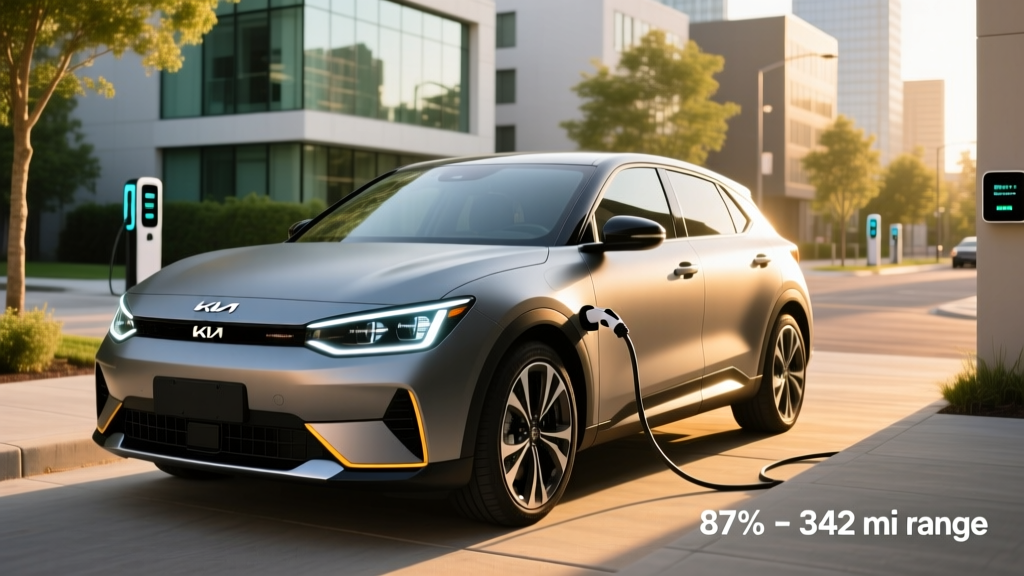
The Kia EV2 is an announced subcompact electric crossover expected to arrive in select global markets in late 2025 and potentially reach the U.S. for the 2026 or 2027 model year. Based on Kia's preliminary disclosures and the Hyundai Motor Group's EV platform strategy, the EV2 is projected to offer approximately 200–250 miles of EPA-estimated range, a starting MSRP near $30,000–$35,000, and DC fast charging around 100–150 kW peak. If you need a compact, affordable EV for urban commuting and can install a Level 2 home charger, the EV2 could be worth tracking — but U.S. specs, pricing, and federal tax credit eligibility remain unconfirmed as of early 2026. Buyers who need a vehicle now should cross-shop the Kia Niro EV, Hyundai Kona Electric, and Chevrolet Equinox EV.
What Is the Kia EV2 and Who Is It For?
The Kia EV2 sits below the EV3, EV6, and EV9 in Kia's expanding electric lineup. It targets the subcompact crossover segment — think Kia Seltos or Hyundai Venue sizing, but fully electric. Kia has confirmed the EV2 as part of its "Plan S" electrification strategy, which calls for 15 dedicated EV models globally by 2030. The EV2 is designed for city-dwelling buyers, first-time EV adopters, and cost-conscious commuters who want a small footprint, low running costs, and modern connectivity without paying EV6 or Ioniq 5 money.
Kia has not released final U.S. specifications. The figures in this preview are based on Kia's global announcements, the shared Hyundai Motor Group platform architecture, and industry analysis. All specs are preliminary and subject to change before the vehicle reaches American showrooms.
Estimated Specs: Range, Battery, and Performance
Based on the platform underpinning Kia's smaller EVs and global-market disclosures, here is what we project for a U.S.-spec EV2:
| Specification | Estimated (U.S. Spec) |
|---|---|
| Battery Capacity (usable) | ~58–65 kWh (NMC chemistry) |
| EPA Range (est.) | ~200–250 miles |
| Real-World Highway Range | ~170–210 miles (70+ mph, moderate climate) |
| Cold-Weather Range (20°F) | ~150–185 miles (est. 25–30% loss) |
| Motor Output | ~150–201 hp (single motor, FWD) |
| 0–60 mph (est.) | ~7.5–8.5 seconds |
| Peak DC Fast Charge Rate | ~100–150 kW |
| 10–80% DC Charge Time (est.) | ~25–35 minutes |
| Level 2 AC Charge Rate | ~10.9 kW (est.) |
| Level 2 Full Charge Time | ~6–7 hours |
| Charging Port | NACS (expected for U.S. market) |
| Estimated Starting MSRP | $30,000–$35,000 |
| Battery/Powertrain Warranty | 10 years / 100,000 miles (Kia standard) |
Real-World Range vs. EPA Sticker
Kia's EV6 and EV9 have historically delivered real-world range within 5–10% of EPA estimates in mixed driving. However, sustained highway driving at 75+ mph typically reduces range by 10–15%, and cold weather (below 32°F) can cut range by 20–30% due to battery resistance and cabin heating demands. If the EV2 achieves a 240-mile EPA rating, plan for roughly 200 miles of usable range in mixed conditions and 165–180 miles on cold winter highway trips. A heat pump — standard on many Kia EVs — would mitigate some cold-weather loss.
Charging Reality: Home, Public, and What You'll Spend
Charging infrastructure access is the single biggest variable in EV ownership satisfaction. Here is what EV2 charging looks like across the three levels:
| Level | Power | Miles Added per Hour | Typical Use Case |
|---|---|---|---|
| Level 1 (120V household) | ~1.4 kW | ~4–5 miles/hr | Overnight trickle; emergency top-ups |
| Level 2 (240V home/public) | ~10.9 kW | ~32–38 miles/hr | Daily home charging; full overnight refill |
| DC Fast Charging | 100–150 kW peak | ~150–200 miles in 30 min | Road trips; rapid top-ups |
Home charging setup: Most EV2 buyers will want a 240V Level 2 home charger. Expect to pay $500–$800 for a quality Level 2 unit (such as a ChargePoint Home Flex or Emporia Vue) plus $800–$2,500 for professional electrician installation, depending on your panel capacity and wiring run. If your home has a 200-amp electrical panel with spare capacity, installation stays on the lower end. Older homes with 100-amp panels may require a $2,000–$4,000 panel upgrade — a cost many buyers overlook.
Cost to charge vs. fuel: At the U.S. average residential electricity rate of approximately $0.17/kWh (per EIA data), fully charging a 62 kWh battery costs roughly $10.50, yielding about $0.04–$0.05 per mile. A comparable gas-powered subcompact crossover getting 30 MPG combined at $3.30/gallon costs about $0.11 per mile. That is a fuel cost reduction of more than 50%.
| Cost Factor | Kia EV2 (Est.) | Gas Subcompact Crossover (30 MPG) |
|---|---|---|
| Purchase Price (base MSRP) | $30,000–$35,000 | $24,000–$28,000 |
| Fuel/Energy Cost per Mile | $0.04–$0.05 (home charging) | $0.11 ($3.30/gal, 30 MPG) |
| Annual Fuel/Energy (12,000 mi) | $480–$600 | $1,320 |
| Annual Maintenance | $300–$400 | $700–$900 |
| 5-Year Fuel + Maintenance | $3,900–$5,000 | $10,100–$13,500 |
| Insurance (annual avg.) | $1,600–$2,000 | $1,300–$1,600 |
Over five years, the EV2 could save $5,000–$8,000 in combined fuel and maintenance costs compared to a gas equivalent — but those savings must be weighed against a higher purchase price and potentially higher insurance premiums. EV insurance tends to run 15–25% higher than comparable gas vehicles due to repair cost structures and battery replacement considerations.
Federal Tax Credit: Will the EV2 Qualify?
The IRS §30D Clean Vehicle Credit offers up to $7,500 for qualifying new EVs, but eligibility depends on several criteria that change frequently. As of early 2026, the key requirements include:
- MSRP cap: Vans, SUVs, and pickups must be under $80,000; sedans and other vehicles under $55,000. The EV2, as a subcompact crossover, would likely fall under the $55,000 cap — making it eligible on price.
- Buyer income limits: Modified adjusted gross income must not exceed $150,000 (single), $225,000 (head of household), or $300,000 (joint).
- Battery component sourcing: Increasing percentages of battery components must be manufactured or assembled in North America, and critical minerals must be sourced from the U.S. or free-trade-agreement partners.
- Final assembly: The vehicle must undergo final assembly in North America.
- Point-of-sale transfer: Buyers can transfer the credit to the dealer at purchase, reducing the out-of-pocket price immediately.
The critical unknown: Kia's current U.S.-market EVs (EV6, EV9) have faced partial or full credit ineligibility due to battery sourcing and assembly location requirements. The EV2's credit status will depend entirely on where Kia decides to build it and source its battery cells. If Kia manufactures the EV2 at its West Point, Georgia plant (as it does the EV9), qualification becomes more likely. If it is imported from South Korea, the credit may be reduced or unavailable. Consult a tax professional and check fueleconomy.gov closer to the vehicle's U.S. launch for confirmed eligibility.
EV2 vs. Gas vs. Hybrid: Which Actually Makes Sense?
For buyers cross-shopping across powertrains, here is how the EV2 stacks up conceptually against a gas subcompact (e.g., Kia Seltos) and a hybrid (e.g., Kia Niro Hybrid):
| Factor | Kia EV2 (BEV, Est.) | Kia Niro Hybrid (HEV) | Kia Seltos (Gas) |
|---|---|---|---|
| Starting MSRP | $30,000–$35,000 | $28,000–$32,000 | $24,500–$28,000 |
| EPA Combined Efficiency | ~110–120 MPGe | ~49–53 MPG | ~29–31 MPG |
| Annual Fuel Cost (12k mi) | $480–$600 | $760–$850 | $1,320 |
| Range / Total Distance | ~200–250 mi (battery) | ~500+ mi (tank) | ~380–420 mi (tank) |
| Refuel/Recharge Time | 6–7 hrs (L2) / 30 min (DC) | 5 min (gas station) | 5 min (gas station) |
| Maintenance Complexity | Low (no oil, fewer fluids) | Moderate (ICE + electric) | Moderate (standard ICE) |
| Cold-Weather Impact | 20–30% range loss | Minimal MPG change | Minimal MPG change |
| Tax Credit Potential | Up to $7,500 (if eligible) | None (HEV) | None |
The takeaway: If you drive under 40 miles daily, have home charging access, and live in a moderate climate, the EV2's lower running costs and potential tax credit make it the most economical choice over 5–7 years. If you regularly drive 300+ miles between stops, lack reliable charging access, or live in extreme cold, the Niro Hybrid offers strong efficiency without range or infrastructure concerns. The gas Seltos remains the cheapest to buy upfront but the most expensive to operate long-term.
Common Misconceptions About Affordable EVs Like the EV2
| Myth | Fact |
|---|---|
| "Small EVs can't handle road trips." | A 200–250 mile range with 100–150 kW DC charging means a 30-minute stop adds ~150 miles. Cross-country trips require planning around charger locations but are entirely feasible on major interstates. |
| "The battery will need replacing in 5 years." | Modern NMC and LFP batteries are engineered for 1,500–3,000+ charge cycles. Kia's 10-year/100,000-mile battery warranty covers capacity below ~70%. Real-world data from EV6 owners shows roughly 5–8% degradation over 5 years. |
| "EVs are worse in winter." | EVs do lose 20–30% range in sub-freezing temperatures, but they start instantly (no cold cranking), offer preheating while plugged in, and provide instant cabin heat via heat pump systems. Winter tires and preconditioning mitigate most issues. |
| "Charging at home is too expensive to install." | A basic Level 2 installation on an existing 200A panel typically costs $1,200–$2,500 total (equipment + labor). Federal and utility rebates can offset $300–$1,000 of this cost. The investment pays back within 2–4 years through fuel savings. |
| "Affordable EVs are slow and basic." | Even a 150 hp single-motor EV delivers instant torque and 0–60 times around 8 seconds — quicker than most gas subcompacts. Kia's recent EVs feature full digital cockpits, OTA updates, and Level 2 ADAS as standard. |
Decision Framework: Is the Kia EV2 Right for You?
Wait for the Kia EV2 if:
- You want a subcompact EV under $35,000 and can wait for U.S. availability (likely late 2026 or 2027 model year).
- You drive under 50 miles daily and can charge at home overnight.
- You live in a moderate or warm climate where cold-weather range loss is minimal.
- You want Kia's 10-year/100,000-mile warranty and the latest infotainment platform.
- Potential §30D tax credit eligibility matters to your budget and you meet income requirements.
Buy Now (Kia Niro EV, Kona Electric, or Equinox EV) if:
- You need a vehicle within the next 3–6 months and cannot wait for an unconfirmed launch.
- You want confirmed EPA range, pricing, and tax credit eligibility today.
- You need slightly more cargo space or AWD availability (Equinox EV offers AWD trims).
Choose a Hybrid (Niro Hybrid or Niro PHEV) if:
- You lack reliable home or workplace charging access.
- You frequently drive 300+ miles in a single day without time for charging stops.
- You live in a region with limited public DC fast-charging infrastructure.
- Upfront purchase price is your primary constraint and you want to stay under $28,000.
What First-Time EV Buyers Should Know Before Committing
If the EV2 — or any EV — is your first electric vehicle, these practical realities matter more than spec sheets:
1. Confirm your home charging situation first. Before ordering any EV, have a licensed electrician assess your panel capacity. A 240V/40A circuit (supporting ~10 kW Level 2 charging) is ideal. If you rent or live in a condo without charging access, public charging will be your primary source — and it costs 2–4× more per kWh than home electricity.
2. Understand the charge curve. DC fast chargers advertise peak rates (e.g., 150 kW), but charging slows significantly above 80% state of charge to protect the battery. A 10–80% session might take 25–30 minutes, but pushing from 80–100% can add another 20+ minutes. Plan road-trip stops around 10–80% charges for efficiency.
3. Budget for insurance. Get insurance quotes before purchasing. EV insurance premiums average 15–25% higher than gas equivalents. GEICO, Progressive, and State Farm have varying EV rate structures — shop around.
4. Download charging apps before you need them. PlugShare, ChargePoint, EVgo, and Electrify America apps let you map routes, check charger availability, and initiate sessions. Tesla's NACS network (accessible to non-Tesla EVs via adapter or native NACS port) is expanding rapidly and generally offers the most reliable public charging experience.
5. Precondition your battery. Most modern EVs, including Kia's, allow you to precondition the battery while plugged in — warming it to optimal temperature before a DC fast-charge session or a cold-weather commute. This preserves range and enables faster charging speeds. Use the Kia Connect app to schedule preconditioning before your morning departure.
Frequently Asked Questions
When will the Kia EV2 be available in the United States?
Kia has confirmed the EV2 for global markets, with European and Korean availability expected first. U.S. availability has not been officially confirmed as of early 2026, but industry analysis suggests a potential 2027 model year launch. Kia typically announces U.S. pricing and specs 3–6 months before deliveries begin.
Will the Kia EV2 qualify for the $7,500 federal tax credit?
It depends on final assembly location and battery sourcing. If Kia builds the EV2 in the U.S. (likely at its Georgia plant) and meets North American battery component and critical mineral thresholds, it could qualify for the full or partial §30D credit. This will not be confirmed until closer to launch. Always verify on fueleconomy.gov and consult a tax professional.
How does the EV2 compare to the Kia EV3?
The EV3 is a slightly larger compact crossover (positioned between the EV2 and EV6) with an EPA-estimated range of approximately 270+ miles in global markets. The EV2 will be smaller, less expensive, and offer less range — targeting urban commuters rather than families needing highway road-trip capability.
Can I charge the Kia EV2 at Tesla Superchargers?
If the U.S.-spec EV2 ships with a native NACS charge port (as Kia has been transitioning to for newer models), it will access Tesla Superchargers directly. If it ships with CCS1, a Kia-approved NACS adapter will be required. Kia has been including adapters with recent EV purchases.
What is the expected battery replacement cost?
Out-of-warranty battery replacement for a ~60 kWh pack currently runs $8,000–$14,000 depending on labor and sourcing. However, Kia's 10-year/100,000-mile battery warranty covers defects and excessive degradation (typically below 70% capacity). Most EV batteries outlast the vehicle itself — data from Recurrent Auto shows the majority of EV batteries retain 90%+ capacity after 5 years.
Is the EV2 worth waiting for over a used EV?
A new EV2 at ~$30,000 (potentially $22,500–$25,000 after tax credit) competes with used EV6s, Model 3s, and Bolt EVs in the $18,000–$28,000 range. Used EVs offer immediate availability and proven specs but come with unknown battery health, shorter remaining warranties, and no point-of-sale tax credit (the separate used-EV credit is up to $4,000 with its own eligibility rules). If warranty coverage and the latest tech matter to you, waiting for the EV2 makes sense.