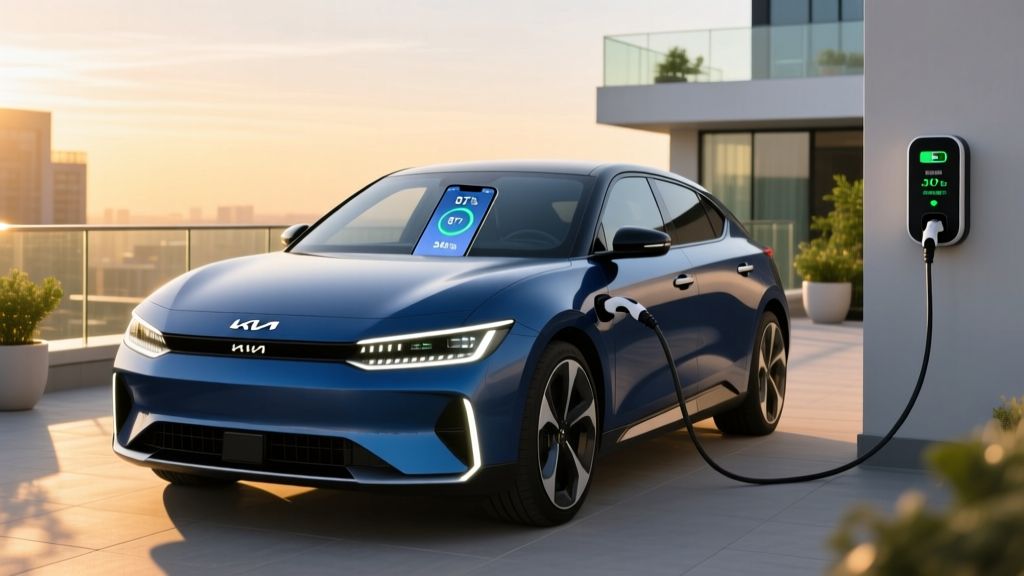
Quick Answer: The 2026 Kia EV2 is a compact electric crossover targeting budget-conscious urban and suburban buyers. Expected EPA range sits around 250 miles on the standard-range battery, with a long-range option pushing past 300 miles. Pricing should start near $30,000 before incentives, positioning it as one of the most affordable new EVs on the U.S. market. However, federal §30D tax credit eligibility depends on battery sourcing, your income, and MSRP caps — not every buyer will qualify for the full $7,500. If you have reliable Level 2 home charging and drive under 40 miles daily, the EV2 is a strong candidate. If you frequently road-trip or lack home charging access, a PHEV or a larger EV with faster DC charging may serve you better.
What Is the Kia EV2 and Who Is It For?
Kia officially unveiled the EV2 as a compact electric crossover slotting below the EV6 in its lineup. Think of it as the electric successor to the Soul's practicality meets the Seltos's footprint — a tall, boxy, space-efficient hatchback/crossover aimed squarely at first-time EV buyers, apartment dwellers with charging access, and cost-sensitive commuters.
The EV2 rides on a dedicated EV platform (a smaller variant of Hyundai Motor Group's E-GMP architecture), meaning it benefits from a flat floor, low center of gravity, and packaging optimized for electric propulsion — not a converted gas-car chassis. For 2026, Kia is targeting global markets, with U.S. availability expected in the second half of the year as a 2027 model year vehicle. Specs below reflect announced and estimated figures; final EPA certification may vary.
Range, Battery, and Charging: The Numbers That Matter
Range and charging speed are the two specs that determine whether an EV fits your life. Here's what we know about the EV2's powertrain based on Kia's announcements and platform data:
| Specification | Standard Range (Est.) | Long Range (Est.) |
|---|---|---|
| Battery Capacity (usable) | ~58 kWh | ~77 kWh |
| Battery Chemistry | LFP (Lithium Iron Phosphate) | NMC (Nickel Manganese Cobalt) |
| EPA Range (Estimated) | ~250 mi | ~310 mi |
| Real-World Highway Range | ~210–225 mi | ~260–280 mi |
| Cold-Weather Range (20°F) | ~175–195 mi | ~220–245 mi |
| Motor Output | ~168 hp / 150 kW | ~201 hp / 168 kW |
| 0–60 mph (Est.) | ~7.8 sec | ~6.9 sec |
| Peak DC Fast Charge Rate | ~150 kW | ~175 kW |
| 10–80% DC Fast Charge | ~28 min | ~25 min |
| Level 2 Charging (240V) | ~11 kW (onboard charger) | ~11 kW (onboard charger) |
| Level 2 Full Charge Time | ~5.5 hours | ~7 hours |
| Drivetrain | FWD (AWD optional) | FWD (AWD optional) |
Real-World Range Reality Check: The EPA sticker tells you the lab-tested estimate. On actual highways at 70+ mph, expect 10–15% less range than the EPA figure. In freezing temperatures (below 30°F), battery chemistry and cabin heating can reduce range by 20–30%. If your daily round-trip commute is 50 miles and you can charge at home nightly, even the standard-range EV2 covers your needs with a wide margin. If you regularly drive 200+ miles between charging stops, the long-range variant — or a vehicle with faster peak charging — is the safer choice.
LFP vs. NMC: Why Chemistry Matters
The standard-range EV2 is expected to use an LFP (lithium iron phosphate) battery, while the long-range variant will likely use NMC (nickel manganese cobalt). Here's why that distinction matters:
| Factor | LFP (Standard Range) | NMC (Long Range) |
|---|---|---|
| Energy Density | Lower (heavier for same kWh) | Higher (lighter, more range) |
| Cycle Life | 3,000+ cycles (excellent longevity) | 1,500–2,000 cycles |
| Cold-Weather Performance | Weaker in freezing temps | Better cold-weather output |
| Charging to 100% | Recommended periodically for calibration | Better kept at 80% daily |
| Cobalt/Nickel Content | None (lower ethical/supply concerns) | Contains cobalt and nickel |
| Cost | Lower per kWh | Higher per kWh |
If you plan to keep the EV2 for 8–10 years and charge at home daily, LFP's superior cycle life is a genuine advantage. The trade-off is slightly reduced cold-weather range and lower energy density.
EV vs. Gas vs. Hybrid: What Actually Saves You Money?
The EV2 competes not just with other EVs but with gas crossovers like the Kia Seltos and Hyundai Kona, as well as hybrids like the Kia Niro Hybrid. Let's compare the real five-year cost picture:
| Factor | Kia EV2 (Long Range, Est.) | Kia Seltos (Gas, AWD) | Kia Niro Hybrid |
|---|---|---|---|
| Base MSRP | ~$34,000 | ~$26,000 | ~$29,000 |
| Fed. Tax Credit (§30D) | Up to $7,500 (if eligible) | $0 | Up to $3,500 (HEV credit, limited) |
| Effective Price After Credit | ~$26,500 | ~$26,000 | ~$25,500–$29,000 |
| Fuel/Energy Cost (15k mi/yr) | ~$540/yr (home charging, $0.13/kWh) | ~$1,800/yr (28 MPG, $3.35/gal) | ~$1,000/yr (50 MPG combined) |
| 5-Year Fuel/Energy Total | ~$2,700 | ~$9,000 | ~$5,000 |
| Maintenance (5-Year Est.) | ~$1,200 | ~$3,500 | ~$2,800 |
| Insurance (5-Year Est.) | ~$8,500 | ~$6,500 | ~$7,000 |
| 5-Year Total Cost of Ownership | ~$38,900 | ~$45,000 | ~$42,300–$45,800 |
Key Takeaway: The EV2's higher insurance premiums (typically 15–25% more than gas equivalents) partially offset fuel savings. However, if you qualify for the full §30D credit and charge primarily at home, the five-year total cost of ownership undercuts both the Seltos and Niro Hybrid. The break-even point vs. the Seltos is roughly 2.5 years. Source: energy cost assumptions based on fueleconomy.gov average electricity rates and AAA fuel cost data.
Federal Tax Credit: Will You Actually Get $7,500?
This is where many EV buyers get burned by assumptions. The §30D federal tax credit is not a guaranteed $7,500 rebate. Under current IRS rules, eligibility hinges on multiple requirements that must all be satisfied simultaneously:
- MSRP Cap: The vehicle's base MSRP must not exceed $55,000 for sedans or $80,000 for SUVs/trucks/vans. The EV2 should clear this easily at its expected ~$30,000–$38,000 range.
- Buyer Income Limits: Modified adjusted gross income must not exceed $150,000 (single), $225,000 (head of household), or $300,000 (joint). Check your prior-year or current-year MAGI.
- Battery Sourcing: The battery must meet critical minerals and battery component requirements that phase in progressively. By 2026–2027, these rules are stringent — sourcing from China-disallowed entities can disqualify the credit partially or entirely. Kia's supply chain decisions for U.S.-spec EV2 batteries will determine the actual credit amount ($0, $3,750, or $7,500).
- Point-of-Sale Transfer: Under current rules, you can transfer the credit to the dealer at purchase, effectively reducing your out-of-pocket cost rather than waiting for a tax refund. This is optional — you can still claim it on your tax return instead.
- Tax Liability: The credit is non-refundable. You need sufficient federal tax liability to benefit from it (or use the point-of-sale transfer option).
For the most current rules, consult IRS.gov's clean vehicle credits page and verify with a tax professional before purchasing. Kia's U.S. press site will confirm final §30D eligibility once the EV2 goes on sale.
Real-World Ownership: What First-Time EV Buyers Must Know
Home Charging Is the Make-or-Break Factor
Over 80% of EV charging happens at home. If you have a garage or driveway where a Level 2 (240V) charger can be installed, the EV2 becomes a "plug in at night, wake up full" experience — no gas station visits, no range anxiety for daily driving.
Level 2 home charger installation costs typically run $800–$2,500 depending on your electrical panel's capacity and the distance from panel to charging location. If your panel is 200A with spare breaker slots, expect the lower end. A panel upgrade to 200A can add $1,500–$3,000. Always get a quote from a licensed electrician — never assume your panel can handle a 40A continuous circuit without verification.
If you live in an apartment or lack dedicated parking with electrical access, your EV2 ownership experience depends entirely on public charging infrastructure. Check PlugShare or ChargePoint maps for reliable Level 2 and DC fast chargers within a 5-minute drive of your home. If the nearest reliable charger is 15+ minutes away, a PHEV like the Niro PHEV may be a more practical electrified choice.
Charging Speed Reality: Peak kW Is Not Sustained kW
The EV2's estimated peak DC fast-charge rate of 150–175 kW is only sustained between roughly 10% and 40% state of charge. Above 50%, the charge curve tapers significantly — by 80%, you may be pulling only 50–70 kW. This is normal battery physics: lithium-ion cells accept charge more slowly as they fill to prevent overheating and degradation.
For road trips, plan charging stops around the 10–80% window where the EV2 charges fastest. A 25-minute stop at a 150+ kW station adds roughly 180–200 miles of range on the long-range model. Above 80%, charging slows enough that it's usually faster to unplug and drive than to wait for a full charge — unless you're stopping overnight.
Insurance, Depreciation, and Maintenance
EV insurance premiums run 15–25% higher than equivalent gas vehicles, driven by higher repair costs for battery and powertrain components and elevated vehicle prices. For the EV2, expect annual premiums in the $1,500–$1,900 range depending on your state, driving record, and coverage levels. Shop quotes from Geico, Progressive, State Farm, and EV-specialty insurers before purchasing.
Maintenance is where EVs genuinely save money. No oil changes, no spark plugs, no transmission fluid, no exhaust system. You'll still need tire rotations (EVs wear tires faster due to instant torque and heavier weight), cabin air filter replacements, brake fluid checks, and wiper blades. Kia's 10-year/100,000-mile powertrain warranty and 10-year/100,000-mile battery warranty (capacity retention above 70%) provide strong long-term protection, consistent with the brand's existing EV warranty structure.
Common Misconceptions About Compact EVs Like the EV2
| Myth | Fact |
|---|---|
| "250 miles of range isn't enough." | The average American drives 37 miles per day (FHWA data). A 250-mile EV covers nearly a week of commuting before needing a charge. For the 5% of trips that exceed range, DC fast charging or trip planning handles it. |
| "EV batteries need replacing every few years." | Modern EV batteries lose roughly 1–2% capacity per year under normal use. At year 8, expect 85–92% of original capacity. Kia's warranty guarantees above 70% at 10 years/100,000 miles. |
| "The power grid can't handle more EVs." | Most EV charging happens overnight when grid demand is lowest. A Level 2 home charger draws about the same as an electric clothes dryer. Utilities are upgrading distribution, but home charging rarely requires grid-level infrastructure changes. |
| "EVs are worse for the environment because of battery mining." | Lifecycle emissions studies (ICCT, Argonne National Lab) consistently show EVs produce 50–70% fewer emissions than gas cars over their lifetime, even accounting for battery manufacturing and grid electricity mix. LFP batteries eliminate cobalt entirely. |
| "I'll save money immediately." | Upfront cost is typically higher, even after incentives. Savings accrue over 2–4 years through lower fuel and maintenance costs. If you sell within 18 months, you may not break even. |
Decision Framework: Is the Kia EV2 Right for You?
Choose the Kia EV2 if:
- You have Level 2 home charging access (garage, driveway, or workplace)
- Your daily driving is under 60 miles round-trip
- You want one of the lowest-cost new EVs on the market
- You prioritize low running costs over performance
- You plan to keep the vehicle 5+ years (maximizing fuel savings and warranty coverage)
- You qualify for the §30D tax credit based on income and the vehicle's battery sourcing
Look elsewhere if:
- You lack reliable home or workplace charging and your area has sparse public infrastructure
- You regularly tow (the EV2 is not a towing-oriented vehicle)
- You take frequent 400+ mile road trips and don't want to plan charging stops
- You need AWD for heavy snow and want proven cold-weather range — consider the EV6 AWD or a PHEV
- You need 3 rows of seating (the EV2 is a compact 5-seater)
Consider a PHEV instead if: You want electric-only commuting but need unlimited range for road trips without charging planning. The Kia Niro PHEV offers ~33 miles of electric range plus a gas engine for longer trips, with no range anxiety and no charging infrastructure dependency for beyond-electric driving.
Pricing, Trims, and When to Buy
Based on Kia's global positioning and U.S. market strategy, expect the EV2 to arrive in two or three trim levels:
- EV2 Light (Standard Range, FWD): ~$30,000–$32,000 MSRP — the value play, LFP battery, ~250 mi range
- EV2 Wind (Long Range, FWD): ~$34,000–$36,000 MSRP — NMC battery, ~310 mi range, added features
- EV2 GT-Line (Long Range, AWD): ~$38,000–$40,000 MSRP — dual motor, sport-tuned suspension, premium interior
All trims should come standard with Kia's suite of ADAS features (forward collision avoidance, lane-keeping assist, blind-spot monitoring, adaptive cruise control) — this is SAE Level 2 driver assistance, meaning the driver must remain engaged and hands on or near the wheel at all times. It is not autonomous driving.
Timing recommendation: If the EV2 launches in the U.S. as a 2027 model year vehicle in late 2026, early adopters may face limited inventory and fewer dealer discounts. Waiting 6–12 months after launch typically yields better pricing, more available trims, and confirmed §30D tax credit eligibility data. Monitor Kia's U.S. press site and fueleconomy.gov for finalized EPA ratings.
Frequently Asked Questions
Does the Kia EV2 qualify for the $7,500 federal tax credit?
It depends. The EV2's MSRP will comfortably clear the cap, but the credit amount ($0, $3,750, or $7,500) hinges on battery component and critical mineral sourcing requirements that are stringent by 2026–2027. Your personal income must also fall below IRS thresholds ($150K single / $300K joint). Confirm eligibility on IRS.gov and with your tax professional before committing to a purchase.
Can I charge the Kia EV2 at Tesla Superchargers?
Kia has been transitioning its U.S. EV lineup to the NACS (North American Charging Standard) connector, which provides access to Tesla's Supercharger network. If the U.S.-spec EV2 ships with a NACS port, you'll have direct Supercharger access. If it ships with CCS, a NACS adapter will be needed. Confirm the connector type at purchase — this significantly impacts road-trip charging convenience.
How long does the EV2 battery last before needing replacement?
Based on data from Kia's existing EV fleet (EV6, Niro EV), expect battery degradation of roughly 1–2% per year under normal conditions. At 100,000 miles, most Kia EV batteries retain 85–92% of original capacity. Full battery replacement is rare and typically covered under the 10-year/100,000-mile warranty if capacity drops below 70%. Out-of-warranty replacement costs for a ~60–80 kWh pack currently range from $8,000–$15,000 depending on chemistry and labor, though prices continue declining.
Is the EV2 good in cold weather?
All EVs lose range in freezing temperatures — typically 20–30% at 20°F due to battery chemistry limitations and cabin heating energy demands. The LFP standard-range battery will be more affected by cold than the NMC long-range variant. If you live in a region with sustained sub-freezing winters, prioritize the long-range model, use preconditioning (warming the battery while plugged in before driving), and consider a heat pump option if Kia offers one — heat pumps reduce cabin heating energy consumption by 30–50% compared to resistive heaters.
What's the difference between kW and kWh?
kW (kilowatts) measures power — the rate at which energy flows. Think of it like water pressure from a hose. A 150 kW DC fast charger delivers energy quickly. kWh (kilowatt-hours) measures energy — the total amount stored or consumed. Think of it like the total gallons in a bucket. A 77 kWh battery holds 77 kWh of energy. If you charge at a sustained 77 kW for one hour, you'd add 77 kWh. Confusing these two is the most common EV mistake — always check whether a number refers to charge rate (kW) or battery capacity (kWh).