Quick Answer: Is the Kia EV2 Worth Waiting For?
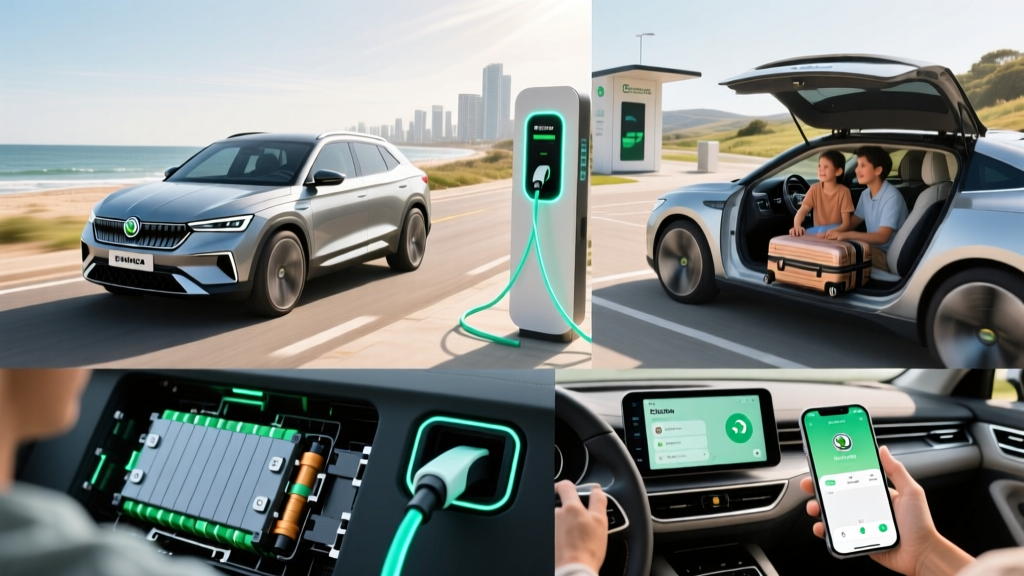
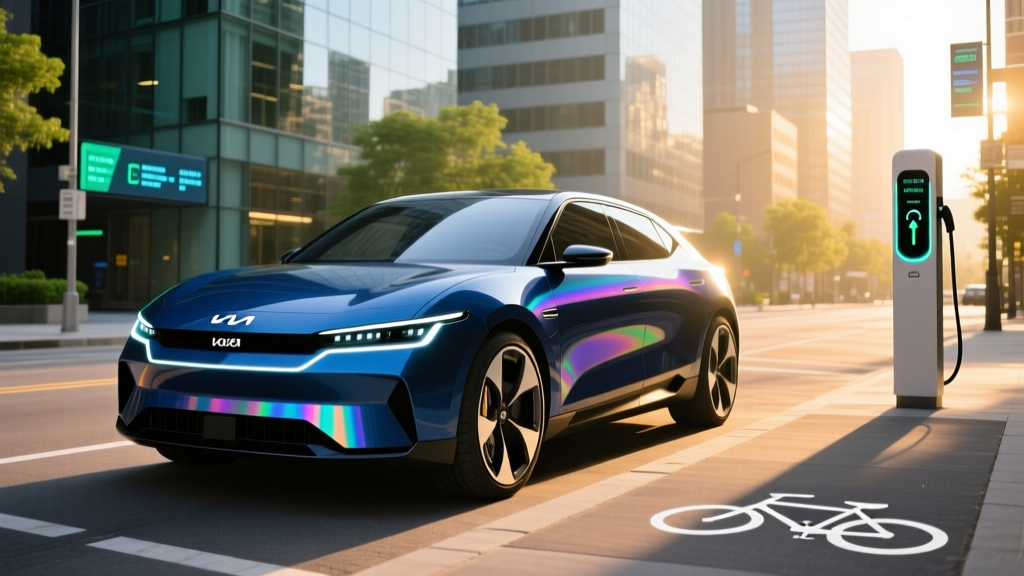
The Kia EV2 is an announced compact electric hatchback expected to arrive in select markets as a 2026 model. Based on Kia's preliminary disclosures and the Hyundai Motor Group's EV platform strategy, the EV2 targets a starting MSRP near $27,000–$30,000 before incentives, with an estimated EPA range of 230–260 miles from a ~58–65 kWh battery pack. It is designed as an urban-focused, affordable entry point into EV ownership — directly competing with the Chevrolet Bolt EV/EUV successors, Nissan Leaf replacement, and entry-level trims of the Hyundai Ioniq 5 and Volvo EX30.
Bottom line: If you need a sub-$30K EV for city commuting with home charging access, the EV2 is worth tracking. If you need long highway range, towing, or AWD, look at the EV6 or Ioniq 5 instead. All specs below are preliminary and subject to change before the final US launch.
What We Know About the Kia EV2 So Far
Kia unveiled the EV2 concept alongside the EV3 and EV4 concepts as part of its expanded electric lineup strategy. The production EV2 slots below the EV3 (which launched in Europe and Korea as a 2025 model) and is built on a dedicated EV architecture optimized for cost efficiency and interior packaging in a compact footprint.
Here is what has been indicated through Kia's announcements and industry reporting as of early 2026:
| Specification | Estimated / Preliminary |
|---|---|
| Body Style | 5-door compact hatchback |
| Platform | Hyundai Motor Group dedicated EV (e-CCP or derived) |
| Battery Capacity (usable) | ~58–65 kWh (NMC chemistry expected) |
| EPA Range (est.) | 230–260 miles |
| Drivetrain | Front-wheel drive, single motor |
| Power Output | ~150–200 HP |
| 0–60 mph (est.) | ~7.5–8.5 seconds |
| Max DC Fast Charge Rate | ~150 kW peak (800V architecture possible) |
| 10–80% DC Fast Charge Time | ~20–28 minutes (est.) |
| Level 2 AC Charging | 10.9 kW onboard charger |
| Charging Port (US) | NACS (Tesla Supercharger compatible) |
| Starting MSRP (est.) | $27,000–$30,000 |
| Battery Warranty | 10 years / 100,000 miles (Kia standard) |
Important caveat: These figures are estimates based on Kia's platform capabilities and competitive positioning. The final EPA-certified range, pricing, and feature set will be confirmed closer to the US launch date. We will update this article when official specs are published on Kia's US site.
Kia EV2 vs Gas Hatchback vs Hybrid: The Numbers
The EV2's target buyer is cross-shopping between a compact EV, a fuel-efficient gas hatchback (like the Honda Civic or Toyota Corolla), and a hybrid (like the Toyota Prius). Here is how the economics stack up over a typical 5-year ownership period at 15,000 miles per year.
| Metric | Kia EV2 (est.) | Toyota Prius (HEV) | Honda Civic (Gas) |
|---|---|---|---|
| Starting MSRP | ~$28,000 | ~$28,550 | ~$24,950 |
| Federal Tax Credit (§30D) | Up to $7,500* | $0 | $0 |
| Effective Net Price | ~$20,500 | ~$28,550 | ~$24,950 |
| Efficiency | ~120 MPGe / ~28 kWh/100mi | 57 MPG combined | 35 MPG combined |
| Annual Fuel/Energy Cost | ~$550 (home charging)** | ~$900 | ~$1,500 |
| 5-Year Fuel/Energy Total | ~$2,750 | ~$4,500 | ~$7,500 |
| 5-Year Maintenance (est.) | ~$1,800 | ~$3,200 | ~$3,800 |
| 5-Year Total Cost of Ownership*** | ~$25,050 | ~$36,250 | ~$36,250 |
* §30D credit eligibility depends on MSRP caps, buyer income limits, battery mineral sourcing, and point-of-sale transfer rules. See IRS §30D guidelines for current-year rules. ** Based on $0.13/kWh national average. *** Excludes insurance, depreciation variance, and state incentives.
The EV2's potential advantage is stark when the full §30D credit applies: an effective purchase price below $21,000 with annual energy costs roughly one-third of a gas car. But that math depends on qualifying for the credit and having access to affordable home charging.
Real-World Ownership: What First-Time EV Buyers Must Know
Spec sheets tell one story; daily ownership tells another. Here are the practical realities that determine whether the EV2 (or any compact EV) fits your life.
Home Charging Is the Make-or-Break Factor
Charging at home on a Level 2 (240V) circuit is where EV ownership shines. The EV2's estimated 10.9 kW onboard charger means a full charge from 10% to 100% in roughly 6 hours — plug in at night, wake up full. But this requires:
- A dedicated 40A or 50A circuit installed by a licensed electrician
- Installation cost: $500–$2,000+ depending on panel proximity and whether your electrical panel needs a 200A upgrade ($1,500–$3,500 additional)
- Level 2 charger hardware: $300–$700 for a quality unit (ChargePoint Home Flex, Emporia Level 2, or Wallbox Pulsar Plus)
If you live in an apartment or lack garage/driveway access, you will rely on public charging — which costs $0.30–$0.55/kWh at DC fast stations, roughly doubling or tripling your per-mile energy cost versus home charging.
Cold Weather Cuts Range — Plan for It
Lithium-ion batteries lose efficiency in cold temperatures. Expect 15–30% range reduction in sustained sub-freezing conditions, depending on cabin heating use. A 250-mile EPA estimate could mean 175–210 real-world miles in a January Midwest commute. The EV2's expected heat pump (standard on most Hyundai Motor Group EVs) mitigates this somewhat, but physics is physics.
EPA estimate: 230–260 miles | Expected real-world highway (70+ mph): ~200–225 miles | Cold weather (below 32°F): ~175–210 miles | City driving with regen: closest to EPA sticker. Always plan road trips around 70–80% of the EPA number for buffer.
DC Fast Charging: The Road Trip Question
If Kia equips the EV2 with 800V architecture (as used in the EV6 and Ioniq 5), a peak 150+ kW charge rate would deliver a 10–80% charge in roughly 20–28 minutes at a compatible 350 kW station. However, charging speed tapers significantly above 80% SoC — the final 20% can take as long as the first 70%. On road trips, the practical strategy is to charge to 80%, then move on.
With the NACS port, the EV2 would access Tesla Supercharger stations (now open to non-Tesla EVs via the North American Charging Standard), dramatically expanding the reliable fast-charging network compared to CCS-only vehicles.
Federal Tax Credit: Will the EV2 Qualify for §30D?
The §30D federal EV tax credit offers up to $7,500 — but not every buyer or every vehicle qualifies. Here is the current checklist based on IRS rules:
| Requirement | Threshold |
|---|---|
| Vehicle MSRP Cap | ≤ $55,000 for sedans/hatchbacks (EV2 qualifies) |
| Buyer Income Cap (MAGI) | ≤ $150K single / $225K head of household / $300K joint |
| Battery Component Manufacturing | Must be assembled in North America (phased thresholds) |
| Critical Minerals Sourcing | Must meet escalating % from FTA countries |
| Point-of-Sale Transfer | Available — credit applied at purchase, reducing out-of-pocket |
The EV2's price easily clears the MSRP cap. The critical question is battery sourcing. If Kia sources cells from SK On's US-based plants (SK Battery America in Georgia), the EV2 has a strong path to partial or full credit eligibility. However, sourcing rules tighten annually. Confirm eligibility on the fueleconomy.gov tax credit database once the EV2 is officially listed.
Common EV Misconceptions — Fact-Checked for the EV2 Buyer
| Myth | Fact |
|---|---|
| "EV batteries need replacing every few years." | Kia warrants its EV batteries for 10 years / 100,000 miles with a minimum 70% capacity retention threshold. Industry data shows most packs retain 85–90% at 100K miles. |
| "Charging takes too long." | Home Level 2 charging is overnight — zero active time. DC fast charging adds ~150–200 miles in 20–25 minutes on road trips. |
| "EVs are worse for the environment because of battery mining." | Lifecycle emissions for EVs are lower than gas cars in nearly every US grid region, even accounting for battery production. The gap widens as grids add renewables (source: EPA). |
| "I'll save $7,500 no matter what." | §30D eligibility depends on income, MSRP, sourcing, and tax liability. Not all buyers qualify. Always verify before purchasing. |
| "A compact EV can't handle road trips." | 230–260 miles of range plus NACS Supercharger access makes 500+ mile trips feasible with one or two 25-minute stops. |
Decision Framework: Should You Buy the Kia EV2?
Choose the Kia EV2 if:
- Your daily commute is under 80 miles round-trip
- You have home charging access (garage or driveway with 240V circuit)
- Your budget is $25K–$32K and you want to minimize operating costs
- You drive primarily in urban/suburban environments
- You qualify for at least a partial §30D tax credit
- You want NACS Supercharger access for occasional road trips
Look elsewhere if:
- You regularly drive 200+ miles between charging stops (consider the EV6 Long Range or Ioniq 5 — both offer 300+ miles)
- You need AWD for snow/terrain (the EV2 is FWD only; consider the EV6 AWD or Hyundai Ioniq 5 AWD)
- You tow anything (the EV2 is not rated for towing; consider the EV9 or Ford F-150 Lightning)
- You live in an apartment without charging access and your area has sparse public charging infrastructure
- You need a vehicle immediately — the EV2 is still in pre-launch/announced status as of early 2026
Frequently Asked Questions
When will the Kia EV2 be available in the US?
Kia has announced the EV2 as part of its expanded EV roadmap, but a firm US on-sale date has not been confirmed as of early 2026. Industry expectations point to a late 2026 or early 2027 arrival. Monitor Kia's US press site for updates.
Will the Kia EV2 have Apple CarPlay and Android Auto?
Kia has included wireless Apple CarPlay and Android Auto in nearly all recent models. Expect full smartphone integration, though Kia's latest ccNC infotainment system may also offer native navigation and over-the-air updates.
Is the Kia EV2 eligible for the $7,500 federal tax credit?
It is too early to confirm. The EV2's MSRP clears the cap, but §30D eligibility hinges on battery sourcing and critical mineral requirements that tighten each year. Check fueleconomy.gov once the vehicle is officially listed.
How does the EV2 compare to the Kia EV3?
The EV3 is a larger compact SUV/crossover (similar in size to the Sportage) with more cargo space, available AWD, and a higher price point (~$35,000–$42,000). The EV2 is a smaller, more affordable hatchback optimized for city driving and maximum value.
What is the expected insurance cost for the Kia EV2?
EV insurance premiums run 10–25% higher than comparable gas cars due to battery replacement costs and specialized repair requirements. For a ~$28,000 compact EV, expect annual premiums of $1,400–$2,000 depending on your state, driving record, and insurer. Get quotes before purchasing.
Can I charge the Kia EV2 at Tesla Superchargers?
If the EV2 ships with a native NACS port (as expected for US-market Kia EVs from 2025 onward), yes — it will plug directly into Tesla Supercharger stalls without an adapter. This is a significant advantage for road-trip charging reliability.