Quick Answer: What Is the Kia EV1?
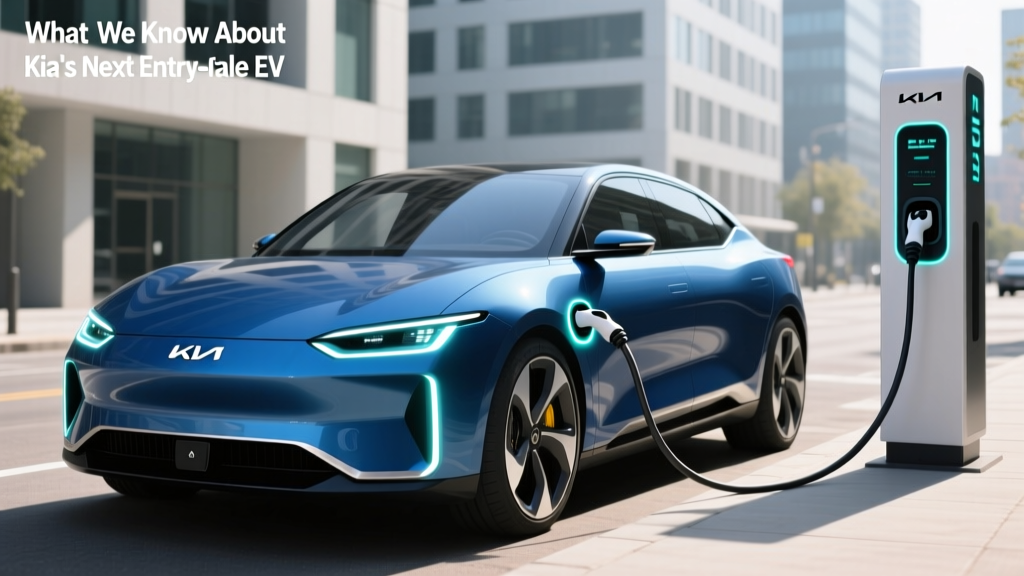
The Kia EV1 is an announced entry-level electric vehicle positioned below the EV6 in Kia's battery-electric lineup. As of mid-2026, Kia has not released full production specifications, but industry reports and Kia executive statements indicate a compact hatchback or crossover targeting a base MSRP in the low-to-mid $30,000 range, an EPA-estimated range near 250 miles, and eligibility for the full $7,500 federal tax credit under IRS §30D rules — assuming battery sourcing requirements are met. The EV1 is expected to slot into the subcompact EV segment alongside rivals like the Chevrolet Equinox EV, Hyundai Ioniq 5 (lower trims), and the Nissan Leaf successor.
Bottom line for buyers: If you want a budget-friendly, practical commuter EV with Kia's warranty backing and you can wait for availability, the EV1 is worth tracking. If you need a vehicle now, the Kia EV6 or Kia Niro EV are proven alternatives already on dealer lots.
Why the Kia EV1 Matters for Budget-Conscious EV Shoppers
The average new vehicle transaction price in the U.S. hovers near $48,000, and most long-range EVs still start above $40,000 before incentives. The EV1's significance lies in its potential to bring a modern, 250+ mile electric vehicle into the low-$30,000 bracket — a price point where many mainstream gas-powered compacts live.
For context, here is how the EV1's expected pricing stacks up against current segment competitors and conventional alternatives:
| Vehicle | Est. Base MSRP | EPA Range (mi) | Est. Fed. Credit | Effective Price After Credit |
|---|---|---|---|---|
| Kia EV1 (announced) | ~$33,000 | ~250 (prelim.) | Up to $7,500* | ~$25,500 |
| Chevrolet Equinox EV 2LT | $34,900 | 319 | $7,500 | $27,400 |
| Kia Niro EV | $39,600 | 239 | $7,500 | $32,100 |
| Hyundai Kona Electric | $34,975 | 261 | $7,500 | $27,475 |
| Toyota Corolla (gas, LE) | $23,500 | N/A (34 MPG comb.) | $0 | $23,500 |
*Federal tax credit eligibility depends on buyer income limits, vehicle MSRP caps, and battery critical-mineral sourcing requirements under IRS §30D rules. Always verify with a tax professional before purchase. Point-of-sale transfer is available for eligible buyers.
Expected Specs: Range, Battery, and Charging
While Kia has not published a full spec sheet, we can piece together reasonable expectations based on Kia's current EV architecture, supplier contracts, and executive comments. The EV1 is anticipated to use a smaller variant of Hyundai Motor Group's E-GMP platform or a derivative front-wheel-drive EV architecture optimized for cost efficiency.
| Specification | Expected Value |
|---|---|
| Battery Capacity (usable) | ~58–65 kWh |
| Battery Chemistry | Likely LFP (lithium iron phosphate) for base trim; NMC possible for long-range variant |
| EPA Range (est.) | ~240–260 mi |
| Real-World Highway Range | ~200–220 mi (70+ mph, moderate temps) |
| Cold-Weather Range (20°F) | ~170–190 mi (est. 25–30% loss without heat pump) |
| DC Fast Charge (peak) | ~150 kW (est.) |
| 10–80% DC Charge Time | ~25–30 min (est.) |
| Level 2 Charge Rate | ~10.9 kW (est.) |
| Level 2 Full Charge Time | ~6–7 hours |
| Motor Output | ~150–201 hp (single motor, FWD) |
| 0–60 mph | ~7.5–8.5 sec (est.) |
| Drivetrain | Front-wheel drive (AWD unlikely at base price) |
| Connector | NACS (Tesla Supercharger native access expected) |
| Battery/Powertrain Warranty | 10 years / 100,000 miles (Kia standard) |
Real-World Range Reality Check
If the EV1 achieves a 250-mile EPA estimate, expect real-world highway driving at 70–75 mph to yield roughly 200–220 miles in mild weather. In freezing temperatures (below 30°F), range can drop 25–30% unless the vehicle includes a heat pump — a feature Kia has offered on the EV6 but may make optional or omit on a budget-focused EV1. If cold-weather commuting is a regular scenario, plan for 170–190 usable miles and verify whether a heat pump is standard or part of an option package.
Total Cost of Ownership: EV1 vs. a Gas Compact
The sticker price tells only part of the story. Here is a five-year cost projection comparing the expected Kia EV1 against a gas-powered compact sedan (Toyota Corolla LE baseline) at 12,000 miles/year.
| Cost Category | Kia EV1 (est.) | Toyota Corolla LE (gas) |
|---|---|---|
| Purchase Price (after credit) | $25,500 | $23,500 |
| Fuel / Electricity (5 yr) | $3,600 (home L2, $0.14/kWh avg) | $7,140 ($3.40/gal, 34 MPG) |
| Maintenance (5 yr) | $1,800 (tire rotations, cabin filter, fluid top-offs) | $3,500 (oil changes, filters, brakes, spark plugs) |
| Insurance (5 yr avg) | $8,500 (EVs typically 15–20% higher) | $7,000 |
| Estimated Depreciation | $12,000 | $9,500 |
| Total 5-Year Cost | ~$51,400 | ~$50,640 |
| Cost Per Mile | ~$0.86 | ~$0.84 |
Key takeaway: The EV1's fuel and maintenance savings largely offset its higher insurance and depreciation over five years, resulting in near-parity total cost with a gas compact. The financial advantage widens significantly in years 6–10 as the gas car requires more maintenance (transmission fluid, timing components, exhaust) while the EV's costs remain relatively flat. Buyers who keep vehicles 8+ years will see the EV1 pull ahead meaningfully.
Charging cost assumptions matter enormously here. At the national residential average of ~$0.14–$0.17/kWh, home charging is dramatically cheaper than gasoline. But if you rely primarily on DC fast charging at $0.35–$0.50/kWh (common on Electrify America and EVgo), your fuel cost jumps to roughly $5,500–$7,200 over five years — erasing most of the advantage. Home Level 2 charging access is the single biggest financial variable in EV ownership.
Who Should Buy the Kia EV1 — and Who Shouldn't
Decision Framework: Is the Kia EV1 Right for You?
Choose the Kia EV1 if:
- You have access to home Level 2 charging (garage or driveway with a 240V circuit)
- Your daily commute is under 80 miles round-trip
- You want a new EV under $30,000 (after tax credit) with a strong warranty
- You primarily drive in mild-to-moderate climates, or can option a heat pump
- You want native NACS access to Tesla Superchargers without an adapter
- You can wait for availability (expected late 2026 or 2027 model year)
Look elsewhere if:
- You rely exclusively on street parking with no charging access — a PHEV like the Kia Niro PHEV or Toyota Prius Prime may be a better fit
- You regularly drive 300+ mile highway trips in cold weather — consider the EV6 (310+ mi range, faster charging) or a larger-battery EV
- You need AWD for snow or mountain driving — the EV1 is expected to be FWD only at base price
- You need a vehicle immediately — the EV1 is still in pre-production as of mid-2026
- You tow anything — subcompact EVs at this price point typically have minimal or no towing rating
Common Misconceptions About Entry-Level EVs
| Myth | Fact |
|---|---|
| "A cheap EV will have terrible range." | A 58–65 kWh LFP battery in a compact, aerodynamic hatchback can realistically deliver 240–260 EPA miles. The Chevy Equinox EV already achieves 319 miles at a similar price point. |
| "I'll need to replace the battery in a few years." | Modern EV batteries are designed for 200,000+ miles with less than 10–15% degradation. Kia covers the battery for 10 years/100,000 miles. LFP chemistry, if used, typically degrades even more slowly than NMC. Replacement costs for a ~60 kWh pack have fallen below $8,000 and continue to decline. |
| "Charging takes too long for road trips." | At ~150 kW peak DC charging, a 10–80% charge takes roughly 25–30 minutes — comparable to a meal stop. With NACS connector access to 17,000+ Tesla Supercharger stalls nationwide, route coverage is the strongest it has ever been. |
| "EVs don't work in cold climates." | Cold weather reduces range 20–30%, but a 250-mile EV still delivers 175+ usable miles in freezing temps. Preconditioning the battery while plugged in mitigates charging-speed loss. Millions of EVs operate daily in Norway, Minnesota, and Canada. |
| "The $7,500 tax credit is guaranteed." | Eligibility depends on your income (AGI caps: $150K single, $300K joint), the vehicle's MSRP (must be under $55K for sedans/hatchbacks), and battery sourcing requirements that change yearly. The credit can be applied at point of sale. Always verify at IRS.gov and with your tax professional. |
Charging at Home: What First-Time EV Buyers Need to Know
The Kia EV1 is expected to support Level 2 AC charging at approximately 10.9 kW, meaning a full charge from empty takes about 6–7 hours on a home wall connector. This is ideal for overnight charging — plug in when you get home, wake up to a full battery every morning.
Here is what a typical home Level 2 installation looks like in 2026:
| Item | Cost Range |
|---|---|
| Level 2 EVSE (wall charger, 32–48A) | $350–$700 |
| Electrician labor (240V/50A circuit run) | $600–$2,000 |
| Permit and inspection | $50–$250 |
| Electrical panel upgrade (if needed, 100A → 200A) | $1,500–$3,500 |
| Total (no panel upgrade) | $1,000–$2,950 |
| Total (with panel upgrade) | $2,500–$6,450 |
Important: Many homes built before 2000 have 100-amp electrical panels that may not support a 50-amp EV circuit alongside existing loads (electric dryer, oven, HVAC). A licensed electrician should perform a load calculation before installation. Some utilities offer rebates of $250–$1,000 for Level 2 charger installation — check with your local provider. Additionally, the federal Alternative Fuel Vehicle Refueling Property Credit (30C) may cover up to 30% of home charging equipment costs (max $1,000), subject to census-tract eligibility.
If you live in an apartment or condo without dedicated parking, public charging is your lifeline. At current Electrify America and EVgo pricing ($0.35–$0.50/kWh), expect to pay roughly $0.10–$0.14 per mile driven — still less than gasoline at $3.40/gallon in a 34-MPG compact, but noticeably more than home charging at $0.04–$0.05 per mile.
How the EV1 Fits Into Kia's EV Lineup
Kia's electric portfolio in 2026 spans from the Niro EV (239 miles, ~$39,600) through the EV6 (310 miles, ~$42,600) and up to the EV9 three-row SUV (304 miles, ~$54,900). The EV1 fills the gap at the bottom — a true entry point for buyers priced out of the $40K+ EV market.
Kia's biggest competitive advantage at this tier is its warranty: 10 years/100,000 miles on the battery and powertrain, and 5 years/60,000 miles bumper-to-bumper. For a first-time EV buyer concerned about long-term battery health, this is one of the strongest safety nets in the industry. By comparison, most competitors offer 8 years/100,000 miles on the battery.
The expected adoption of the NACS connector also matters. Kia has confirmed that its newer EVs will ship with NACS ports, granting native access to Tesla's Supercharger network — currently the largest and most reliable DC fast-charging network in North America with over 17,000 stalls. This eliminates the adapter hassle that CCS-equipped Kia EV6 owners have dealt with at Superchargers.
Frequently Asked Questions
Is the Kia EV1 available to buy right now?
No. As of mid-2026, the Kia EV1 is an announced vehicle that has not yet entered production. Kia has signaled a launch targeting the 2027 model year, which could mean dealer availability in late 2026 or early 2027. All specifications discussed here are preliminary estimates based on industry reporting and Kia's existing platform capabilities. Final EPA range, pricing, and feature availability will be confirmed closer to launch.
Will the Kia EV1 qualify for the $7,500 federal tax credit?
It is likely but not guaranteed. The vehicle's MSRP is expected to fall well under the $55,000 cap for non-SUVs. However, eligibility also depends on (a) your adjusted gross income falling below IRS thresholds ($150,000 single filer, $225,000 head of household, $300,000 joint), and (b) the battery meeting critical-mineral and battery-component sourcing requirements that tighten each year. Kia has been working to localize battery supply chains through partnerships with SK On and LG Energy Solution in U.S. plants. Verify current-year eligibility at fueleconomy.gov and consult a tax professional.
How does the EV1 compare to buying a used EV instead?
A used EV (2022–2024 model year) can often be found for $18,000–$28,000 and may qualify for the used-EV tax credit (up to $4,000 under IRS §25E). However, you inherit someone else's battery degradation, miss out on the latest charging technology and NACS connector, and get a shorter remaining warranty. The EV1, at an estimated ~$25,500 after the new-EV credit, offers a full 10-year warranty, modern software, and native Supercharger access — compelling advantages for buyers who plan to keep the car long-term.
Should I wait for the EV1 or buy a Kia Niro EV now?
If you need a vehicle within the next few months, the Niro EV is a solid, proven choice with 239 miles of EPA range, a spacious interior, and full §30D credit eligibility. If you can wait 6–12 months and want the lowest possible price with native NACS charging, the EV1 is worth the patience. The trade-off is that the Niro EV offers more cargo space (22.8 cu ft behind rear seats) and may have more advanced driver-assist features as a higher-positioned model.
What charging connector will the Kia EV1 use?
Kia has committed to the NACS (North American Charging Standard) connector for its upcoming EVs, meaning the EV1 should arrive with a native Tesla-compatible charge port. This grants access to Tesla Superchargers without an adapter, in addition to CCS-equipped networks like Electrify America (which are adding NACS cables). Level 2 home charging will use the standard J1772 connector or NACS, depending on the charger.