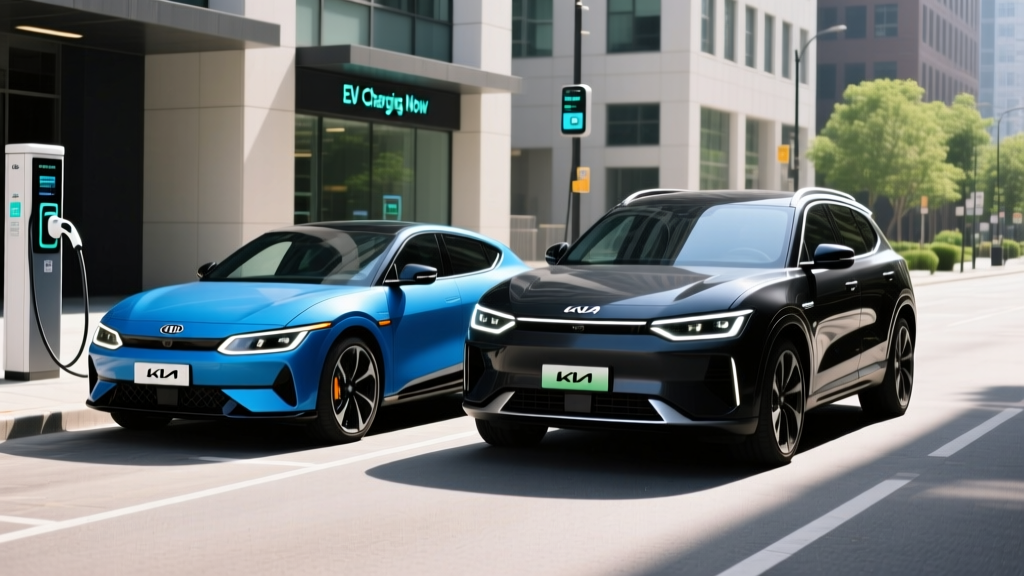
Kia's aggressive price reductions on the 2026 EV6 and EV9 have reshuffled the midsize and three-row electric SUV segments. With the EV6 now starting below $40,000 and the EV9 dropping into the low $50,000s, buyers who previously dismissed Kia's electric lineup on sticker price alone need to run the numbers again. But a lower MSRP is only one variable in the total cost of ownership equation — insurance premiums, charging costs, tax-credit eligibility, and depreciation all factor into what you actually pay over five years.
This guide dissects the current Kia EV price cuts, models affected, and the full ownership math behind the 2026 EV6 and EV9.
What Kia EV Price Cuts Mean for 2026 Buyers
For the 2026 model year, Kia has reduced base MSRPs across its electric lineup to compete against the expanding field of affordable EVs and to respond to shifting federal incentive dynamics. The headline numbers:
- 2026 Kia EV6 Light (RWD): ~$39,900 MSRP (down from ~$42,600 for the 2025 model year)
- 2026 Kia EV6 Wind (AWD): ~$45,500 MSRP
- 2026 Kia EV6 GT-Line (AWD): ~$51,200 MSRP
- 2026 Kia EV9 Light (RWD): ~$54,900 MSRP (down from ~$59,900 in 2025)
- 2026 Kia EV9 Wind (AWD): ~$59,900 MSRP
- 2026 Kia EV9 GT-Line (AWD): ~$66,500 MSRP
These reductions are significant — $2,500 to $5,000 depending on trim — and they push the EV6 Light squarely under the IRS §30D MSRP cap for SUVs, which matters for tax-credit eligibility. The EV9, classified as a large SUV under IRS rules, already sat under the $80,000 cap, but the lower starting price makes the credit's effective discount percentage more meaningful.
Key Specs at a Glance — 2026 Kia EV6 (Wind AWD)
- Battery: 77.4 kWh usable, NMC chemistry
- EPA Range: 282 miles (real-world highway: ~240–255 mi; cold weather: ~210–230 mi)
- Peak DC Fast Charge: 240 kW (10–80% in ~18 minutes on a 350 kW charger)
- Level 2 Charge Rate: 10.9 kW onboard charger
- 0–60 mph: 5.1 seconds (AWD dual motor, 320 hp / 446 lb-ft)
- MPGe: 117 city / 95 hwy / 106 combined (fueleconomy.gov)
- Warranty: 10 years / 100,000 miles (powertrain & battery)
Federal Tax Credit: Do You Qualify Under §30D?
The Kia EV price cuts become far more compelling when paired with the IRS §30D Clean Vehicle Credit, which offers up to $7,500 for qualifying new EVs. But eligibility is not automatic — it depends on your income, the vehicle's MSRP, and the battery's sourcing of critical minerals and components. As of 2026, the rules have tightened considerably compared to earlier years.
§30D Eligibility Checklist (2026 Rules)
- Vehicle MSRP cap: ≤ $55,000 for sedans; ≤ $80,000 for SUVs and trucks (EV6 and EV9 both qualify)
- Buyer income cap (MAGI): ≤ $150,000 single / ≤ $225,000 head of household / ≤ $300,000 joint
- Battery component sourcing: Must meet escalating domestic-content thresholds for battery components (phased in annually through 2029)
- Critical minerals: Must meet escalating percentage thresholds for minerals sourced from the U.S. or free-trade-agreement partners
- Foreign Entity of Concern (FEOC): Battery components or critical minerals from FEOC entities (certain Chinese, Russian, North Korean, Iranian sources) disqualify the vehicle
- Point-of-sale transfer: You can transfer the credit to the dealer at purchase, reducing your out-of-pocket cost immediately — or claim it on your tax return
- Final assembly: Must occur in North America (Kia EV6 and EV9 for the U.S. market are assembled at Kia's West Point, Georgia plant)
Source: IRS.gov — Clean Vehicle Credit
The FEOC complication: Kia has worked to diversify its battery supply chain away from FEOC-flagged sources, but the critical-minerals and battery-component rules tighten each year. A vehicle that qualified for the full $7,500 in 2024 may qualify for a reduced amount or none at all by 2026 depending on sourcing changes. Always verify the specific VIN's eligibility on the IRS qualified-vehicles list before purchasing. The dealer should also be able to confirm eligibility through the IRS Energy Credits Online portal at the point of sale.
Effective price with credit: If you qualify for the full $7,500 and apply it at the point of sale, a 2026 EV6 Light at ~$39,900 drops to an effective ~$32,400 — competitive with many gasoline crossovers before you factor in fuel savings.
5-Year Total Cost of Ownership: EV6 vs. Gasoline SUV
To understand whether Kia's EV price cuts translate into genuine long-term savings, we need to model the full five-year cost. Below is a comparison between the 2026 Kia EV6 Wind AWD (~$45,500 MSRP) and a comparably equipped gasoline midsize SUV in the $40,000–$45,000 range (e.g., Hyundai Tucson AWD or Toyota RAV4 AWD, averaging ~28 MPG combined).
| Cost Category | Kia EV6 Wind AWD | Gasoline AWD SUV (~28 MPG) |
|---|---|---|
| Purchase Price (MSRP) | $45,500 | $42,000 |
| Federal Tax Credit (§30D) | −$7,500 (if eligible) | $0 |
| Effective Purchase Price | $38,000 | $42,000 |
| Fuel/Energy (75,000 mi) | $3,900 (home + public mix) | $9,375 ($3.50/gal, 28 MPG) |
| Maintenance | $1,200 | $3,500 |
| Insurance (5 years) | $10,500 | $8,250 |
| Estimated Depreciation | $17,100 (~45% of MSRP) | $16,800 (~40% of MSRP) |
| 5-Year Total | $70,700 | $79,925 |
Net 5-year savings with the EV6: approximately $9,225, assuming full §30D credit eligibility. Without the tax credit, the EV6 still saves roughly $1,725 over five years — primarily from fuel and maintenance reductions — but the margin narrows considerably.
Charging vs. Gas: The Per-Mile Cost Reality
The single largest ongoing savings from driving the EV6 comes at the "pump." But the actual cost per mile depends heavily on how and where you charge.
| Scenario | Cost per kWh / Gallon | Cost per Mile |
|---|---|---|
| EV6 — Home Level 2 (national avg electricity) | $0.16/kWh | $0.047/mi |
| EV6 — Public DC Fast Charging (avg) | $0.40/kWh | $0.117/mi |
| EV6 — Blended (70% home, 30% public) | $0.23/kWh (effective) | $0.067/mi |
| Gasoline SUV (28 MPG) | $3.50/gallon | $0.125/mi |
The EV6 consumes roughly 0.29 kWh per mile (derived from its 106 MPGe combined rating, per fueleconomy.gov). At the blended 70/30 home-to-public charging ratio, you pay about $0.067 per mile — roughly half the cost of the gasoline SUV at $0.125 per mile.
Over 15,000 miles per year, that's $780 vs. $1,875 in annual fuel/energy costs — a savings of ~$1,095 per year, or ~$5,475 over five years. If you charge almost exclusively at home on a time-of-use plan with off-peak rates (~$0.10/kWh), the savings widen further to ~$6,500 over five years.
State, Local, and Utility Incentives
Beyond the federal §30D credit, many states, municipalities, and electric utilities offer additional rebates and incentives that can further reduce your effective purchase price and charging costs. Examples include:
- State EV rebates (e.g., California, Colorado, Massachusetts — amounts and eligibility vary by income and vehicle price)
- Utility off-peak charging credits or free public-charging programs
- Home Level 2 charger installation rebates (some utilities cover up to $500–$1,500 of equipment and electrical work)
- HOV lane access stickers (California, Virginia, and others — often with income or vehicle-price caps)
These programs change frequently and vary significantly by ZIP code. Check your state's energy office, your utility provider, and the AFDC incentives database for current offerings in your area.
Maintenance Savings: Where EVs Quietly Win
EVs eliminate many of the recurring maintenance items that add up over five years of gasoline-vehicle ownership. The EV6's electric powertrain has far fewer moving parts than an internal-combustion engine, and regenerative braking significantly extends brake-pad life.
| Maintenance Item | Kia EV6 | Gasoline AWD SUV |
|---|---|---|
| Oil Changes | $0 (none required) | $600–$900 (5–7 changes) |
| Transmission Fluid | $0 (single-speed reducer) | $150–$300 |
| Brake Pads | $0–$200 (regen extends life to 80,000+ mi) | $600–$1,200 (2–3 replacements) |
| Engine Air Filter / Spark Plugs | $0 | $200–$400 |
| Coolant Flush / Belts | $100–$150 | $300–$500 |
| Tire Rotation & Replacement | $800–$1,100 (EVs can wear tires faster due to torque & weight) | $600–$900 |
| Cabin Air Filter, Wipers, Misc. | $200–$300 | $200–$300 |
| Total (5 Years) | ~$1,200 | ~$3,500 |
Net maintenance savings: approximately $2,300 over five years. Note that EVs tend to wear tires slightly faster due to instant torque and higher curb weight (the EV6 Wind AWD weighs ~4,700 lbs). Budget for premium touring tires designed for EV weight and torque characteristics.
Insurance Costs: The Uncomfortable Truth
Insurance is where EV ownership typically costs more than gasoline equivalents. The EV6 will generally carry premiums 15–25% higher than a comparably priced gasoline SUV. Several factors drive this:
- Higher repair costs: EV battery packs, power electronics, and specialized body panels cost more to replace after a collision
- Higher vehicle value: Even after price cuts, the EV6's MSRP exceeds that of many gas crossovers, and insurers price accordingly
- Specialized labor: High-voltage system repairs require certified technicians, which limits the repair-shop pool and raises labor rates
- Total-loss thresholds: Battery damage in a moderate collision can push repair costs above the vehicle's actual-cash-value threshold, leading insurers to declare total losses more frequently
For the EV6 Wind AWD, expect annual premiums in the $1,800–$2,400 range depending on your state, driving record, and coverage levels — compared to roughly $1,500–$1,800 for a gasoline Tucson or RAV4. That's an additional $1,500–$2,250 over five years.
Shop multiple insurers before purchasing. Some carriers (Geico, Progressive, State Farm, and EV-specialty insurers) have narrowed the gap as EV repair networks have expanded. Bundling with homeowners insurance and maintaining a clean record can bring EV premiums closer to gas-car parity.
Depreciation and Resale Value Trends
EV depreciation has been volatile. In 2023–2024, used EV values dropped sharply as Tesla cut new-car prices, flooding the used market and pulling down resale values across all EV brands. The EV6 and EV9 were not immune — early 2024 model-year EV6s saw resale values dip 45–55% below MSRP after three years in some markets.
By 2026, the depreciation picture has stabilized somewhat:
- EV6 projected 5-year depreciation: ~42–48% of MSRP (roughly in line with non-luxury gasoline SUVs, which average ~38–44%)
- EV9 projected 5-year depreciation: ~40–46% of MSRP (three-row SUVs hold value better; limited EV competition in the segment supports residuals)
- Stabilizing factors: Kia's 10-year/100,000-mile battery warranty, NACS adoption opening Tesla Supercharger access, and growing consumer familiarity with EVs
- Risk factors: Future battery-technology leaps (solid-state), continued price wars, and potential changes to federal incentives could accelerate depreciation unpredictably
If you plan to own the vehicle for its full useful life (8–12 years), depreciation matters less. If you typically trade in every 3–5 years, factor in the slightly steeper EV depreciation curve when calculating your true cost of ownership.
Is the EV9 Three-Row Worth the Premium?
The 2026 EV9 starts at ~$54,900 for the Light RWD — a significant price drop from its 2024 launch MSRP of ~$59,900. With up to 304 miles of EPA range (Light RWD, 76.1 kWh battery pack) and seating for up to seven, it occupies a segment with almost no direct electric competition.
2026 Kia EV9 Key Specs
- Battery: 76.1 kWh (Light RWD) / 99.8 kWh (Wind/Land/GT-Line AWD), NMC chemistry
- EPA Range: 230–304 mi depending on trim and drivetrain
- Peak DC Fast Charge: 210–240 kW (10–80% in ~20–24 minutes)
- 0–60 mph: 8.2 sec (Light RWD) / 4.9 sec (GT-Line AWD, 379 hp)
- Towing: Up to 5,000 lbs (AWD trims)
- Warranty: 10 years / 100,000 miles (powertrain & battery)
Real-world note: The 99.8 kWh AWD trims (~243–270 mi EPA) will deliver closer to 200–220 miles in mixed highway/cold-weather driving. If you regularly drive in sub-freezing temperatures or take long highway trips, the larger battery is worth the premium for the buffer it provides.
The EV9's price cut makes it eligible for the full §30D credit on all trims (all sit under the $80,000 SUV cap). Combined with Kia's industry-leading warranty and the lack of three-row electric alternatives, the value proposition is strong for families who need the space and can charge at home.
Decision Framework: Who Benefits Most from Kia's EV Price Cuts?
Buy the EV6 if:
- You qualify for the full $7,500 §30D credit (bringing effective price to ~$32,400–$38,000)
- You can install a Level 2 home charger (the economics collapse if you rely solely on expensive public DC fast charging)
- You drive 12,000–18,000 miles per year (higher mileage = faster fuel savings payback)
- You value the 18-minute 10–80% DC fast-charging capability for road trips
Buy the EV9 if:
- You need three rows and refuse to compromise on electric powertrain
- Your household qualifies for the §30D credit and any state rebates
- You plan to keep the vehicle 7+ years (mitigating depreciation risk)
- You tow occasionally (5,000-lb capacity on AWD trims)
Wait or reconsider if:
- You cannot charge at home and your local public-charging infrastructure is sparse or expensive
- Your household income exceeds §30D MAGI limits and your state offers no additional incentives
- You typically trade vehicles every 2–3 years (depreciation will eat into savings)
- Your insurance quotes come back more than 30% above your current gasoline vehicle
Frequently Asked Questions
How much does it really cost to own a Kia EV6 over 5 years?
With the full $7,500 federal tax credit and predominantly home charging, the 2026 EV6 Wind AWD costs approximately $70,700 over five years (75,000 miles), including purchase, energy, maintenance, insurance, and depreciation. Without the tax credit, expect roughly $78,200. Compare that to ~$79,925 for a gasoline equivalent — the EV6 saves $1,700–$9,200 depending on credit eligibility.
Do I qualify for the $7,500 federal tax credit on the Kia EV6 or EV9?
Eligibility depends on three factors: (1) your modified adjusted gross income must be ≤ $150K single / $300K joint; (2) the vehicle MSRP must be ≤ $80,000 for SUVs (both qualify); and (3) the battery must meet 2026 critical-mineral and component-sourcing thresholds, with no FEOC-sourced materials. Verify the specific VIN on the IRS qualified vehicles list before purchasing. You can transfer the credit to the dealer at the point of sale for an immediate price reduction.
How much do I save on fuel and maintenance with the EV6?
With a 70% home / 30% public charging mix, expect to save roughly $5,475 on energy costs over five years compared to a 28 MPG gasoline SUV. Maintenance savings add another ~$2,300 over five years (no oil changes, fewer brake-pad replacements, no spark plugs or transmission fluid). Combined, that's approximately $7,775 in operational savings.
Are Kia EVs more expensive to insure?
Yes — typically 15–25% more than a comparably priced gasoline SUV. Expect annual premiums of $1,800–$2,400 for the EV6 depending on your state and driving record. The higher cost reflects more expensive collision repairs, specialized high-voltage labor, and higher total-loss frequency from battery damage. Shop multiple insurers; the gap has narrowed as EV repair networks expand.
How well do the EV6 and EV9 hold their value?
Projected five-year depreciation for the EV6 is ~42–48% of MSRP, and ~40–46% for the EV9. This is slightly steeper than the gasoline-SUV average (~38–44%) but has stabilized compared to the sharp EV value drops of 2023–2024. Kia's 10-year/100,000-mile battery warranty and NACS Supercharger compatibility support resale values. If you keep the vehicle 8+ years, depreciation becomes less relevant to your total-cost calculation.
Does the Kia EV6 use NACS or CCS for charging?
Starting with the 2025 model year, Kia transitioned the EV6 and EV9 to the NACS (Tesla-style) charge port in North America. This means native access to Tesla Supercharger stalls (over 20,000 locations) without an adapter. For Electrify America and other CCS-equipped networks, Kia provides a NACS-to-CCS adapter. The 2026 models ship with NACS as standard.
What is the real-world range of the EV6 in cold weather?
The EV6 Wind AWD's EPA rating is 282 miles. In real-world highway driving at 70°F, expect ~240–255 miles. In freezing temperatures (20–32°F) with cabin heating, range drops to approximately 210–230 miles — a 15–25% reduction typical of NMC lithium-ion chemistry. The EV6's heat pump (standard on most trims) helps mitigate cold-weather losses compared to resistive heating systems.