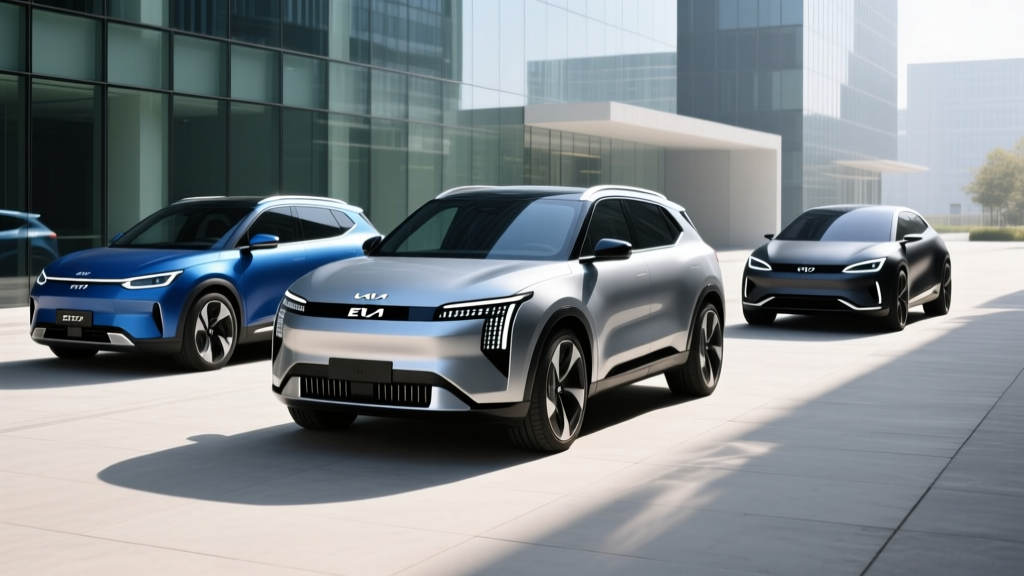
Kia's electric offensive has moved well past the single-model phase. What began with the Niro EV and the bold EV6 has evolved into a multi-vehicle strategy that now spans compact crossovers, mid-size SUVs, and a three-row flagship. For 2026, Kia's EV expansion plans center on filling the gaps in its lineup — most notably with the mid-size EV5 SUV slotting between the EV6 and EV9, alongside continued production shifts to the brand's West Point, Georgia plant that unlock federal tax credit eligibility for more models.
This isn't vaporware analysis. We've driven the current-production models and tracked Kia's confirmed North American rollout schedule. Below is a model-by-model breakdown of what's on sale now, what's arriving in showrooms within months, and what the numbers actually mean for your garage and your wallet.
The 2026 Kia EV Lineup at a Glance
Before diving into individual models, here's where each vehicle sits in Kia's electrified portfolio as of early 2026. Models marked "Available" are in dealerships now; "Upcoming" denotes confirmed production with preliminary specs.
| Model | Segment | Status | EPA Range (mi) | Starting MSRP |
|---|---|---|---|---|
| Kia Niro EV | Subcompact SUV | Available | 239 | $39,600 |
| Kia EV6 | Mid-size crossover | Available (refreshed) | 310 | $42,900 |
| Kia EV9 | Three-row SUV | Available | 304 | $54,900 |
| Kia EV5 | Compact-mid SUV | Upcoming (late 2026) | ~280 (est.) | ~$38,000 (est.) |
| Kia EV4 (sedan/hatch) | Compact sedan | Announced | TBD | TBD |
Kia EV6 (2026 Refresh): The Volume Play
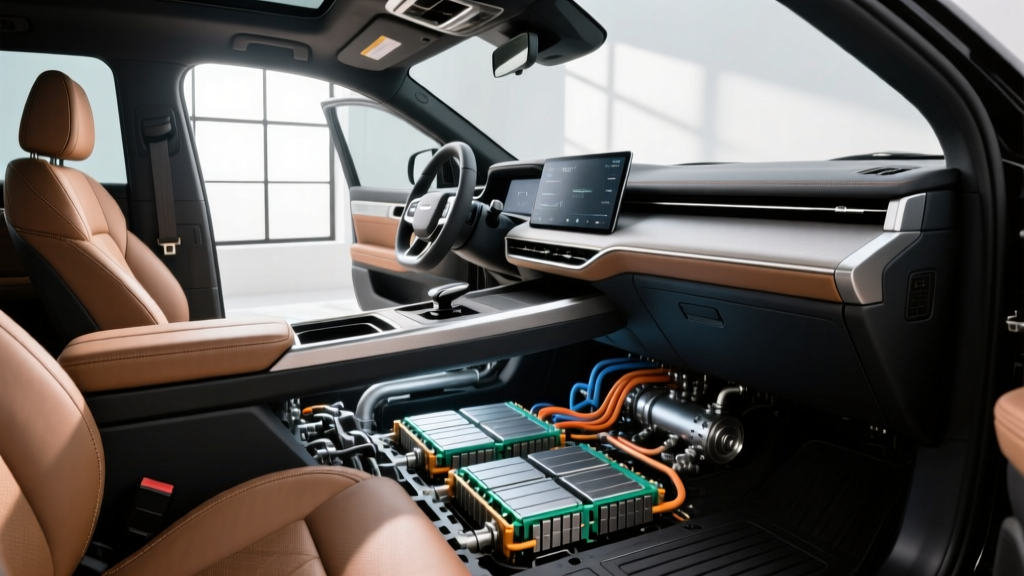
The refreshed 2026 EV6 remains Kia's mainstream electric anchor. Built on the E-GMP platform with an 800V architecture, it continues to offer some of the fastest DC charging in its class. The 2026 refresh brought a slightly larger battery pack, updated infotainment with native Tesla Supercharger routing via the NACS port (now standard), and revised front and rear styling.
| Spec | EV6 Light (RWD) | EV6 Wind (AWD) | EV6 GT |
|---|---|---|---|
| Battery | 84.0 kWh usable, NMC | 84.0 kWh usable, NMC | 84.0 kWh usable, NMC |
| Drivetrain | RWD, single motor | AWD, dual motor | AWD, dual motor |
| Horsepower | 225 hp | 325 hp | 576 hp |
| 0-60 mph | 7.2 sec | 5.0 sec | 3.4 sec |
| EPA Range | 310 mi | 282 mi | 206 mi |
| MPGe (combined) | 134 MPGe | 117 MPGe | 85 MPGe |
| Max DC Charge | ~240 kW peak | ~240 kW peak | ~240 kW peak |
| 10-80% DC Time | ~18 min | ~18 min | ~18 min |
| Level 2 Rate | 10.9 kW (~37 mi/hr) | 10.9 kW (~37 mi/hr) | 10.9 kW (~37 mi/hr) |
| Base MSRP | $42,900 | $49,900 | $61,600 |
The EV6's 800V architecture is its charging trump card. On a 350 kW Electrify America or compatible DC fast charger, the battery pulls close to its 240 kW peak from roughly 10–55% SoC before tapering. That taper is important — above 80%, charging slows considerably to protect cell longevity, so plan your road-trip stops around 10–80% windows rather than topping off to full.
Cargo and Interior Space
The EV6 offers 24.4 cubic feet behind the second row and 50.2 cu ft with the rear seats folded. The rear frunk adds 0.7 cu ft — enough for a charging cable kit but not much more. Rear legroom measures 39.5 inches, which is generous for the segment. The cabin materials and build quality punch above the EV6's price class, though the gloss-black center console is a fingerprint magnet.
Tax Credit Eligibility
For the 2026 model year, the EV6 is assembled in West Point, Georgia, which is critical for IRS §30D eligibility. The Light and Wind trims (both under the $55,000 SUV MSRP cap) may qualify for up to $7,500 in federal tax credits, subject to battery component and critical mineral sourcing requirements that shift annually. Buyer income caps apply: $150,000 single / $300,000 married filing jointly. The GT trim at $61,600 exceeds the MSRP cap and is ineligible. The credit can be transferred to the dealer as a point-of-sale discount — confirm eligibility with your tax professional before purchase.
Kia EV9: Three-Row Electric Family Hauler
The EV9 is Kia's statement vehicle — a genuine three-row electric SUV competing directly with the Tesla Model X, Rivian R1S, and the upcoming Hyundai Ioniq 9. Also built on E-GMP with 800V capability, the EV9 prioritizes space and practicality over outright performance.
| Spec | EV9 Light (RWD) | EV9 Wind/Land (AWD) | EV9 GT-Line (AWD) |
|---|---|---|---|
| Battery | 76.1 kWh (Light) / 99.8 kWh (Light Long Range), NMC | 99.8 kWh usable, NMC | 99.8 kWh usable, NMC |
| Drivetrain | RWD, single motor | AWD, dual motor | AWD, dual motor |
| Horsepower | 215 hp / 379 hp (LR) | 379 hp | 379 hp (501 hp w/ boost) |
| 0-60 mph | 8.2 sec / 5.0 sec (LR) | 5.0 sec | 4.3 sec |
| EPA Range | 230 mi / 304 mi (LR) | 280 mi | 270 mi |
| MPGe (combined) | 106 / 89 MPGe | 85 MPGe | 83 MPGe |
| Max DC Charge | ~210 kW peak | ~210 kW peak | ~210 kW peak |
| 10-80% DC Time | ~24 min | ~24 min | ~24 min |
| Level 2 Rate | 10.9 kW (~30 mi/hr) | 10.9 kW (~30 mi/hr) | 10.9 kW (~30 mi/hr) |
| Base MSRP | $54,900 / $59,900 | $63,900 | $73,900 |
Space: The EV9's Real Advantage
With 20.2 cu ft behind the third row, 43.5 cu ft behind the second, and 81.7 cu ft with both rear rows folded, the EV9 offers legitimate cargo utility. Third-row legroom is 32.0 inches — tight for adults on long trips but fine for children. Second-row captain's chairs (available on Land and GT-Line trims) improve comfort and walk-through access. The EV9 also offers V2L (Vehicle-to-Load) capability, letting you power external devices or small appliances from the battery — useful for camping or emergency backup.
EV9 Tax Credit Status
As of the 2026 model year, the EV9 is produced at the West Point, Georgia facility, making it eligible for the §30D credit provided the battery sourcing requirements are met. The Light and Light Long Range trims (under the $80,000 SUV MSRP cap) are potential candidates for up to $7,500. The Land and GT-Line trims also fall under the cap. Income limits apply as noted above. Verify current battery-sourcing compliance on the IRS clean vehicle credit page, as critical mineral requirements tighten annually.
Kia EV5: The Gap-Filler (Upcoming Late 2026)
The EV5 is the most significant addition in Kia's expansion roadmap. Positioned between the EV6 and EV9, it targets the compact-to-mid-size SUV segment where the Toyota RAV4 and Honda CR-V dominate in the ICE world. Kia has confirmed North American production, and early indications point to aggressive pricing aimed at undercutting the EV6 while offering more interior volume.
| Spec | EV5 (Estimated) |
|---|---|
| Battery | ~75–84 kWh usable, NMC (est.) |
| Drivetrain | RWD and AWD options |
| Horsepower | ~215–320 hp (est.) |
| EPA Range | ~270–290 mi (est., RWD) |
| Max DC Charge | Expected 800V architecture, ~200+ kW peak |
| Estimated Starting MSRP | ~$38,000–$42,000 |
| Tax Credit | Likely eligible (GA production expected) |
If Kia prices the EV5 near $38,000 and it qualifies for the full $7,500 point-of-sale credit, the effective starting price could drop to roughly $30,500 — making it one of the most affordable electric SUVs in its class. This is the model most likely to expand Kia's EV buyer pool beyond early adopters and into mainstream family shoppers.
Kia Niro EV: The Entry Point
The Niro EV continues as Kia's most accessible battery-electric offering. It's not the fastest-charging or longest-range EV in the lineup, but it serves a specific buyer: the urban or suburban commuter who wants a practical, efficient electric crossover without stretching into EV6 pricing.
| Spec | 2026 Niro EV |
|---|---|
| Battery | 64.8 kWh usable, NMC |
| Drivetrain | FWD, single motor |
| Horsepower | 201 hp |
| 0-60 mph | 7.8 sec |
| EPA Range | 239 mi |
| MPGe (combined) | 113 MPGe |
| Max DC Charge | ~85 kW peak |
| 10-80% DC Time | ~43 min |
| Level 2 Rate | 7.2 kW (~26 mi/hr) |
| Base MSRP | $39,600 |
The Niro EV's charging speed is its biggest limitation versus the EV6. At 85 kW peak, it can't take advantage of 150+ kW chargers, adding roughly 130 miles in 30 minutes at best. For buyers who road-trip frequently, the EV6's 240 kW capability is a meaningful upgrade. But for daily driving within a 60-mile round trip, the Niro EV's efficiency and lower price make it a rational choice.
Charging Infrastructure and the NACS Transition
A key part of Kia's expansion strategy is the adoption of the NACS (North American Charging Standard) port across its EV lineup. For the 2026 model year, new Kia EVs come equipped with the NACS connector natively, granting access to Tesla's Supercharger network — the most reliable and extensive DC fast-charging infrastructure in North America. Older Kia EVs with CCS1 ports can use adapters, though with potential speed limitations depending on the adapter generation.
| Charging Level | Power | Typical Miles Added/Hour | Where |
|---|---|---|---|
| Level 1 (120V) | ~1.4 kW | 3–5 mi/hr | Standard household outlet |
| Level 2 (240V) | 7.2–10.9 kW | 26–37 mi/hr | Home wallbox, public Level 2 |
| DC Fast Charge | 85–240 kW (model-dependent) | 130–600+ mi/hr (peak) | Superchargers, EA, EVgo |
For home Level 2 charging, a 48-amp wallbox on a 60-amp circuit delivers the full 10.9 kW to the EV6 and EV9, adding roughly 30–37 miles of range per hour. Expect $500–$1,200 for the charger hardware plus $800–$2,500 for professional installation depending on your electrical panel's capacity. A 200-amp panel upgrade — sometimes needed in older homes — can add $1,500–$3,000. Always get a quote from a licensed electrician before committing.
Warranty, Ownership Costs, and Long-Term Value
Kia's warranty coverage remains one of the strongest in the EV market:
- Battery: 10 years / 100,000 miles (capacity retention warranty — typically covers drops below 70% State of Health)
- Powertrain: 10 years / 100,000 miles
- Bumper-to-Bumper: 5 years / 60,000 miles
- Roadside Assistance: 5 years / 60,000 miles
That 10-year battery warranty is a significant ownership advantage, particularly for buyers planning to keep their EV past the typical lease term. NMC battery degradation in Kia's E-GMP platform has tracked well in real-world data — most owners report 92–95% State of Health after 50,000 miles, though individual results vary based on charging habits, climate, and DC fast-charge frequency.
Insurance costs for Kia EVs run 10–20% higher than comparable ICE models, reflecting higher repair costs and parts pricing. Shop quotes before purchasing — premiums vary significantly by insurer and ZIP code.
Who Should Buy What: Decision Framework
Choose the Niro EV if: You commute under 60 miles daily, charge at home, rarely road-trip, and want the lowest entry price into Kia's EV lineup.
Choose the EV6 if: You want a balance of range, fast charging, and style. The Wind AWD is the sweet spot for all-weather buyers who road-trip 2–4 times per year.
Choose the EV9 if: You need three rows for family hauling, value V2L capability, and have the budget for a larger vehicle. The Long Range RWD offers the best range-per-dollar.
Wait for the EV5 if: You want EV6-class tech in a more affordable, right-sized SUV package and can hold off until late 2026.
How the Kia EV Lineup Compares to Rivals
| Model | EPA Range | Max DC kW | 10-80% Time | Starting MSRP | Tax Credit |
|---|---|---|---|---|---|
| Kia EV6 Wind AWD | 282 mi | ~240 kW | ~18 min | $49,900 | Likely eligible |
| Hyundai Ioniq 5 SEL AWD | 266 mi | ~240 kW | ~18 min | $50,250 | Likely eligible |
| Tesla Model Y LR AWD | 311 mi | ~250 kW | ~15 min | $46,630 | Eligible (varies) |
| Ford Mustang Mach-E Premium AWD | 290 mi | ~150 kW | ~36 min | $51,875 | Likely eligible |
| Kia EV9 Land AWD | 280 mi | ~210 kW | ~24 min | $63,900 | Likely eligible |
| Tesla Model X LR | 335 mi | ~250 kW | ~15 min | $79,990 | Ineligible (MSRP cap) |
The EV6's charging speed advantage over the Mach-E is substantial on road trips — 18 minutes versus 36 minutes for a 10–80% session adds up over a 600-mile drive. Against the Tesla Model Y, the EV6 trades a slight range and charging deficit for a more conventional interior layout, physical climate controls, and (for some buyers) a more distinctive design.
The EV9 occupies a segment with few direct electric rivals at its price point. The Model X is dramatically more expensive and now ineligible for the tax credit. The Rivian R1S starts higher and targets a more adventure-oriented buyer. For families who simply need three rows and modern EV tech, the EV9 is currently the default choice.
The Production Strategy Behind Kia's Expansion
Kia's EV expansion plans aren't just about adding models — they're about localization. The West Point, Georgia plant (shared with corporate sibling Hyundai) is central to Kia's U.S. strategy. Vehicles assembled there qualify for the §30D federal tax credit, provided they meet the evolving battery component and critical mineral sourcing thresholds. This production shift gives Kia a pricing advantage over competitors still importing EVs from South Korea or Europe.
By late 2026, Kia aims to have at least four EVs in U.S. showrooms with domestic production, covering price points from the mid-$30,000s (EV5, post-credit) to the mid-$70,000s (EV9 GT-Line). That's a broader electrified portfolio than most mainstream brands can offer, and it positions Kia to capture buyers who might otherwise default to Tesla or wait for legacy-brand EVs that keep getting delayed.
Pros and Cons Across the Lineup
Pros
- 800V architecture on EV6/EV9 enables class-leading DC charge speeds
- 10-year/100,000-mile battery and powertrain warranty
- Georgia production unlocks §30D tax credit eligibility
- NACS port standard — full Supercharger access
- EV9 offers genuine three-row utility with V2L
- EV5 expected to bring aggressive pricing to mainstream SUV segment
Cons
- Niro EV's 85 kW charge ceiling limits road-trip practicality
- EV9 AWD range drops significantly in cold weather
- EV5 specs remain preliminary — no guarantee of final pricing or range
- Gloss-black interior trim shows fingerprints and scratches
- Insurance premiums run 10–20% above ICE equivalents
- Infotainment learning curve for first-time Kia EV buyers
Frequently Asked Questions
What is the real-world range of Kia's EVs?
The EV6 Light RWD delivers roughly 260–280 highway miles versus its 310 EPA rating. The EV9 Long Range RWD achieves 250–270 highway miles against its 304 EPA figure. Cold weather (below 32°F) reduces range by 20–30% across the lineup. The Niro EV's 239-mile EPA rating drops to about 200–215 highway miles.
How fast do Kia EVs charge at home and on the road?
The EV6 and EV9 peak at 240 kW and 210 kW respectively on DC fast chargers, achieving 10–80% in 18 and 24 minutes. At home on Level 2 (10.9 kW), the EV6 adds roughly 37 miles per hour. The Niro EV charges more slowly: 85 kW DC peak, 43 minutes 10–80%, and 7.2 kW Level 2.
How much does a Kia EV cost after tax credits?
If eligible for the full $7,500 §30D credit transferred at point of sale, the EV6 Light drops to approximately $35,400, the EV9 Light to $47,400, and the Niro EV to $32,100. Eligibility depends on buyer income, battery sourcing compliance, and MSRP caps. Always verify current rules on irs.gov.
Are Kia EVs worth buying over Tesla or Hyundai?
The EV6 competes closely with the Tesla Model Y and Hyundai Ioniq 5. The EV6's advantage is faster charging than most rivals and a more conventional interior. The EV9 has almost no direct three-row EV competitor at its price. If Supercharger access is your top priority, Tesla still has the edge in network familiarity — but Kia's NACS adoption largely closes that gap.
Does the Kia EV9 qualify for the federal EV tax credit?
Yes, the EV9 is assembled in Georgia and falls under the $80,000 SUV MSRP cap for §30D eligibility. The full $7,500 credit depends on meeting battery sourcing requirements, which tighten each year. Buyer income caps apply. Confirm your specific eligibility with a tax professional and check the IRS clean vehicle credit page for current sourcing rules.
When will the Kia EV5 be available?
Kia has confirmed the EV5 for North America with production expected to begin in late 2026 as a 2027 model. Final EPA range, pricing, and trim details will be announced closer to launch. Based on Kia's global reveal, expect pricing in the $38,000–$42,000 range before incentives.