Can You Really Get a $10,000 Discount on a Kia EV?
The short answer: yes — but not from a single source. A Kia EV $10,000 discount is achievable in 2026 by stacking the federal §30D tax credit (up to $7,500), state or utility rebates ($1,000–$3,500 in qualifying regions), and dealer cash or Kia incentive programs that periodically target the EV6, EV9, and Niro EV. The catch is that every layer has eligibility rules — income caps, MSRP ceilings, battery-sourcing requirements, and residency constraints — that determine whether you actually see that five-figure price cut.
This guide breaks down which Kia electric vehicles are currently on sale, what they cost before and after incentives, and the exact stacking math that gets you close to $10,000 off. We'll also cover real-world range, charging speeds, and whether each model is worth your money versus competitors like the Hyundai Ioniq 5, Tesla Model Y, and Ford Mustang Mach-E.
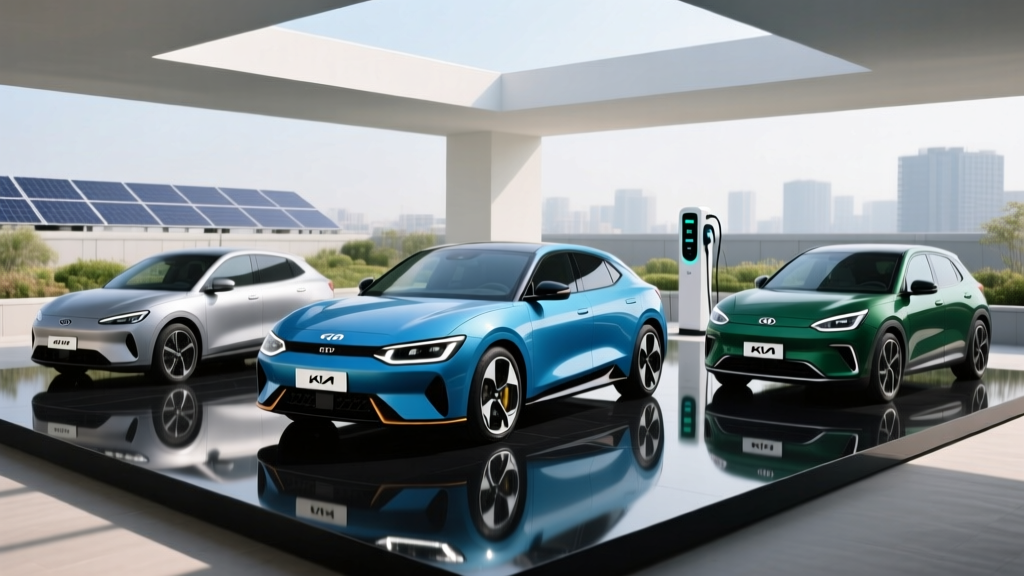
Kia's 2026 EV Lineup at a Glance
| Model | Body Style | EPA Range | Battery (kWh) | Max DC kW | Base MSRP |
|---|---|---|---|---|---|
| Kia Niro EV | Compact crossover | 239 mi | 64.8 (NMC) | 85 kW | ~$39,600 |
| Kia EV6 (RWD) | Midsize crossover | 310 mi | 77.4 (NMC) | 240 kW | ~$42,600 |
| Kia EV6 (AWD) | Midsize crossover | 282 mi | 77.4 (NMC) | 240 kW | ~$46,600 |
| Kia EV9 (RWD) | 3-row SUV | 304 mi | 100.0 (NMC) | 210 kW | ~$54,900 |
| Kia EV9 (AWD) | 3-row SUV | 270–280 mi | 100.0 (NMC) | 210 kW | ~$59,900 |
All three nameplates use nickel-manganese-cobalt (NMC) battery chemistry, which delivers higher energy density than LFP but is more sensitive to sustained 100% state-of-charge storage. Kia pairs each pack with an 8-year/100,000-mile battery and powertrain warranty, with a capacity-retention threshold typically set at 70% of original capacity.
The Stacking Math: How $10,000 Comes Together
No single incentive writes a $10,000 check. Here is the realistic stacking framework for a buyer pursuing a Kia EV $10,000 discount in 2026:
| Incentive Layer | Amount | Key Requirement |
|---|---|---|
| Federal §30D Clean Vehicle Credit | $0–$7,500 | Income, MSRP cap, battery sourcing (IRS rules) |
| State rebate (e.g., CA, CO, MA, NY) | $1,000–$4,000 | Residency; some are income-tiered |
| Utility or municipal rebate | $250–$1,500 | Enrollment in participating utility program |
| Kia dealer cash / loyalty / lease bonus | $500–$2,500 | Varies by region and model month |
| Total (best case) | ~$9,250–$15,500 | All layers must stack; leasing may unlock more |
The federal credit is the largest single piece, but it is not automatic. Under current IRS §30D rules, the buyer must meet adjusted gross income caps ($150k single / $300k joint), the vehicle MSRP must fall under the ceiling ($80,000 for SUVs like the EV9, $55,000 for sedans/wagons/hatchbacks — the EV6 and Niro EV classification depends on how Kia badges them, and Kia has historically listed the EV6 as a "wagon" for credit purposes), and the battery must satisfy critical-mineral and component-sourcing thresholds that tighten annually. As of 2026, the sourcing rules are strict enough that some Kia trims qualify for only $3,750 (half credit) rather than the full $7,500, depending on the build month and supply-chain lot.
Kia EV6: The Discount Sweet Spot
The EV6 is the Kia most frequently bundled into aggressive dealer incentive events and the one most likely to approach a $10,000 total discount for a buyer who qualifies for the full federal credit plus a state rebate.
| Spec | RWD Long Range | AWD Long Range |
|---|---|---|
| EPA Range | 310 mi | 282 mi |
| Battery (usable) | 77.4 kWh NMC | 77.4 kWh NMC |
| Horsepower | 225 hp | 320 hp |
| 0–60 mph | 7.2 sec | 5.1 sec |
| Max DC Fast Charge | 240 kW (peak) | 240 kW (peak) |
| 10–80% DC Time | ~18 min | ~18 min |
| Level 2 Home Rate | 10.9 kW (~36 mi/hr) | 10.9 kW (~36 mi/hr) |
| Combined MPGe | 134 MPGe | 117 MPGe |
| Efficiency | 25 kWh/100 mi | 29 kWh/100 mi |
| Cargo (rear up / folded) | 24.4 / 50.2 cu ft | 24.4 / 50.2 cu ft |
| Rear Legroom | 39.4 in | 39.4 in |
| Base MSRP | ~$42,600 | ~$46,600 |
| Warranty (basic / powertrain) | 5/60k + 10/100k | 5/60k + 10/100k |
The EV6's 800-volt architecture is the standout engineering feature here: peak 240 kW DC charging on a 350 kW-class stall delivers 10–80% in roughly 18 minutes, though the curve tapers sharply above 80% — a 10–100% fill can stretch past 35 minutes. For home Level 2 charging on a 48-amp circuit, the onboard 10.9 kW charger refills the pack in about 7.5 hours, which is fast enough to wake up to a full battery every morning.
Kia EV9: Big SUV, Big Discount Potential
The EV9 is the three-row family hauler, and because its MSRP sits under the $80,000 SUV cap for §30D, it qualifies for the full federal credit on most trims — provided the buyer's income is under the joint-filing $300,000 threshold. A top-trim EV9 GT-Line AWD pushing $73,000 MSRP can still clear the cap, making it one of the more discount-friendly large EVs on the market.
| Spec | RWD Long Range | AWD |
|---|---|---|
| EPA Range | 304 mi | 270–280 mi |
| Battery (usable) | 100.0 kWh NMC | 100.0 kWh NMC |
| Horsepower | 215 hp | 379 hp |
| 0–60 mph | 8.2 sec | 5.0 sec |
| Max DC Fast Charge | 210 kW | 210 kW |
| 10–80% DC Time | ~24 min | ~24 min |
| Level 2 Home Rate | 10.9 kW (~28 mi/hr) | 10.9 kW (~28 mi/hr) |
| Combined MPGe | 89 MPGe | 83 MPGe |
| Cargo (behind 3rd / 2nd / 1st) | 20.2 / 43.5 / 81.7 cu ft | 20.2 / 43.5 / 81.7 cu ft |
| Towing (max, with prep) | — | 5,000 lb |
| Base MSRP | ~$54,900 | ~$59,900 |
The EV9's 100 kWh pack takes longer to fill than the EV6's — about 24 minutes from 10–80% on a 350 kW charger — but the 800V architecture still keeps it competitive against the Rivian R1S and Tesla Model X, neither of which undercut it on price. Third-row legroom is 32.0 inches (tight for adults on long trips), but the second row offers a generous 42.8 inches, and cargo volume with both rows folded rivals midsize minivans.
Kia Niro EV: Entry Price, Modest Discount Ceiling
The Niro EV is Kia's most affordable electric option and the one most likely to be cross-shopped with the Chevrolet Bolt EUV and Hyundai Kona Electric. Base MSRP around $39,600 puts it under the §30D $55,000 cap, but its smaller 64.8 kWh battery and 85 kW peak DC charge rate limit its appeal for road-trip-heavy buyers.
| Spec | Value |
|---|---|
| EPA Range | 239 mi |
| Battery | 64.8 kWh NMC |
| Horsepower / 0–60 | 201 hp / 7.8 sec |
| Max DC Fast Charge | 85 kW |
| 10–80% DC Time | ~43 min |
| Level 2 Home Rate | 11 kW (~32 mi/hr) |
| Combined MPGe | 113 MPGe |
| Cargo (rear up / folded) | 19.1 / 53.0 cu ft |
| Base MSRP | ~$39,600 |
The 43-minute 10–80% DC time is the Niro EV's weakest link. For a commuter who charges at home nightly, it is irrelevant; for anyone driving beyond a 200-mile round trip regularly, it becomes a real inconvenience versus the EV6's 18-minute refill.
Federal Tax Credit Eligibility — The Fine Print
Before assuming any Kia EV qualifies for the full $7,500, run through this checklist against current IRS §30D guidance:
- Buyer AGI: ≤ $150,000 single, ≤ $225,000 head of household, ≤ $300,000 joint.
- Vehicle MSRP cap: $55,000 for sedans/wagons/hatchbacks (EV6, Niro EV); $80,000 for SUVs/pickups (EV9).
- Battery sourcing: Critical-mineral and component thresholds phase up annually; verify the specific VIN with the dealer and the IRS energy-credits portal before signing.
- Final assembly: Must occur in North America — all three Kia EVs currently qualify.
- Point-of-sale transfer: Available; dealer must be IRS-registered.
- Lease workaround: Leased vehicles fall under §45W (commercial credit to the lessor), which has no MSRP, income, or sourcing caps — the lessor may pass savings through as a reduced lease payment, though they are not obligated to.
Because sourcing requirements tighten every year, a Kia EV6 built in early 2026 may qualify for the full $7,500 while one built later in the year with a different battery lot might only hit $3,750. Always verify by VIN.
Real-World Ownership: What Buyers Actually Experience
Specs only tell half the story. Here are the practical ownership realities we've observed across Kia's EV lineup:
Charging-curve taper: The EV6 and EV9 both peak at their advertised kW only between roughly 10% and 45% state of charge. Past 60%, the curve drops significantly; past 80%, it slows to Level 2 speeds. Plan DC fast stops as 10–80% fills and move on rather than waiting for a full battery.
Cold-weather range loss: NMC packs in the Kia lineup lose 20–30% of EPA range in sustained sub-freezing temperatures, especially with cabin heat running. The EV6 and EV9 use a heat pump (standard on most trims), which mitigates this compared to resistive heating, but the physics of cold chemistry still apply. A 310-mile EV6 becomes roughly a 230-mile EV6 at 15°F.
Driver assistance: Kia's Highway Driving Assist 2 (HDA2) is a competent SAE Level 2 system — lane centering, adaptive cruise, lane-change assist — but it is not self-driving. Hands must stay on the wheel, and the system disengages in construction zones and faded lane markings. It is competitive with Toyota Safety Sense 3.0 but a step below GM's Super Cruise in hands-off highway coverage.
Infotainment: The EV6 and EV9 use a dual 12.3-inch curved display with wireless Apple CarPlay and Android Auto. The EV9 adds an available fingerprint-authenticated driver profile and over-the-air updates. The Niro EV uses a smaller 10.25-inch screen but retains wireless phone mirroring.
Pros
- 800V architecture on EV6/EV9 = top-tier DC charging speeds
- Class-leading warranty: 10-year/100,000-mile powertrain
- EV9 offers rare 3-row SUV choice under $80k MSRP cap
- Strong §30D eligibility across the lineup (verify by VIN)
- Spacious rear seats and cargo, especially EV6 vs Ioniq 5
Cons
- Niro EV's 85 kW DC charging is slow for 2026 standards
- Real-world highway range falls 15–20% below EPA sticker
- EV9 third row is tight for adults on long trips
- No LFP option — 100% storage not recommended for NMC longevity
- Dealer markups can erase incentive gains in hot markets
Who Should Buy Which Kia EV?
Choose the EV6 if: You want the best balance of range (310 mi EPA), fast charging (18-min 10–80%), and price. It's the Kia most likely to deliver a full $10,000 discount stack and the best road-trip EV in the lineup.
Choose the EV9 if: You need three rows, 5,000-pound towing (AWD), and can absorb a higher base price. The SUV MSRP cap gives it more headroom for the federal credit than competitors like the BMW iX.
Choose the Niro EV if: Your commute is under 80 miles round-trip, you charge at home every night, and you want the lowest entry price. Skip it if you road-trip more than twice a year.
Frequently Asked Questions
Is the Kia EV $10,000 discount a single coupon?
No. It is a stack of the federal §30D credit (up to $7,500), state/utility rebates ($1,000–$4,000 depending on residency), and dealer or Kia factory cash. No single program writes a $10,000 check; you must qualify for multiple layers simultaneously.
Does the Kia EV6 qualify for the full $7,500 federal credit?
It can, but only if the buyer's AGI is under the cap, the MSRP is under $55,000 (classified as a wagon), and the specific VIN's battery meets 2026 critical-mineral and component-sourcing thresholds. Always verify on the IRS portal before signing.
How fast does the Kia EV9 charge at home?
On a 48-amp Level 2 home charger (10.9 kW), the EV9's 100 kWh pack refills from empty in roughly 9.5 hours — fast enough to recover a day's driving overnight. Expect about 28 miles of range added per hour of charging.
Is the Niro EV worth it vs the EV6?
Only if budget is the primary constraint. The EV6's 310-mile range and 18-minute DC charging crush the Niro's 239-mile / 43-minute figures. For any buyer who road-trips more than occasionally, the EV6 is the stronger long-term buy even at a higher sticker price.
Can I lease a Kia EV to bypass the tax credit rules?
Yes — leased EVs fall under §45W commercial credit, which has no MSRP, income, or battery-sourcing caps. The leasing company (lessor) receives the credit and may pass it through as a lower monthly payment, but they are not legally required to. Compare the lease money factor to purchase APR before committing.
Where can I verify current Kia EV incentives?
Check fueleconomy.gov for EPA range and efficiency data, the IRS Energy Credits portal for §30D eligibility by VIN, and your state's energy office or utility for local rebates. Kia's own incentive page and dealer quote tools will show current factory cash and loyalty offers.