Quick Answer: Which Kia EV Is Right for You?
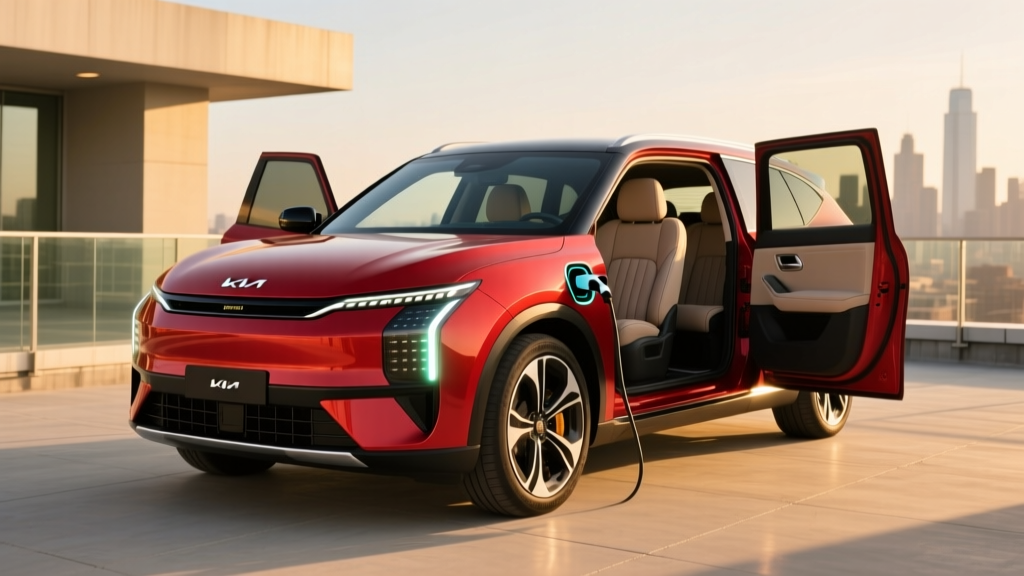
Kia offers three battery-electric models in the US for 2026: the Niro EV (239 mi EPA, ~$39,600), the EV6 (up to 310 mi EPA, ~$42,900), and the three-row EV9 (up to 304 mi EPA, ~$54,900). All three use Hyundai Motor Group's E-GMP platform with 800V architecture (EV6/EV9), enabling 10–80% DC fast charges in roughly 18 minutes at a 350 kW station. The Niro EV is the budget commuter pick; the EV6 is the best all-around crossover; the EV9 is the only mainstream electric three-row SUV under $60,000. Federal §30D tax credit eligibility varies by battery sourcing and buyer income — check current IRS rules before assuming a flat $7,500.
The 2026 Kia EV Lineup at a Glance
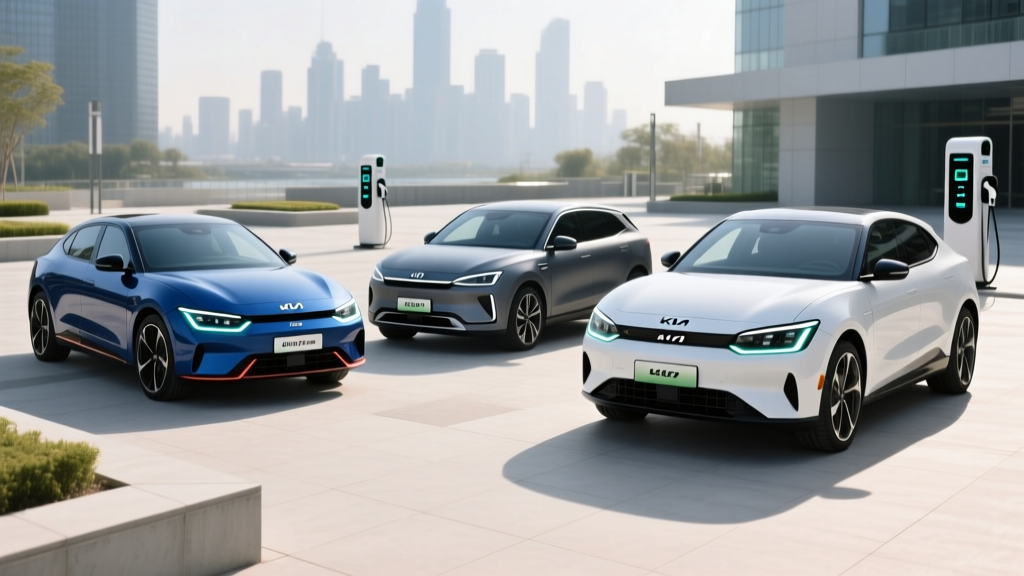
Kia's electric strategy is straightforward: one compact crossover for value seekers, one performance-oriented midsize crossover, and one large family hauler. All three are battery-electric (BEV) — no plug-in hybrids here (Kia sells the Niro PHEV and Sorento PHEV separately). Below is the spec matrix that matters for purchase decisions.
| Spec | Niro EV | EV6 (Light RWD) | EV6 (GT-Line AWD) | EV9 (Light RWD) | EV9 (GT-Line AWD) |
|---|---|---|---|---|---|
| EPA Range | 239 mi | 310 mi | 274 mi | 304 mi | 270 mi |
| Battery (usable) | 64.8 kWh (NMC) | 77.4 kWh (NMC) | 77.4 kWh (NMC) | 100.0 kWh (NMC) | 100.0 kWh (NMC) |
| Horsepower | 201 hp | 225 hp | 320 hp | 215 hp | 379 hp |
| 0–60 mph | ~7.8 s | ~7.2 s | ~4.5 s | ~8.2 s | ~4.9 s |
| Peak DC Charge Rate | 85 kW | 240 kW | 240 kW | 210 kW | 210 kW |
| 10–80% DC Time | ~45 min | ~18 min | ~18 min | ~24 min | ~24 min |
| Level 2 (240V) Rate | 7.2 kW | 10.9 kW | 10.9 kW | 10.9 kW | 10.9 kW |
| MPGe (combined) | 113 MPGe | 134 MPGe | 106 MPGe | 88 MPGe | 83 MPGe |
| Starting MSRP | $39,600 | $42,900 | $52,500 | $54,900 | $63,900 |
| Drivetrain | FWD | RWD | AWD | RWD | AWD |
Sources: fueleconomy.gov, Kia America specifications. Real-world highway range is typically 10–15% below EPA; cold-weather (below 30°F) can reduce range 20–30%.
Real-World Range vs. EPA Stickers
EPA range is measured on a dynamometer under controlled conditions. Your actual range depends on speed, temperature, terrain, and climate-control use. Here's what to realistically expect from each model:
Niro EV (239 mi EPA)
Real-world expectation: 195–220 mi in mixed driving; 165–185 mi sustained highway at 75 mph; 150–170 mi in sub-freezing winter conditions. The Niro EV's smaller battery and FWD layout make it efficient around town but range drops noticeably at highway speed.
EV6 Light RWD (310 mi EPA)
Real-world expectation: 260–285 mi mixed; 240–260 mi highway; 210–230 mi in cold weather. This is the range champion of the lineup. The 77.4 kWh battery paired with RWD delivers strong efficiency at 134 MPGe combined.
EV9 Light RWD (304 mi EPA)
Real-world expectation: 250–275 mi mixed; 230–250 mi highway; 195–220 mi in cold weather. The EV9 is a large, heavy vehicle — its 100 kWh battery compensates, but aerodynamic drag at highway speed cuts efficiency. Towing further reduces range by 30–50%.
Charging Speed: Where Kia's 800V Architecture Pays Off
The EV6 and EV9 use an 800V electrical architecture — a significant advantage over competitors still running 400V systems (including the Niro EV). Higher voltage allows faster DC charging without increasing current, which means less heat and sustained charge speeds.
| Level | Power (kW) | Niro EV (mi/hr) | EV6 (mi/hr) | EV9 (mi/hr) | Typical Use |
|---|---|---|---|---|---|
| Level 1 (120V) | ~1.4 kW | ~4 mi/hr | ~4 mi/hr | ~4 mi/hr | Emergency / overnight trickle |
| Level 2 (240V, 32A) | 7.2–10.9 kW | ~22 mi/hr | ~33 mi/hr | ~33 mi/hr | Home daily charging |
| DC Fast (50 kW) | 50 kW | ~120 mi/hr | ~150 mi/hr | ~130 mi/hr | Older public stations |
| DC Fast (150 kW) | 150 kW | ~180 mi/hr (capped at 85 kW) | ~450 mi/hr | ~400 mi/hr | Electrify America, EVgo |
| DC Fast (350 kW) | 240–350 kW | N/A (capped) | ~700 mi/hr peak | ~600 mi/hr peak | EA, Ionity 350 kW stalls |
Charging curve reality check: The EV6 peaks near 240 kW but only sustains that rate between roughly 10–55% State of Charge. From 55–80%, speed tapers to 100–150 kW. Above 80%, expect under 50 kW as the battery management system protects cell longevity. The 18-minute 10–80% figure assumes a preconditioned battery at a functioning 350 kW charger — at a 150 kW unit, expect 25–30 minutes for the same session.
The Niro EV's 85 kW DC cap is its biggest limitation for road trips. A 10–80% charge takes roughly 45 minutes, making it less practical for frequent long-distance driving.
Kia EV vs. Gas vs. Hybrid: Cost Comparison
The purchase price of a Kia EV is higher than a comparable gas or hybrid vehicle, but operating costs are lower. Here's a 5-year cost projection for the EV6 Light RWD versus the gasoline Sportage and the Niro Hybrid:
| Cost Factor | EV6 Light RWD | Sportage FWD (Gas) | Niro Hybrid |
|---|---|---|---|
| Purchase Price (MSRP) | $42,900 | $28,590 | $26,990 |
| Est. Federal Tax Credit (§30D) | $0–$7,500* | $0 | $0 |
| Fuel/Energy (60k mi) | $4,200** | $7,800 | $5,400 |
| Maintenance (5 yr) | $1,800 | $3,500 | $3,200 |
| Insurance (5 yr avg) | $9,500 | $7,200 | $7,000 |
| 5-Year Total (before credit) | $58,400 | $47,090 | $42,590 |
| 5-Year Total (after max credit) | $50,900 | $47,090 | $42,590 |
* §30D credit eligibility depends on battery critical-mineral sourcing, buyer income caps ($150K single / $300K joint), and MSRP caps ($55K cars / $80K SUVs). Check IRS §30D guidance for current rules. Point-of-sale transfer is available at participating dealers.
** Energy cost assumes $0.16/kWh national average for home charging and occasional DC fast charging at $0.40/kWh. Gas assumes $3.40/gal at 28 MPG combined (Sportage). Your costs vary by electricity rate and driving mix.
Key takeaway: The EV6 breaks even with the gas Sportage around year 4–5 when the federal credit applies. Without the credit, the EV remains more expensive over 5 years, though the gap narrows if gas prices rise. The Niro Hybrid remains the cheapest option for buyers who cannot charge at home.
Federal Tax Credit: What Kia Buyers Need to Know
The §30D New Clean Vehicle Credit offers up to $7,500, split into two halves:
- $3,750 — Battery Components: A percentage of battery components must be manufactured or assembled in North America. This threshold increases annually.
- $3,750 — Critical Minerals: A percentage of critical minerals (lithium, cobalt, nickel) must be sourced from the US or a free-trade-agreement partner.
- Buyer Income Caps: AGI must not exceed $150,000 (single), $225,000 (head of household), or $300,000 (married filing jointly).
- MSRP Caps: SUVs (EV6, EV9) must have MSRP ≤ $80,000; sedans ≤ $55,000. All current Kia EVs fall under the cap.
- Point-of-Sale Transfer: Eligible buyers can transfer the credit to the dealer at purchase, reducing the out-of-pocket price immediately rather than waiting for tax filing.
Critical nuance for Kia buyers: Kia's battery supply chain involves SK Innovation (SK On), which sources cells from plants in Georgia. However, critical-mineral sourcing compliance varies by model year and production batch. Some Kia EVs qualify for the full $7,500, some for $3,750, and some for $0 depending on when they were built. Always verify the specific VIN's eligibility on fueleconomy.gov before purchasing.
Real-World Ownership Considerations
Home Charging Access
Level 2 home charging is where EV ownership is won or lost. If you can install a 240V, 40-amp circuit (NEMA 14-50 or hardwired wallbox), you'll wake up to a full battery every morning — effectively eliminating range anxiety for daily driving under 200 miles.
Installation cost: Expect $800–$2,000 for a straightforward install (panel near garage, no upgrade needed). If your electrical panel needs a 200-amp service upgrade, add $1,500–$3,000. The EV6 and EV9 accept up to 10.9 kW on Level 2, meaning a full charge from empty takes about 7–9 hours overnight.
No home charging? The Niro EV's slower DC charging and smaller battery make it less suitable for apartment dwellers relying on public infrastructure. The EV6/EV9 are more viable thanks to faster DC speeds, but frequent public charging adds cost ($0.30–$0.50/kWh vs. $0.12–$0.18/kWh at home) and time.
Cold-Weather Performance
All three Kia EVs use NMC (nickel manganese cobalt) chemistry, which is energy-dense but loses more capacity in cold weather than LFP batteries. Expect 20–30% range reduction below 30°F. The EV6 and EV9 include a heat pump (standard on most trims), which recovers waste heat from the powertrain to warm the cabin — reducing HVAC energy draw by roughly 30% compared to resistive heating. The Niro EV also includes a heat pump on US trims.
Preconditioning tip: Use the Kia Access app to precondition the cabin and battery while plugged in at home. This warms the battery before departure, improving both range and DC fast-charge acceptance on winter road trips.
Driving Patterns
If your commute is under 80 miles round-trip and you have home charging, any Kia EV works seamlessly. If you regularly drive 200+ miles in a day or take frequent road trips, the EV6 Light RWD (310 mi EPA, 18-min fast charge) is the clear winner. The Niro EV is best reserved for city and suburban duty with occasional highway trips under 150 miles.
Decision Framework: Which Kia EV Should You Buy?
Choose the Niro EV if:
- Your budget is under $42,000
- You commute under 60 miles daily and charge at home
- You rarely take road trips exceeding 150 miles one-way
- You want the lowest purchase price in Kia's EV lineup
Choose the EV6 Light RWD if:
- You want the best range-to-price ratio (310 mi EPA, ~$42,900)
- You take road trips and need 18-minute DC fast charging
- You value quick acceleration (0–60 in ~7.2 s) without paying AWD premium
- You want a crossover with car-like handling and a flat floor
Choose the EV6 GT-Line AWD if:
- You need all-wheel drive for snow or mountain driving
- You want 320 hp and sub-5-second 0–60 performance
- You're willing to trade ~36 miles of range for traction and power
Choose the EV9 if:
- You need three rows and 7-passenger seating
- You want a mainstream electric SUV under $60,000 (Light RWD)
- You tow occasionally (up to 2,000 lbs for RWD, 5,000 lbs for AWD with tow package)
- You have home charging and daily drives under 200 miles
Common Misconceptions About Kia EVs
| Myth | Fact |
|---|---|
| "Kia EVs can't use Tesla Superchargers." | Starting in 2025, Kia EVs with the NACS port (or a CCS-to-NACS adapter) can access Tesla Superchargers. New 2026 models are shipping with the native NACS port on select trims. Verify your specific vehicle's connector at purchase. |
| "The battery will need replacing in 5 years." | Kia warranties the high-voltage battery for 10 years / 100,000 miles, covering capacity loss below 70%. Real-world degradation data from E-GMP vehicles shows approximately 10–12% capacity loss at 100,000 miles under normal use. Full replacement, if ever needed, costs roughly $12,000–$18,000 depending on model. |
| "EVs are more expensive to insure." | Partially true. EV insurance premiums run 15–25% higher than comparable gas vehicles due to higher repair costs and total-loss thresholds. Budget $150–$200/month for EV6 coverage (varies by state, driving record, and coverage level). |
| "I need a special charger at home." | You need a 240V outlet (like a dryer outlet) and a compatible Level 2 EVSE (charging cable/box). Kia includes a portable 120V/240V combo cord with new EVs. A dedicated wallbox (ChargePoint, Emporia, Wallbox) costs $400–$700 for the unit plus installation. |
| "The EV9 tows just like a gas SUV." | The EV9 AWD is rated for up to 5,000 lbs, but towing cuts range by 30–50%. A 250-mile trip towing a 3,500-lb trailer may require 1–2 DC fast-charge stops. Plan accordingly. |
Frequently Asked Questions
Does the Kia EV6 qualify for the $7,500 federal tax credit?
It depends on the production date and battery sourcing. The EV6 is assembled in South Korea (West Point, Georgia plant began production in late 2024 for some models). Eligibility for the full $7,500, partial $3,750, or $0 changes as Kia's supply chain evolves. Verify your specific VIN on fueleconomy.gov and consult IRS §30D guidance. Point-of-sale transfer is available at participating dealers if you qualify.
How long does it take to charge a Kia EV6 at home?
On a 240V Level 2 charger at 10.9 kW, the EV6's 77.4 kWh battery charges from 0–100% in approximately 7.5 hours. Most owners charge from 20–80% overnight, which takes about 4.5 hours. A standard 120V outlet (Level 1) adds roughly 4 miles of range per hour — sufficient only for very low daily mileage or emergency trickle charging.
Is the Kia EV9 too big for city driving?
The EV9 is 197 inches long — comparable to a Toyota Highlander. It's manageable in urban environments with its 360-degree camera and parking sensors, but tight parking garages and narrow streets require attention. Its turning radius is 39.4 feet, which is typical for the class. If you live in a dense city with limited parking, the EV6 or Niro EV is easier to live with daily.
What happens if the battery degrades?
Kia's battery warranty covers capacity below 70% for 10 years or 100,000 miles. Real-world E-GMP data shows roughly 90% capacity retention at 60,000 miles and 88% at 100,000 miles under normal charging habits (avoiding frequent 100% charges and prolonged storage at low SoC). If the battery falls below the 70% threshold within warranty, Kia will repair or replace it at no cost.
Can I road-trip a Kia EV cross-country?
Yes. The EV6 and EV9 have access to over 50,000 public DC fast chargers in the US, including Electrify America, EVgo, and (with NACS adapter or native port) Tesla Superchargers. Plan stops every 200–250 miles for 15–25 minute charges. Use apps like A Better Routeplanner or PlugShare to map charger locations and verify station uptime. The Niro EV is less ideal for cross-country trips due to its 85 kW DC charge cap and 239-mile range.
Kia EV vs. Hyundai Ioniq 5 — which is better?
The EV6 and Ioniq 5 share the same E-GMP platform, battery options, and powertrains. The EV6 is slightly sportier in tuning with a lower roofline; the Ioniq 5 offers a roomier rear seat and more retro styling. Range, charging speed, and pricing are nearly identical. Choose based on design preference and dealer proximity. Both qualify for the same tax-credit eligibility based on production sourcing.