Quick Answer: Should You Buy the Kia PV5 Electric Van?
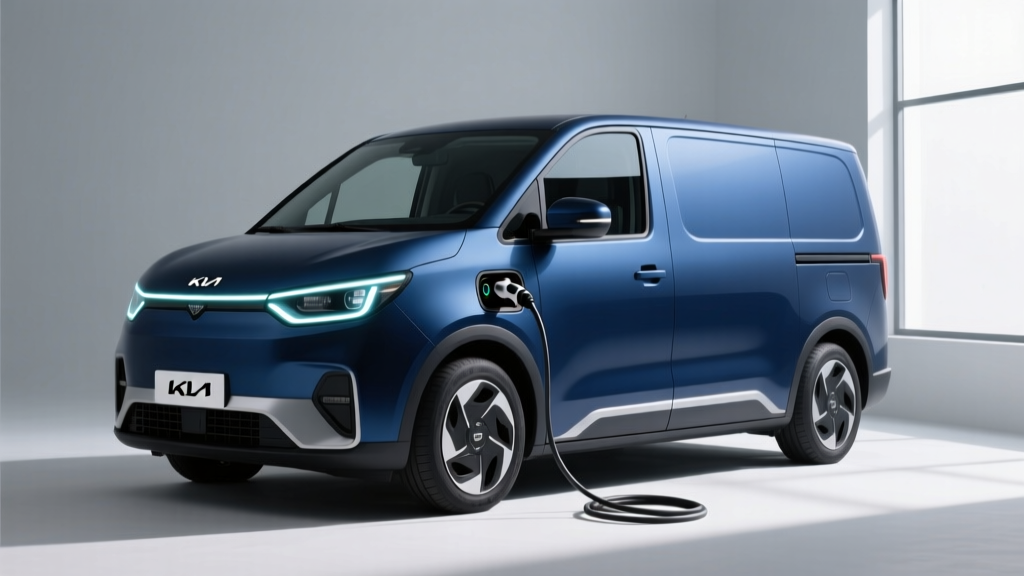
The Kia electric van PV5 is a purpose-built electric commercial and passenger van built on Hyundai Motor Group's dedicated "Platform Beyond Vehicle" (PBV) skateboard architecture. Announced for global rollout starting in 2025 with North American availability expanding through 2026, the PV5 targets fleet operators, small-business owners, and families who need maximum cargo or passenger volume with zero tailpipe emissions. Expect an EPA-estimated range near 250–280 miles (Long Range variant), a 71.2 kWh (Standard) or ~90+ kWh (Long Range) NMC battery pack, DC fast charging peaking at roughly 150 kW (10–80% in approximately 30 minutes), and a starting MSRP in the mid-$40,000s for base commercial trims before any applicable federal tax credits. If you need a versatile electric workhorse and have access to Level 2 home or depot charging, the PV5 is worth a serious look. If you regularly tow heavy loads or operate in extreme cold without depot charging, you'll need to plan carefully.
What Is the Kia PV5 and Who Is It For?
The Kia PV5 is the mid-size entry in Kia's new PBV (Platform Beyond Vehicle) electric van lineup, sitting between the smaller PV1 micro-delivery pod and the larger PV7 heavy-duty van. Unlike a converted combustion van with a battery stuffed underneath, the PV5 uses a dedicated skateboard platform with the battery integrated into the floor, yielding a flat load surface, a low step-in height, and configurable upper bodies.
Kia offers the PV5 in several body configurations:
- Cargo Van — panel van for last-mile delivery and tradespeople
- Passenger / Crew Van — multi-row seating for shuttle or family duty
- Chassis Cab — bare platform for upfitters (box trucks, mobile workshops)
- Wheelchair Accessible Vehicle (WAV) — purpose-built accessible configuration
This modular approach means the PV5 isn't a one-size-fits-all vehicle — it's a platform that businesses and buyers can spec to their exact workflow. For private buyers, the passenger variant is the most relevant, offering seating for up to seven with substantial rear cargo space.
Battery, Range, and Efficiency: Real Numbers
The PV5's powertrain specs reflect its commercial DNA: adequate power, durable chemistry, and pragmatic range rather than headline-chasing performance.
| Spec | Standard Range | Long Range |
|---|---|---|
| Battery Capacity (usable) | ~71.2 kWh | ~90+ kWh (est.) |
| Chemistry | NMC (Nickel Manganese Cobalt) | NMC |
| EPA-Est. Range | ~200–220 mi | ~250–280 mi |
| Real-World Highway Range | ~170–190 mi | ~210–240 mi |
| Cold-Weather Range (20°F) | ~150–170 mi | ~185–210 mi |
| Motor Output | ~158 kW / 212 hp (front-mounted) | |
| 0–60 mph | ~8.5 sec (est.) | |
| Efficiency (MPGe) | ~95–105 MPGe combined (est.) | |
| Max DC Fast Charge Rate | ~150 kW peak | |
| 10–80% DC Charge Time | ~30 min (Standard) / ~38 min (Long Range) | |
| Level 2 (AC) Charge Rate | 11 kW onboard charger | |
| Level 2 Full Charge Time | ~7 hr | ~9 hr |
| Battery/Powertrain Warranty | 10 years / 100,000 miles | |
Real-World Range Reality Check
The EPA sticker will likely read around 280 miles for the Long Range PV5. In practice, plan for 210–240 miles on a highway trip at 70 mph, and 185–210 miles if temperatures drop below freezing. The PV5's boxy aerodynamic profile and tall frontal area hurt highway efficiency more than a sleeker crossover like the EV9. If your daily route is under 120 miles with depot or home charging, range will rarely be a concern. If you're running inter-city delivery routes exceeding 200 miles, you'll need to integrate DC fast-charging stops into scheduling.
Charging the PV5: Home, Depot, and Public Networks
Because the PV5 is primarily a commercial and fleet vehicle, charging strategy looks different than a typical commuter EV.
| Level | Power | Miles Added per Hour | Typical Use Case |
|---|---|---|---|
| Level 1 (120V) | ~1.4 kW | ~4–5 mi/hr | Emergency / overnight trickle |
| Level 2 (240V, 48A) | 11 kW | ~32–36 mi/hr | Home garage, depot overnight |
| DC Fast Charge | Up to 150 kW | ~150+ mi in 30 min | Public stations, mid-route top-ups |
kW vs. kWh reminder: kW (kilowatts) measures the rate of charging — like water flow from a hose. kWh (kilowatt-hours) measures the battery's total energy capacity — like the size of the tank. The PV5's battery holds ~71–90 kWh of energy; a 150 kW DC charger can theoretically push energy in at that rate, though the actual charge curve tapers significantly above 80% state of charge to protect the battery.
Home charging for private buyers: A Level 2 home charger (like a ChargePoint Home Flex or Emporia Vue) on a 240V/48A circuit will fully replenish the Standard Range battery overnight in about 7 hours. Expect a professional installation cost of $800–$2,000 depending on whether your electrical panel needs an upgrade. Commercial fleets will want to evaluate depot-level AC charging with managed charging software to stagger loads and avoid demand charges from the utility.
The PV5 is expected to ship with a CCS1 charge port in North America. As Kia has committed to adopting the NACS (Tesla Supercharger) standard across its lineup by 2025–2026, later production PV5 units may feature NACS natively or include a CCS-to-NACS adapter. Verify the connector on your specific build before ordering — this affects your access to Tesla's Supercharger network, which remains the most reliable public DC fast-charging infrastructure in the U.S.
PV5 vs. Gas Vans: Cost of Ownership Breakdown
The PV5 competes against internal-combustion commercial vans like the Ford Transit, Ram ProMaster, and Mercedes-Benz Sprinter. Here's how the numbers stack up over a typical 5-year / 75,000-mile ownership cycle.
| Cost Category | Kia PV5 (Long Range) | Ford Transit 250 (Gas) |
|---|---|---|
| Purchase Price (MSRP) | ~$52,000 | ~$48,000 |
| Federal Tax Credit (§30D) | Up to $7,500 (if eligible)* | $0 |
| Effective Purchase Price | ~$44,500 | ~$48,000 |
| Fuel / Electricity (75k mi) | ~$4,800 (avg $0.13/kWh) | ~$10,500 (avg $3.50/gal, 16 MPG) |
| Maintenance (5 yr) | ~$1,200 | ~$3,800 |
| Insurance (5 yr est.) | ~$9,500 | ~$8,200 |
| Total 5-Year Cost | ~$60,000 | ~$70,500 |
* Federal EV tax credit eligibility under IRS §30D rules depends on MSRP caps (vans capped at $80,000), buyer income limits ($300k joint / $150k single), and battery critical-mineral and component sourcing requirements. Commercial fleet buyers may qualify under the separate §45W commercial credit instead. Always consult a tax professional before assuming eligibility.
The PV5's fuel savings are substantial — roughly $5,700 less in energy costs over five years at current electricity and gas prices. Maintenance savings add another ~$2,600, since there are no oil changes, spark plugs, transmission fluid services, or exhaust system repairs. Insurance tends to run 10–20% higher for EVs due to repair cost patterns, but the net ownership-cost advantage still favors the PV5 by roughly $10,000 over five years for a buyer who qualifies for the federal credit.
What First-Time EV Buyers Need to Know About the PV5
If you're transitioning from a gas van or SUV to the PV5, several ownership realities deserve upfront attention.
| Myth | Fact |
|---|---|
| "The battery will need replacing in a few years." | Kia warranties the PV5 battery for 10 years / 100,000 miles with a capacity-retention threshold (typically 70% SoH). NMC packs in modern thermal-managed systems routinely last 200,000+ miles before hitting that threshold. |
| "I can't drive it in winter." | Cold reduces range by 15–30% due to battery chemistry and cabin heating demands. The PV5 is expected to offer a heat pump (standard or optional), which recovers waste heat from the powertrain to warm the cabin more efficiently than resistive heating — cutting winter range loss significantly. |
| "Charging takes too long for commercial use." | For depot-based fleets that charge overnight on Level 2, charging takes zero driver time — the van is ready every morning. For long routes, a 30-minute DC fast-charge stop adds ~150 miles, which aligns with mandatory driver rest breaks. |
| "EVs are worse for the environment because of battery mining." | Lifecycle analyses from Argonne National Lab and the ICCT consistently show EVs produce fewer total emissions than ICE vehicles over their lifetime, even accounting for battery manufacturing — and the grid gets cleaner every year. |
| "I'll be stranded if I run out of charge." | With 250+ miles of range and growing DC fast-charging infrastructure (Electrify America, EVgo, Tesla Superchargers), range planning is straightforward. The PV5's navigation system should include integrated charge-station routing. |
Home charging access is the single biggest factor in EV satisfaction. If you can install a Level 2 charger at home or at your business, the PV5 will be dramatically more convenient than a gas van — you "refuel" while you sleep or work, and you never visit a gas station for daily driving. If you rely entirely on public charging, the experience is less predictable: broken chargers, occupied stalls, and variable pricing (anywhere from $0.25 to $0.60+ per kWh at DC fast chargers) can erode the cost advantage. Before ordering, verify your charging plan.
Tax Credits and Incentives for the PV5
The PV5's commercial-van classification works in buyers' favor for federal incentives. Under current IRS §30D rules, vans fall under the $80,000 MSRP cap (compared to $55,000 for sedans), meaning most PV5 trims should qualify for credit consideration.
§30D Federal EV Tax Credit Checklist (2026)
- MSRP cap: Van/pickup/SUV — must be ≤ $80,000 ✓ (PV5 clears this)
- Buyer income cap: AGI ≤ $300,000 (joint) / $225,000 (head of household) / $150,000 (single)
- Battery sourcing: Required percentages of critical minerals and battery components must be sourced from the U.S. or FTA partners — this is the biggest variable and changes annually
- Final assembly: Must occur in North America (verify VIN — Kia's PBV production for the U.S. market is expected at the new Georgia EV plant)
- Point-of-sale transfer: Eligible buyers can transfer the credit to the dealer at purchase, reducing the out-of-pocket price immediately rather than waiting for a tax refund
Rules are subject to change. Verify current eligibility at fueleconomy.gov and consult a tax professional.
For commercial fleet buyers, the separate §45W Commercial Clean Vehicle Credit may apply instead, offering up to $7,500 for vehicles under 14,000 lbs GVWR. This credit has different sourcing rules and does not have the same buyer income caps, making it more accessible for business entities. State and local incentives (utility rebates for charger installation, state purchase rebates, HOV lane access) vary by jurisdiction — check your state's energy office and local utility for specifics.
Decision Framework: Is the Kia PV5 Right for You?
Choose the Kia PV5 If:
- You drive a predictable daily route under 200 miles and can charge at home or at a depot overnight
- You need a versatile van for cargo, passengers, or upfitting and want to eliminate fuel and most maintenance costs
- You qualify for the §30D or §45W federal tax credit, bringing the effective purchase price below comparable gas vans
- You operate in a metro area with adequate public DC fast-charging infrastructure for occasional longer trips
- You want Kia's 10-year/100,000-mile battery warranty for long-term peace of mind
Look Elsewhere If:
- Your daily routes regularly exceed 250 miles without reliable mid-route charging access
- You need to tow heavy trailers (EV towing range loss can be 30–50%, and the PV5 isn't designed as a heavy tow vehicle)
- You have no access to home, depot, or reliable workplace Level 2 charging
- You operate in extreme cold (below 0°F regularly) where range loss and charging speed reduction compound significantly
- You need an all-wheel-drive platform for off-road or severe-weather job sites (the PV5 is front-wheel drive)
Frequently Asked Questions
When can I buy the Kia PV5 in the United States?
Kia began global PV5 production in 2025, with North American market availability expanding through 2026. Initial U.S. availability may prioritize fleet and commercial buyers, with retail passenger variants following. Check with your local Kia dealer for the latest allocation timeline.
How much does it cost to charge the PV5 at home?
At the U.S. average residential electricity rate of ~$0.16/kWh (as of late 2025, per EIA data), a full charge of the 71.2 kWh Standard Range battery costs roughly $11.40, yielding about 200 miles of range. That's approximately $0.057 per mile — compared to ~$0.22 per mile for a gas van at 16 MPG and $3.50/gallon. Annual fuel savings for a driver covering 15,000 miles could exceed $2,400.
Does the PV5 have a front trunk (frunk)?
No. The PV5's skateboard platform places the motor and power electronics under the short front hood, leaving no meaningful frunk space. Cargo capacity is concentrated in the main rear compartment, which offers class-leading volume thanks to the flat floor and boxy dimensions.
What driver-assistance features does the PV5 offer?
The PV5 is expected to include Kia's latest ADAS suite (Highway Driving Assist 2, Smart Cruise Control with Stop & Go, Lane Keeping Assist, Blind-Spot View Monitor). These are SAE Level 2 driver-assistance systems — the driver must remain attentive and keep hands on the wheel at all times. This is not autonomous or self-driving technology.
Will the PV5 qualify for the $7,500 federal EV tax credit?
The PV5's MSRP, North American assembly (expected at Kia's Georgia plant), and vehicle classification put it in a strong position. However, credit eligibility depends on battery sourcing requirements that shift annually. Verify the specific vehicle's eligibility on the IRS clean vehicle credit page or via your dealer at the point of sale before finalizing a purchase.
How does the PV5 compare to the Volkswagen ID. Buzz?
The VW ID. Buzz is a retro-styled passenger minivan with ~234 miles of EPA range and a ~$59,995 starting price. The PV5 is more utilitarian, offers cargo and upfitter variants the ID. Buzz doesn't, and is expected to start at a lower price point. If you want a family-focused people mover with style, the ID. Buzz appeals. If you need a working van that can be configured for commercial duty, the PV5 is the more pragmatic platform.