Quick Answer: Are Kia Electric Cars Worth Buying in 2026?
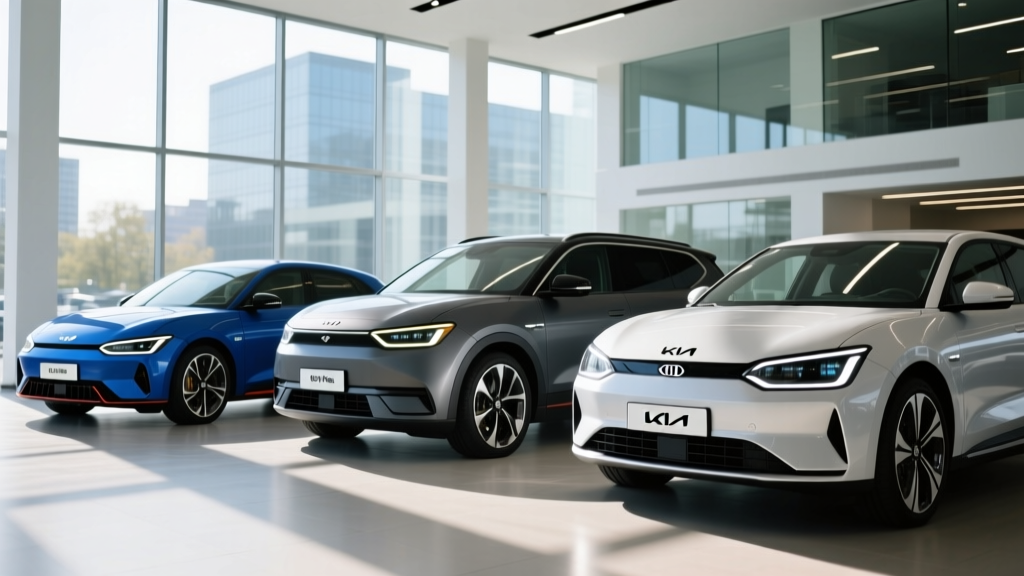
Kia's 2026 electric lineup centers on three models: the EV6 (from ~$42,900, up to 310 miles EPA range), the three-row EV9 (from ~$54,900, up to 304 miles), and the compact Niro EV (from ~$39,600, 239 miles). All three use Hyundai Motor Group's E-GMP platform with 800V architecture (EV6/EV9), enabling 10-80% DC fast charging in roughly 18 minutes at rates up to 240 kW. Federal §30D tax credit eligibility varies by model, trim, and battery sourcing — check current IRS rules before assuming the full $7,500 applies.
The 2026 Kia EV Lineup at a Glance
Kia's battery-electric portfolio targets three distinct buyer segments. The Niro EV serves budget-conscious commuters. The EV6 is a performance-oriented crossover that competes directly with the Tesla Model Y and Ford Mustang Mach-E. The EV9 fills a gap few automakers have addressed: an affordable three-row electric family hauler.
| Spec | 2026 Niro EV | 2026 EV6 | 2026 EV9 |
|---|---|---|---|
| Base MSRP | ~$39,600 | ~$42,900 | ~$54,900 |
| EPA Range (max trim) | 239 mi | 310 mi (RWD LR) | 304 mi (RWD LR) |
| Battery (usable) | 64.8 kWh (NMC) | 77.4 kWh (NMC) | 100.0 kWh (NMC) |
| Max DC Fast Charge | ~85 kW | ~240 kW | ~236 kW |
| 10-80% DCFC Time | ~43 min | ~18 min | ~20 min |
| Level 2 Charge Rate | 11 kW | 10.9 kW | 10.9 kW |
| Horsepower | 201 hp | 225-576 hp | 215-379 hp |
| 0-60 mph | ~7.2 sec | 3.4-7.3 sec | 5.0-8.2 sec |
| Drivetrain | FWD | RWD / AWD | RWD / AWD |
| Battery Warranty | 10 yr / 100,000 mi | 10 yr / 100,000 mi | 10 yr / 100,000 mi |
Sources: EPA / fueleconomy.gov, Kia America press materials. Real-world highway range is typically 10-15% below EPA estimates; cold-weather (below 32°F) can reduce range by 20-30%.
Real-World Range Reality Check
EPA 310 miles (EV6 RWD Long Range) — Expect approximately 265-280 miles on a highway road trip at 70-75 mph. In freezing temperatures with cabin heat, plan for 220-250 miles of usable range before needing to charge. The EV9's larger 100 kWh battery provides a bigger buffer but its boxy aerodynamics hit efficiency harder at highway speeds.
Charging Speed: Where Kia's 800V Platform Shines
The most significant technical advantage the EV6 and EV9 hold over most competitors is their 800-volt electrical architecture. Most mainstream EVs (including the Niro EV) use 400V systems. The practical difference shows up at DC fast chargers:
| Charging Level | Power (kW) | Miles Added/Hour (EV6) |
|---|---|---|
| Level 1 (120V household) | ~1.4 kW | ~4-5 mi/hr |
| Level 2 (240V home/public) | ~10.9 kW | ~32-36 mi/hr |
| DC Fast (350 kW station) | Up to ~240 kW (EV6) | ~145 mi in 10 min (10-45% SoC) |
| DC Fast (150 kW station) | ~130-150 kW | ~90-100 mi in 10 min |
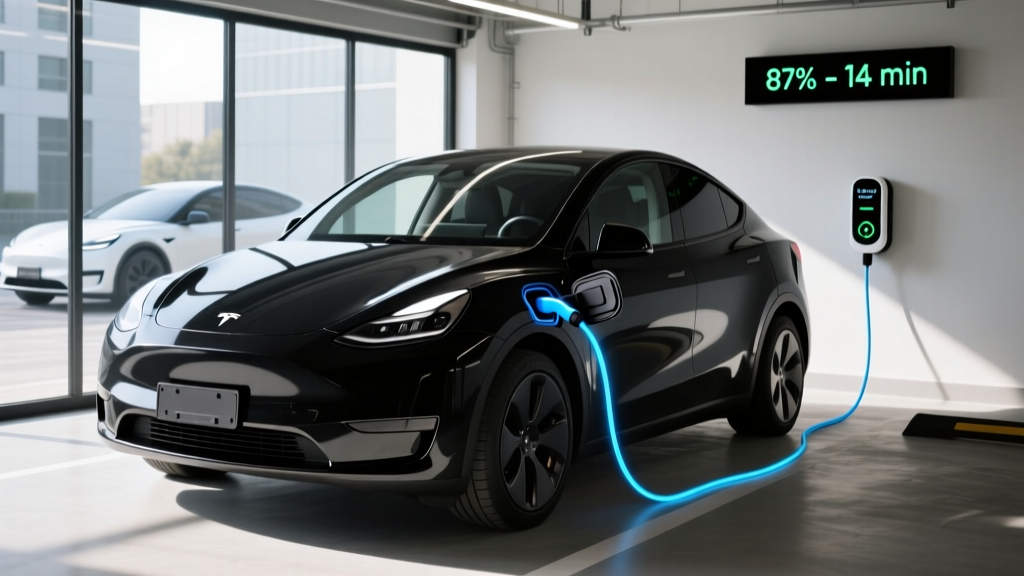
Understanding kW vs kWh: kW (kilowatts) measures the rate of power delivery — think of it as the width of a hose. kWh (kilowatt-hours) measures total energy stored in the battery — the size of the tank. The EV6's 77.4 kWh battery charged at 240 kW will fill rapidly in the 10-55% range, but charging speed tapers significantly above 80% State of Charge (SoC) to protect battery longevity. That taper is why manufacturers quote 10-80% times rather than 0-100%.
On a 300-mile road trip, the EV6's fast-charge capability means a single 18-minute stop at a 350 kW Electrify America or Tesla Supercharger (with NACS adapter) restores enough range to complete the journey. The Niro EV, limited to ~85 kW DCFC, requires roughly 43 minutes for a 10-80% charge — plan accordingly for longer trips.
EV vs Gas vs Hybrid: The Cost Comparison
How does a Kia EV stack up against its gas-powered siblings and hybrids? Here's a five-year ownership snapshot comparing the EV6, Sportage Hybrid, and gas Sportage at 15,000 miles/year:
| Cost Factor (5-Year) | 2026 EV6 (AWD) | Sportage Hybrid | Sportage (Gas) |
|---|---|---|---|
| Purchase Price (base MSRP) | ~$46,900 | ~$32,090 | ~$28,590 |
| Est. §30D Tax Credit | Up to $7,500* | N/A | N/A |
| Effective Purchase | ~$39,400 | ~$32,090 | ~$28,590 |
| Fuel/Energy (5 yrs, 75K mi) | ~$3,750** | ~$6,875 | ~$9,375 |
| Maintenance (5 yrs) | ~$1,500 | ~$3,200 | ~$3,800 |
| Insurance (est. avg) | ~$9,500 | ~$7,500 | ~$7,200 |
| 5-Year Total | ~$54,150 | ~$49,665 | ~$48,965 |
| Cost Per Mile | $0.72 | $0.66 | $0.65 |
*§30D credit eligibility depends on MSRP caps ($80K SUVs / $55K sedans), buyer income limits ($300K MFJ / $150K single), battery sourcing requirements, and point-of-sale transfer rules. Verify at IRS.gov and consult a tax professional.
**Home charging at $0.15/kWh avg; public DCFC costs more. Gas at ~$3.50/gal. EV6 efficiency ~3.7 mi/kWh; Sportage Hybrid ~38 MPG combined; Sportage gas ~28 MPG combined.
The EV's fuel and maintenance savings are real — no oil changes, fewer brake replacements thanks to regenerative braking, and electricity at roughly $0.05/mile vs $0.125/mile for gas. But higher insurance premiums (typically 20-35% above gas equivalents) and a higher purchase price narrow the gap. If you qualify for the full §30D credit and charge primarily at home, the EV6 reaches cost parity with a hybrid around year 4-5.
Federal Tax Credit: What Actually Applies to Kia EVs
The §30D Clean Vehicle Credit remains one of the most confusing aspects of EV buying. Here's the current framework:
- Maximum credit: $7,500 (split between critical minerals and battery component sourcing requirements)
- MSRP caps: Vans/SUVs/pickups ≤ $80,000; sedans ≤ $55,000
- Buyer income limits: AGI ≤ $300,000 (married filing jointly) / $150,000 (single) / $225,000 (head of household)
- Battery sourcing: Increasing percentages of critical minerals and battery components must be sourced from the US or FTA partners — these thresholds tighten annually
- Point-of-sale transfer: You can transfer the credit to the dealer for an immediate price reduction rather than claiming it on your tax return
- Assembly requirement: Final assembly must occur in North America (all three Kia EVs qualify)
The EV9 and EV6 are assembled in Georgia at Hyundai Motor Group's Metaplant, so they clear the North American assembly requirement. However, battery component and critical mineral sourcing rules change yearly. The credit amount you actually receive at the dealership could be $7,500, $3,750, or $0 depending on when you buy and how Kia's supply chain qualifies. Always confirm the current credit amount with your dealer and verify against the IRS clean vehicle credit list before signing.
Real-World Ownership: What First-Time Buyers Must Know
Home Charging Access Is the Make-or-Break Factor
If you can install a Level 2 (240V) home charger, a Kia EV becomes dramatically more convenient than a gas car — you start every morning with a full "tank." A typical Level 2 installation (like a ChargePoint Home Flex or Kia-approved Wallbox) costs:
| Item | Low Estimate | High Estimate |
|---|---|---|
| Level 2 Charger (hardware) | $400 | $750 |
| Electrician labor (standard install) | $600 | $1,500 |
| Electrical permit | $50 | $200 |
| Panel upgrade (if needed, 200A) | $1,500 | $3,500 |
| Total | $1,050 | $5,950 |
If your electrical panel is already 200 amps with spare breaker slots, expect to pay $1,000-$2,250 total. Older homes with 100-amp panels may need a costly upgrade. Get a licensed electrician's assessment before purchasing the vehicle — not after.
Apartment and Street-Parking Realities
Without home charging, public DCFC at $0.35-$0.48/kWh brings your per-mile cost close to a fuel-efficient hybrid. If your only option is Level 1 (standard 120V outlet), expect roughly 4-5 miles of range per hour of charging — adequate only if you drive under 30 miles daily and can plug in overnight for 10+ hours.
Climate and Driving Pattern Considerations
Cold weather is the single biggest range variable. In sustained sub-freezing temperatures, expect 20-30% range reduction due to battery resistance and cabin heating demands. The EV6 and EV9 offer an optional heat pump, which reduces (but doesn't eliminate) this penalty. If you live in Minnesota or Maine and commute 80+ miles daily in winter, plan your charging accordingly — or consider the EV9's larger 100 kWh battery for its cold-weather buffer.
Common Misconceptions About Kia EVs
| Myth | Fact |
|---|---|
| "The battery will need replacing in 5 years and cost $20,000." | Kia warranties the battery for 10 years/100,000 miles against defects and capacity loss below ~70%. Industry data shows NMC batteries typically retain 85-90% capacity at 100,000 miles with normal use. Full replacements are rare and typically covered under warranty. |
| "Kia EVs can't use Tesla Superchargers." | Kia has adopted the NACS (North American Charging Standard) port for newer models and provides CCS-to-NACS adapters for existing EV6/EV9 owners. Access to Tesla's Supercharger network (17,000+ US stalls) is now available, dramatically expanding road-trip charging options. |
| "EVs are worse for the environment because of battery mining." | While battery production has an environmental footprint, lifecycle analyses from Argonne National Laboratory show EVs produce fewer total emissions than gas cars over their lifetime, even on coal-heavy grids — and the grid is getting cleaner every year. |
| "The EV9 is too heavy and inefficient." | At ~5,100 lbs (AWD), the EV9 achieves roughly 2.8-3.0 mi/kWh (89 MPGe combined). That's less efficient than the EV6, but it seats seven and tows up to 5,000 lbs — compare it to a gas three-row SUV getting 21 MPG, not to a sedan. |
| "I'll save $10,000 in fuel in the first year." | At 15,000 miles/year and $0.15/kWh home charging, the EV6 saves roughly $1,250/year vs a 28 MPG gas car at $3.50/gallon. The savings are real but accumulate over years, not months. |
Decision Framework: Which Kia EV Is Right for You?
Choose the Niro EV if:
- Your budget is under $42,000 and you want the lowest entry price
- Your daily commute is under 50 miles round-trip
- You rarely take road trips over 200 miles
- You want a compact footprint for city driving and tight parking
- Slower DCFC (~85 kW) doesn't bother you because you charge at home
Choose the EV6 if:
- You want the best balance of range (310 mi), charging speed (18-min 10-80%), and performance
- You take regular road trips and need fast public charging
- You want sporty handling with available 576 hp (GT trim)
- You're cross-shopping the Tesla Model Y, Ford Mach-E, or Hyundai Ioniq 5
- You value the 800V architecture for future-proofing charge speeds
Choose the EV9 if:
- You need three rows and seating for 6-7 passengers
- You want an electric alternative to the Telluride or Honda Pilot
- You tow a trailer (up to 5,000 lbs with towing package)
- You want the largest battery buffer (100 kWh) for cold climates or long drives
- Budget allows $55,000+ before incentives
Frequently Asked Questions
How long does it take to charge a Kia EV6 at home?
On a Level 2 (240V, ~48A) home charger delivering 10.9 kW, the EV6's 77.4 kWh battery charges from 10% to 100% in approximately 7-8 hours. Most owners plug in when they get home and wake up fully charged. A standard 120V outlet (Level 1) would take roughly 55 hours for a full charge — impractical as a primary charging method.
Is the Kia EV6 cheaper to own than a Tesla Model Y?
Purchase price is comparable: the EV6 AWD starts around $46,900 vs the Model Y Long Range AWD at roughly $48,990. The Tesla has slightly longer range (320+ mi EPA) and access to the Supercharger network natively (though Kia now has NACS adapter access). Insurance tends to be higher on Teslas. The EV6 offers more physical controls, a more traditional interior layout, and Kia's 10-year/100,000-mile powertrain warranty vs Tesla's 8-year/120,000-mile battery warranty. Neither is universally cheaper — run the numbers for your insurance zip code and local electricity rates.
Do Kia electric cars hold their resale value?
EV depreciation has been steeper than gas cars in recent years, driven by rapid tech advancement, price cuts from Tesla, and battery longevity uncertainty. According to industry data, 3-year-old EVs retain roughly 45-55% of original value vs 55-65% for comparable gas crossovers. Kia's strong warranty (which transfers to second owners) helps support used values. If depreciation concerns you, lease the vehicle and let the lessor absorb the hit.
Can I use the Kia EV9 for camping or power outages?
The EV9 supports V2L (Vehicle-to-Load), which provides up to 3.6 kW of AC power through an interior outlet or external adapter — enough to run a refrigerator, lights, laptops, and a small space heater simultaneously for days. This makes it genuinely useful for camping and a valuable backup during grid outages. The EV6 also supports V2L with an optional adapter.
What happens if a Kia EV battery degrades significantly?
Kia's battery warranty covers capacity loss below approximately 70% of original capacity for 10 years or 100,000 miles. If your battery falls below that threshold within the warranty period, Kia will repair or replace it at no cost. Out-of-warranty replacement costs are estimated at $8,000-$15,000 depending on the model, though this figure is expected to decline as battery costs continue falling. Real-world data from high-mileage E-GMP platform vehicles suggests degradation of 8-12% over the first 100,000 miles under normal use.
Always verify current pricing, tax credit eligibility, and specifications at Kia.com and IRS.gov before purchasing. Specs and credit rules are subject to change. Safety ratings available at IIHS.org and NHTSA.gov.