The Quick Answer
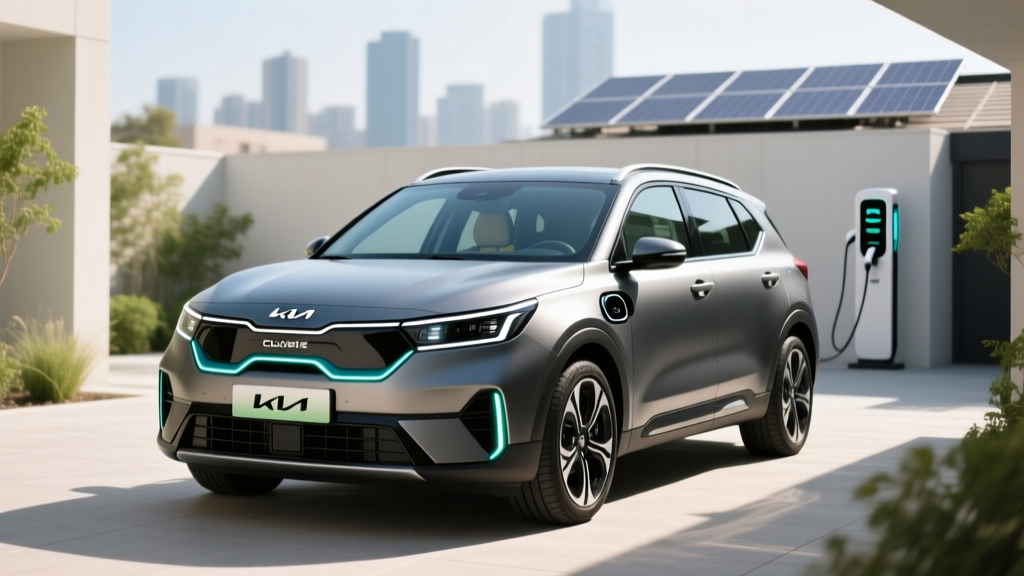
The Kia Carens Clavis EV is an all-electric version of Kia's three-row Carens MPV, officially unveiled in early 2026 primarily for the Indian and select Asia-Pacific markets. It is built on a dedicated EV platform with an expected battery capacity in the 50–65 kWh range and a projected real-world range of roughly 250–310 miles (400–500 km) depending on the variant. As of mid-2026, the Carens Clavis EV is not sold or homologated for the U.S. market, and Kia has not announced plans to bring it stateside. If you're a U.S. buyer researching electric three-row people-movers, this guide breaks down what's known, how it compares to gas and hybrid alternatives, and which EVs actually available in America fill a similar role.
What Is the Kia Carens Clavis EV?
The Carens nameplate has been a staple in Kia's global lineup as a compact multi-purpose vehicle (MPV) — think three-row seating in a footprint smaller than a minivan. The "Clavis" designation marks Kia's new electric sub-brand naming convention for the Indian market, signaling a dedicated EV variant rather than a converted ICE platform.
Kia previewed the Carens Clavis EV at the 2026 Auto Expo in New Delhi, positioning it as an affordable electric family hauler. The production version is expected to go on sale in India in late 2026 or early 2027. Key design cues include a closed-off grille, flush door handles, and aerodynamic wheel covers aimed at reducing drag to maximize range.
Announced and Estimated Specifications
Because the Carens Clavis EV is still pre-launch, the figures below are compiled from Kia's official preview materials, Indian automotive regulatory filings, and industry reporting. Final production specs may differ.
| Specification | Estimated / Announced |
|---|---|
| Battery Capacity | 50–65 kWh (likely LFP chemistry for base, NMC for long-range) |
| Projected Range (India test cycle) | 400–500 km (249–311 mi) |
| Estimated Real-World Range | ~200–260 mi (varies with climate, load, speed) |
| DC Fast Charging (peak) | ~80–100 kW (estimated) |
| 10–80% DC Charge Time | ~35–45 min (estimated) |
| Level 2 AC Charging | 7.2–11 kW onboard charger |
| Seating | 6- or 7-passenger |
| Drivetrain | Front-wheel drive (single motor) |
| Expected India Price | ₹20–28 lakh (~$24,000–$33,500 USD equivalent) |
| U.S. Availability | Not announced — unlikely near-term |
Sources: Kia India official site, Indian automotive regulatory filings (VAHAN/ICAT).
Carens Clavis EV vs. Gas and Hybrid MPVs: The Data
For buyers in markets where the Carens is sold — or U.S. shoppers cross-shopping electric three-row options — the fundamental question is whether an electric MPV makes financial and practical sense against a gasoline or hybrid alternative.
| Factor | Carens Clavis EV (Est.) | Kia Carens Gas (India) | U.S. Equivalent: Kia EV9 (AWD) |
|---|---|---|---|
| Powertrain | Single-motor BEV | 1.5L Turbo Petrol | Dual-motor BEV |
| Energy/Fuel Capacity | ~55–65 kWh battery | 50 L fuel tank | 100 kWh battery (usable) |
| Range | ~250 mi real-world | ~400 mi per tank | EPA 279 mi (Light Long Range) |
| Energy Cost per Mile | ~$0.04–0.06 (home charging) | ~$0.10–0.14 (India petrol) | ~$0.04–0.05 (U.S. home avg) |
| Refuel/Recharge Time | 35–45 min (DC 10–80%) | ~5 min | ~20 min (DC 10–80%, 210 kW peak) |
| Maintenance (annual) | ~$200–400 | ~$500–800 | ~$300–500 |
| CO₂ per Mile (tailpipe) | 0 g | ~170–200 g | 0 g |
The Carens Clavis EV's estimated per-mile energy cost is roughly 50–60% lower than the gasoline Carens when charging at home at average Indian residential electricity rates (~₹8/kWh, or ~$0.10/kWh). In the U.S., where the EPA's fueleconomy.gov lists average electricity costs around $0.16/kWh, a comparable three-row EV like the Kia EV9 achieves similar savings against a gas-powered Kia Telluride.
Real-World Ownership Considerations
The spec sheet only tells part of the story. Here's what actually shapes the ownership experience:
- Home charging access: If you can install a Level 2 charger (7.2 kW), overnight charging fully replenishes a 60 kWh battery in ~8–9 hours. Without home charging, reliance on public DC fast chargers adds time and cost.
- Climate impact: LFP batteries — likely in the base Carens Clavis EV — handle heat well but lose 15–25% range in freezing temperatures. NMC variants fare slightly better in cold but degrade faster if routinely charged to 100%.
- Three-row practicality: Electric MPVs sacrifice some cargo volume to battery packaging. Expect the Clavis EV to offer slightly less under-floor storage than its gas sibling, though the frunk (front trunk) may offset this.
- Driving patterns: For daily commutes under 60 miles with home charging, the Clavis EV is ideal. For frequent 200+ mile road trips in regions with sparse DC charging infrastructure, a hybrid or gas MPV remains more practical.
Cost Breakdown: Purchase, Charging, and Total Ownership
Understanding the full cost picture requires looking beyond the sticker price. Below is a 5-year total cost of ownership (TCO) comparison using the Carens Clavis EV's estimated India-market pricing, alongside a U.S.-market comparison for context.
India-Market 5-Year TCO Estimate (Carens Clavis EV vs. Gas Carens)
| Cost Category | Carens Clavis EV (Est.) | Kia Carens 1.5T Gas |
|---|---|---|
| Purchase Price | ~₹24,00,000 ($28,700) | ~₹18,00,000 ($21,500) |
| Fuel/Energy (5 yr / 60,000 km) | ~₹48,000 ($575) | ~₹3,00,000 ($3,590) |
| Maintenance (5 yr) | ~₹60,000 ($720) | ~₹1,50,000 ($1,795) |
| Insurance (5 yr) | ~₹1,50,000 ($1,795) | ~₹1,20,000 ($1,435) |
| Estimated Resale Value (Year 5) | ~₹10,00,000 ($11,970) | ~₹9,00,000 ($10,770) |
| Net 5-Year Cost | ~₹15,58,000 ($18,650) | ~₹21,70,000 ($25,970) |
Assumes 12,000 km/year, home charging at ₹8/kWh, petrol at ₹105/L. Insurance premiums are higher for EVs due to battery replacement cost exposure. Resale values are estimates based on current EV depreciation trends in India.
The EV's higher upfront price is offset within roughly 3–4 years by fuel and maintenance savings — provided you have reliable home charging. Without home charging, public DC fast charging in India costs roughly ₹18–25/kWh, which narrows the savings gap significantly.
U.S. Context: Federal Tax Credits and the Carens
Since the Carens Clavis EV is not available in the United States, U.S. buyers cannot apply the IRS §30D federal tax credit to it. For context, if you're shopping for a U.S.-available three-row EV like the Kia EV9:
- The §30D credit offers up to $7,500, but eligibility depends on MSRP caps ($80,000 for SUVs/vans), buyer income limits ($300,000 joint / $150,000 single), and battery critical-mineral and component sourcing requirements.
- As of 2026, the Kia EV9 does not qualify for the full §30D credit because it is assembled in South Korea, not North America. Point-of-sale transfer is available for qualifying models only.
- Always verify current eligibility on irs.gov before purchasing — rules and sourcing requirements change frequently.
Common Misconceptions About the Carens Clavis EV
| Myth | Fact |
|---|---|
| "It's available in the U.S." | The Carens Clavis EV is an India/APAC-market vehicle. Kia has not announced U.S. availability. The closest U.S. Kia three-row EV is the EV9. |
| "Electric MPVs can't handle full loads." | EVs deliver peak torque from 0 RPM. A fully loaded Carens Clavis EV will accelerate more responsively at city speeds than its gas counterpart, though range drops ~10–15% with a full passenger/cargo load. |
| "Battery replacement will cost more than the car." | Modern EV batteries are warrantied for 8 years/160,000 km (India) or 8 years/100,000 mi (U.S.). Full replacement costs ₹6–10 lakh ($7,200–$12,000) for a pack this size, but total battery failure within warranty is statistically rare. Most batteries retain 80–90% capacity at 100,000 miles. |
| "Fast charging ruins the battery." | Occasional DC fast charging has minimal impact on battery health. Kia's battery management system (BMS) throttles charge rate above 80% SoC to protect cells. For daily use, charging to 80% on Level 2 is optimal for longevity. |
| "It qualifies for the $7,500 U.S. tax credit." | It doesn't — it's not sold in the U.S. Even among U.S.-sold EVs, §30D eligibility requires North American assembly, MSRP and income caps, and battery sourcing compliance. |
Decision Framework: Is the Carens Clavis EV Right for You?
If / Then Guide
- If you live in India or an APAC market where the Carens is sold and you have home charging access → the Clavis EV is a strong candidate for a daily-driver family MPV, especially for city-heavy commutes under 80 km/day.
- If you need frequent 300+ km highway trips in areas with limited DC fast charging → a hybrid MPV (like the Toyota Innova Hycross) offers more flexibility until charging infrastructure matures.
- If you're a U.S. buyer looking for a three-row electric vehicle → look at the Kia EV9, Hyundai Ioniq 9, or Tesla Model X. The Carens Clavis EV is not an option for you.
- If you cannot install a home charger → calculate your access to reliable public Level 2 or DC fast chargers. Public charging costs 2–4× more than home charging and adds 30–45 minutes per session.
- If cold-weather range loss concerns you → expect 15–25% range reduction below freezing. A 250-mile rated range becomes ~190–210 miles in winter highway driving. If that's insufficient for your needs, consider a PHEV or larger-battery EV.
- If total cost of ownership is your priority → the Clavis EV breaks even against the gas Carens in ~3–4 years with home charging. Without home charging, break-even extends to 5+ years, and a hybrid may be cheaper overall.
What First-Time EV Buyers Should Know
If the Carens Clavis EV is your entry point into electric ownership — or if you're using it as a reference for shopping in your market — here are the fundamentals that separate a smooth transition from buyer's remorse:
- kW vs. kWh: Kilowatts (kW) measure power — how fast you charge or how hard the motor pulls. Kilowatt-hours (kWh) measure energy — the battery's total capacity, like gallons in a fuel tank. A 60 kWh battery charged at 7.2 kW takes ~8.3 hours from empty.
- Charging curves matter: Peak DC charge rates (e.g., "100 kW") only apply at low state-of-charge (typically 10–40%). Above 80%, charging slows dramatically to protect the battery. A "35-minute 10–80% charge" is realistic; a "35-minute full charge" is not.
- LFP vs. NMC chemistry: LFP (lithium iron phosphate) batteries are cheaper, last more cycles, and can be charged to 100% regularly — but they're heavier and lose more range in cold weather. NMC (nickel manganese cobalt) batteries are lighter and more energy-dense but degrade faster if held at 100% SoC for extended periods.
- Home charging is the backbone: Over 80% of EV charging happens at home. A Level 2 home charger (240V, 32–48A) costs $500–$2,000 installed (U.S.) or ₹40,000–₹80,000 (India) depending on electrical panel capacity. Budget for this upfront.
- Insurance costs more: EV insurance premiums run 10–25% higher than equivalent gas cars due to battery replacement exposure and specialized repair requirements. Get quotes before committing.
Frequently Asked Questions
When will the Kia Carens Clavis EV be available to buy?
Kia previewed the Carens Clavis EV in early 2026 for the Indian market, with sales expected to begin in late 2026 or early 2027. There is no announced timeline for availability outside India and select APAC markets.
Will Kia bring the Carens Clavis EV to the United States?
As of mid-2026, Kia has not announced U.S. plans for the Carens Clavis EV. Kia's U.S. three-row electric offering is the EV9. The Carens platform is not currently sold in North America in any form.
What is the expected real-world range of the Carens Clavis EV?
Based on estimated battery capacity of 50–65 kWh and typical MPV efficiency, expect approximately 200–260 miles (320–420 km) in mixed real-world driving. Highway-only driving at sustained speeds above 65 mph will reduce this to roughly 180–220 miles. Cold weather (below 32°F / 0°C) may reduce range by an additional 15–25%.
How long does it take to charge the Carens Clavis EV at home?
With a 7.2 kW Level 2 home charger, a full charge from 10% to 100% on a ~60 kWh battery takes approximately 8–9 hours. On a standard 120V outlet (Level 1, ~1.4 kW), the same charge would take 40+ hours — making Level 1 impractical as a primary charging method for a battery this size.
Does the Carens Clavis EV qualify for any tax incentives?
In India, EVs benefit from reduced GST (5% vs. 28% for ICE vehicles) and various state-level incentives that vary by jurisdiction. Check your state's transport department for current subsidy programs. In the U.S., the vehicle is not available and therefore ineligible for the IRS §30D federal tax credit.
How does the Carens Clavis EV compare to the Kia EV9?
The EV9 is significantly larger, more powerful, and more expensive. The EV9 offers EPA-rated ranges up to 279 miles, DC fast charging at up to 210 kW (10–80% in ~20 minutes), and starts around $54,900 in the U.S. The Carens Clavis EV is a compact MPV aimed at affordability in emerging markets, with a smaller battery, slower charging, and an expected price roughly 40–50% lower than the EV9 in its respective market.
Editorial note: Specifications for the Kia Carens Clavis EV are based on pre-production announcements and estimated data as of mid-2026. Final production figures may differ. Always verify with your local Kia dealer before making a purchase decision. For U.S. EV tax credit rules, consult irs.gov or a qualified tax professional.