Quick Answer: What Does a Kei Truck EV Conversion Involve?
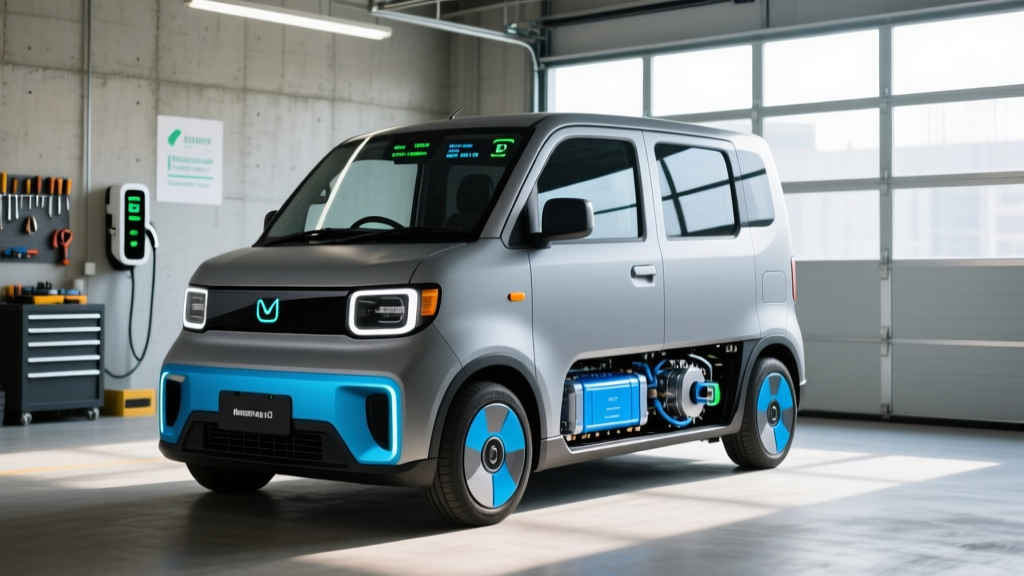
A kei truck EV conversion replaces the stock 660cc gasoline engine with an electric motor and lithium battery pack. Expect to spend $8,000–$20,000 on parts and labor (or $5,000–$12,000 if DIY), gain 30–70 miles of real-world range depending on battery size, and charge on a standard 120V outlet in 6–12 hours. Converted kei trucks are best suited for low-speed, short-distance utility work on private property or in neighborhoods where their 25–35 mph top speed and limited range aren't constraints. They do not qualify for the federal §30D EV tax credit because they are not new vehicles from a certified manufacturer.
Japanese kei trucks — the Suzuki Carry, Honda Acty, Subaru Sambar, and Daihatsu Hijet — have become enormously popular in the US as affordable, compact utility vehicles. Imported under the 25-year rule, a clean gasoline kei truck runs $5,000–$9,000. The appeal of electrifying one is obvious: silent operation, zero tailpipe emissions, and pennies-per-mile fueling. But a kei truck EV conversion is a fabrication project, not a plug-and-play upgrade, and the economics are more nuanced than YouTube thumbnails suggest.
The Real Cost of Converting a Kei Truck to Electric
Conversion costs break into three buckets: the donor truck, the EV drivetrain components, and fabrication labor. Here's what a realistic budget looks like in 2026:
| Component | Budget Build (DIY) | Mid-Range Build | Turnkey / Shop Build |
|---|---|---|---|
| Donor kei truck (gas, running) | $5,000–$7,000 | $6,000–$9,000 | $7,000–$9,000 |
| Electric motor (10–25 kW) | $800–$1,500 | $1,500–$3,000 | $2,000–$4,000 |
| Motor controller | $400–$800 | $800–$1,500 | $1,000–$2,000 |
| Battery pack (8–20 kWh, LFP or salvaged NMC) | $1,500–$3,500 | $3,000–$6,000 | $4,000–$8,000 |
| BMS, wiring, contactors, DC-DC converter | $500–$1,000 | $800–$1,500 | $1,000–$2,000 |
| Charger (Level 1 onboard, 1–2 kW) | $200–$400 | $400–$800 | $500–$1,000 |
| Fabrication (motor mount, battery box, adapters) | $500–$1,500 (self) | $1,500–$3,000 | $3,000–$6,000 |
| Miscellaneous (cooling, gauges, safety cutoffs) | $300–$600 | $500–$1,000 | $800–$1,500 |
| Total Estimated Cost | $9,200–$15,800 | $14,500–$22,800 | $19,300–$33,500 |
For context, a brand-new electric utility vehicle like the Polaris Ranger EV or a Chinese-market mini EV truck starts around $12,000–$18,000 with a factory warranty, proper safety certification, and no fabrication risk. The conversion route only makes financial sense if you value the kei truck's specific form factor (street-legal in some states, compact dimensions, right-hand-drive novelty) and have the skills to do much of the work yourself.
Range, Efficiency, and Charging: What the Numbers Actually Say
Kei trucks are light — curb weight sits around 1,500–1,800 lbs — but they're aerodynamically blunt and geared low. That combination means efficiency isn't as good as the weight alone would suggest.
| Metric | Gas Kei Truck (660cc) | EV Conversion (15 kWh pack) |
|---|---|---|
| Energy capacity | ~8 gallons (~272 kWh gasoline) | 15 kWh usable (LFP) |
| Real-world range | 200–280 miles | 40–60 miles |
| Efficiency | 25–35 MPG | 250–350 Wh/mile |
| Fuel/energy cost per mile | ~$0.12–$0.16 (at $3.50/gal) | ~$0.04–$0.05 (at $0.14/kWh) |
| Top speed | 55–65 mph | 40–55 mph (motor-dependent) |
| Refuel / recharge time | 3 minutes | 8–12 hours (120V Level 1, 1.4 kW) |
| Maintenance (annual) | $300–$600 (oil, filters, plugs) | $50–$100 (brake fluid, cabin filter) |
A few critical caveats on range:
- Cold weather cuts range 20–35%. LFP chemistry, the most common choice for conversions due to its safety and cycle life, suffers more in cold than NMC. At 25°F, a 50-mile summer range drops to roughly 35 miles.
- Hills and payload destroy range. A kei truck loaded with 500 lbs of lumber climbing a 5% grade can pull 500+ Wh/mile, cutting range in half.
- There is no DC fast charging. Conversion builds almost universally use a simple onboard Level 1 charger (1–2 kW). There's no CCS or NACS port, no 10–80% fast-charge capability. You charge overnight from a standard outlet, and that's it.
On the charging side, a 15 kWh pack charging at 1.4 kW (standard 120V/12A outlet) takes roughly 11 hours from empty. Upgrading to a 240V Level 2 circuit with a 3.3 kW onboard charger cuts that to about 5 hours, but adds $500–$1,500 for the charger unit and electrical work. For a truck that only drives 30 miles a day, Level 1 is usually adequate.
Battery Chemistry Choice: LFP vs Salvaged NMC
Most kei truck conversions in 2026 use one of two battery sources:
| Factor | New LFP Cells (e.g., EVE, CATL prismatic) | Salvaged NMC Modules (e.g., Tesla, Leaf) |
|---|---|---|
| Cost per kWh | $100–$150 | $50–$90 |
| Cycle life | 3,000–5,000 cycles | 1,000–2,000 cycles (degraded) |
| Energy density | Lower (~160 Wh/kg cell-level) | Higher (~220 Wh/kg cell-level) |
| Weight for 15 kWh | ~110–130 kg (240–290 lbs) | ~80–100 kg (175–220 lbs) |
| Safety | Excellent (thermal runaway resistant) | Moderate (requires robust BMS) |
| Cold performance | Poor below 32°F | Better, still degraded |
| Warranty | None (DIY integration) | None (used) |
The weight matters. A kei truck's gross vehicle weight rating (GVWR) is typically around 2,600–3,300 lbs. A 290-lb LFP pack plus motor, controller, and fabrication hardware can add 400–500 lbs to a truck that originally weighed 1,600 lbs. That eats into payload capacity and stresses suspension components designed for a 100-lb engine. Budget for upgraded springs or spacers.
Legal, Registration, and Insurance Considerations
This is where many conversion projects hit a wall. Kei trucks imported to the US occupy a complex legal space:
- Street legality varies by state. Over 20 states have specific kei truck or "mini truck" registration pathways, often restricting them to roads with speed limits of 35 mph or below. Other states have no legal framework, making on-road use a gray area.
- An EV conversion changes the powertrain. Your state DMV may require a rebuilt/constructed vehicle inspection, a new VIN assignment, or a smog-exemption reclassification. California's BAR (Bureau of Automotive Repair) has specific rules for EV-converted vehicles that differ from the original emissions certification.
- Insurance is difficult. Major insurers rarely cover modified or converted vehicles at agreed value. Specialty insurers (Hagerty, Grundy) may offer agreed-value policies, but premiums for a custom EV conversion on a foreign-market chassis typically run $800–$1,500/year — sometimes more than the truck is worth.
- No federal tax credit. The IRS §30D clean vehicle credit applies only to new qualifying vehicles from certified manufacturers with proper MSRP documentation, battery sourcing compliance, and buyer income limits. A DIY conversion of a 30-year-old imported truck meets none of these criteria.
Kei Truck EV Conversion vs. Alternatives: A Decision Framework
Before committing to a conversion, compare it against the realistic alternatives for the same use case:
| Option | Upfront Cost | 5-Yr Fuel/Energy | 5-Yr Maintenance | Range | Warranty |
|---|---|---|---|---|---|
| Gas kei truck (stock) | $6,000–$9,000 | $2,500–$3,500 | $1,500–$3,000 | 200–280 mi | None (used) |
| Kei truck EV conversion (DIY) | $12,000–$18,000 | $600–$900 | $250–$500 | 40–60 mi | None |
| Chinese mini EV truck (e.g., Kandi) | $12,000–$18,000 | $500–$800 | $400–$800 | 50–80 mi | 1–2 yr limited |
| Used electric GEM / Polaris Ranger EV | $8,000–$14,000 | $500–$700 | $500–$1,000 | 30–50 mi | Expired |
Should You Convert a Kei Truck to Electric?
Choose the EV conversion if:
- You have fabrication and electrical skills (or a trusted shop) and enjoy the project aspect
- Your use case is under 30 miles/day, mostly on private property or low-speed roads
- You want silent, emission-free operation for farm, campus, or neighborhood use
- You already own a kei truck and want to eliminate fuel-system maintenance on an aging 660cc engine
- You can charge at home from a standard 120V outlet and never need public charging
Stick with gas (or choose an alternative) if:
- You need more than 60 miles of range or drive at highway speeds
- You operate in cold climates (below 30°F regularly) where LFP range drops sharply
- You need a street-legal, insured daily driver with proper registration
- You want warranty coverage, dealer support, or resale value predictability
- Your total budget is under $10,000 — the gas truck is the better financial choice at that price point
Common Misconceptions About Kei Truck EV Conversions
| Myth | Fact |
|---|---|
| "It'll cost $3,000 to convert." | That budget might cover just the battery cells. A complete, safe, drivable conversion with BMS, controller, charger, and fabrication starts around $9,000 DIY. |
| "I'll save thousands on fuel." | At $0.14/kWh and 300 Wh/mile, you save ~$0.10/mile vs. gas. Driving 3,000 miles/year saves ~$300/year. The conversion won't pay for itself on fuel savings alone within a realistic timeframe. |
| "It'll be highway-capable." | Most kei truck conversions top out at 40–55 mph. The stock 4- or 5-speed transmission (if retained) and the truck's aerodynamics make sustained highway speeds impractical and unsafe. |
| "I can use any old forklift motor." | You can, but brushed DC motors lack regen, overheat under sustained load, and offer poor efficiency. A brushless AC motor (e.g., HPEVS AC-35 or NetGain HyPer 9) is the modern standard for good reason. |
| "It qualifies for the $7,500 EV tax credit." | It does not. IRS §30D requires a new vehicle from a qualified manufacturer with specific battery sourcing and MSRP/income caps. A conversion of a used import meets zero of these criteria. |
Real-World Ownership: What First-Time Converters Should Know
If you decide to proceed, here are the practical realities that don't appear in build videos:
Thermal management is minimal. Most kei truck conversions are air-cooled by default. The motor and controller will heat-soak on sustained climbs or heavy loads. Plan for at least forced-air cooling on the controller, and monitor motor temperature with a gauge. Sustained 25 kW draw on a 15 kW rated motor will trigger thermal derating within minutes.
Regenerative braking changes the brake balance. Kei trucks use a simple hydraulic brake system with a proportioning valve calibrated for the stock weight distribution. Adding 400 lbs of batteries (typically mounted low and central or rear) shifts that balance. Budget for a brake proportioning valve adjustment and plan regen strength carefully — aggressive regen on a light, short-wheelbase truck can cause rear-end instability on deceleration.
The 12V system still exists. You'll need a DC-DC converter (typically 1–2 kW) to step down from your traction pack voltage (usually 48–96V nominal) to 12V for lights, wipers, horn, and any accessories. If this converter fails, you lose all lighting and safety systems even if the main pack is full.
Resale value is unpredictable. A well-documented conversion with quality components might recoup 40–60% of the conversion cost from the right buyer. A poorly documented one with mystery cells and hand-soldered wiring can actually reduce the truck's value below stock. Keep receipts, photograph every step, and label every wire.
Frequently Asked Questions
What motor size do I need for a kei truck EV conversion?
A 10–15 kW continuous (20–25 kW peak) brushless AC motor is the practical sweet spot. This gives adequate torque for the truck's weight (~1,600 lbs stock, ~2,100 lbs converted) and a top speed of 40–55 mph depending on gearing. The HPEVS AC-35 and NetGain HyPer 9 are popular choices in the $1,500–$3,000 range. Anything below 7 kW will struggle with hills and payloads.
Can I keep the original transmission?
Yes, and most builders do. Retaining the stock 4- or 5-speed manual transmission lets you use the existing clutch and gear ratios. You typically lock the transmission in 2nd or 3rd gear for daily driving and use the clutch only for starting from a stop. The adapter plate between motor and transmission bell housing is a custom fabrication piece — budget $200–$600 for machining.
How long will the battery last?
New LFP prismatic cells rated for 3,000–5,000 cycles should last 10–15 years at one cycle per day, retaining roughly 80% of original capacity. Salvaged NMC modules from a wrecked EV may have already consumed 30–50% of their cycle life and could degrade noticeably within 3–5 years. There is no warranty on either option in a DIY build.
Is a kei truck EV conversion street-legal?
It depends entirely on your state. States like Texas, Tennessee, and Arizona have relatively permissive mini-truck laws. Others require a full reconstructed-vehicle inspection. The EV conversion adds a second layer of complexity — some states require an updated smog certification or a "converted to electric" designation on the title. Check with your local DMV before starting the build, not after.
What's the total cost of ownership over 5 years vs. keeping the gas engine?
Assuming 3,000 miles/year: the gas kei truck costs roughly $10,000–$15,000 in total (purchase + fuel + maintenance) over 5 years. The EV conversion costs $15,000–$22,000 in total (truck + conversion + energy + minimal maintenance). The EV path costs more upfront but has dramatically lower running costs. The break-even point on fuel savings alone is roughly 15–20 years at typical mileage — meaning the conversion is a passion project, not a cost-saving measure, unless your gas engine is already failing and needs a $2,000+ rebuild.
Where can I find conversion kits or parts?
There is no single "kei truck EV conversion kit" from a major supplier. Builders source components individually: motors from HPEVS or EV West, battery cells from Battery Hookup or direct from EVE/CATL distributors, controllers from Kelly Controllers or Sevcon, and BMS units from Batrium, Orion, or JBD. Community resources like the DIY Electric Car forums and Open Inverter project provide wiring diagrams and build logs specific to small-truck conversions.