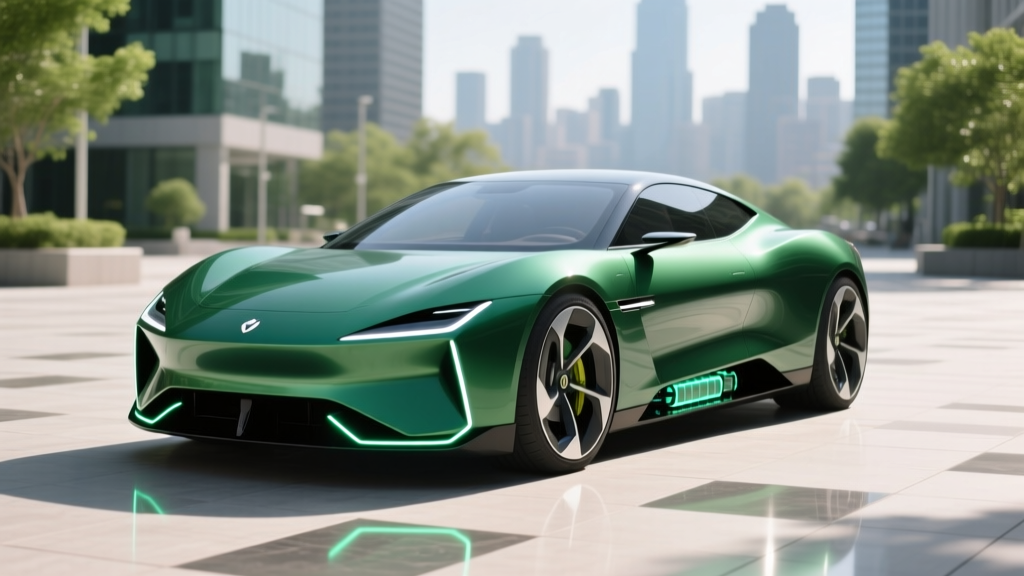
The name "Fisker" carries weight in the EV world. Henrik Fisker's original Fisker Karma (2012) was a stunning plug-in hybrid that burned through two companies and left a trail of unfulfilled promises. Now, Karma Automotive — the entity that acquired the original Karma's assets — is attempting a high-voltage comeback with the Karma Kaveya, a luxury electric GT that many shoppers are searching for as the "Karma Fisker electric car." But after years of delays, bankruptcies, and pivots, the question isn't just what this car can do — it's whether it will actually reach driveways.
This profile breaks down everything confirmed about the Kaveya as of early 2026, including estimated specs, pricing, the complicated Fisker/Karma naming situation, and whether this grand tourer is worth your deposit or your patience.
Karma, Fisker, and the Name Confusion — Cleared Up
Before evaluating specs, buyers need clarity on what they're actually looking at. The search term "Karma Fisker electric car" conflates two separate — and now competing — entities:
- Karma Automotive: The current company (headquartered in Irvine, CA) that purchased the remnants of the original Fisker Automotive after its 2013 bankruptcy. Karma produces the Revero GT (a plug-in hybrid) and is developing the all-electric Kaveya.
- Fisker Inc. (2023–2024): Henrik Fisker's second venture, which launched the Fisker Ocean SUV in 2023 before filing for Chapter 11 bankruptcy in June 2024. The Ocean is discontinued, and remaining inventory was liquidated at steep discounts. Fisker Inc. has no connection to Karma Automotive.
The Kaveya is Karma Automotive's product, not Fisker Inc.'s. It was first teased in 2019, formally revealed as a concept in 2023, and has been targeted for a 2026 production start. As of this writing, the Kaveya remains in pre-production/announced status — not yet available for purchase or independent testing. All specs below are manufacturer-estimated and subject to change.
Estimated Range, Battery, and Efficiency
EPA Estimated Range: ~300 miles (manufacturer target, not yet EPA-certified)
Real-World Expectation: Expect 240–270 miles in mixed highway driving; cold-weather (below 32°F) could reduce this to 200–230 miles given the GT coupe's aerodynamic profile and likely performance-tuned thermal management priorities.
Karma Automotive has stated the Kaveya will use a ~100 kWh usable battery pack with NMC (nickel manganese cobalt) chemistry — the standard choice for performance-oriented luxury EVs prioritizing energy density over the LFP chemistry found in more affordable models like the Tesla Model 3 RWD. NMC offers higher specific energy but typically shows slightly faster long-term degradation than LFP, though modern thermal management systems have narrowed this gap significantly.
The 300-mile target puts the Kaveya in the middle of the luxury EV GT pack — behind the Lucid Air Grand Touring (516 miles EPA) but comparable to the Porsche Taycan 4S (288 miles EPA, though the Taycan consistently exceeds its EPA estimate in real-world testing). The Kaveya's efficiency will depend heavily on its final curb weight; Karma's prior EREV platforms were notably heavy, and a 100 kWh pack plus GT proportions suggest a vehicle likely exceeding 4,800 lbs.
| Specification | Estimated / Target |
|---|---|
| Battery Capacity | ~100 kWh usable (NMC) |
| EPA Range (Target) | ~300 miles |
| Real-World Range (Est.) | 240–270 mi mixed / 200–230 mi cold |
| Efficiency Target | ~33 kWh/100 mi (~100 MPGe) |
| Drivetrain | Dual-motor AWD |
| Horsepower | ~550–700 hp (trim-dependent) |
| 0–60 mph | ~3.5–4.5 seconds (est.) |
Charging Speed: DC Fast and Level 2
Charging specifications for the Kaveya have not been independently verified, but Karma has targeted compatibility with modern DC fast-charging infrastructure. Based on the company's stated platform architecture:
| Charging Level | Rate | Estimated Speed |
|---|---|---|
| DC Fast Charge (Peak) | ~150–200 kW | 10–80% in ~28–35 minutes |
| Level 2 (240V, 48A) | ~11.5 kW | ~30–35 miles per hour of charging |
| Level 1 (120V) | ~1.4 kW | ~4 miles per hour (emergency only) |
| Connector | CCS1 (likely); NACS adapter TBD | |
A peak DC rate of 150–200 kW is adequate but not class-leading. The Hyundai Ioniq 5 peaks at 240 kW (10–80% in ~18 minutes), and the Lucid Air can accept over 300 kW on compatible chargers. The Kaveya's charge curve — how long it sustains peak power before tapering above 80% SoC — is unknown until independent testing occurs. Buyers should expect the typical NMC taper: strong pull from 10–50%, gradual reduction through 80%, and a steep slowdown from 80–100%.
For home charging, an 11.5 kW Level 2 setup (requiring a 60-amp dedicated circuit) would replenish the 100 kWh pack from empty in roughly 9–10 hours — standard overnight charging for a pack this size. A licensed electrician should evaluate your panel capacity before installation; a 200-amp service panel is typically required.
Pricing, Trims, and Federal Tax Credit Reality
Karma Automotive has positioned the Kaveya as a luxury grand tourer, and pricing reflects that ambition. Estimated MSRP by trim:
| Trim | Estimated MSRP | Key Features |
|---|---|---|
| Base GT | ~$115,000–$125,000 | Dual-motor AWD, ~550 hp, premium interior |
| Performance | ~$140,000–$155,000 | Higher output (~700 hp), sport suspension, carbon accents |
| Limited Edition | ~$165,000+ | Bespoke materials, numbered production, exclusive colorways |
Federal Tax Credit Eligibility (§30D)
The Kaveya faces significant hurdles under current IRS §30D rules:
- MSRP Cap: The §30D credit caps eligibility at $55,000 for sedans/coupes. At $115,000+, the Kaveya does not qualify for the new-vehicle federal tax credit regardless of battery sourcing.
- Income Caps: Even if MSRP were below the threshold, buyers must fall under $150,000 (single) / $300,000 (joint) modified AGI.
- Battery Sourcing: The critical minerals and battery component requirements (phasing in through 2026) would need to be met — unlikely for a low-volume manufacturer sourcing globally.
Bottom line: The Kaveya will almost certainly not qualify for the $7,500 federal EV tax credit. Buyers should budget the full MSRP plus destination, luxury gas-guzzler considerations (though the EV exemption from the gas-guzzler tax still applies), and state-level incentives where available. Consult a tax professional for your specific situation.
Interior, Cargo, and Technology
The Kaveya is a 2+2 grand tourer — two full-size front seats and two smaller rear seats suitable for children or short trips. Based on Karma's concept reveals and the proportions of similar GT coupes:
- Front legroom: ~42 inches (estimated)
- Rear legroom: ~30–32 inches (tight for adults)
- Cargo volume: ~12–15 cu ft (trunk); no frunk confirmed
- Infotainment: Expected 12.3"+ digital cluster, 14"+ center touchscreen, wireless CarPlay/Android Auto
- Driver Assistance: Adaptive cruise, lane-keeping, blind-spot monitoring (SAE Level 2 — driver must remain engaged at all times)
Karma has emphasized handcrafted interior materials — real wood, aluminum, and leather — in line with its positioning against Bentley and Aston Martin rather than Tesla or Lucid. The trade-off is weight and a likely premium on replacement parts. The infotainment system is expected to be a conventional (if well-executed) touchscreen setup rather than the minimalist single-screen approach of some competitors.
Warranty and Ownership Considerations
Karma Automotive has not published final warranty terms for the Kaveya, but industry standards for luxury EVs and Karma's prior Revero coverage suggest:
- Battery/Powertrain Warranty: 8 years / 100,000 miles (minimum per federal mandate for emissions-related components; EV battery packs are typically covered at this level)
- Battery Capacity Threshold: Likely 70% retention over the warranty period (industry standard)
- Bumper-to-Bumper: 4 years / 50,000 miles (estimated)
Ownership risk is a legitimate concern. Karma Automotive is a low-volume manufacturer with a turbulent corporate history. The company filed for Chapter 11 restructuring in 2024, emerging with new backing but limited production scale. Buyers should weigh the exclusivity of a Karma product against the practical advantages of purchasing from an established OEM with a nationwide service network. If Karma's service centers are not within reasonable distance of your location, routine maintenance and warranty repairs could require significant logistics.
Kaveya vs. the Competition: Is It Worth It?
| Spec | Karma Kaveya | Porsche Taycan 4S | Lucid Air Grand Touring | BMW i7 xDrive60 |
|---|---|---|---|---|
| EPA Range | ~300 mi (est.) | 288 mi | 516 mi | 318 mi |
| Battery | ~100 kWh NMC | 83.7 kWh (net) | 112 kWh | 101.7 kWh |
| Peak DC Charge | ~150–200 kW | 270 kW | 300+ kW | 195 kW |
| 0–60 mph | ~3.5–4.5s | 3.8s | 3.0s | 4.5s |
| Starting MSRP | ~$115,000+ | $107,900 | $125,600 | $120,295 |
| Federal Credit | No (MSRP cap) | No (MSRP cap) | No (MSRP cap) | No (MSRP cap) |
| Production Status | Announced | On sale | On sale | On sale |
Choose the Karma Kaveya if: You want an exclusive, low-volume GT with handcrafted luxury and don't mind the risks of buying from a startup with limited service infrastructure. You're willing to wait for production and accept unproven long-term reliability.
Choose the Porsche Taycan if: You want proven performance, class-leading charging speed (270 kW), a robust dealer network, and a car you can drive today. The Taycan consistently beats its EPA range in real-world highway testing.
Choose the Lucid Air Grand Touring if: Range is your priority. The Air's 516-mile EPA rating and 300+ kW charging are unmatched, and Lucid's service network is expanding.
Choose the BMW i7 if: You want a full-size luxury sedan with rear-seat comfort, BMW's established service infrastructure, and a more traditional luxury experience.
Pros and Cons
Pros
- Stunning GT design from Henrik Fisker's pen — head-turning exclusivity
- Handcrafted interior with premium materials uncommon at this price point
- Dual-motor AWD with strong estimated performance (550–700 hp)
- Low production volume = rarity and potential collector appeal
- EV running costs (no gas, reduced maintenance vs. ICE GTs)
Cons
- Not yet in production — delivery timeline uncertain
- No federal tax credit eligibility (MSRP exceeds $55,000 cap)
- Limited service network; Karma has a small dealer footprint
- Company's turbulent financial history raises long-term support concerns
- Estimated range (300 mi) trails Lucid Air by over 200 miles
- DC fast-charge rate (~150–200 kW) lags Porsche and Lucid
- 2+2 seating limits practicality; tight rear quarters
- Unproven real-world efficiency and charging curve data
Who Is the Karma Kaveya For?
The Kaveya targets a narrow buyer profile: luxury collectors and enthusiasts who value exclusivity and design over spec-sheet dominance. It's not the right choice for:
- Daily commuters who need reliable, nearby service and proven range
- Families needing four full-size seats and practical cargo space
- Road trippers who prioritize charging speed and range over design
- Budget-conscious buyers — this is a six-figure luxury GT with no federal credit offset
It is suited for buyers who already own a practical daily driver and want a weekend GT that stands apart from the sea of Taycans and Model S Plaid. Think of it as the EV equivalent of buying an Aston Martin DB12 over a BMW 8 Series — you're paying for design, exclusivity, and emotion, not value metrics.
Frequently Asked Questions
Is the Karma Kaveya the same as the Fisker Ocean?
No. The Kaveya is produced by Karma Automotive, a separate company from Fisker Inc. (the maker of the now-discontinued Fisker Ocean). Fisker Inc. filed for bankruptcy in 2024 and ceased production. The Kaveya is a luxury GT coupe; the Ocean was a compact SUV.
Can I buy the Karma Kaveya right now?
Not yet. As of early 2026, the Kaveya remains in announced/pre-production status. Karma Automotive has targeted 2026 for initial deliveries, but the company's history of delays warrants caution. Reservations may be available through Karma's website, but no independent reviews or EPA certifications exist yet.
What is the real-world range of the Karma Kaveya?
Karma targets approximately 300 miles EPA, but real-world mixed driving is likely to yield 240–270 miles. Cold-weather operation (below freezing) could reduce range to 200–230 miles. These figures are estimates until the EPA certifies the production vehicle and independent testing occurs.
Does the Karma Kaveya qualify for the federal EV tax credit?
Almost certainly not. Under current IRS §30D rules, new sedans and coupes must have an MSRP under $55,000 to qualify. The Kaveya's estimated $115,000+ starting price disqualifies it regardless of battery sourcing. Always verify current rules with a tax professional.
How fast does the Kaveya charge at home and on the road?
Estimated DC fast-charging peaks at 150–200 kW, with a 10–80% charge in approximately 28–35 minutes. Home Level 2 charging at 11.5 kW (48A, 240V) would add roughly 30–35 miles per hour, fully replenishing the pack in about 9–10 hours.
Is Karma Automotive still in business?
Karma Automotive emerged from Chapter 11 restructuring in 2024 with new financial backing and has continued development of the Kaveya. However, it remains a low-volume manufacturer with limited production history. Buyers should factor in the company's financial stability when making a purchase decision.
How does the Kaveya compare to the Porsche Taycan?
The Taycan offers proven reliability, faster DC charging (270 kW peak), a nationwide dealer network, and EPA-certified specs you can verify today. The Kaveya offers more exclusivity and design flair but comes with unproven specs, no service network to speak of, and significant delivery uncertainty. For most buyers, the Taycan is the safer choice.
Sources: EPA / fueleconomy.gov for competitor range and efficiency data; IRS §30D Clean Vehicle Credit rules; Karma Automotive official announcements. All Kaveya specifications are manufacturer estimates and subject to change pending EPA certification and production finalization.