Quick Answer: Is a Karma Electric Car Right for You?
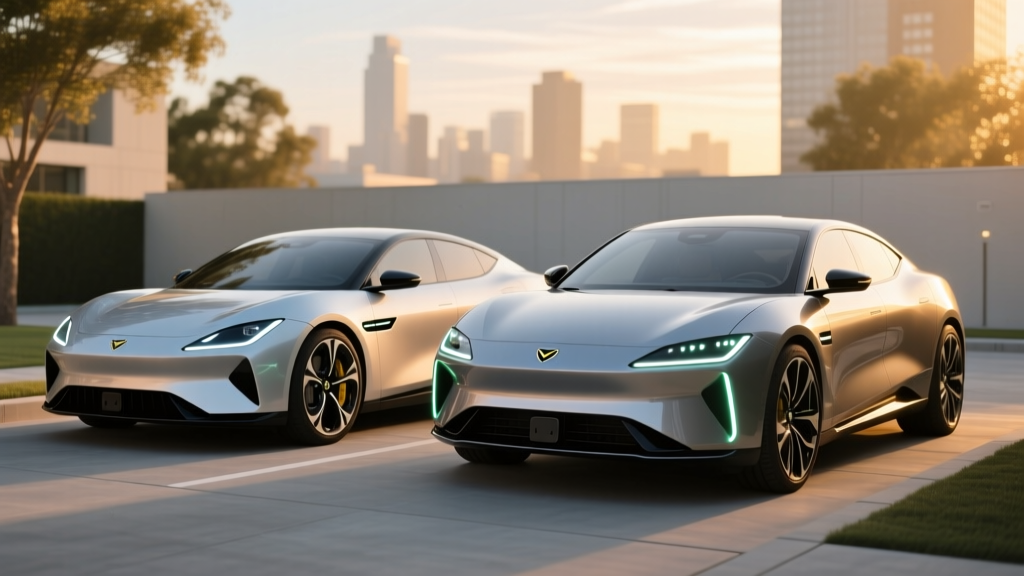
The Karma Air (the brand's flagship all-electric luxury sedan, formerly known as the Revero lineage) targets buyers who want a premium electric sedan with distinctive styling and long range. However, Karma as a brand has faced repeated production delays, restructuring, and limited dealer networks. As of early 2026, the Karma Air remains in limited production/pre-order status with an announced starting MSRP around $80,000–$100,000 depending on trim, a targeted EPA range of 400+ miles on its highest-capacity battery pack, and DC fast-charging capability up to 150 kW. The earlier Karma GS-6 (an extended-range EV/EREV) was discontinued. Buyers should weigh Karma's limited service infrastructure and uncertain delivery timelines against established rivals like the Tesla Model S, Lucid Air, and BMW i7.
The Karma Electric Car Lineup: What's Actually Available?
Search interest in "electric karma car" typically refers to one of two vehicles:
- Karma Air — An all-electric luxury sedan (announced/limited production) built on Karma's new E-Flex platform. This is the brand's first pure BEV, moving away from the range-extender architecture of earlier models.
- Karma GS-6 / Revero GT — A plug-in extended-range electric vehicle (EREV) with a small gasoline generator. The GS-6 offered roughly 61 miles of electric-only range with a total range exceeding 360 miles. Production has been halted following Karma's corporate restructuring.
This guide focuses primarily on the Karma Air as the forward-looking product, while noting where GS-6 data informs expectations for battery and charging behavior.
| Spec | Value |
|---|---|
| Vehicle Type | All-Electric Luxury Sedan (BEV) |
| Battery Capacity (est.) | ~100–120 kWh usable (NMC chemistry) |
| EPA Range (targeted) | 400+ miles (top trim) |
| Peak DC Fast Charge Rate | 150 kW |
| 10–80% DC Charge Time (est.) | ~35–40 minutes |
| Level 2 AC Charging | 11.5 kW onboard charger |
| Horsepower (targeted) | ~400–600 hp (depending on motor config) |
| 0–60 mph (est.) | ~4.0–5.5 seconds |
| Starting MSRP (announced) | $80,000–$100,000+ |
| Federal §30D Tax Credit Eligibility | Uncertain — depends on battery sourcing & MSRP cap at time of delivery |
| Battery/Powertrain Warranty | Not yet published (industry standard: 8 yr / 100,000 mi) |
Note: Karma has not published finalized EPA certification data. All figures above are based on manufacturer announcements and industry estimates. Specs remain preliminary until vehicles reach customers and fueleconomy.gov lists official ratings.
Range & Efficiency: What to Expect in the Real World
A targeted 400+ mile EPA range would place the Karma Air in elite company alongside the Lucid Air Grand Touring (516 mi EPA) and well ahead of the Tesla Model S Long Range (402 mi EPA). But EPA sticker numbers rarely match real-world driving, especially in a large luxury sedan.
Real-World Range Reconciliation
EPA Target: 400+ miles
Highway driving (70–80 mph, mild weather): Expect ~320–360 miles
Cold weather (below 32°F, highway): Expect ~260–300 miles (15–25% loss typical for NMC packs without aggressive heat-pump preconditioning)
Mixed city/highway, temperate climate: ~350–380 miles
The Karma Air's aerodynamics and battery thermal management system will heavily influence these numbers. Karma has referenced a heat pump for cabin and battery conditioning, which helps mitigate cold-weather losses but does not eliminate them. Buyers in northern climates should budget for 20–25% range reduction in winter months.
For comparison, the Lucid Air achieves its class-leading range partly through exceptional aerodynamic efficiency (Cd of 0.197) and a highly optimized drivetrain. Karma has not published a drag coefficient for the Air, so efficiency in Wh/mile remains unverified.
Charging Speed & Infrastructure
The Karma Air's announced 150 kW peak DC fast-charging rate is the most significant spec concern for a luxury EV in 2026. Here's why that matters:
| Vehicle | Peak DC kW | 10–80% Time | Connector |
|---|---|---|---|
| Karma Air (prelim.) | 150 kW | ~35–40 min | CCS1 (est.) |
| Tesla Model S | 250 kW | ~25 min | NACS |
| Lucid Air | 300+ kW | ~20 min | CCS1 (NACS adapter avail.) |
| BMW i7 xDrive60 | 195 kW | ~34 min | CCS1 (NACS adapter avail.) |
| Hyundai Ioniq 6 | 350 kW (800V) | ~18 min | CCS1 (NACS adapter avail.) |
At 150 kW peak, the Karma Air charges noticeably slower than most 2026 competitors. On a road trip, that means roughly 35–40 minutes at a DC fast charger for a 10–80% session, compared to 18–25 minutes in vehicles with 800V architectures or 300+ kW capability. The charge curve also tapers significantly above 80% State of Charge (SoC) — a full 10–100% session could take 55+ minutes.
For home Level 2 charging at 11.5 kW (48A on a 60A circuit), expect roughly 35–40 miles of range added per hour. A full overnight charge from 20% to 100% takes approximately 8–9 hours — adequate for daily use if you have home charging access.
Connector note: Karma has not confirmed NACS (Tesla-style) adoption. If the Air ships with CCS1, owners will rely on Electrify America, EVgo, and ChargePoint networks. As the industry shifts to NACS through 2025–2026, CCS-only vehicles may face reduced convenience at Tesla Supercharger stations unless an adapter is provided.
Karma Air vs. Gas Sedans and Established EVs: Cost Comparison
Let's put the ownership economics in perspective. A luxury sedan buyer at this price point is likely cross-shopping the BMW 5 Series, Mercedes E-Class, or Tesla Model S.
| Cost Category | Karma Air (~$90K est.) | Tesla Model S LR ($79,990) | BMW 530i xDrive (~$62,000) |
|---|---|---|---|
| Purchase Price (MSRP) | $90,000 | $79,990 | $62,000 |
| Federal Tax Credit (§30D) | $0–$7,500 (uncertain) | $0–$7,500 (sourcing-dependent) | $0 (ICE) |
| Fuel/Energy (5 yr, 75K mi) | $4,500 (electric) | $4,200 (electric) | $11,250 (gas, 28 MPG avg) |
| Maintenance (5 yr) | $2,000 (est.) | $1,800 | $5,500 |
| Insurance (5 yr avg) | $12,000 (est.) | $11,500 | $8,500 |
| Depreciation (est. 5 yr) | $45,000 (high — brand risk) | $35,000 | $30,000 |
| Est. 5-Year Total | ~$148,500 | ~$131,500 | ~$126,250 |
Key takeaways from this comparison:
- Energy savings are real: Electric sedans cost roughly $1,350–$1,500/year to "fuel" vs. $2,250+ for gas — a 5-year savings of $4,000–$7,000.
- Depreciation is the wildcard: Karma's brand uncertainty, limited production, and thin dealer network could result in steeper depreciation than established EV brands. This is the single largest ownership risk.
- Insurance premiums for low-volume luxury EVs tend to run 30–50% higher than equivalent gas sedans due to repair complexity and parts availability.
- Maintenance savings are genuine — no oil changes, no transmission fluid, fewer moving parts. Brake wear is minimal thanks to regenerative braking.
Tax Credits & Incentives: What Karma Buyers Need to Know
Federal EV tax credit eligibility under IRS §30D is complex and changes based on battery sourcing, vehicle MSRP, and buyer income. For the Karma Air:
- MSRP Cap: Sedans must have an MSRP of $55,000 or less to qualify. The Karma Air's $80,000+ price tag almost certainly disqualifies it from the federal credit unless reclassified.
- Income Cap: Buyer AGI must not exceed $150,000 (single) / $300,000 (joint).
- Battery Sourcing: Critical minerals and battery components must meet escalating domestic-content thresholds. Karma's supply chain details are not public.
- Point-of-Sale Transfer: If eligible, the credit can be transferred to the dealer at purchase for an immediate price reduction.
Bottom line: At its announced price point, the Karma Air is unlikely to qualify for the $7,500 federal tax credit. State incentives (California, Colorado, etc.) may still apply — check your state's energy office for current programs.
Real-World Ownership Considerations
Home Charging Access
Owning any EV is dramatically easier with home charging. A Level 2 home charger installation (240V, 48A circuit) typically costs $1,200–$3,500 including equipment, electrician labor, and permits — more if your electrical panel needs a 200A upgrade ($2,000–$4,000 additional). Without home charging, you'll rely on public DC fast chargers and workplace Level 2 stations, which adds time and cost.
Service & Support Network
This is Karma's most significant vulnerability. Unlike Tesla (200+ service centers), BMW (350+ dealers), or Lucid (20+ service centers plus mobile service), Karma operates with an extremely limited service footprint. If the nearest authorized Karma service center is 200+ miles away, a warranty repair could mean a multi-day ordeal with a flatbed tow. Buyers should confirm service availability in their region before committing.
Climate & Driving Patterns
The Karma Air's large battery pack and targeted 400+ mile range make it viable for most US climates and driving patterns. However:
- Cold-climate buyers (Minnesota, New England, mountain states): Plan for 20–25% winter range loss and verify the vehicle includes battery preconditioning for DC fast charging.
- Road-trip heavy drivers: The 150 kW charge rate means longer stops. A 600-mile trip requires at least one 35–40 minute charge stop, versus 20–25 minutes in a Lucid Air or Hyundai Ioniq.
- Urban commuters: Excellent use case — home charging covers daily needs, and regenerative braking reduces wear in stop-and-go traffic.
Common Misconceptions About Karma Electric Cars
| Myth | Fact |
|---|---|
| "Karma electric cars are made by Fisker." | Karma Automotive and Fisker Inc. are separate companies. The original Fisker Karma sedan (2011–2012) was redesigned and sold as the Karma Revero after the brand was acquired by Wanxiang Group. |
| "The Karma Air qualifies for the $7,500 tax credit." | At $80,000+ MSRP, the Karma Air exceeds the $55,000 sedan cap under §30D. Credit eligibility is very unlikely. |
| "Karma EVs have self-driving capability." | Any ADAS features Karma offers would be SAE Level 2 driver-assist — requiring full driver attention and hands-on or eyes-on supervision. This is not autonomous driving. |
| "I can buy a Karma Air at any dealership." | Karma sells through a limited direct-to-consumer model and a small number of partner dealers. Availability is extremely restricted. |
| "The GS-6 is still available new." | The Karma GS-6 (EREV) has been discontinued following the company's restructuring. Only used examples remain. |
Decision Framework: Should You Buy a Karma Electric Car?
Choose the Karma Air If:
- You want a distinctive, low-volume luxury EV sedan and are willing to accept brand risk and limited service infrastructure.
- You have reliable home Level 2 charging and your daily driving is under 100 miles.
- You value design exclusivity over proven reliability track records and widespread service networks.
- You can absorb potential depreciation risk if the brand faces further financial challenges.
Choose the Lucid Air If:
- You want proven 400–516 mile EPA range with 300+ kW charging and a growing service network.
- Fast DC charging speed is a priority for road trips.
- Starting around $69,900 (Pure trim), it offers more verified performance data.
Choose the Tesla Model S If:
- You want Supercharger network access (NACS), proven reliability data, and 250 kW DC fast charging.
- You value over-the-air updates and a mature software ecosystem.
- Starting at $79,990 with extensive real-world ownership data available.
Choose the BMW i7 If:
- You want a traditional luxury dealer experience with nationwide service coverage.
- Build quality, ride comfort, and brand prestige are top priorities.
- Starting at $120,300 — a different price tier, but comparable in luxury execution.
Frequently Asked Questions
Is Karma Automotive still in business in 2026?
Karma Automotive has undergone significant restructuring and ownership changes through 2024–2025. The company continues to operate in a limited capacity, with the Karma Air as its primary forward-looking product. However, production volumes remain very low, and the company's long-term viability is uncertain. Buyers should consider this risk when evaluating a purchase.
What happened to the Karma Revero and GS-6?
The Karma Revero GT and GS-6 were extended-range electric vehicles (EREVs) — essentially series hybrids with a gasoline generator that recharged the battery but never drove the wheels directly. Both models have been discontinued. The GS-6 offered 61 miles of electric-only range and a combined 360+ miles of total range with the generator running.
How does the Karma Air compare to a Tesla Model S in daily use?
The Tesla Model S benefits from the Supercharger network (NACS), over-the-air updates, a proven service infrastructure, and 250 kW DC fast charging. The Karma Air aims to compete on design exclusivity and targeted range, but lacks Tesla's charging network access, verified EPA data, and established service footprint. For most buyers, the Model S is the lower-risk choice.
Can I charge a Karma EV at Tesla Superchargers?
This depends on the connector. If the Karma Air ships with a CCS1 port (as expected), you would need a NACS-to-CCS adapter to access Tesla Superchargers — and only if Tesla permits third-party adapter use at the time. Karma has not confirmed NACS adoption for the Air.
What is the battery warranty on Karma electric cars?
Karma has not published official battery warranty terms for the Air. Industry standard for luxury EVs is 8 years / 100,000 miles with a minimum 70% capacity retention guarantee. Buyers should insist on written warranty terms before placing a deposit.
Is an extended-range EV (EREV) like the old GS-6 better than a pure BEV?
EREVs eliminate range anxiety by carrying a gasoline backup generator, but they add mechanical complexity, require oil changes for the generator engine, and produce tailpipe emissions when the generator runs. For buyers with home charging and predictable commutes, a pure BEV like the Karma Air is simpler and cheaper to operate. EREVs make more sense for buyers without reliable charging access or who frequently drive 300+ miles between stops.
Sources: EPA fueleconomy.gov, IRS §30D Clean Vehicle Credits, Karma Automotive press releases. All Karma Air specifications are preliminary and subject to change. Verify final specs and pricing with the manufacturer before purchasing.