Quick Answer: Is the John Deere Work Electric Gator Worth It?
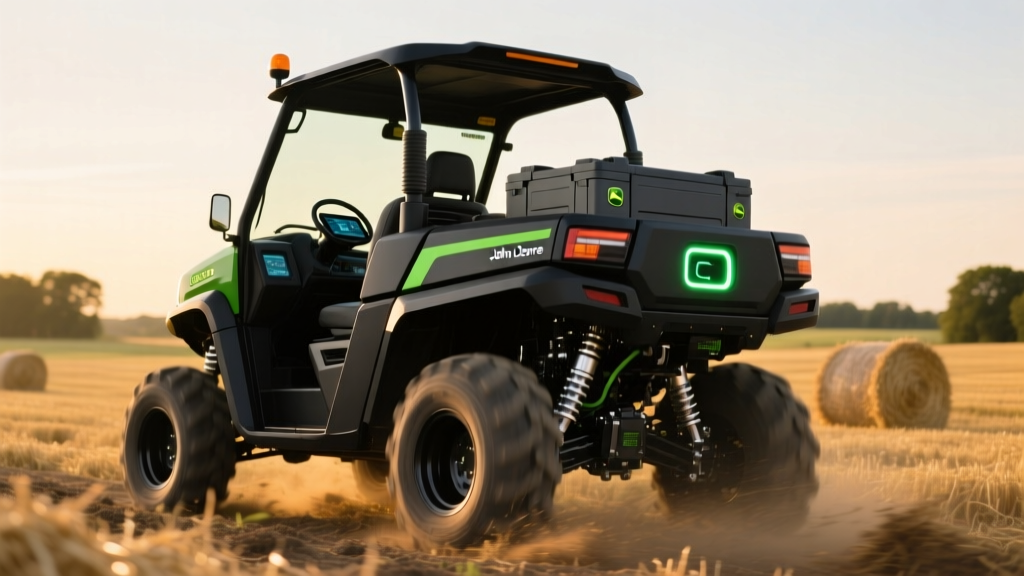
The John Deere Work Electric Gator is a battery-electric utility vehicle (UTV) designed for quiet, zero-tailpipe-emissions work on farms, ranches, estates, and job sites. Expect a base MSRP around $16,500–$18,000 depending on configuration, with a lithium-ion battery pack in the 10–15 kWh range delivering 30–45 miles of real-world range under typical load. It charges via standard 120V (Level 1) in roughly 6–8 hours or a 240V outlet in approximately 3–4 hours. For buyers who need silent operation, minimal maintenance, and short-range utility work, it's a compelling alternative to gas Gators — but range limitations and payload-dependent energy consumption mean it's best for defined, repeatable routes rather than all-day open-field work.
What Exactly Is the John Deere Work Electric Gator?
The Work Electric Gator sits in John Deere's compact utility vehicle lineup as the brand's primary electric UTV offering. Unlike recreational side-by-sides, this is a purpose-built work machine — think cargo hauling, property maintenance, livestock checks, and light towing in environments where noise and emissions matter. Think wildlife management areas, indoor arenas, greenhouses, suburban estates, and early-morning farm operations where a gas engine's noise is a problem.
John Deere has iterated on the electric Gator platform over several model years. The current-generation models use lithium-ion battery chemistry (replacing older lead-acid configurations), which delivers better energy density, longer cycle life, and more consistent power delivery under load. The vehicle is classified as an off-road utility vehicle and is not street-legal in most jurisdictions without aftermarket modifications and local registration — this matters for insurance and usage planning.
Specs That Matter: Battery, Range, and Payload
Utility EV buyers care about different numbers than highway commuters. Here's the spec sheet that drives real purchasing decisions:
| Specification | Value / Estimate |
|---|---|
| Battery Chemistry | Lithium-ion (NMC-type) |
| Battery Capacity (Usable) | ~10–15 kWh (varies by config) |
| EPA-Estimated Range | Not EPA-rated (off-road UTV) |
| Real-World Range (Light Load) | 35–45 miles |
| Real-World Range (Heavy Load/Hills) | 20–30 miles |
| Top Speed | ~20–25 mph (governed) |
| Payload Capacity | ~400–600 lbs (cargo bed + passengers) |
| Towing Capacity | ~500–600 lbs (varies by model) |
| Charge Time (120V / Level 1) | 6–8 hours (0–100%) |
| Charge Time (240V / Level 2) | 3–4 hours (0–100%) |
| Base MSRP (2026 est.) | $16,500–$18,000 |
| Drivetrain Warranty | Limited — confirm with dealer |
Range Reality Check
Because the Work Electric Gator is an off-road vehicle, it doesn't carry an EPA range sticker like a highway EV. Manufacturer claims of "up to 45 miles" assume flat terrain, moderate temperatures, and light cargo. In practice, hilly terrain, cold weather, full payload, and frequent stop-start work patterns can cut range by 30–50%. Plan your routes around a realistic 25–30 mile working range if you're hauling heavy loads or operating in winter conditions.
Electric Gator vs. Gas Gator: The Real Cost Comparison
The most common question from buyers: does the electric version save money over a comparable gas-powered John Deere Gator? The answer depends heavily on your usage pattern. Here's a five-year ownership breakdown for a buyer using the vehicle roughly 500 hours per year on a property:
| Cost Category (5-Year) | Electric Gator | Gas Gator (Comparable) |
|---|---|---|
| Purchase Price | $17,500 | $13,000 |
| Fuel / Electricity | $600–$900 | $3,500–$5,000 |
| Oil Changes & Engine Maint. | $0 | $800–$1,200 |
| Brake Wear (Regen Advantage) | $100–$200 | $400–$600 |
| Drive Belt / CVT Service | $0 | $300–$500 |
| Insurance (Est. Annual × 5) | $1,500–$2,500 | $1,500–$2,500 |
| Total 5-Year Cost | $19,700–$21,100 | $19,500–$22,800 |
Key takeaway: The electric Gator's higher upfront price is largely offset by dramatically lower operating costs within 3–5 years. The breakeven point accelerates if you have access to cheap electricity (especially solar-generated power on the property) and decelerates if you need to run the vehicle for 8+ continuous hours where range limitations require mid-day charging downtime.
Charging Logistics: What You Actually Need
One advantage of a UTV over a highway EV: you almost certainly have the right outlet already. The Work Electric Gator charges via a standard onboard charger that plugs into a common 120V household outlet (NEMA 5-15). For most property owners, this means plugging in at the barn, garage, or shop overnight and waking up to a full charge.
However, if your work cycle demands faster turnaround — say, a morning shift and an afternoon shift with only a lunch break in between — a 240V outlet (NEMA 14-50 or NEMA 6-20) cuts charge time roughly in half. Installing a dedicated 240V circuit typically costs $300–$800 depending on panel proximity and conduit run, per a licensed electrician. For a UTV that parks in the same spot every night, this is a one-time investment that meaningfully improves operational flexibility.
A note on kW vs. kWh: The battery stores energy measured in kWh (kilowatt-hours — think of it like the size of the fuel tank). The charger delivers power measured in kW (kilowatts — the rate of filling). A 120V outlet delivers roughly 1.2 kW, meaning a 12 kWh battery takes about 10 hours from empty. A 240V circuit at 3.3 kW cuts that to roughly 3.5–4 hours. The Work Electric Gator does not support DC fast charging — and for a UTV that parks overnight, it doesn't need to.
Common Misconceptions About Electric UTVs
| Myth | Fact |
|---|---|
| "Electric UTVs have no power for real work." | Electric motors deliver instant torque at zero RPM. The Work Electric Gator's towing and hill-climbing performance matches or exceeds comparable gas models at low speeds — exactly where utility work happens. |
| "The battery will need replacing in 2–3 years." | Modern lithium-ion packs are rated for 1,000+ charge cycles before significant degradation. At one cycle per day, that's 3+ years of daily use before you'd see ~20% capacity loss. Many packs last 5–8 years in UTV duty. |
| "It won't work in cold weather." | Cold temperatures do reduce range — expect 15–30% loss below freezing. But unlike gas engines, electric motors start instantly in cold without choke issues, and the vehicle is fully operational even when range is reduced. |
| "I need a special charging station." | A standard 120V outlet charges the vehicle overnight. A 240V outlet is a convenience upgrade, not a requirement. |
| "Federal EV tax credits apply." | The IRS §30D credit applies to on-road highway vehicles meeting specific MSRP, income, and battery-sourcing requirements. Off-road UTVs like the Gator generally do not qualify. Check IRS guidelines for specifics. |
Who Should Buy the Electric Gator — and Who Shouldn't
Decision Framework
Choose the Electric Gator if:
- You work on a defined property with routes under 25 miles per day
- Noise is a concern — wildlife areas, suburban properties, early-morning livestock operations, indoor facilities
- You have reliable access to a 120V or 240V outlet at your base of operations
- You want to eliminate engine maintenance (oil, filters, belts, spark plugs, fuel stabilizer)
- You have solar panels on-site and want to run the vehicle on self-generated electricity
- You operate in enclosed or ventilated-sensitive areas (barns, greenhouses, tunnels) where exhaust is a hazard
Stick with a gas Gator if:
- Your daily work routinely exceeds 30+ miles of varied terrain
- You need to refuel in under 2 minutes and keep working — no charging downtime tolerance
- You operate in extreme cold for extended periods and need maximum range reliability
- Your budget is strictly under $13,000 and you can't absorb the electric premium
- You frequently transport the UTV to remote sites with no electrical access
Real-World Ownership Considerations
Beyond the spec sheet, here are the practical ownership realities that don't appear in brochures:
Battery longevity and replacement cost: If the lithium-ion pack eventually needs replacement (typically 7–10+ years depending on use and climate), expect a cost in the $2,000–$4,000 range for the battery module. This is a significant future expense, but it's comparable to a major engine overhaul on a gas UTV. Store the vehicle in a temperature-controlled space when possible — extreme heat accelerates degradation more than moderate cold.
Charging discipline: Unlike a gas UTV that you refuel when empty, lithium-ion batteries prefer to stay between 20% and 80% state of charge for maximum longevity. For daily-use owners, plugging in every night and setting a charge limit (if the onboard system supports it) will extend pack life. Avoid leaving the vehicle at 0% or 100% for extended storage periods.
Terrain matters more than you think: Flat, hard-packed trails use dramatically less energy than soft mud, sand, or steep grades. If your property is hilly, plan your range expectations conservatively and consider whether a mid-day top-up is feasible. The regenerative braking system recovers some energy on downhill runs, partially offsetting the uphill consumption.
Insurance and registration: As an off-road vehicle, the Work Electric Gator typically falls under off-highway vehicle (OHV) insurance, which is generally less expensive than auto insurance but varies by state and property type. Confirm with your insurer whether electric UTVs carry any premium differential — in most cases, they do not.
Attachment compatibility: The electric Gator supports many of the same mechanical attachments as gas models (sprayers, spreaders, small plows). However, attachments that require a PTO (power take-off) or high-draw electrical accessories may need separate power sources or may reduce vehicle range significantly. Verify compatibility with your John Deere dealer before purchasing add-ons.
Frequently Asked Questions
Can the John Deere Work Electric Gator be driven on public roads?
Generally, no. The Work Electric Gator is classified as an off-road utility vehicle. Some states and localities allow UTVs on designated roads with modifications (mirrors, turn signals, registration), but this varies widely. Check your local regulations before assuming road legality.
How long does the battery last before it needs replacing?
Lithium-ion packs in UTV duty typically last 1,000–2,000 charge cycles before degrading to ~80% of original capacity. At one full cycle per day, that's roughly 3–5 years of daily heavy use, or 7–10 years for typical property-owner usage patterns. The battery won't "die" at that point — it simply holds less energy, reducing your effective range.
Does the federal EV tax credit apply to the Electric Gator?
No. The IRS §30D clean vehicle credit applies to on-road vehicles meeting specific MSRP caps, buyer income limits, and battery-sourcing requirements. Off-road utility vehicles like the Gator are excluded. Some states or local utility districts may offer separate rebates for electric off-road equipment — check with your state energy office.
Is the electric Gator powerful enough for towing?
Yes, within its rated capacity. Electric motors produce peak torque from zero RPM, which gives the electric Gator strong low-speed pulling performance — often superior to gas models of similar rated horsepower when starting from a stop on an incline. Stay within the published towing limit (typically 500–600 lbs) and remember that towing heavy loads significantly reduces range.
What happens if I run out of charge in the field?
Unlike a gas UTV where you can walk back with a fuel can, a depleted electric Gator must be towed or pushed to a charging source. Plan your routes with a 20–30% range buffer, especially when working unfamiliar terrain. Some owners keep a portable generator with a 120V outlet as an emergency range extender — it's slow (adding roughly 3–5 miles of range per hour of generator runtime), but it can get you home.
How does the Electric Gator compare to the Polaris Ranger EV or other electric UTVs?
The competitive electric UTV market remains small. The Work Electric Gator differentiates on John Deere's dealer network, attachment ecosystem, and brand loyalty among agricultural and property-management buyers. If you're already in the Deere ecosystem for tractors or mowers, the integration and service advantages are meaningful. Cross-shop based on payload, range, dealer proximity, and attachment compatibility rather than brand alone.