Quick Answer: Is the John Deere Gator Electric Right for You?
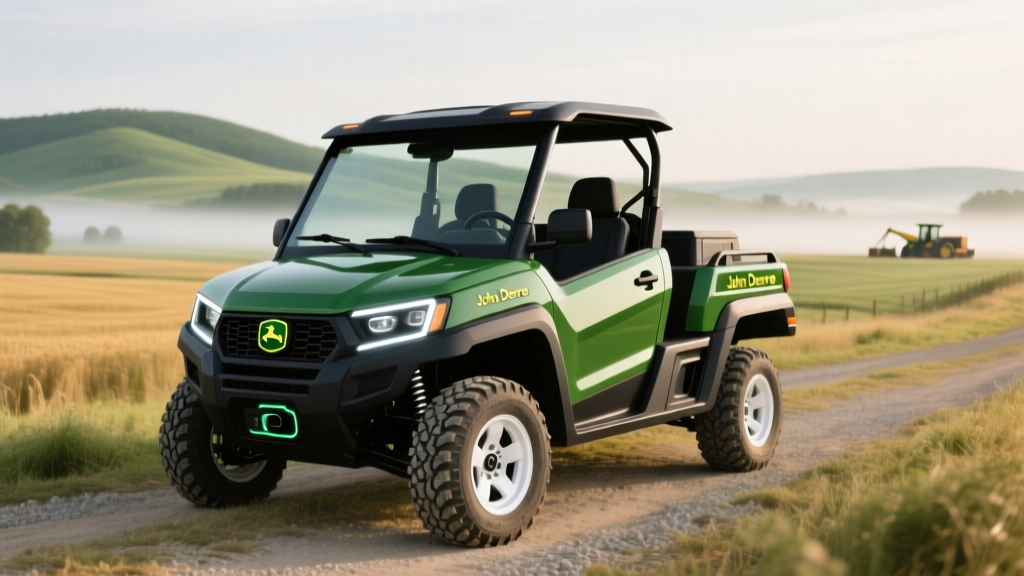
The John Deere Gator Electric (officially the Gator XUV Electric / TE 4x2 platform) delivers approximately 45 miles of real-world range from a 17 kWh lithium-ion battery pack, with a top speed around 35 mph and zero tailpipe emissions. It costs roughly $14,000–$16,000 depending on configuration. It excels at low-speed, repetitive property work — livestock checks, fence repair, campus maintenance — where silent operation and minimal maintenance matter. It is not a highway-capable vehicle, does not qualify for the federal §30D EV tax credit (it is classified as an off-road utility vehicle, not a highway-capable automobile), and requires access to a standard 120V outlet for overnight charging.
If you've searched for a John Deere Gator electric utility vehicle, you're likely weighing whether battery power makes sense for your property work versus a traditional gas-powered Gator. This guide covers the real specs, ownership economics, and practical limitations so you can decide based on data — not dealer brochures.
John Deere Gator Electric: Specs at a Glance
| Specification | Value |
|---|---|
| Battery Capacity | ~17 kWh (lithium-ion) |
| EPA / Estimated Range | Up to 50 mi (light duty); ~45 mi real-world mixed use |
| Top Speed | ~35 mph (governed) |
| Motor Output | ~20 kW continuous / ~30 kW peak (~27–40 HP equivalent) |
| Charge Time (120V Level 1) | ~8–10 hours (0–100%) |
| Charge Time (240V Level 2) | ~4–5 hours (where supported) |
| Payload Capacity | ~500 lbs (varies by config) |
| Towing Capacity | ~1,000 lbs |
| Starting MSRP | ~$14,000–$16,000 (base, before options) |
| Federal §30D Tax Credit | Not eligible (off-road classification) |
| Warranty (Battery) | Typically 3 years / unlimited hours (confirm with dealer) |
Note: John Deere's electric utility lineup has evolved across model years. The figures above reflect the most current configurations available through dealerships as of early 2026. Always confirm exact specs with your local dealer, as battery chemistry and capacity can shift between production runs.
Electric vs. Gas Gator: The Real Cost Comparison
The core buying decision comes down to total cost of ownership over the vehicle's working life. Here's how a John Deere Gator electric stacks up against a comparable gas-powered Gator XUV 835M over five years of typical property use (approximately 2,500 miles/year).
| Cost Factor | Gator Electric | Gas Gator XUV 835M |
|---|---|---|
| Purchase Price (MSRP) | ~$15,000 | ~$18,000 |
| Fuel / Electricity (5 yrs) | ~$375 (at $0.15/kWh) | ~$3,750 (at $3.50/gal, 25 MPG) |
| Oil Changes (5 yrs) | $0 | ~$500 |
| Air/Spark Plug Filters | $0 | ~$300 |
| Brake Wear | Lower (regen assist) | Standard replacement ~$400 |
| Estimated Maintenance Total | ~$200 (coolant, inspections) | ~$1,800 |
| 5-Year Total Cost | ~$15,575 | ~$24,050 |
The electric Gator saves roughly $8,400 over five years in fuel and maintenance alone. The breakeven point against a gas model arrives within the first 18–24 months of regular use. The caveat: battery replacement after 7–10 years could cost $3,000–$5,000 depending on pack size and availability, which partially offsets long-term savings.
Charging the Gator Electric: What You Actually Need
Unlike highway EVs that rely on DC fast-charging networks, the Gator Electric lives and dies by Level 1 (120V) and Level 2 (240V) AC charging at your property.
| Charging Level | Power (kW) | Miles Added per Hour | Full Charge Time |
|---|---|---|---|
| Level 1 (120V standard outlet) | ~1.4–1.8 kW | ~4–5 mi/hr | 8–10 hours |
| Level 2 (240V, where equipped) | ~3.3–3.6 kW | ~10–12 mi/hr | 4–5 hours |
Practical reality: Most Gator Electric owners charge overnight on a standard 120V outlet in a barn, garage, or workshop. If you drive 15–20 miles during the day, an overnight top-up fully replenishes the pack. A dedicated 240V circuit (like a dryer outlet) cuts charge time in half but requires a licensed electrician — expect $500–$1,500 for a new circuit run depending on distance from your panel.
One important note on kW vs. kWh: The battery stores 17 kWh (kilowatt-hours) of energy — think of it as the "tank size." The charger delivers power measured in kW (kilowatts) — the "flow rate." A 1.8 kW charger filling a 17 kWh battery takes roughly 17 ÷ 1.8 = ~9.4 hours, minus efficiency losses.
Real-World Range: What to Expect on the Job
Rated Range: Up to 50 miles (light load, flat terrain, moderate temps)
Real-World Range: ~35–45 miles mixed use; as low as ~25–30 miles with heavy towing, steep terrain, or cold weather below 32°F
Range in a utility EV depends heavily on workload. Hauling 400 lbs of feed up gravel inclines consumes significantly more energy than cruising flat pasture lanes. Cold weather reduces lithium-ion battery efficiency by roughly 15–25%, meaning winter range on a Northern property could drop to 30 miles or less.
For most property owners running 10–20 miles of daily loops, the Gator Electric's range is more than adequate. If your operation demands 40+ miles daily with heavy loads, a gas Gator or a larger-capacity platform may serve you better.
Common Misconceptions About Electric Utility Vehicles
| Myth | Fact |
|---|---|
| "It qualifies for the $7,500 federal EV tax credit." | No. The IRS §30D credit applies to highway-capable vehicles meeting specific MSRP, income, and battery-sourcing requirements. Off-road UTVs like the Gator do not qualify. |
| "Electric means zero maintenance forever." | Electric drivetrains eliminate oil, spark plugs, and air filters, but you still need brake inspections, coolant checks, tire rotation, suspension greasing, and eventual battery replacement. |
| "It's as fast as a gas Gator." | Gas Gators like the XUV 835M reach 45–50+ mph. The electric Gator tops out around 35 mph — adequate for property work but not for trail riding or road use. |
| "I can charge it at public EV stations." | The Gator Electric uses proprietary or standard AC charging, not CCS/NACS DC fast-charging connectors. Public charging infrastructure is irrelevant for this vehicle. |
| "The battery will die in 3 years." | Modern lithium-ion packs in utility EVs typically retain 80%+ capacity after 5–7 years of normal use, depending on charge cycles and thermal management. Check your dealer's specific battery warranty terms. |
Decision Framework: Should You Buy the Gator Electric?
Choose the John Deere Gator Electric if:
- Your daily driving is under 30 miles on your property
- You have access to a 120V or 240V outlet in a garage or barn for overnight charging
- Silent operation matters (livestock operations, hunting, early-morning neighborhood use)
- You want to minimize maintenance visits and fuel costs
- You operate in areas where emissions or noise ordinances restrict gas equipment
Stick with a gas Gator if:
- You regularly drive 40+ miles per day or need 45+ mph top speed
- You tow heavy loads (1,500+ lbs) over long distances
- You lack reliable access to AC power at your worksite
- You operate in extreme cold (below 0°F) for extended periods
- You need the vehicle for trail riding or mixed road/off-road recreation
What First-Time Electric Utility Vehicle Buyers Should Know
Transitioning from a gas UTV to an electric one involves a few adjustments:
- Plan your charging routine. Unlike gassing up in 2 minutes, charging takes hours. Plug in when you finish work — treat it like charging a phone overnight.
- Understand the charge curve. Lithium-ion batteries charge fastest between 20–80% state of charge. The final 20% slows significantly to protect cell health. For daily use, charging to 80–90% extends battery lifespan.
- Budget for electrical work. If your barn or workshop lacks a convenient outlet, factor in $500–$2,000 for an electrician to run a dedicated circuit. A licensed electrician should always handle this work.
- Cold weather matters. If you're in USDA Zone 4 or colder, expect meaningful range reduction in winter. Store the vehicle in an insulated garage when possible to preserve battery health.
- Check local incentives. While the federal §30D credit doesn't apply, some states and utility cooperatives offer rebates for electric agricultural or off-road equipment. Contact your local utility or state energy office for current programs.
Frequently Asked Questions
How long does the John Deere Gator Electric battery last?
Expect 5–10 years of service life with normal use, retaining roughly 80% of original capacity. Actual longevity depends on charge cycles, depth of discharge, and operating temperatures. Replacement packs typically cost $3,000–$5,000 depending on configuration and availability.
Can I use the Gator Electric in the rain or wet conditions?
Yes. John Deere designs its electric utility vehicles for outdoor agricultural use with sealed battery enclosures and weatherproof connectors. However, avoid submerging the vehicle or pressure-washing electrical components directly.
Is the Gator Electric street-legal?
No. The Gator Electric is classified as an off-road utility vehicle and is not DOT-certified for highway use. Some jurisdictions allow UTVs on low-speed local roads with modifications (mirrors, turn signals, registration), but this varies by state and county.
How does regenerative braking work on the Gator Electric?
When you lift off the throttle or descend hills, the electric motor reverses direction and acts as a generator, converting kinetic energy back into battery charge. This extends range slightly and reduces brake wear — similar to engine braking in a gas vehicle but with energy recovery.
Where can I buy a John Deere Gator Electric?
Availability varies by dealer and region. Check John Deere's official utility vehicle page or contact your local John Deere dealership for current inventory and pricing. Lead times can vary, especially for electric configurations.
Sources: John Deere official specifications, IRS §30D Clean Vehicle Credit guidelines. Always verify current specs and pricing with your authorized dealer, as configurations may change between model years.