The Quick Answer on John Deere Electric Riding Mowers
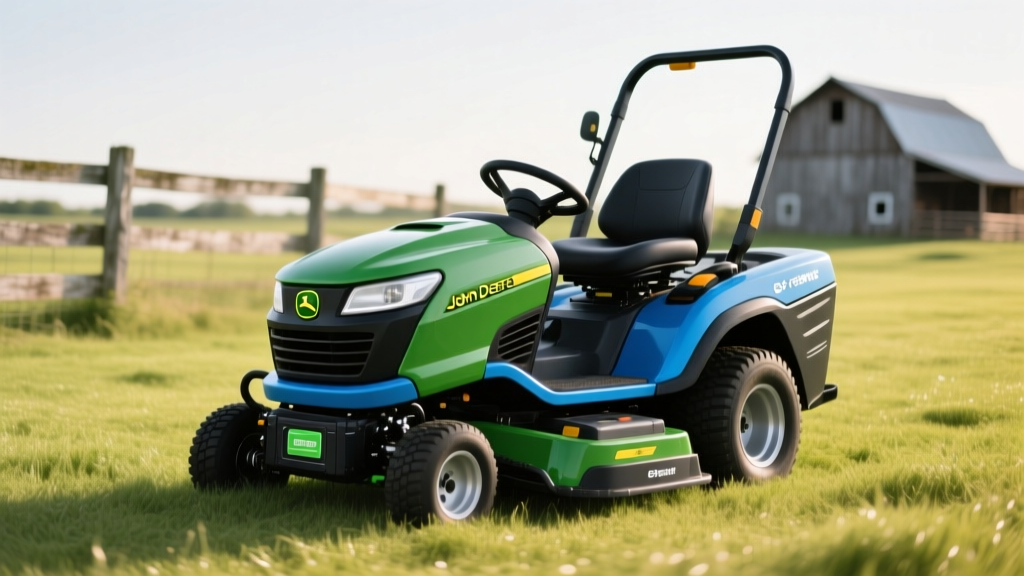
As of 2026, John Deere does not sell a full-size electric riding lawn mower for residential consumers. The company's battery-electric lineup is limited to commercial-grade equipment (stand-on mowers and utility vehicles) and smaller battery-powered push/handheld tools through its partnership with Greenworks. If you're searching for a zero-emission, battery-powered ride-on mower under the John Deere brand, the closest current option is the John Deere 100 Series with a gas engine, or pivoting to competitors like the Ryobi 42" electric riding mower or Craftsman V60V cordless rider. Below, we break down the real costs, run-time expectations, and what a future John Deere electric rider might look like based on the company's commercial EV trajectory.
Does John Deere Make an Electric Riding Mower?
Short answer: not yet for homeowners. John Deere has invested heavily in electrification, but that investment has targeted commercial landscaping and agricultural equipment first. The company introduced the John Deere EP5 Electric Pallet Truck and battery-electric commercial stand-on mowers aimed at groundskeeping fleets. For the residential riding mower segment — the 42-to-54-inch deck, sit-down tractors that dominate suburban lawns — John Deere continues to rely on gasoline engines (primarily Briggs & Stratton and Kawasaki powerplants in the 100, 200, and S240 series).
This gap isn't accidental. The engineering challenge of scaling battery-electric power to a riding mower involves trade-offs that John Deere has been cautious about:
- Run time vs. weight: A 42-inch gas mower burns roughly 0.5–0.7 gallons per hour. Replicating that with batteries requires 2–5 kWh of usable capacity, adding 60–120 lbs of lithium-ion cells.
- Deck power draw: Spinning a 42–54" blade through thick grass demands 3–5 kW of continuous power — comparable to running a household dryer.
- Cost structure: A battery pack large enough for 2+ hours of mowing adds $1,500–$3,000 in cell costs alone at current lithium-ion pricing (~$130/kWh at the pack level in 2026).
John Deere's approach mirrors the broader industry: commercial fleets (which mow daily and can justify higher upfront costs for lower operating expenses) get EVs first. Residential models follow once battery costs drop further.
The Electric Riding Mower Alternatives (2026 Market)
If you want a battery-powered ride-on mower today, several competitors fill the gap John Deere hasn't entered. Here's how the leading options compare on the specs that matter:
| Model | Battery (kWh) | Deck Size | Run Time (est.) | Charge Time | Price (MSRP) |
|---|---|---|---|---|---|
| Ryobi RY48140 (42") | 4.0 kWh (4× 40V 8Ah) | 42 in | ~1.5 hours | ~4 hours (standard) | $4,499 |
| Craftsman V60V 42" Rider | 3.6 kWh (4× 60V 4Ah) | 42 in | ~1.0 hour | ~3 hours | $3,799 |
| Ego Power+ 42" Rider (ZT) | 5.0 kWh (4× 56V 12Ah) | 42 in | ~2.0 hours | ~2.5 hours | $5,999 |
| John Deere S100 (gas, 42") | N/A (gas tank) | 42 in | ~2.5 hours | Refuel: 2 min | $2,899 |
Run times are manufacturer estimates under moderate grass conditions. Thick, wet grass can reduce electric mower run time by 30–40%.
Electric vs Gas Riding Mower: Real Cost Breakdown
The sticker price of an electric riding mower is typically $1,500–$3,000 higher than a comparable gas model. The question every buyer should ask: do the operating savings justify the premium?
| Cost Category | Gas Rider (John Deere S100) | Electric Rider (Ego ZT 42") |
|---|---|---|
| Purchase Price | $2,899 | $5,999 |
| Fuel/Energy (annual, 30 mows) | $95–$130 (gas at $3.50/gal) | $18–$28 (electricity at $0.16/kWh) |
| Oil Changes (annual) | $25–$40 | $0 |
| Air Filter / Spark Plug (annual) | $15–$25 | $0 |
| Blade Maintenance (annual) | $30–$50 | $30–$50 |
| Battery Replacement (Year 5–8) | $0 | $800–$1,500 |
| 5-Year Total Cost | $3,824–$4,424 | $6,589–$7,539 |
The math is clear: at current battery pricing, the electric riding mower does not break even within 5 years for a typical homeowner mowing 30 times per season. The fuel and maintenance savings of roughly $100–$140 per year require 20+ years to offset a $3,000 purchase premium. The equation improves if you mow commercially (100+ sessions/year), have very cheap electricity (under $0.10/kWh), or factor in the value of near-silent operation and zero exhaust.
One cost often overlooked: battery degradation. Lithium-ion packs in outdoor power equipment typically retain 70–80% of original capacity after 500 charge cycles. If you mow weekly for 8 months per year, that's roughly 32 cycles annually — putting meaningful degradation around year 10–12. Replacement packs for 4–5 kWh systems currently run $800–$1,500.
What a Future John Deere Electric Rider Would Need
Based on John Deere's commercial EV platform and the company's statements at recent trade shows, a residential electric riding mower from Deere would likely need to hit these benchmarks to compete:
Minimum Viable Specs for a John Deere Electric Rider
- Battery capacity: 5–7 kWh usable (lithium iron phosphate / LFP chemistry for longevity)
- Run time: 2.5+ hours at moderate load (covering 1–2 acres per charge)
- Charge time: Under 3 hours on a standard 120V outlet; under 1 hour on 240V
- Price point: Under $4,500 to compete with mid-range gas models + 5-year operating savings
- Deck compatibility: 42" and 48" stamped or fabricated deck options
- Warranty: 5-year/500-cycle battery warranty (matching automotive EV norms)
The most likely battery chemistry for this application would be LFP (lithium iron phosphate) rather than the NMC (nickel manganese cobalt) used in most EVs. LFP cells trade some energy density for dramatically longer cycle life (3,000+ cycles to 80% capacity vs. ~1,000 for NMC) and better thermal stability — ideal for equipment that sits in a hot garage and sees hundreds of shallow discharge cycles.
Common Misconceptions About Electric Riding Mowers
| Myth | Fact |
|---|---|
| "Electric mowers can't handle thick or wet grass." | Modern 42" electric riders deliver 3–5 kW to the deck motor — comparable to a 22 HP gas engine. They handle thick grass but do drain the battery 30–40% faster under heavy load. |
| "The batteries won't last and cost a fortune to replace." | LFP batteries in outdoor equipment are rated for 2,000–3,000 cycles. At 30 mows/year, that's 65–100 years of cycle life. Calendar degradation (age, not use) is the real limiter — expect meaningful capacity loss after 8–12 years regardless of use. |
| "You need a 240V outlet to charge an electric mower." | All current electric riders charge on standard 120V. A 240V circuit cuts charge time roughly in half but isn't required. A standard outdoor-rated 120V/15A outlet near your storage area is sufficient. |
| "Electric mowers qualify for the $7,500 federal EV tax credit." | They do not. The IRS §30D credit applies only to on-road motor vehicles with 4 wheels and a GVWR under 14,000 lbs. Lawn mowers, even ride-on models, are classified as off-road equipment and are ineligible. |
| "John Deere is about to release an electric rider any day now." | John Deere has announced electric commercial mowers and compact utility vehicles but has not confirmed a residential riding mower timeline. Based on their product-cycle patterns, a 2028–2030 launch is plausible but not confirmed. |
Real-World Ownership Considerations
If you're weighing an electric riding mower from any brand, these practical factors matter more than spec-sheet numbers:
Lawn size and terrain. Electric riders excel on flat-to-moderate lawns under 1.5 acres. If your property is 2+ acres, heavily sloped, or has thick St. Augustine or Bahia grass, you'll likely need to recharge mid-session — a significant workflow disruption compared to a 2-minute gas refill.
Climate impact. Lithium-ion batteries lose 15–25% of effective capacity in temperatures below 40°F. If you're mowing in early spring or late fall in northern states, expect noticeably shorter run times. Conversely, sustained use in 95°F+ heat triggers thermal management that can reduce power output to protect the cells.
Storage and charging access. Unlike an EV that charges in your garage overnight, a riding mower often lives in a shed or detached structure. You'll need a weatherproof 120V outlet within reach of the mower's charge port — a $200–$500 electrical job if you don't already have one.
Noise as a genuine benefit. Electric riding mowers produce 65–75 dB at the operator's ear vs. 85–95 dB for gas models. That's not just comfort — it eliminates the need for hearing protection and allows mowing during early morning or evening hours without noise-ordinance concerns.
Should You Wait for John Deere or Buy Electric Now?
Buy a competitor's electric rider now if:
- Your lawn is under 1.5 acres and relatively flat
- You have a 120V outlet near your mower storage
- Noise reduction is a priority (early-morning mowing, close neighbors, HOA rules)
- You want zero engine maintenance (no oil, filters, spark plugs, or winterization)
Stick with a John Deere gas rider if:
- Your lawn exceeds 2 acres or has significant slopes
- You frequently mow wet or overgrown grass
- You want the lowest upfront cost and proven dealer-service network
- You plan to use attachments (towing, snow blade, aerator) that demand sustained high torque
Wait for John Deere's electric platform if:
- Brand loyalty and dealer support are non-negotiable for you
- Your current mower still runs fine and you can wait 2–4 years
- You want a product backed by John Deere's warranty and parts network rather than a big-box-store brand
Frequently Asked Questions
Can I convert a gas John Deere riding mower to electric?
Technically possible but not practical. DIY conversion kits exist ($800–$2,000 for motor, controller, and batteries), but they void all warranties, require significant fabrication, and rarely deliver the run time or reliability of a purpose-built electric mower. The conversion cost plus labor typically exceeds the price difference between a gas and factory-electric rider.
Do any electric riding mowers qualify for federal tax credits or rebates?
No. The IRS §30D clean vehicle credit applies exclusively to on-road vehicles meeting specific battery-sourcing, MSRP, and income requirements. Lawn mowers are classified as off-road equipment. However, some state and utility programs offer rebates for battery-powered outdoor power equipment — check your local utility's energy-efficiency program or DSIRE for state-specific incentives.
How long do electric riding mower batteries last?
Most manufacturers use lithium-ion packs rated for 1,000–3,000 charge cycles before dropping to 80% capacity. At typical residential use (25–40 mows per year), that translates to 25–75 years of cycle life. In practice, calendar aging — the natural chemical degradation that happens whether you use the battery or not — limits real-world lifespan to roughly 8–12 years before replacement is needed.
Is an electric riding mower powerful enough for my yard?
For lawns under 1.5 acres with standard turf grass, yes. Current 42" electric riders produce 3–5 kW of deck power, equivalent to a 15–22 HP gas mower. Where they struggle is sustained heavy-load work: tall wet grass, steep hills, or pulling a loaded dump cart. If your mowing is mostly maintenance cutting on flat terrain, electric power is more than adequate.
What's the cheapest way to try electric mowing without buying a rider?
If you want to test battery-electric mowing before committing $4,000–$6,000 to a rider, consider a battery-powered push mower ($300–$600) or a battery-powered zero-turn walk-behind from brands like Ego or Greenworks. These use the same battery ecosystems as the riding models, so you can later repurpose the batteries if you upgrade to a rider from the same brand.