Quick Answer: Is There a John Deere Electric Riding Mower?
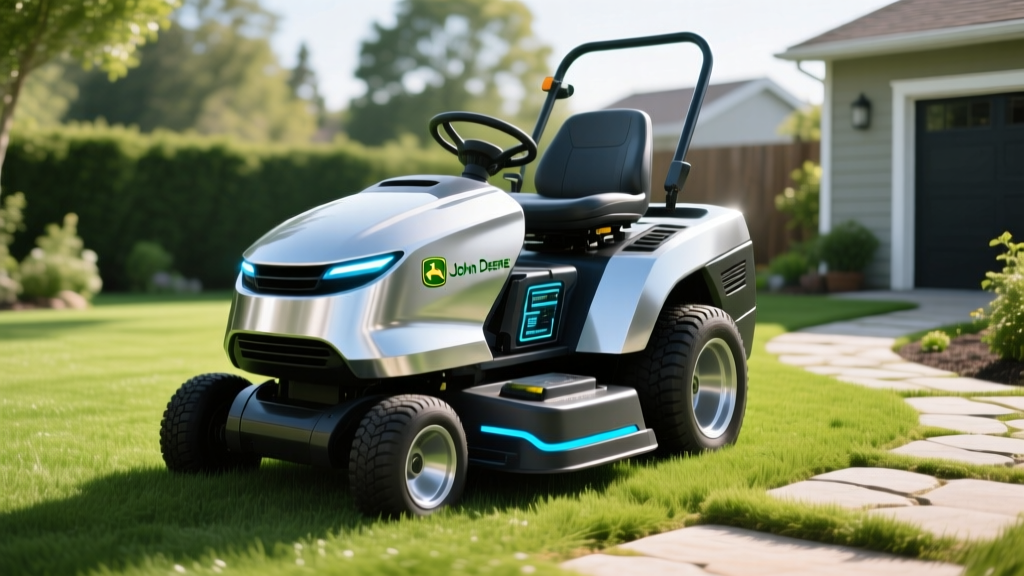
As of 2026, John Deere does not sell a fully electric riding mower for residential consumers. The company has introduced battery-electric commercial mowers (like the Z370R Zero-Turn announced for professional landscaping fleets) and electric compact utility tractors for agricultural use, but the residential riding mower lineup remains gasoline-powered. If you're searching for a John Deere electric riding mower for your yard, the closest current alternatives are electric riding mowers from brands like Ryobi, EGO, and Craftsman — or waiting for John Deere to expand its battery-electric residential lineup.
This guide breaks down what John Deere has actually released in the electric mower space, what the specs look like, how electric riding mowers compare to gas equivalents on cost and performance, and what you should know before buying any battery-powered riding mower in 2026.
John Deere's Electric Mower Lineup: What Actually Exists
John Deere has been developing battery-electric equipment, but the rollout has been targeted primarily at commercial and agricultural users rather than suburban homeowners. Here's where things stand:
- Commercial Zero-Turn Mowers: John Deere has previewed battery-electric zero-turn mowers for landscaping professionals. These units target fleet operators who benefit from lower fuel and maintenance costs across hundreds of mowing hours per year.
- Electric Compact Tractors: The John Deere eAutoPowr and related electric drivetrain technology has appeared in agricultural tractors, but these are heavy-duty machines far removed from residential mowing.
- Residential Riding Mowers: The popular S100, S240, and X300 series riding mowers sold at Home Depot and local dealers remain gasoline-powered, typically using Kawasaki or Briggs & Stratton engines in the 17-25 HP range.
If a John Deere electric residential riding mower arrives, industry watchers expect it would likely share battery architecture with Deere's commercial lineup — potentially a 56V or higher lithium-ion platform. Until then, buyers looking for electric must turn elsewhere.
Electric Riding Mowers vs. Gas: The Real Numbers
Since a John Deere electric riding mower isn't yet available to consumers, let's compare what you can buy — electric riding mowers from competing brands — against equivalent gas-powered John Deere models. This gives you the data to decide whether to switch brands for electric or stick with gas.
| Spec | Ryobi 42" Electric Rider (48V) | John Deere S140 Gas (48") |
|---|---|---|
| Power Source | 48V lithium-ion, ~2.4 kWh usable | 22 HP Briggs & Stratton V-twin |
| Runtime / Tank | ~1.5-2 acres per full charge | ~2.5-3 acres per 2.4-gal tank |
| Top Speed | 8 mph | 7 mph |
| Deck Width | 42 inches | 48 inches |
| Noise Level | ~65 dB (conversation level) | ~90 dB (hearing protection recommended) |
| Purchase Price | ~$4,500-$5,500 MSRP | ~$3,200-$3,600 MSRP |
| "Fuel" Cost per Acre | ~$0.10-$0.15 (electricity) | ~$0.80-$1.20 (gasoline) |
| Annual Maintenance | ~$25 (blade sharpening) | ~$120-$180 (oil, filter, spark plug, belt) |
| Warranty | 5-year battery, 3-year mower | 3-year bumper-to-bumper |
Sources: Ryobi Tools product specifications; John Deere residential mower specs.
Battery Specs That Matter: kWh, Voltage, and Runtime
If you're cross-shopping electric riding mowers, you'll encounter two numbers repeatedly: voltage (V) and kilowatt-hours (kWh). Here's how to interpret them — and why the distinction matters just as much as it does with electric cars.
Voltage (V) is the electrical pressure of the system. Higher voltage (48V, 56V, 80V) generally means more torque available to the blade motor, which translates to better performance in thick or wet grass. Most electric riding mowers in 2026 sit in the 48V-80V range.
Kilowatt-hours (kWh) measures total energy storage — the "fuel tank" equivalent. A mower with 2.4 kWh of usable battery capacity can deliver roughly 2.4 kW of power for one hour, or 1.2 kW for two hours. Mowing typically draws 1.0-1.8 kW depending on grass thickness and terrain.
Common Battery Misconceptions
| Myth | Fact |
|---|---|
| "Higher voltage always means longer runtime" | Voltage affects power delivery, not capacity. A 48V/3.0 kWh battery outlasts an 80V/1.5 kWh battery. |
| "Electric mowers can't handle tall grass" | Modern brushless motors deliver peak torque instantly. The limitation is runtime, not power — thick grass draws more current and reduces acreage per charge. |
| "The battery will need replacing every 2-3 years" | Lithium-ion mower batteries are rated for 800-1,500 charge cycles. At 40 mows per year, that's 20-37 years of typical use before significant degradation. |
| "You need a special outlet to charge" | Nearly all electric riding mowers charge on a standard 120V household outlet. A full charge takes 4-8 hours depending on battery size. |
Total Cost of Ownership: Electric vs. Gas Mower Over 10 Years
The upfront price of an electric riding mower is typically $1,000-$2,000 higher than a comparable gas model. But operating costs tell a different story. Here's a realistic 10-year breakdown assuming 40 mows per year on a 1-acre lot.
| Cost Category | Electric Rider (~$5,000) | Gas Rider (~$3,400) |
|---|---|---|
| Purchase Price | $5,000 | $3,400 |
| Fuel/Electricity (10 yrs) | $50-$75 | $800-$1,200 |
| Oil Changes & Filters | $0 | $400-$600 |
| Spark Plugs & Belts | $0 | $150-$250 |
| Blade Sharpening/Replace | $200-$300 | $200-$300 |
| Battery Replacement (if needed) | $600-$1,200 | $0 |
| 10-Year Total | $5,850-$6,775 | $4,950-$5,750 |
The electric mower costs roughly $400-$1,000 more over a decade, but the gap narrows significantly if gas prices rise or if you mow more than one acre. For a 2-acre property, the electric mower breaks even around year 7-8 due to the doubled fuel savings. The non-monetary benefits — no exhaust fumes, dramatically lower noise, no winterization with ethanol-free fuel — tip the scale for many buyers.
Charging Realities: What First-Time Electric Mower Buyers Should Know
Unlike electric vehicles, which may require Level 2 home charger installation, electric riding mowers are remarkably simple to charge. But there are practical considerations that affect real-world satisfaction.
Charging speed: Most electric riding mowers include a standard 120V charger that adds roughly 0.3-0.5 kWh per hour. For a 2.4 kWh battery, expect a full charge from empty in 5-8 hours. Some premium models offer faster 240V charging options that cut this to 2-3 hours — useful if you need to mow a second time the same day (for example, mowing a second property or re-cutting after rain).
Storage and temperature: Lithium-ion batteries degrade faster when stored in extreme heat. If your mower lives in an unventilated shed that reaches 110°F+ in summer, expect accelerated capacity loss over 5-10 years. Garage storage is ideal. Cold weather (below 40°F) temporarily reduces available capacity by 10-20% — the same physics that affect EV range in winter.
Charging access: You'll need a standard 120V outlet within reach of the mower's charging cord (typically 6-10 feet). If your shed or garage doesn't have an outlet, budget $150-$400 for an electrician to install one on a dedicated 15A or 20A circuit. This is far simpler and cheaper than the 240V circuit required for a home EV charger.
Decision Framework: Should You Buy Electric, Wait for John Deere, or Stick with Gas?
If-Then Buying Guide
- Choose an electric riding mower now (Ryobi, EGO, Craftsman) if: Your lot is under 2 acres, you have garage/shed access with a 120V outlet, you value low noise (early-morning or evening mowing), and you want minimal maintenance. The Ryobi 42-inch 48V model at ~$4,800 is the current category leader for residential use.
- Wait for a John Deere electric residential mower if: You're a loyal Deere dealer customer who values their service network, you want the build quality and dealer support Deere is known for, and you're willing to wait 1-3 years for a potential residential electric product launch. There is no confirmed release date as of 2026.
- Stick with a gas John Deere riding mower if: You mow more than 3 acres, you have hilly terrain that demands sustained high-torque output, you lack convenient charging access, or you need the 48-54 inch deck widths that gas models currently offer. The John Deere S240 at ~$3,800 with a 48-inch deck remains an excellent choice for larger properties.
- Consider a commercial electric mower (if available) if: You run a landscaping business and mow 20+ properties per week. The per-acre electricity savings ($0.12 vs. $1.00) add up to thousands annually at commercial volume, and the quiet operation allows mowing in noise-restricted areas.
Federal and State Incentives: Do Electric Mowers Qualify?
Unlike electric vehicles, which may qualify for the IRS §30D Clean Vehicle Credit of up to $7,500, electric riding mowers do not qualify for federal EV tax credits. The §30D credit applies specifically to on-road motor vehicles with four wheels and a gross vehicle weight under 14,000 pounds.
However, some state and utility programs offer rebates for battery-powered outdoor power equipment. For example:
- California's Clean Off-Road Equipment Voucher Incentive Project (CORE) has offered point-of-sale discounts on electric commercial mowing equipment.
- Several municipal utilities in states like Vermont, Oregon, and Colorado have offered $100-$500 rebates on electric lawn equipment as part of broader electrification programs.
- Check with your local utility or state energy office — these programs vary by jurisdiction and change annually.
Frequently Asked Questions
Does John Deere make any electric mower I can buy today?
John Deere offers battery-electric commercial mowers aimed at professional landscaping fleets, but as of 2026, there is no John Deere electric riding mower available for residential purchase. The residential lineup (S-series, X300 series) remains gasoline-powered.
How long does an electric riding mower battery last before replacement?
Most lithium-ion riding mower batteries are rated for 800-1,500 full charge cycles. At a typical 40 mows per year, that translates to 20+ years of use before the battery degrades below 80% of its original capacity. Replacement batteries cost $600-$1,200 depending on the brand and kWh capacity.
Can an electric riding mower handle hills and thick grass?
Yes, but with caveats. Modern brushless motors deliver strong torque for hills and dense grass. The limitation is runtime — thick, wet grass draws more power, which can reduce a mower's effective acreage by 30-40%. If your property is steep and overgrown, choose a model with the largest kWh battery available, or consider gas for sustained high-load performance.
Is it cheaper to run an electric mower than a gas mower?
Per acre, yes — electricity costs roughly $0.10-$0.15 per acre compared to $0.80-$1.20 for gasoline. Over 10 years on a 1-acre lot, you'll save $700-$1,100 in fuel alone. However, the higher upfront cost of the electric mower ($1,000-$2,000 more) means the total cost of ownership is roughly comparable over a decade, with electric pulling ahead on larger lots or over longer ownership periods.
What's the best electric riding mower to buy in 2026?
For most residential buyers, the Ryobi 42-inch 48V Electric Riding Mower (approximately $4,500-$5,500) offers the best combination of deck size, runtime (~2 acres per charge), and dealer availability through Home Depot. EGO's 56V platform and Craftsman's V60 lineup are also strong competitors. Check fueleconomy.gov and manufacturer sites for the latest specs and pricing.
Will John Deere release an electric riding mower for homeowners?
John Deere has signaled commitment to electrification, particularly in commercial equipment, but has not announced a specific residential electric riding mower as of 2026. Industry analysts expect a residential electric product within the next 2-4 years, likely leveraging battery technology from Deere's commercial lineup. No pricing, specs, or release date has been confirmed.