Quick Answer: Is a John Deere Electric Right for You?
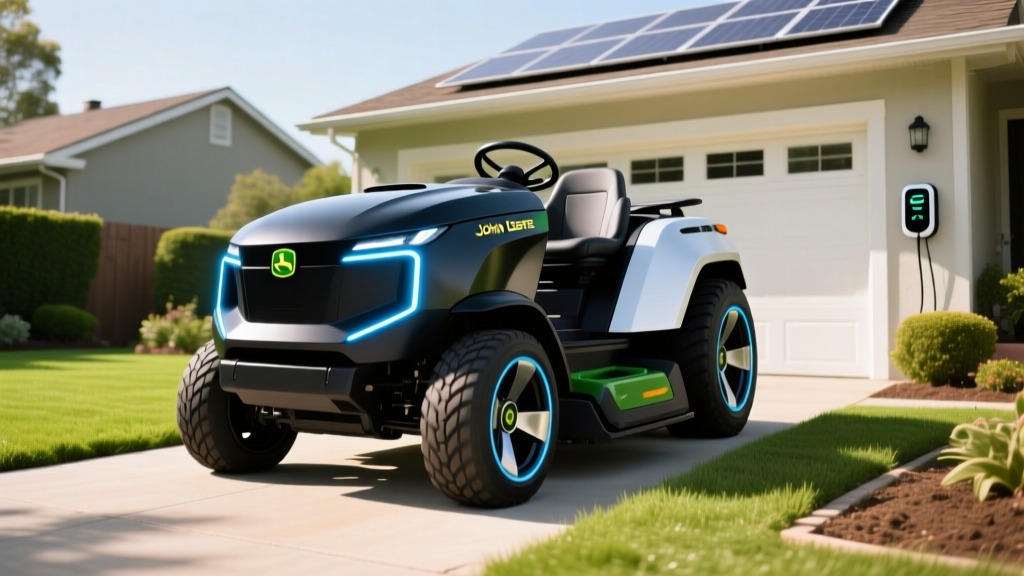
As of early 2026, John Deere does not sell a fully electric riding lawn tractor for residential consumers in the United States. The company's electric lineup centers on battery-powered commercial mowers (like the Z370R Zero-Turn with electric spindle motors) and the Tango E5 autonomous electric mower for smaller properties. For the popular 42–54 inch residential riding tractor segment, John Deere continues to offer gas-powered and, in select commercial models, diesel-electric hybrid equipment. If you're searching for a John Deere electric riding mower to match your EV driveway, the honest answer is: it doesn't exist yet in consumer form. Below, we break down what John Deere does offer in electric, what it costs, how battery mowers compare to gas, and when to consider alternatives.
What John Deere Electric Actually Means in 2026
The term "John Deere electric" covers a broader product range than most shoppers realize. John Deere has been investing in electrification across its agricultural and turf equipment lines, but the rollout has been segmented by use case:
- Tango E5 Series — Autonomous robotic electric mowers for properties up to ~5,000 sq ft. These run on lithium-ion battery packs and return to a charging dock automatically.
- Commercial Battery Zero-Turn Mowers — Models like the Z370R feature electric spindle motors powered by onboard battery packs, targeting landscaping companies seeking lower noise and zero direct emissions.
- Electric Utility Vehicles (Gator TE 4x2) — Battery-electric utility task vehicles for campus, farm, and facility use. These are not consumer riding mowers but are sometimes confused with them in search results.
- Agricultural Prototypes — John Deere has demonstrated electric and hybrid-electric tractor concepts (including the GridCON and the autonomous SESAM 2), but these remain in development or limited pilot programs as of 2026.
For the typical homeowner who mows 0.5–2 acres with a 42- to 54-inch riding tractor, John Deere's current consumer catalog remains gasoline-powered. The John Deere mower lineup on the company's official site confirms this split.
John Deere Electric Mower Options: Specs and Pricing
Here's what you can actually buy in the John Deere electric space today:
| Model | Type | Battery / Power | Runtime / Range | Charge Time | Approx. MSRP |
|---|---|---|---|---|---|
| Tango E5 (Robotic) | Autonomous robotic mower | ~28 V lithium-ion, ~2.2 Ah (~62 Wh) | Up to 2.5 hrs per session; covers ~5,000 sq ft | ~70 min to dock full charge | ~$2,500–$3,200 |
| Z370R (Commercial ZTR) | Zero-turn commercial | Lithium-ion pack, ~10 kWh (estimated) | ~4–5 hrs typical commercial use | ~3–4 hrs (Level 1 / 120V); faster with 240V | ~$25,000+ (commercial pricing) |
| Gator TE 4x2 | Electric utility vehicle | 48 V lead-acid or lithium-ion option | ~20–30 miles mixed use | ~6–8 hrs (120V) | ~$15,000–$20,000+ |
Key takeaway: None of these are the residential riding lawn tractor that most "John Deere electric" searchers are looking for. The Tango E5 is a small robotic unit (not a ride-on), the Z370R is a commercial machine priced well beyond residential budgets, and the Gator TE is a utility vehicle, not a mower.
Electric vs. Gas Lawn Tractor: Real Cost Comparison
Even though John Deere doesn't offer a consumer electric riding mower, the comparison matters because competitors like Ryobi, EGO, and Craftsman do sell battery-electric riding mowers. Here's how electric and gas stack up for a typical 1-acre yard:
| Cost Factor | Gas Riding Tractor (42") | Battery-Electric Riding Mower (42") |
|---|---|---|
| Purchase Price | $2,200–$3,500 | $3,500–$6,000 |
| Fuel / Energy Cost Per Season (25 mows) | $120–$180 (gasoline, ~2 gal/mow at $3.50/gal) | $15–$30 (electricity, ~4–6 kWh/mow at $0.15/kWh) |
| Annual Maintenance | $80–$150 (oil, filter, spark plug, belt) | $10–$30 (blade sharpening, minimal) |
| Battery Replacement (if needed) | N/A | $800–$2,000 (after 5–8 years) |
| 5-Year Total Operating Cost | $1,000–$1,650 | $125–$400 (plus possible battery swap) |
| Noise Level | ~90–95 dB | ~65–75 dB |
| Direct Emissions | Yes (EPA Tier 4 small engine) | None at point of use |
The math is clear: electric mowers cost more upfront but save $150–$300 per year in fuel and maintenance. Over five years, the operating savings can offset $750–$1,500 of the price premium. For a John Deere electric riding mower to make sense, the company would need to price one competitively in the $3,500–$5,000 range — something that hasn't materialized for consumers yet.
Real-World Ownership: What First-Time Battery Mower Buyers Should Know
If you're an EV owner considering a battery-electric riding mower from any brand, several practical factors mirror the EV ownership experience:
Charging Access and Electrical Requirements
Most battery riding mowers charge on a standard 120V household outlet at roughly 0.5–1.5 kW. A 5 kWh battery pack will need 4–8 hours for a full charge — similar to Level 1 EV charging. Unlike your car, you won't need a 240V Level 2 installation for most residential mowers, but if you opt for a commercial unit with a larger pack, a dedicated 240V circuit (like a dryer outlet) can cut charge times in half.
Battery Degradation and Replacement
Just like EV traction batteries, lithium-ion mower packs lose capacity over time. Expect 15–25% degradation over 5–7 years depending on charge cycles and storage conditions. Most manufacturers warranty batteries for 3–5 years with a capacity retention threshold of 70–80%. Store the battery in a climate-controlled space (above freezing, below 90°F) to maximize lifespan — the same advice applies to your EV.
Runtime vs. Yard Size
Battery-electric riding mowers typically deliver 1.5–2.5 hours of runtime on a full charge, enough for 1–2 acres of flat, dry grass. Thick, wet, or overgrown conditions can cut runtime by 30–40%. If your property exceeds 2 acres, you may need to pause for a partial recharge — a real limitation that gas tractors don't have.
Cold-Weather Performance
Lithium-ion batteries lose 10–20% of usable capacity in temperatures below 40°F. If you mow in early spring or late fall in northern climates, expect reduced runtime. This mirrors the cold-weather range loss EV owners experience, though the stakes are lower (you're not stranded on a highway).
Common Misconceptions About John Deere Electric Equipment
| Myth | Fact |
|---|---|
| "John Deere makes an electric riding lawn tractor for homeowners." | As of 2026, no consumer electric riding tractor exists in the John Deere lineup. Their electric products target commercial and robotic segments. |
| "Battery mowers are as powerful as gas." | Modern brushless electric spindle motors deliver strong, consistent torque — often matching or exceeding equivalent gas engines for cutting performance. However, sustained heavy-load tasks (towing, tilling) still favor gas/diesel. |
| "Electric mowers qualify for the $7,500 federal EV tax credit." | They do not. The IRS §30D credit applies to on-road motor vehicles (cars, trucks, SUVs), not off-road lawn equipment. Some states or utilities offer separate rebates for electric outdoor power equipment — check your local programs. |
| "I can just plug it in and forget about it." | Battery storage matters. Leaving a lithium-ion mower battery at 100% SoC for months, or letting it drop to 0% in freezing temperatures, accelerates degradation — the same principles that affect your EV battery. |
Decision Framework: Should You Buy Electric or Gas for Your Yard?
Choose a Battery-Electric Riding Mower (from Ryobi, EGO, or similar) if:
- Your yard is under 2 acres and relatively flat
- You already have a garage outlet where you can charge overnight
- You value quiet operation (early morning mowing, noise-sensitive neighborhoods)
- You want to eliminate gasoline storage and small-engine maintenance
- You plan to stay in your home 5+ years to recoup the upfront premium through fuel savings
Choose a Gas Riding Tractor (including current John Deere models) if:
- Your property is over 2 acres or has steep terrain
- You need towing, tilling, or snow-blowing attachments (PTO-dependent tasks)
- You mow in wet or extremely thick conditions frequently
- You need unlimited runtime without mid-job recharging
- Your budget is under $3,000 and you want maximum cutting width per dollar
Wait for a John Deere Electric Riding Tractor if:
- You're loyal to the John Deere dealer network and want their build quality in an electric package
- Your current gas tractor still runs fine and you can wait 2–3 years for potential product launches
- You want to see real-world battery degradation data from early adopters before committing
What's Next: John Deere's Electric Roadmap
John Deere has publicly committed to expanding its electric and hybrid-electric product lines. The company's technology and innovation page outlines investments in battery-electric and autonomous agricultural equipment. Key signals for residential buyers:
- Commercial-first rollout: John Deere typically debuts new powertrain technology in its commercial turf and ag lines before adapting it for residential consumers. The Z370R and similar commercial electric mowers serve as proving grounds.
- Battery platform standardization: As battery costs decline (industry analysts project pack-level costs below $80/kWh by 2027), a consumer electric riding tractor becomes economically viable at the $3,500–$5,000 price point.
- Autonomous convergence: The Tango E5 robotic mower demonstrates John Deere's investment in autonomous navigation. A future electric riding mower could combine ride-on capability with semi-autonomous mowing modes — similar to how ADAS features migrated from luxury to mainstream cars.
Until a residential John Deere electric riding tractor is officially announced and priced, buyers in this segment should evaluate competitors like the EGO Power+ 42" Zero-Turn (~$5,000, 56V lithium-ion, ~1.5 hr runtime) or the Ryobi 42" Electric Riding Mower (~$3,500, 48V, ~2 hr runtime) if electric is the priority, or stick with John Deere's gas-powered S100/S240 series tractors if dealer support and attachment compatibility matter most.
Does John Deere make an electric riding lawn mower for homeowners?
Not as of early 2026. John Deere's electric mower products are limited to the Tango E5 robotic mower (small yards, ~$2,500–$3,200), commercial battery zero-turn models (~$25,000+), and the Gator TE electric utility vehicle. No consumer riding tractor with battery-electric propulsion is currently sold.
Can I get a federal tax credit for buying an electric lawn mower?
No. The IRS §30D Clean Vehicle Credit applies only to on-road vehicles (cars, trucks, SUVs, vans) that meet MSRP, income, and battery-sourcing requirements. Off-road equipment like lawn mowers does not qualify. Some state utilities or local clean-air programs may offer rebates — check with your electric provider.
How long do battery-electric mower batteries last?
Expect 5–8 years of useful life with typical residential use (20–30 mows per season). Capacity degradation of 15–25% is normal over that period. Replacement battery packs cost $800–$2,000 depending on the brand and kWh capacity.
Is a battery mower powerful enough for thick grass and hills?
Modern brushless electric motors deliver strong cutting torque, often matching gas equivalents for standard mowing. However, sustained heavy loads — very thick/wet grass, steep inclines, or towing — will drain the battery faster and may exceed runtime limits. For 2+ acres of challenging terrain, gas remains the pragmatic choice in 2026.
Will John Deere release an electric riding tractor soon?
John Deere has signaled continued investment in electrification but has not announced a specific consumer electric riding tractor as of this writing. Industry analysts expect the company to follow its commercial-first pattern, potentially adapting battery-electric technology from its commercial turf line to residential models within the next 2–4 years if battery cost trends continue.