The Short Answer
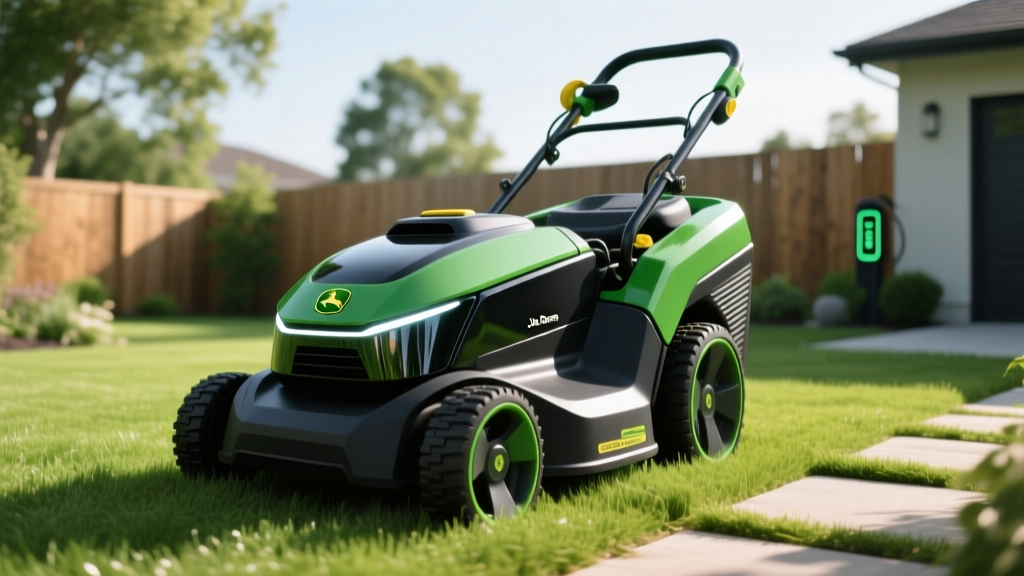
As of 2026, John Deere does not sell a fully electric ride-on or zero-turn lawn mower for residential consumers. The company has demonstrated electric and hybrid-electric prototypes (including the autonomous Turf Eater concept and battery-electric commercial mowers in limited fleet testing), but no production electric mower is currently available for purchase from John Deere dealers. If you need a battery-electric mower today, competitors like Ryobi, EGO, Toro, and Mean Green offer residential and commercial electric models. John Deere's current residential lineup remains gasoline-powered, with diesel-electric hybrid technology reserved for large agricultural and commercial turf equipment.
Why John Deere Hasn't Launched an Electric Mower Yet
John Deere (officially Deere & Company) has invested heavily in electrification — but primarily in agricultural machinery, not residential lawn care. Their 2026 electrification roadmap focuses on:
- Battery-electric compact utility tractors for commercial landscaping
- Hybrid diesel-electric systems for large turf and grounds equipment
- Autonomous mowing platforms (like the battery-powered Turf Eater prototype shown at CES)
- Grid-tied electric commercial mowers for institutional campuses
The residential zero-turn and riding mower market — where homeowners expect 2-4 acres of cutting on a single charge with a sub-$5,000 price tag — presents a different engineering challenge. The battery capacity needed to run a 42-54 inch deck for 90+ minutes under load, at a consumer price point, remains difficult. For context, a gas-powered John Deere S180 zero-turn with a 54-inch deck delivers roughly 2.5 hours of continuous mowing on a 4-gallon tank, refueling in 30 seconds. Replicating that runtime with batteries requires roughly 5-8 kWh of usable capacity, adding 80-150 lbs and significant cost.
Electric Mower Alternatives Available Today
If you're committed to electric mowing and don't need the John Deere dealer network, several established brands offer battery-electric residential and commercial mowers in 2026. Here's how the leading options compare:
| Brand / Model | Type | Battery (kWh) | Runtime (est.) | Deck Width | MSRP |
|---|---|---|---|---|---|
| EGO Power+ Z6 Zero-Turn | Residential ZTR | 2.24 kWh (4× 56V 10Ah) | ~60 min | 42 in | $5,499 |
| Ryobi 48V 42" Zero-Turn | Residential ZTR | 1.92 kWh (4× 48V 8Ah) | ~50 min | 42 in | $4,299 |
| Mean Green Rival 48 | Commercial ZTR | 5.6 kWh (Li-ion) | ~90 min | 48 in | $14,500 |
| Toro eS3200 (announced) | Commercial Stand-On | 4.8 kWh (Li-ion) | ~75 min | 32 in | $12,000 (est.) |
| Gravely Pro-Stance EV | Commercial Stand-On | 5.1 kWh (NMC) | ~85 min | 48 in | $15,999 |
Sources: EGO Power+, Ryobi Tools, Mean Green Products. All MSRP figures are base configurations; battery expansion packs sold separately for some brands.
Electric vs. Gas Mower: Real Cost Comparison
Whether you choose a John Deere gas mower or a competitor's electric model, the economics differ significantly over a 10-year ownership period. Here's a side-by-side breakdown assuming 1 acre of mowing, 30 cuts per season:
| Cost Category | Gas ZTR (e.g., John Deere Z530M) | Electric ZTR (e.g., EGO Z6) |
|---|---|---|
| Purchase Price | $4,299 | $5,499 |
| Fuel / Electricity (10 yrs) | $2,100 (gas @ $3.80/gal, 1.5 gal/cut) | $180 (electric @ $0.16/kWh, 1.8 kWh/cut) |
| Oil Changes (10 yrs) | $350 | $0 |
| Air/Spark Plug Filters | $200 | $0 |
| Blade Sharpening | $150 | $150 |
| Battery Replacement (if needed) | $0 | $600 (at year 7) |
| Estimated Resale Value | -$1,200 | -$1,500 |
| 10-Year Net Cost | $5,899 | $4,929 |
The electric mower breaks even around year 5-6 in this scenario. The primary savings come from fuel elimination — electricity at $0.16/kWh costs roughly $0.29 per mowing session versus $5.70 for gasoline. However, the electric mower's higher upfront cost and potential mid-life battery replacement narrow the gap.
Battery Chemistry and Degradation: What Buyers Should Know
Most residential electric mowers use NMC (nickel manganese cobalt) lithium-ion cells, similar to those in early EVs. Commercial models are beginning to adopt LFP (lithium iron phosphate) for longer cycle life.
| Claim | Reality |
|---|---|
| "Electric mower batteries last forever" | NMC cells typically retain 80% capacity after 800-1,200 full cycles. At 30 cuts/year, that's 26-40 years of cycles — but calendar aging (10-15 years) usually limits lifespan first. |
| "You can use any brand's battery" | Each brand uses proprietary voltage and connector systems. EGO's 56V ARC batteries are not interchangeable with Ryobi's 48V platform. |
| "Cold weather doesn't affect mowers" | Li-ion batteries lose 15-25% effective capacity below 40°F. Most mowing occurs in warm months, but spring/fall cuts in northern states will show reduced runtime. |
| "Electric mowers are maintenance-free" | No oil or spark plugs, but blades still need sharpening, belts need inspection, and motors/drive systems require occasional service. |
Charging and Home Electrical Requirements
Residential electric mowers charge on standard 120V household outlets — no special electrical work needed. Here's what to expect:
| Model | Battery Size | Charger Power | 0-100% Time | Outlet Required |
|---|---|---|---|---|
| EGO Z6 (4-battery) | 2.24 kWh | 0.48 kW (dual-port) | ~4.5 hours | Standard 120V / 15A |
| Ryobi 48V ZTR | 1.92 kWh | 0.36 kW | ~5.5 hours | Standard 120V / 15A |
| Mean Green Rival 48 | 5.6 kWh | 1.44 kW (onboard) | ~4 hours | 120V / 20A or 240V |
For residential mowers, overnight charging is the practical pattern: plug in after mowing, full by morning. Commercial operators running 5+ kWh batteries should consider a dedicated 240V circuit (similar to an EV Level 2 charger install, typically $500-$1,500 from a licensed electrician) to cut charge times in half.
Tax Credits and Incentives for Electric Outdoor Equipment
Unlike electric vehicles, electric lawn mowers do not qualify for the federal §30D Clean Vehicle Credit — that credit applies only to on-road vehicles meeting IRS battery sourcing and MSRP requirements. However:
- Some state and utility programs offer rebates for electric outdoor power equipment (check your local utility's energy efficiency programs)
- Commercial landscapers may qualify for Section 179 equipment deductions or bonus depreciation on electric mower purchases
- A handful of California air quality districts offer $500-$2,000 rebates for zero-emission commercial mowing equipment through programs like CORE (Clean Off-Road Equipment Voucher Incentive Project)
Always verify current incentive availability with your state energy office or the DSIRE incentive database before purchasing.
Decision Framework: Should You Go Electric for Lawn Care?
Choose an Electric Mower If:
- Your lawn is under 1 acre (residential electric) or you're a commercial operator with predictable daily routes
- You have easy access to a standard 120V outlet near your storage area
- You mow in noise-sensitive areas (early mornings, near hospitals/schools, HOA restrictions)
- You want to eliminate gasoline storage, fuel stabilizer, and small-engine winterization
- You plan to keep the mower 7+ years to recoup the higher upfront cost through fuel savings
Stick With Gas (or Wait for John Deere Electric) If:
- You mow 2+ acres per session and need 2-3 hours of continuous runtime
- Your property has steep hills — electric motors can lose torque under sustained heavy load on inclines
- You need dealer-supported service and warranty — John Deere's 3,000+ dealer network is unmatched for in-person support
- You operate in extreme cold shoulder seasons where battery performance drops significantly
- Your budget is under $3,000 — gas mowers dominate the value segment
Frequently Asked Questions
Does John Deere make any electric equipment at all?
Yes — John Deere sells battery-electric compact tractors and has hybrid diesel-electric commercial turf machines. They also offer the John Deere Electric Power Take-Off (ePTO) system for commercial attachments. However, no residential electric mower (riding or push) is currently in production as of 2026.
Will John Deere release an electric zero-turn mower?
John Deere has not announced a specific timeline for a residential electric zero-turn. The company's public statements indicate they are developing battery-electric platforms for commercial turf care first, with residential products likely following later this decade. Any announced model would likely use NMC or LFP lithium-ion chemistry with a 4-6 kWh battery pack.
Are electric mowers powerful enough for thick grass?
Modern brushless electric motors in premium mowers (EGO, Mean Green) deliver torque comparable to 20-25 HP gas engines at the blade. In real-world testing, they handle thick fescue and wet spring grass adequately, though cutting speed may need to be reduced in the densest conditions. The limiting factor is usually battery runtime under heavy load, not motor power.
How long do electric mower batteries last before replacement?
Expect 8-12 years of calendar life or 800-1,200 full charge cycles (whichever comes first) for NMC batteries. LFP batteries in commercial models can reach 2,000+ cycles. Replacement battery packs cost $150-$400 for residential units and $1,500-$3,000 for commercial units. Store batteries in a climate-controlled space (50-75°F) to maximize lifespan.
Can I charge an electric mower from a solar panel system?
Yes. A 1.5-2 kWh mowing session can be covered by roughly 3-4 kWh of solar production (accounting for inverter and charging losses). If you already have rooftop solar, your marginal mowing cost is essentially zero. A dedicated solar circuit is not required — any standard outlet on your home's electrical system works.