Quick Answer: Is the John Deere Electric Gator Right for You?
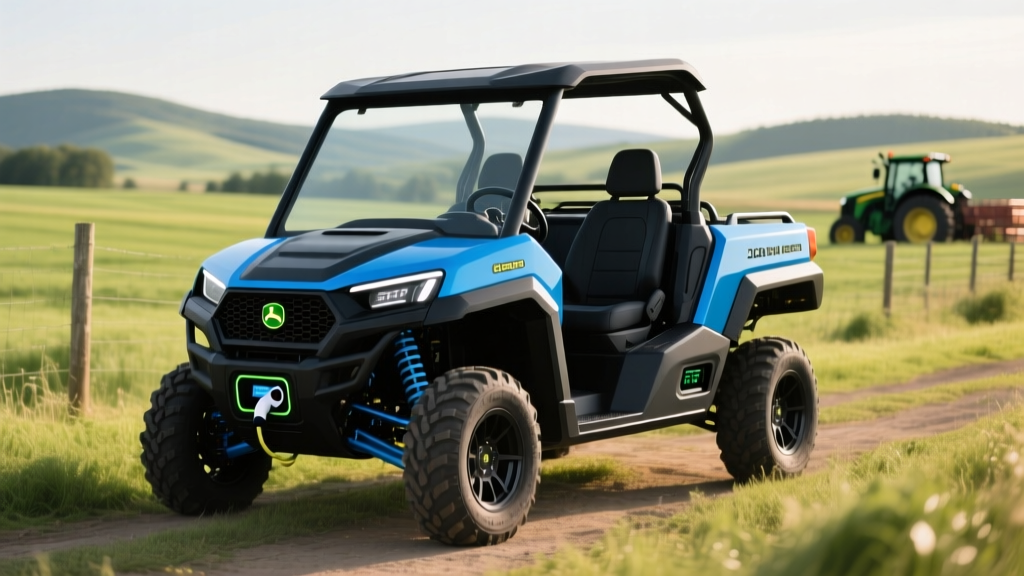
The John Deere Electric Gator (TE Gator series) is a battery-electric utility vehicle designed for low-speed, short-range work on farms, estates, campuses, and job sites. As of 2026, the TE 4x2 Gator offers a usable range of approximately 20–35 miles per charge depending on terrain and payload, powered by a lithium-ion battery pack in the 14–18 kWh range. Base pricing starts around $28,000–$32,000 before incentives. It makes the most sense if your typical daily route stays under 25 miles, you have access to standard 120V or 240V charging on-site, and quiet, zero-exhaust operation matters (livestock barns, greenhouses, indoor facilities). If you routinely need 50+ mile range, high-speed road travel, or heavy towing across rough terrain, a gas-powered Gator or a full-size electric pickup remains the more practical choice.
John Deere Electric Gator: Specs at a Glance
John Deere's electric utility lineup has evolved since the original TE Gator debuted. The current-generation models use lithium-ion chemistry (replacing older lead-acid platforms), delivering better energy density, faster charging, and longer cycle life. Here are the key specifications for the most common configuration available to US buyers in 2026:
| Specification | John Deere TE 4x2 Gator (2026 Est.) |
|---|---|
| Battery Capacity | ~14–18 kWh (lithium-ion) |
| Estimated Range | 20–35 miles (varies by payload/terrain) |
| Top Speed | ~25 mph (governed, low-speed vehicle class) |
| Motor Output | ~20–28 kW peak |
| Payload Capacity | ~800–1,000 lbs (cargo bed + cabin) |
| Towing Capacity | ~1,200–1,500 lbs |
| Charge Time (120V Level 1) | 8–12 hours (full charge) |
| Charge Time (240V Level 2) | 3–5 hours (full charge) |
| Connector | Standard J1772 (or industrial plug, config-dependent) |
| Starting MSRP | ~$28,000–$32,000 |
| Warranty (Battery) | Typically 3–5 years (consult dealer) |
Note: John Deere's electric utility vehicle specifications vary by model year and configuration. Always confirm exact figures with your local dealer or the official John Deere Gator lineup page. The numbers above reflect the current lithium-ion TE platform estimates as of early 2026.
Electric Gator vs. Gas Gator: Cost and Capability Compared
The most common question from buyers is whether going electric saves money versus a traditional gas-powered Gator (such as the HPX or XUV series). The answer depends heavily on your usage pattern. Below is a side-by-side comparison of estimated 5-year operating costs for a typical estate/farm user driving roughly 15 miles per day, 250 days per year.
| Category | Electric Gator (TE) | Gas Gator (HPX 4x4) |
|---|---|---|
| Purchase Price (approx.) | $30,000 | $18,000 |
| Annual Energy/Fuel Cost | ~$150–$250 (electricity) | ~$800–$1,200 (gasoline) |
| 5-Year Energy/Fuel Total | ~$750–$1,250 | ~$4,000–$6,000 |
| Annual Maintenance | ~$50–$100 (minimal) | ~$300–$500 (oil, filters, plugs) |
| 5-Year Maintenance Total | ~$250–$500 | ~$1,500–$2,500 |
| 5-Year Total Cost of Ownership | ~$31,000–$31,750 | ~$23,500–$26,500 |
| Exhaust Emissions | None at tailpipe | CO₂, NOₓ, particulates |
| Noise Level | Near-silent (<60 dB) | 75–85 dB |
The electric Gator carries a higher upfront cost—typically $10,000–$14,000 more than a comparable gas model. However, the fuel and maintenance savings are substantial: electricity costs roughly $0.10–$0.15 per kWh in most US regions, meaning a full 16 kWh charge costs about $1.60–$2.40, compared to $8–$15 for a tank of gasoline. Over five years, a heavy-use owner can recoup $4,000–$7,000 of the price premium through operational savings.
Where gas still wins: If you need sustained highway-speed travel, 60+ mile daily range, or heavy towing in cold weather, a gas Gator (or a full-size EV like the Ford F-150 Lightning for road-legal work) remains more capable. The Electric Gator is a low-speed vehicle (LSV) and is not designed for highway use.
Real-World Range: What to Actually Expect
John Deere does not publish EPA range figures for the Gator line the way passenger EV manufacturers do, because utility vehicles fall under different regulatory classifications. However, based on battery capacity, motor efficiency, and real-world user reports, here's what to expect:
- Light-duty, flat terrain, single rider: 30–35 miles on a full charge
- Mixed work (stop-and-go, moderate payload): 20–28 miles
- Heavy payload, hilly terrain, or cold weather (below 40°F): 15–20 miles
Lithium-ion batteries lose approximately 15–25% of their effective capacity in freezing temperatures. If you operate in northern climates during winter, plan your routes around a 20-mile practical maximum. Unlike highway EVs, the Electric Gator does not feature active battery thermal management (heating/cooling), so cold-weather performance drops noticeably.
Charging logistics: The Electric Gator charges from a standard 120V household outlet (Level 1) at roughly 1.2–1.5 kW, meaning a depleted battery takes 8–12 hours to refill. If you install a 240V Level 2 station (common for barns, garages, or workshops), charging drops to 3–5 hours at approximately 3.3–6.6 kW. For a 2026 installation, expect to pay $500–$1,500 for a Level 2 charger plus electrician labor, depending on panel capacity and run distance. Always consult a licensed electrician to confirm your site's electrical panel can support the added circuit.
Tax Credits and Incentives: What Applies in 2026
Utility vehicles like the John Deere Electric Gator occupy a complex space in federal incentive law. Here's what buyers need to know:
- §30D Federal Clean Vehicle Credit: The IRS §30D credit applies to vehicles with four wheels, a gross vehicle weight rating (GVWR) under 14,000 lbs, and that meet battery sourcing and critical mineral requirements. Low-speed vehicles (LSVs) may or may not qualify depending on their exact classification and whether they meet on-road certification standards. Confirm eligibility with a tax professional before assuming the $7,500 credit applies.
- Off-road / agricultural equipment incentives: Some states and utility cooperatives offer rebates for electric agricultural or off-road equipment. Check with your local electric co-op or state energy office.
- Business deductions: If purchased for farm or business use, Section 179 expensing or bonus depreciation may apply, effectively reducing net cost. Consult your tax advisor.
- Commercial clean vehicle credit (§45W): If the vehicle is purchased for business use and does not qualify under §30D, the §45W credit (up to $7,500 for vehicles under 14,000 lbs GVWR) may be available. This is particularly relevant for fleet and farm purchases.
Incentive rules for 2026 include MSRP caps, buyer income limits (for §30D), and battery component/critical mineral sourcing requirements. Rules change frequently—always verify current eligibility on irs.gov or with a qualified tax professional.
Who Should Buy the Electric Gator (and Who Shouldn't)
Buy the John Deere Electric Gator if:
- Your daily work route is under 25 miles and returns to a home base
- You need quiet operation (livestock facilities, early-morning residential areas, campuses, event venues)
- You operate in enclosed or semi-enclosed spaces where exhaust is hazardous (barns, greenhouses, warehouses)
- You have or can install 240V charging on-site
- You value near-zero routine maintenance (no oil changes, spark plugs, air filters, or fuel stabilizer)
- You want to reduce on-site fuel storage and handling
Stick with a gas Gator or consider a full-size EV truck if:
- Your daily range needs exceed 35 miles consistently
- You need highway-speed travel (above 35 mph) between work sites
- You tow heavy loads (2,000+ lbs) regularly or work in steep, demanding terrain
- You operate in extreme cold (below 20°F) for extended periods and cannot charge mid-day
- Your budget is strictly under $18,000 and you cannot access incentives or financing to offset the EV premium
Common Misconceptions About Electric UTVs
| Myth | Fact |
|---|---|
| "Electric Gators have no power for real work." | Electric motors deliver peak torque from 0 RPM. The TE Gator's ~20–28 kW motor provides strong low-end pulling power, often outperforming equivalently rated gas engines in initial acceleration and hill climbing at low speeds. |
| "The battery will need replacing in 3 years." | Modern lithium-ion packs are rated for 1,000–2,000+ charge cycles before reaching 80% capacity. At one charge per day, that translates to 3–5+ years before noticeable degradation, and the pack won't simply "die"—it gradually loses range. |
| "You need a special charging station." | Level 1 charging from a standard 120V outlet works fine for overnight replenishment. A 240V Level 2 setup speeds things up considerably but isn't mandatory for light-duty users. |
| "It qualifies for the full $7,500 federal tax credit automatically." | Eligibility depends on vehicle classification, battery sourcing, buyer income, and MSRP caps. Low-speed vehicles may fall outside §30D. Always verify with a tax professional before purchasing. |
| "Electric means zero maintenance forever." | While the powertrain is nearly maintenance-free, you still need to maintain brakes, tires, suspension, cooling system (if equipped), and the 12V auxiliary battery. Budget $50–$100/year. |
First-Time EV Buyer Checklist for Utility Vehicles
If the Electric Gator is your first battery-electric vehicle, here's what to prepare before delivery day:
- Assess your electrical panel: A 240V/30A circuit (for Level 2 charging) requires available capacity on your panel. Older farm buildings may need a sub-panel upgrade ($800–$2,500).
- Map your daily route: Drive your typical work route and measure the distance. If it exceeds 25 miles, plan for mid-day opportunity charging or reconsider.
- Understand your climate impact: If winter temperatures regularly drop below freezing, derate the published range by 20–25%.
- Confirm incentive eligibility: Don't finalize your purchase until you've spoken with a tax professional about §30D, §45W, or state-level rebates.
- Ask the dealer about battery warranty: Specifically, what capacity retention is guaranteed (e.g., 70% at 5 years), what voids the warranty, and what a replacement pack costs out of warranty (typically $5,000–$10,000+ for utility-vehicle-class packs).
- Plan for storage: Lithium-ion batteries degrade faster if stored at 100% or 0% state of charge for extended periods. If the Gator sits unused for weeks, store it at roughly 50–60% charge in a cool, dry location.
Frequently Asked Questions
How long does a John Deere Electric Gator battery last?
Lithium-ion battery packs in utility vehicles are typically rated for 1,000–2,000 full charge cycles before degrading to 80% of original capacity. With daily use and proper storage habits, expect 5–8 years of practical service before range loss becomes operationally significant. The battery doesn't "fail" suddenly—it gradually holds less energy, reducing your usable range over time.
Can I use the Electric Gator on public roads?
Most Electric Gator configurations are classified as low-speed vehicles (LSVs) or off-road utility vehicles. LSV-class models can be driven on roads with speed limits up to 35 mph in many states, but requirements vary (some states require specific equipment like turn signals, mirrors, and VIN registration). Check your state's DMV regulations before operating on public roads.
What does it cost to charge the Electric Gator?
At an average US electricity rate of $0.13/kWh, fully recharging a ~16 kWh battery costs approximately $2.08. Over a year of daily use (250 charges), total electricity cost runs about $500–$600—compared to $1,500–$2,500 in gasoline for an equivalent gas Gator.
Does the Electric Gator have regenerative braking?
Yes, the electric drivetrain recovers energy during deceleration and downhill travel, extending range slightly and reducing brake wear. However, the effect is modest at the Gator's low operating speeds compared to highway EVs.
Is a used Electric Gator a good deal?
A used model can offer significant savings, but battery health is the critical variable. Ask the seller for the battery's state of health (SoH) reading or have a dealer perform a diagnostic. A pack at 85%+ SoH is generally a solid buy; below 75% means you'll notice meaningful range reduction and should negotiate accordingly or budget for eventual replacement.