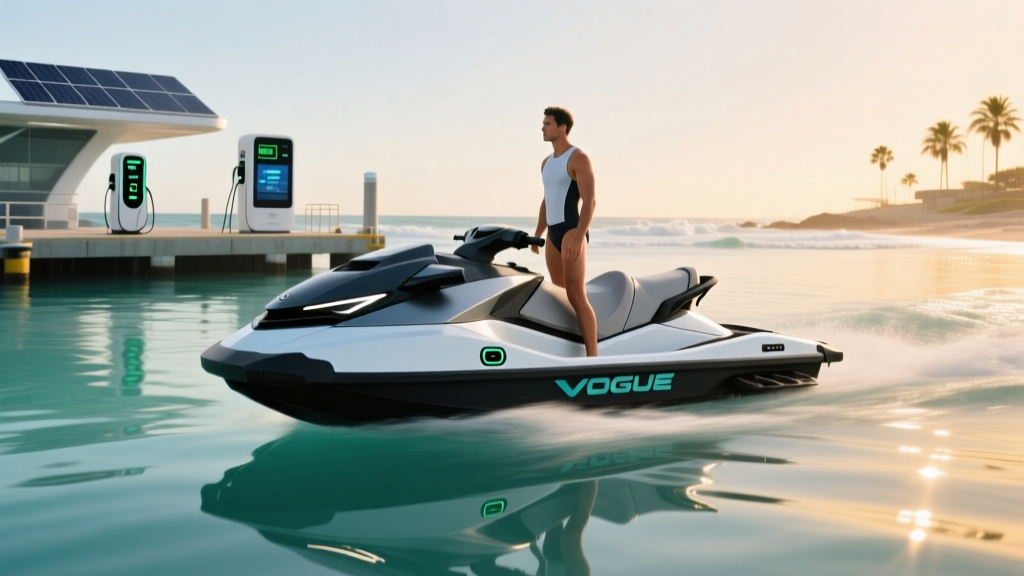
Quick answer: Electric jet skis are a real, purchasable product category in 2026, but they remain a niche market with limited model availability, high upfront costs ($12,000–$30,000+), and runtime measured in minutes rather than hours. Unlike electric cars, battery-electric personal watercraft (PWC) face severe energy-density constraints — you're trading 2–4 hours of gas-powered runtime for roughly 45–90 minutes of electric ride time at moderate throttle. If you have dock or shore power access, ride on calm lakes, and prioritize low noise and zero local emissions, an electric jet ski can work. If you need long range, high-speed towing, or ride on large bodies of water far from a charger, a gas PWC remains the practical choice.
As an EV publication focused primarily on electric and hybrid vehicles, we don't normally cover watercraft. But the keyword searches are real, and the battery, charging, and ownership questions map directly onto what our readers already know about EVs. So here's a data-grounded guide to the electric jet ski market in 2026 — written for EV-literate buyers who want numbers, not marketing.
The Electric Jet Ski Market in 2026: What Actually Exists
The honest reality: the "electric jet ski" market in 2026 is small, fragmented, and dominated by a handful of brands rather than the Big Three PWC manufacturers (Sea-Doo/BRP, Yamaha, Kawasaki). As of early 2026, none of the major PWC OEMs have released a fully battery-electric jet ski for retail sale. Here's what is available or announced:
| Brand / Model | Status | Battery (kWh) | Claimed Runtime | Top Speed | Base Price (USD) |
|---|---|---|---|---|---|
| Narke GT Electrojet | Available (EU/limited US) | 20.5 kWh (NMC) | 60–90 min (moderate use) | ~40 mph | $28,000–$32,000 |
| Orca (by Taiga Motors) | Available (limited production) | 23 kWh (NMC) | ~120 min (eco mode) | ~65 mph (performance trims) | $14,990–$24,990 |
| Super Soco / Sur-Ron variants | Available (China market, grey imports) | 3–6 kWh | 30–45 min | ~25–35 mph | $4,000–$8,000 |
| Kawasaki / Sea-Doo / Yamaha electric | Not announced as of 2026 | — | — | — | — |
The Taiga Orca is the most credible and best-known electric PWC in the North American market. It's a serious, performance-oriented machine built by a Canadian EV startup that also makes electric snowmobiles and dirt bikes. The Narke is a European luxury product. The Chinese-market options are essentially electric surfboards with a seat bolted on.
Battery, Range, and Charging: The Physics Problem
If you understand EV car batteries, you already understand the core constraint: kWh is energy, kW is power — and on the water, you burn through kWh fast. A Taiga Orca with a 23 kWh battery delivering peak performance might drain that pack in under an hour at full throttle. Cruise at moderate speeds and you can stretch it to roughly 2 hours.
For comparison, a gas Sea-Doo RXP-X 325 with a 15.9-gallon fuel tank at roughly 10 mpg gives you about 160 miles of range — roughly 3–5 hours of riding depending on throttle. The energy density of gasoline is approximately 33.7 kWh per gallon, meaning that gas tank holds the equivalent of ~536 kWh of energy. Even accounting for the ~25% thermal efficiency of a gas engine versus the ~90% efficiency of an electric motor, the gas PWC carries roughly 4–5x the usable energy.
Real-world runtime expectations (Taiga Orca, 23 kWh):
- Eco/cruise mode (~25 mph): 1.5–2 hours
- Mixed sport riding: 60–90 minutes
- Full-throttle performance: 40–60 minutes
- Cold water (below 55°F): subtract 10–15% from above figures due to battery thermal losses
Charging is where electric PWCs face their biggest practical hurdle. The Taiga Orca supports Level 2 (240V) charging via a standard J1772 connector — the same connector used by most non-Tesla EVs in North America. A full charge from 0–100% on a Level 2 charger takes approximately 3–4 hours at ~6.6 kW. There is no DC fast charging available on current electric PWCs; the battery packs are too small to benefit from high-power DC charging, and the thermal management systems aren't designed for 100+ kW charge rates.
This means a mid-day top-up is feasible if you have dock power or shore-side Level 2 infrastructure, but a quick 15-minute "fill up" like you'd get at a gas dock is not possible. You're looking at the equivalent of Level 2 home charging for an EV car — overnight or multi-hour sessions.
Cost Breakdown: Electric Jet Ski vs. Gas PWC
The upfront price gap is significant. Here's a five-year ownership comparison between a Taiga Orca (electric, mid-trim) and a comparable gas PWC like a Yamaha FX Cruiser SVHO:
| Cost Category | Taiga Orca (Electric) | Yamaha FX Cruiser SVHO (Gas) |
|---|---|---|
| Base MSRP | $19,990 | $17,299 |
| Federal tax credit (§30D) | $0 — PWCs do NOT qualify* | $0 |
| Trailer | $1,500–$2,500 | $1,500–$2,500 |
| Fuel/energy (5 yrs, 100 hrs/yr) | ~$600–$900 (electricity) | ~$3,500–$5,000 (premium gas) |
| Maintenance (5 yrs) | ~$200–$500 (minimal) | ~$2,000–$3,500 (oil, filters, impeller, winterize) |
| Insurance (avg annual) | $400–$700/yr | $300–$600/yr |
| Estimated 5-year total cost | $25,000–$30,000 | $28,000–$34,000 |
*The IRS §30D Clean Vehicle Credit applies to qualified on-road plug-in electric vehicles — motorcycles may qualify under certain conditions, but personal watercraft are not classified as motor vehicles under IRS guidelines and do not qualify for the federal EV tax credit.
The math shows a crossover point: the electric PWC costs more upfront but saves roughly $4,000–$7,000 over five years in fuel and maintenance. If you ride more than 100 hours per year, the savings accelerate. If you ride less than 50 hours per year, the gas PWC will likely remain cheaper over the ownership period due to the lower purchase price.
Common Misconceptions About Electric Jet Skis
| Myth | Fact |
|---|---|
| "Electric jet skis are as fast as gas ones." | Not yet. The Taiga Orca Performance trim hits ~65 mph — competitive with mid-range gas PWCs, but far short of the 80+ mph top-end models like the Sea-Doo RXP-X 325. |
| "You can charge it at any marina." | Most marinas have 120V shore power (Level 1), which would take 10+ hours for a full charge. You need 240V Level 2 infrastructure for practical 3–4 hour charging, which few marinas offer at the dock. |
| "The battery will need expensive replacement soon." | Taiga offers a 5-year/limited-mileage warranty on the battery pack. NMC lithium-ion packs in marine applications typically retain 80%+ capacity after 1,000 charge cycles — roughly 10+ years of moderate use. Replacement cost is estimated at $5,000–$8,000 if out of warranty. |
| "They're completely silent." | The electric motor is nearly silent, but the water jet pump still produces audible noise at speed. Expect conversation-quiet, not library-quiet. |
| "I can get a $7,500 tax credit." | No. The §30D credit applies to qualified highway vehicles. Electric PWCs do not qualify. Some states may offer marine electrification rebates — check your state energy office. |
Real-World Ownership: What First-Time Buyers Need to Know
If you're coming from the EV car world, some ownership habits transfer directly. Others don't. Here's the practical reality:
Charging infrastructure is your #1 constraint. Unlike an EV car that charges in your garage overnight, an electric jet ski lives on a trailer, at a dock, or in a storage unit. You need a 240V outlet (NEMA 14-50 or hardwired Level 2 EVSE) wherever the PWC is stored. If that means running a dedicated circuit to your boat slip or installing a Level 2 charger in your garage, budget $500–$2,000 for electrical work — the same range you'd see for a home EV charger installation. Always hire a licensed electrician for this work.
Cold-water range loss is real. Just as EV cars lose 15–30% of range in freezing weather, lithium-ion PWC batteries lose efficiency in cold water. If you ride in northern lakes where water temps drop below 55°F in spring and fall, plan for 10–15% less runtime than the spec sheet claims.
Maintenance is genuinely minimal. No engine oil, no spark plugs, no fuel stabilizer, no winterization of the engine block (though you still need to flush the jet pump and store the battery properly). This is the single biggest ownership advantage and mirrors the EV car vs. gas car maintenance story.
Insurance may cost more. Electric PWCs are uncommon enough that some insurers don't have established rate tables. Expect quotes 10–30% higher than equivalent gas models, primarily due to higher replacement cost and limited actuarial data. Shop multiple carriers.
Resale value is uncertain. The Taiga Orca has only been in limited production since roughly 2023–2024. There is no meaningful used-market data yet to project depreciation. Gas PWCs from Yamaha and Sea-Doo have decades of established resale curves.
Decision Framework: Should You Buy an Electric Jet Ski?
Buy electric if:
- You ride primarily on calm, smaller lakes (under 10 miles across) where range is manageable
- You have reliable 240V shore power or garage charging at your storage location
- You value low noise (e.g., residential lake restrictions, early-morning rides)
- You want zero local emissions (no exhaust fumes, no fuel spills in the water)
- You ride 50–150 hours per year (the sweet spot where fuel savings offset the price premium)
- You accept that you may need to trailer home to recharge mid-day on heavy ride days
Stick with gas if:
- You ride on large lakes, rivers, or coastal waters where being stranded without power is a safety concern
- You need 3+ hours of continuous runtime for towing, touring, or all-day group rides
- You want the ability to refuel in 5 minutes at any gas dock or marina
- Top speed above 70 mph matters to you (e.g., racing, high-performance riding)
- You ride fewer than 40 hours per year (the savings won't justify the price premium)
- You want established dealer support, parts availability, and predictable resale value
The Bottom Line
Electric jet skis in 2026 occupy the same market position that electric cars held around 2014–2016: real, functional, and compelling for the right use case, but constrained by battery energy density, limited model selection, and charging infrastructure gaps. The Taiga Orca is a genuinely impressive product for riders whose needs fit within its runtime envelope. But for the majority of PWC buyers — especially those who ride hard, ride long, or ride far from shore power — a gas-powered Sea-Doo, Yamaha, or Kawasaki remains the default practical choice.
If the Big Three OEMs enter the electric PWC market with competitive pricing and 30+ kWh battery packs, that calculus could change quickly. Until then, buy electric only if your riding patterns and charging access align with what current technology actually delivers.
Frequently Asked Questions
Do electric jet skis qualify for the $7,500 federal EV tax credit?
No. The IRS §30D Clean Vehicle Credit applies to qualified plug-in electric drive motor vehicles designed for on-road use. Personal watercraft are not classified as motor vehicles under the IRS credit guidelines. Some states or local utilities may offer marine electrification incentives — check your state energy office or utility provider.
How long does it take to charge an electric jet ski?
On a 240V Level 2 charger at approximately 6.6 kW, a Taiga Orca (23 kWh battery) charges from 0–100% in roughly 3.5 hours. On a standard 120V outlet (Level 1, ~1.4 kW), expect 16+ hours — making Level 1 impractical for anything other than overnight trickle maintenance.
What happens if the battery dies on the water?
You lose all propulsion — there's no neutral coasting or sail-home mode. This is a genuine safety concern on large bodies of water. Always monitor your state of charge (SoC) and plan rides with a 20–30% reserve, just as you would with an EV car's battery buffer. Carry a marine VHF radio or phone in a waterproof case.
Can I tow a tube or wakeboarder with an electric jet ski?
The Taiga Orca Performance and Carbon trims produce enough instant torque for towing at moderate speeds, but sustained towing at high load will drain the battery rapidly — expect runtime to drop to 30–45 minutes under continuous tow load. Gas PWCs remain superior for heavy towing use.
What battery chemistry do electric jet skis use?
The Taiga Orca and Narke Electrojet use NMC (nickel manganese cobalt) lithium-ion cells, chosen for high energy density — critical in a weight-sensitive marine application. This is the same chemistry used in most long-range EV cars. LFP (lithium iron phosphate) batteries, common in lower-cost EVs, are too heavy for current PWC designs due to lower energy density.
How does electric jet ski maintenance compare to gas?
Dramatically simpler. No engine oil changes, no fuel system maintenance, no spark plugs, no exhaust system corrosion, no engine winterization. You still need to flush the jet pump after saltwater use, inspect the impeller, and follow proper lithium-ion battery storage procedures (store at ~50% SoC, avoid extreme temperatures). Annual maintenance costs are typically $50–$150 versus $400–$800+ for a gas PWC.