What Is the Jeepster EV?
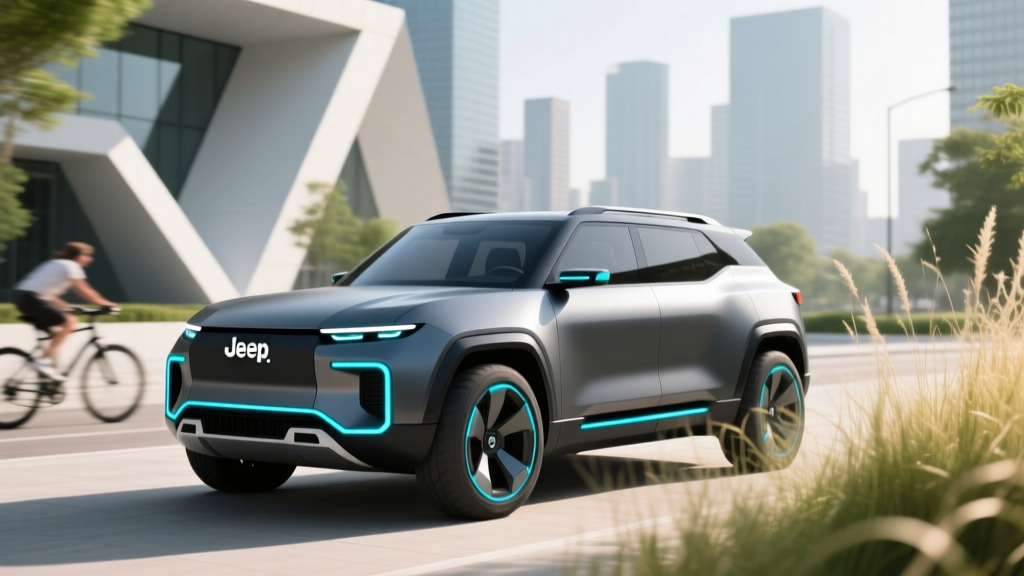
The Jeepster EV is an announced but not yet on sale all-electric compact SUV from Jeep, positioned below the Wagoneer S in Stellantis' EV lineup. Based on the STLA Medium platform, preliminary reports suggest a starting price near $35,000–$40,000, an EPA-estimated range target of 250–300 miles, and DC fast charging up to approximately 150–200 kW. No final specifications, pricing, or release date have been confirmed by Stellantis as of early 2026. All figures in this guide are projections based on platform data, industry reporting, and Jeep's stated electrification roadmap. Treat every number as preliminary until Jeep publishes official specs.
Projected Specs: What the STLA Medium Platform Tells Us
While Jeep has not released a full spec sheet for the Jeepster EV, the STLA Medium platform — which underpins vehicles like the Dodge Charger Daytona EV and upcoming Alfa Romeo electric models — gives us a credible basis for estimates. Here's what platform data and industry reporting suggest:
| Specification | Projected / Estimated | Source Basis |
|---|---|---|
| Battery Capacity | ~75–90 kWh (usable) | STLA Medium platform variants |
| Chemistry | Likely NMC; LFP variant possible for base trim | Stellantis battery sourcing partnerships |
| EPA Range (est.) | 250–300 miles | Platform energy density + Jeep targets |
| Peak DC Fast Charge | ~150–200 kW | STLA Medium 400V architecture |
| 10–80% Charge Time (est.) | ~25–35 minutes | Comparable STLA-based vehicles |
| Level 2 Charging | ~11 kW onboard charger (est.) | Segment standard |
| Drivetrain | RWD base; AWD available | STLA Medium supports both |
| Horsepower (est.) | 200–350 hp depending on trim | Platform motor configurations |
| 0–60 mph (est.) | ~5.5–7.5 seconds | Weight and power estimates |
| Starting MSRP (est.) | $35,000–$40,000 | Industry reporting, positioning below Wagoneer S |
Key caveat: These are educated projections, not manufacturer-confirmed figures. The STLA Medium platform supports battery packs from roughly 87 to 104 kWh (gross), but usable capacity and efficiency vary significantly by vehicle weight, aerodynamics, and thermal management. A boxy, off-road-oriented Jeep will almost certainly deliver lower efficiency than a sleek sedan on the same platform.
Real-World Range: What to Actually Expect
EPA estimate (projected): 250–300 miles
Real-world highway (70–80 mph): Expect 200–250 miles
Cold weather (below 30°F): Expect 170–220 miles
Off-road / towing: Significantly reduced — potentially 120–160 miles under load
The gap between EPA range stickers and real-world delivery is one of the most common surprises for first-time EV buyers. The EPA test cycle includes substantial low-speed and city driving, where regenerative braking recaptures energy. Sustained highway driving at 75+ mph, headwinds, cold temperatures, and elevation changes all compress range — often by 15–30%.
For a vehicle likely styled with Jeep's traditional upright windshield and squared-off profile, aerodynamic drag will be a significant range penalty at highway speeds compared to more streamlined EVs like the Hyundai Ioniq 5 or Tesla Model Y. If Jeep offers an off-road-oriented trim with all-terrain tires and a suspension lift, expect further efficiency losses.
If your daily driving is under 50 miles round-trip with home charging access, even a cold-weather-compressed 180-mile range is more than sufficient. If you regularly drive 200+ miles between charging stops, the Jeepster EV's real-world range may require careful route planning — especially in winter or on mountain passes.
Charging: Home Setup and Public Network Reality
Charging access is the single most important ownership variable for any EV, and it's where many first-time buyers underestimate the logistics.
| Level | Power | Miles Added Per Hour (est.) | Best For |
|---|---|---|---|
| Level 1 (120V outlet) | ~1.4 kW | ~4–5 miles/hour | Overnight top-offs if daily driving is under 30 mi |
| Level 2 (240V home) | ~7.7–11.5 kW | ~25–40 miles/hour | Daily home charging, full overnight replenishment |
| DC Fast Charging | ~150–200 kW (peak) | ~150–250 mi in 30 min (partial) | Road trips, rapid top-ups |
kW vs. kWh — the critical distinction: kW (kilowatts) measures the rate of power flow — how fast energy is moving into the battery. kWh (kilowatt-hours) measures total energy stored — the battery's capacity, like a fuel tank size. A 200 kW charger delivers power quickly, but the battery's kWh capacity determines total range.
Charging curve reality: Peak DC fast-charge rates (e.g., 200 kW) are typically only sustained between roughly 10–50% state of charge. Above 80%, charging speed tapers dramatically to protect battery longevity — often dropping below 50 kW. That's why manufacturers quote 10–80% times rather than 0–100%. Plan road-trip stops around the 10–80% window for the fastest experience.
Home Charging Installation Costs
If you have a garage or driveway with accessible electrical infrastructure, a Level 2 home charger is the most convenient and cost-effective daily charging solution. Here's what installation typically costs:
| Item | Typical Cost Range |
|---|---|
| Level 2 charger hardware (40–48A) | $400–$750 |
| Electrician labor (240V circuit run) | $500–$2,000 |
| Permit / inspection fees | $50–$300 |
| Electrical panel upgrade (if needed, 200A) | $1,500–$4,000 |
| Total (no panel upgrade) | $950–$3,050 |
| Total (with panel upgrade) | $2,450–$7,050 |
Homes with older 100-amp electrical panels may need an upgrade to support a dedicated 40–60 amp EV circuit alongside existing loads. Always get a site assessment from a licensed electrician before purchasing equipment. The federal Residential Clean Energy Credit covers 30% of home charger hardware and installation costs (up to $1,000) through 2032, which can offset a meaningful portion of the expense.
Apartment and street-parking reality: If you lack access to home charging, you'll depend on public Level 2 and DC fast chargers. This adds time, cost, and unpredictability. Before purchasing any EV without home charging, map your local public charging options using apps like PlugShare or ChargePoint and verify reliability — broken chargers and occupied stalls are common frustrations in some markets.
Jeepster EV vs. Gas Compact SUV: Cost of Ownership
The most common question from prospective EV buyers is whether the higher purchase price pays for itself in fuel and maintenance savings. Here's a five-year comparison using projected Jeepster EV figures against a typical gas-powered compact SUV in the $30,000–$35,000 range (e.g., Jeep Compass, Subaru Forester).
| Cost Category (5-Year) | Jeepster EV (Projected) | Gas Compact SUV |
|---|---|---|
| Purchase Price (est. MSRP) | $37,500 | $32,500 |
| Federal Tax Credit (§30D) | Up to $7,500 (if eligible) | $0 |
| Effective Purchase Price | ~$30,000 | $32,500 |
| Fuel / Electricity (60,000 mi) | $2,700–$4,500 | $6,000–$8,400 |
| Maintenance (5 years) | $800–$1,500 | $2,500–$4,000 |
| Insurance (5 years, avg.) | $7,500–$9,500 | $6,000–$8,000 |
| Home Charger Install | $1,000–$3,000 | $0 |
| Estimated 5-Year Total | $41,000–$56,000 | $47,000–$52,900 |
Key assumptions: Electricity at $0.13–$0.18/kWh (home) and $0.35–$0.50/kWh (public DC fast charging); gas at $3.20–$4.00/gallon; EV efficiency of 3.0–3.5 mi/kWh; gas SUV at 27 MPG combined. Actual costs vary significantly by local utility rates, driving patterns, and charging access. Insurance premiums for EVs tend to run 10–25% higher than comparable gas vehicles due to higher repair costs and parts pricing.
The math generally favors the EV if you qualify for the full federal tax credit and charge primarily at home. Without the tax credit — or if you rely entirely on expensive public DC fast charging — the savings narrow or disappear. Run the numbers with your local electricity rate and driving habits before deciding.
Federal Tax Credit: §30D Eligibility Rules for 2026
The Jeepster EV's eligibility for the federal §30D New Clean Vehicle Credit (up to $7,500) depends on several requirements that change periodically and vary by vehicle build. As of 2026, the key criteria include:
- MSRP cap: SUVs must have a base MSRP at or below $80,000 — the Jeepster EV should clear this easily at a projected $35,000–$40,000 starting price.
- Buyer income limits: Adjusted gross income must not exceed $300,000 (married filing jointly), $225,000 (head of household), or $150,000 (single filers).
- Battery sourcing: Increasingly strict requirements for critical minerals and battery components sourced from the U.S. or free-trade-agreement countries. Vehicles with battery components from "foreign entities of concern" may be disqualified.
- Point-of-sale transfer: As of 2024, buyers can transfer the credit to the dealer at purchase, reducing the purchase price directly rather than waiting to claim it on their tax return.
- Final assembly: Vehicle must undergo final assembly in North America.
Critical note: Even if the Jeepster EV is built on a North American assembly line, battery component and critical-mineral sourcing rules are the most common disqualifiers and are tightened annually. Check the DOE's qualifying vehicle list on fueleconomy.gov at the time of purchase — eligibility can change between model years and even between production batches.
Decision Framework: Should You Wait for the Jeepster EV?
Consider waiting for the Jeepster EV if:
- You want a compact electric SUV with Jeep styling and potential light off-road capability
- Your budget is $35,000–$45,000 and you want to stay within the §30D MSRP cap
- You have home charging access and a daily commute under 80 miles
- You don't need a vehicle immediately and can wait for confirmed specs and real-world testing
- You value the Jeep brand and want an EV that fits that identity
Look at currently available alternatives if:
- You need a vehicle now — the Jeepster EV has no confirmed on-sale date
- You require proven range and charging data before purchasing
- You frequently drive 300+ miles between stops and need validated highway range
- You want access to the Tesla Supercharger network (NACS connector) — availability on the Jeepster EV is unconfirmed; Stellantis has not committed to NACS adoption across its lineup
- You need a third row or significant cargo/towing capacity — the Jeepster EV is positioned as a compact SUV
Currently available alternatives in the compact electric SUV segment include the Hyundai Ioniq 5 (EPA 303 mi, starting ~$42,000), Kia EV6 (EPA 310 mi, ~$43,000), Ford Mustang Mach-E (EPA 250–320 mi depending on battery, ~$43,000), and the Tesla Model Y (EPA 308–330 mi, ~$44,000). Each has established charging networks, proven battery longevity data, and confirmed §30D eligibility status.
Common Misconceptions About the Jeepster EV
| Myth | Fact |
|---|---|
| "It will have 400+ miles of range." | STLA Medium platform vehicles are not projected to exceed ~300 miles EPA in a boxy SUV form factor. Aerodynamic drag and vehicle weight limit range regardless of battery size. |
| "It will be a true off-roader like a Wrangler." | EVs can deliver excellent low-speed torque and AWD traction, but the Jeepster EV is expected to prioritize on-road comfort with light trail capability — not Wrangler-level rock crawling. Battery weight and ground clearance are limiting factors. |
| "It qualifies for the $7,500 tax credit, guaranteed." | Tax credit eligibility depends on battery sourcing, buyer income, and MSRP — all subject to change. Never assume eligibility until you verify on fueleconomy.gov at time of purchase. |
| "I won't need home charging — public chargers are everywhere." | Public charging reliability varies widely by region. Broken chargers, occupied stalls, and slow actual charge rates are common. Home Level 2 charging is strongly recommended for daily ownership satisfaction. |
| "EV batteries need replacing every few years." | Modern EV batteries are designed to last 150,000–200,000+ miles with gradual degradation (typically 10–15% capacity loss over 8–10 years). Federal law mandates a minimum 8-year/100,000-mile battery warranty. |
Frequently Asked Questions
When will the Jeepster EV be available for purchase?
Stellantis has not confirmed an official on-sale date. Industry reporting suggests a possible late 2026 or 2027 launch, but delays are common in EV production timelines. Monitor Jeep's official press channels for confirmed dates.
Will the Jeepster EV use NACS or CCS for charging?
This has not been confirmed. Stellantis has been slower than Ford and GM to commit to the Tesla NACS connector. The vehicle may launch with CCS1, with a future transition to NACS — or it could adopt NACS from the start. This matters for Supercharger access and long-term charging compatibility.
How does the Jeepster EV compare to the Jeep Wagoneer S?
The Wagoneer S is a larger, more premium electric SUV (starting above $65,000, EPA ~300 mi, dual-motor AWD with 600 hp). The Jeepster EV is positioned as a more affordable, compact alternative — think of it as the EV equivalent of the Compass/Renegade segment rather than the Grand Cherokee tier.
Will there be a plug-in hybrid (PHEV) version?
Jeep has offered PHEV variants under the "4xe" badge for the Wrangler and Grand Cherokee. Whether the Jeepster will have a PHEV variant alongside the full EV is unconfirmed. Stellantis' STLA Medium platform supports BEV, PHEV, and ICE configurations, so a PHEV variant is technically feasible.
What should a first-time EV buyer know before purchasing?
Three things matter most: (1) Confirm you have reliable home charging access — this is the single biggest factor in EV satisfaction. (2) Understand that real-world range is typically 15–30% below the EPA sticker, especially in cold weather and at highway speeds. (3) Verify federal and state incentive eligibility before committing, as rules change frequently and depend on your income, the vehicle's battery sourcing, and your state of residence.