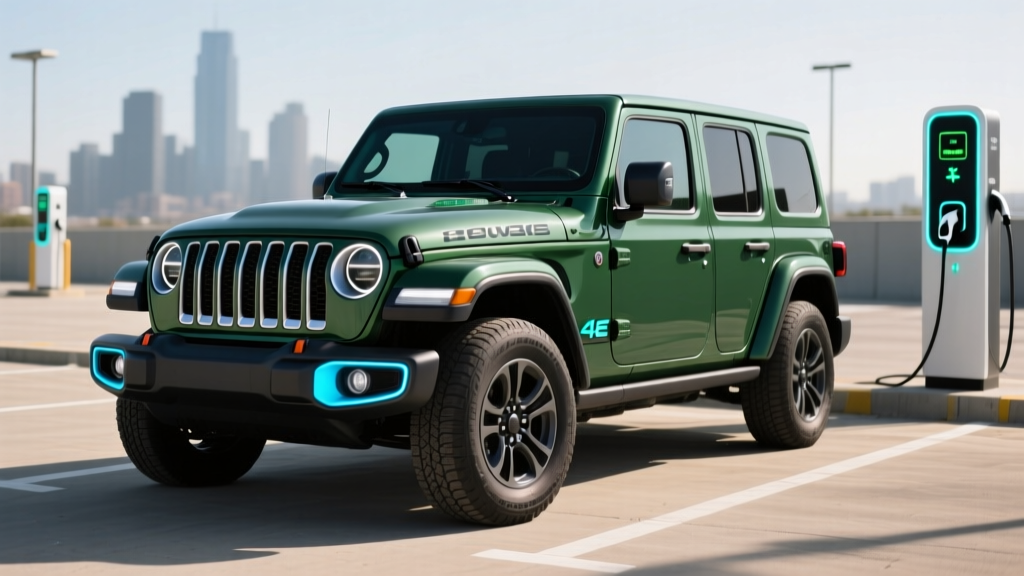
If you're still driving a 2017 Jeep Wrangler JK and researching what an upgrade to the electrified Wrangler 4xe actually looks like — including whether your existing wheels and accessories will carry over — you're asking the right questions. The 2026 Jeep Wrangler 4xe is a plug-in hybrid (PHEV), not a full battery-electric vehicle, but it remains the only electrified Wrangler you can buy, and it has matured considerably since its 2021 debut. This review covers every spec that matters to a real buyer: EPA range, charging, performance, tax-credit math, cargo space, and yes — the bolt pattern question that brought you here.
Bolt Pattern on the 2017 Wrangler vs. the 2026 Wrangler 4xe
The 2017 Jeep Wrangler JK uses a 5x127 mm (5x5 inch) bolt pattern with a 71.5 mm center bore and 1/2"-20 lug nuts. The current-generation Wrangler JL — including the 2026 4xe — also uses a 5x127 mm (5x5 inch) bolt pattern. This means most wheels from your 2017 JK will physically bolt onto a 2026 4xe JL, provided the center bore and offset are compatible. However, the JL generation moved to M14x1.5 lug bolts (metric), so you'll need new lug hardware even if the wheel pattern matches. Always verify fitment with a tire shop before swapping wheels between generations.
2026 Wrangler 4xe Powertrain and Efficiency Specs
The 2026 Wrangler 4xe pairs a 2.0-liter turbocharged inline-four with two electric motors integrated into an eight-speed automatic transmission. Combined system output is 375 horsepower and 470 lb-ft of torque. The high-voltage battery is a 17.3 kWh usable (NMC lithium-ion) pack mounted under the rear seats, preserving the Wrangler's ground clearance and water-fording capability.
| Spec | Value |
|---|---|
| Powertrain | 2.0L turbo I-4 + dual electric motors (PHEV) |
| Combined HP / Torque | 375 hp / 470 lb-ft |
| Battery (usable) | 17.3 kWh, NMC chemistry |
| EPA Electric-Only Range | 22 miles |
| EPA Combined (gas+electric) | 49 MPGe |
| Gas-Only Combined MPG | 20 MPG |
| 0-60 mph | |
| Drivetrain | 4WD (part-time, with electric assist) |
| Towing Capacity | 3,500 lbs |
| Ground Clearance | 10.8 in (Rubicon) |
| Water Fording | 31.5 in (Rubicon) |
Charging: DC Fast, Level 2, and Level 1 Speeds
The Wrangler 4xe's relatively small battery means charging is straightforward, but it's important to distinguish kW (power — how fast energy flows) from kWh (energy — battery capacity). With only 17.3 kWh to fill, you won't need DC fast charging for daily use.
| Level | Power | Time (0-100%) | Notes |
|---|---|---|---|
| Level 1 (120V household) | ~1.4 kW | ~12 hours | Standard outlet; overnight top-up |
| Level 2 (240V home/public) | ~7.2 kW | ~2.5 hours | Recommended for daily use |
| DC Fast Charge | Not supported | N/A | No DC fast-charge port on 4xe |
The 4xe uses a standard J1772 connector for Level 1 and Level 2 AC charging. There is no DC fast-charging capability — the battery is simply too small to justify it, and Jeep has kept the charge port simple. A home Level 2 charger (240V, 32A circuit) will replenish the battery fully in roughly 2.5 hours, which is practical for topping up mid-day if you have a home charger.
Home installation reality: A Level 2 home charger installation typically costs $500–$1,500 for equipment and electrician labor if your panel has capacity. A 200-amp panel upgrade — sometimes needed in older homes — adds $1,500–$3,000. Always get a quote from a licensed electrician before purchasing equipment.
Pricing, Trims, and Federal Tax Credit Eligibility
The 2026 Wrangler 4xe is available across multiple trims, from the base Willys 4xe to the high-end Rubicon and High Altitude models. Here's what the pricing landscape looks like before incentives:
| Trim | Base MSRP | Key Features |
|---|---|---|
| Willys 4xe | ~$51,795 | Basic 4xe, off-road tires, steel bumpers |
| Sport S 4xe | ~$54,295 | Alloy wheels, upgraded infotainment |
| Sahara 4xe | ~$57,795 | Luxury touches, body-color fenders |
| Rubicon 4xe | ~$60,795 | Front/rear lockers, sway-bar disconnect |
| High Altitude 4xe | ~$65,295 | Premium leather, 20" wheels, luxury pkg |
Federal Tax Credit: §30D Eligibility
The Wrangler 4xe has historically qualified for a partial or full IRS §30D federal tax credit, but eligibility depends on several factors that change yearly:
- MSRP cap: SUVs must be under $80,000 MSRP — all 4xe trims qualify.
- Buyer income cap: Modified AGI must not exceed $150,000 (single) / $300,000 (joint).
- Battery sourcing: Critical minerals and battery component requirements phase in annually. For 2026, a significant percentage must be sourced from the US or FTA partners.
- Point-of-sale transfer: As of 2024, eligible buyers can transfer the credit to the dealer for an upfront price reduction rather than waiting for tax filing.
For 2026, the 4xe's credit amount may range from $3,750 to $7,500 depending on how its battery sourcing aligns with current-year rules. Consult a tax professional and check fueleconomy.gov for the latest credit status before purchasing.
Cargo Space, Passenger Room, and Daily Practicality
The 4xe battery placement under the rear seats does not significantly compromise cargo or passenger space compared to the gas-only Wrangler JL. However, the Wrangler was never a space leader in its class.
| Dimension | Measurement |
|---|---|
| Front Legroom | 41.2 in |
| Rear Legroom | 38.3 in |
| Cargo (behind rear seats) | 31.7 cu ft |
| Cargo (rear seats folded) | 72.4 cu ft |
| Seating Capacity | 5 passengers |
The 4-door Unlimited body style is the only configuration for the 4xe. Cargo volume is adequate for weekend trips but trails crossovers like the Toyota RAV4 Prime (37.5 cu ft behind rear seats). The removable top and doors remain a party trick no competitor matches, though reinstallation is a two-person job.
Tech, Driver Assists, and Standout Features
The 2026 4xe runs Stellantis' Uconnect 5 infotainment system on a 12.3-inch touchscreen (8.4-inch on base trims). Wireless Apple CarPlay and Android Auto are standard on mid-and-above trims. The system supports over-the-air updates and includes an off-road trail map feature unique to the Wrangler.
Standard driver assists include:
- Adaptive cruise control (with stop-and-go)
- Forward collision warning with automatic emergency braking
- Lane departure warning
- Blind-spot monitoring (standard on Sahara+)
- ParkSense rear park assist
Unique 4xe features: The E-Save mode lets you reserve battery charge for later use (e.g., saving electric miles for a quiet trail section or a low-emission zone). The hybrid powertrain also enables a "silent" electric-only mode for early-morning neighborhood departures — a genuine quality-of-life feature that gas Wranglers can't match.
Warranty Coverage
| Coverage | Term |
|---|---|
| Basic (bumper-to-bumper) | 3 years / 36,000 miles |
| Powertrain | 5 years / 60,000 miles |
| Hybrid/EV Components | 8 years / 100,000 miles |
| Battery Capacity Retention | 8 years / 100,000 miles (min 70% capacity) |
The 8-year/100,000-mile hybrid component warranty is federally mandated for PHEVs and covers the high-voltage battery, electric motors, and power electronics. Jeep guarantees the battery will retain at least 70% of its original capacity during the warranty period. In practice, the 17.3 kWh pack's small size and moderate charge/discharge cycles suggest degradation should be minimal for most owners.
Wrangler 4xe vs. Competitors: Who Else Is In This Lane?
The Wrangler 4xe occupies a narrow niche: the only plug-in hybrid serious off-roader. But buyers cross-shop it against several alternatives:
| Vehicle | Type | Electric Range | Combined MPGe/MPG | Starting MSRP | Off-Road Capability |
|---|---|---|---|---|---|
| Jeep Wrangler 4xe | PHEV | 22 mi | 49 MPGe | ~$51,795 | Excellent |
| Toyota RAV4 Prime | PHEV | 42 mi | 94 MPGe | ~$44,000 | Moderate (AWD-i) |
| Ford Bronco (gas) | ICE | 0 mi | 20 MPG | ~$39,000 | Excellent |
| Jeep Grand Cherokee 4xe | PHEV | 26 mi | 56 MPGe | ~$56,000 | Moderate-Good |
If off-road capability is non-negotiable, the Wrangler 4xe has no direct PHEV rival. The Bronco offers comparable trail chops but no electrified powertrain. The RAV4 Prime is a far more efficient daily driver but can't match the Wrangler off-road. The Grand Cherokee 4xe is more refined on-road but less capable on rocks.
Choose the Wrangler 4xe if: You need serious off-road capability (locking diffs, sway-bar disconnect, solid axles) and want to run short commutes on electricity. You value removable doors/top and the Jeep lifestyle.
Look elsewhere if: Your priority is maximum electric range (RAV4 Prime wins), on-road refinement (Grand Cherokee 4xe), or lower purchase price (gas Bronco or RAV4 Prime).
Pros and Cons
- Only PHEV with genuine off-road hardware (lockers, solid axles)
- 375 hp / 470 lb-ft — the quickest Wrangler ever
- 22 miles electric covers most short commutes
- Silent electric mode for trails and neighborhoods
- Same 5x127 bolt pattern as 2017 JK (wheels may swap)
- Removable doors/roof — no competitor offers this
- 8-yr/100,000-mi hybrid warranty
- High starting price (~$52K base, $65K+ loaded)
- Only 22 miles electric range — less than RAV4 Prime's 42
- No DC fast charging
- 20 MPG gas-only — worse than most PHEV competitors
- Ride and refinement trail unibody crossovers
- Tight rear cargo area for the vehicle's footprint
- Tax credit amount varies by year and sourcing rules
Who Is the 2026 Wrangler 4xe Best For?
The Wrangler 4xe is a niche vehicle that excels for a specific buyer:
- The off-road enthusiast with a short commute: If you drive 15–20 miles each way to work and hit trails on weekends, the 4xe lets you commute on electricity and tackle Moab on gas. No other vehicle does both.
- The 2017 JK owner ready to upgrade: The JL platform is a major leap in ride quality, tech, and safety over the JK. The shared bolt pattern eases the transition for wheel and accessory swaps.
- The lifestyle buyer who wants the Jeep look with lower fuel bills: If most of your driving is local and you can charge at home, the 4xe cuts fuel costs meaningfully versus the gas Wrangler.
It is not the best choice for highway-heavy commuters, families who need max cargo space, or buyers prioritizing value over off-road capability.
Frequently Asked Questions
What is the real-world electric range of the 2026 Wrangler 4xe?
The EPA rates it at 22 miles electric-only. In moderate conditions, expect 18–20 miles. At highway speeds or in cold weather, plan for 14–16 miles before the gas engine takes over.
How fast does the Wrangler 4xe charge at home?
On a Level 2 (240V) home charger at 7.2 kW, the 17.3 kWh battery charges from empty to full in approximately 2.5 hours. On a standard 120V outlet (Level 1), expect about 12 hours. There is no DC fast-charging capability.
Does the 2026 Wrangler 4xe qualify for the federal EV tax credit?
It may qualify for $3,750–$7,500 under IRS §30D, depending on your income (under $150K single / $300K joint), the vehicle's MSRP (all trims are under the $80K SUV cap), and the battery's critical-mineral and component sourcing for the current tax year. Check fueleconomy.gov and consult a tax professional before relying on the credit.
Will my 2017 Wrangler JK wheels fit the 2026 4xe?
Both use a 5x127 mm (5x5") bolt pattern, so wheels physically bolt on. However, the JL uses M14x1.5 lug bolts (vs. the JK's 1/2"-20), so you'll need new lug hardware. Verify center bore and offset compatibility with a tire professional.
Is the Wrangler 4xe worth it versus a gas Wrangler or the Ford Bronco?
If you can charge at home and your daily driving fits within ~20 electric miles, the 4xe saves fuel and delivers instant electric torque on the trail. If you can't charge at home or drive mostly highway, the gas Wrangler or Bronco may be more practical and cost less upfront. The 4xe's premium is roughly $8,000–$10,000 over a comparable gas Wrangler — the tax credit and fuel savings can offset this over 3–5 years for the right driver.
What is the bolt pattern on a 2017 Jeep Wrangler?
The 2017 Jeep Wrangler JK uses a 5x127 mm bolt pattern (also expressed as 5x5 inches), with a 71.5 mm center bore and 1/2"-20 lug nuts. This is the same bolt pattern used on the current JL-generation Wrangler, including the 4xe.