Quick Verdict: The Electric Wagoneer S Arrives With Premium Ambition
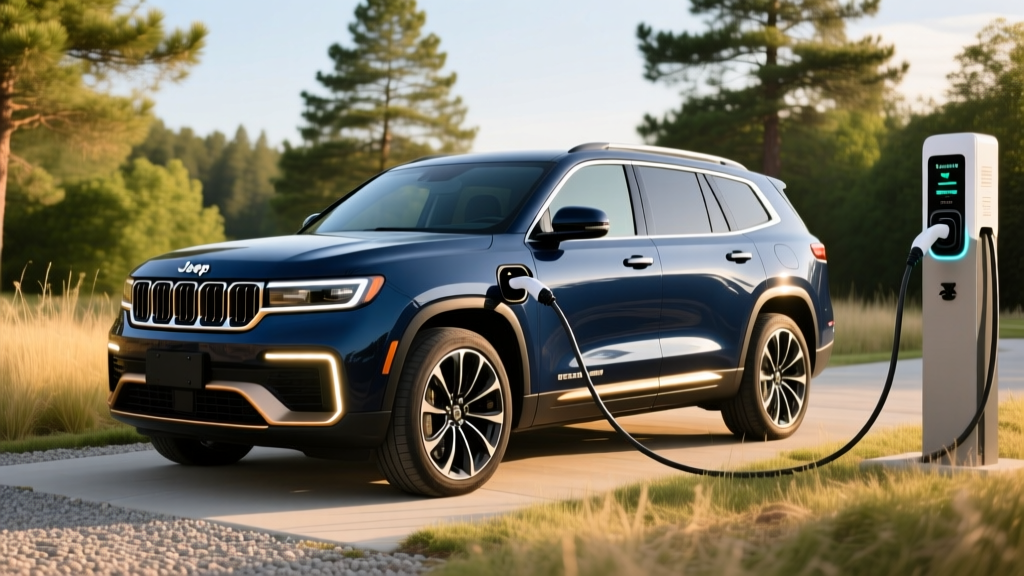
The 2025 Jeep Wagoneer S is the brand's first battery-electric vehicle built on Stellantis' STLA Large platform, and it arrives with a clear mission: deliver genuine luxury-SUV capability with zero tailpipe emissions. With 600 horsepower in Launch Edition trim, a 100 kWh battery pack, and a 300-mile EPA range estimate, the electric Wagoneer S targets buyers cross-shopping the BMW iX, Audi Q8 e-tron, and Tesla Model X — but with Jeep's signature design language and off-road credibility.
After spending time analyzing the specs, charging architecture, and pricing structure, the Wagoneer S presents a compelling but complex value proposition. It's fast, well-equipped, and qualifies for the full $7,500 federal tax credit (subject to buyer income and sourcing rules). But at a starting MSRP of $65,200 for the Launch Edition, buyers need to weigh whether Jeep's first EV effort delivers enough real-world refinement to justify the premium over established competitors.
Range and Efficiency: 300 Miles EPA, But What Happens on the Highway?
EPA Estimated Range: 300 miles
Real-World Expectation: Plan for 240–270 miles on sustained highway driving at 70+ mph. In cold weather (below freezing), expect an additional 15–25% reduction, bringing winter highway range down to approximately 190–230 miles. City driving with regenerative braking recovers more energy and should stay closer to the EPA sticker.
The Wagoneer S achieves its 300-mile rating from a 100 kWh usable battery pack using NMC (nickel manganese cobalt) chemistry. This chemistry offers higher energy density than LFP (lithium iron phosphate), which matters for a large SUV that needs to balance range with curb weight. However, NMC batteries typically benefit from charge-limiting to 80% for daily use to maximize long-term health — something the vehicle's battery management system handles automatically.
Efficiency lands at approximately 87 MPGe combined (city/highway), translating to roughly 36 kWh per 100 miles. That's competitive for a 6,000+ pound luxury SUV but trails the more aerodynamic BMW iX xDrive50 (87 MPGe combined) and Tesla Model X (102 MPGe combined). The boxy Jeep styling and taller ride height create more drag, which shows up most noticeably at highway speeds.
| Spec | Value |
|---|---|
| EPA Range | 300 miles |
| Battery Capacity | 100 kWh (usable), NMC chemistry |
| Drivetrain | Dual-motor AWD |
| Horsepower | 600 hp |
| Torque | 617 lb-ft |
| 0–60 mph | 3.4 seconds |
| Max DC Fast Charge | 270 kW (peak) |
| 10–80% DC Charge Time | ~23 minutes |
| Level 2 Charge Rate | 11 kW (approx. 28 miles/hr) |
| MPGe (combined) | 87 MPGe |
| Cargo (rear seats up) | 30.8 cu ft |
| Cargo (rear seats folded) | 61.2 cu ft |
| Base MSRP | $65,200 |
| Battery Warranty | 8 years / 100,000 miles |
Charging Performance: 270 kW Peak With NACS Access
The Wagoneer S supports DC fast charging at up to 270 kW peak — a competitive figure that enables quick road-trip stops when paired with high-power chargers. Jeep quotes a 10–80% charge time of approximately 23 minutes under ideal conditions.
However, real-world charging rarely sustains peak rates. The charging curve typically tapers significantly above 80% state of charge to protect battery health. Expect a 10–90% charge to take closer to 35–40 minutes. At Electrify America or Tesla Supercharger stations (via the included NACS adapter or native NACS port on later builds), you'll see the highest sustained rates between 20–60% SoC, often holding 180–220 kW before stepping down.
| Level | Power | Miles Added per Hour | Typical Use Case |
|---|---|---|---|
| Level 1 (120V) | 1.4 kW | ~3–4 miles/hr | Emergency/overnight trickle |
| Level 2 (240V, 48A) | 11 kW | ~28 miles/hr | Home daily charging |
| DC Fast Charge | Up to 270 kW peak | ~180 miles in 15 min (20–60%) | Road trips, public stations |
For home Level 2 charging, the onboard 11 kW charger means a full 0–100% charge takes roughly 9–10 hours on a 48-amp, 240-volt circuit. Most owners will plug in overnight and wake up fully charged. A Level 2 home charger installation typically costs $500–$2,000 depending on electrical panel proximity and local permitting — factor this into your first-year ownership budget.
The Wagoneer S ships with a NACS (North American Charging Standard) port, giving it native access to Tesla's Supercharger network — currently the most reliable and extensive DC fast-charging infrastructure in the U.S. This is a significant advantage over CCS-only vehicles still dependent on Electrify America or EVgo availability.
Performance and Driving: 600 HP and Sub-3.5 Second Sprints
The Launch Edition's dual-motor all-wheel-drive powertrain produces 600 horsepower and 617 lb-ft of torque, launching the Wagoneer S from 0–60 mph in 3.4 seconds. That puts it in the same acceleration ballpark as a Tesla Model X Plaid-lite and comfortably ahead of the BMW iX M60 (3.6 seconds). The instant torque delivery makes highway merging and passing effortless.
Drive modes include Auto, Sport, Eco, Snow, and Sand — a nod to Jeep's off-road heritage even in an electric unibody SUV. The air suspension provides up to 8.3 inches of ground clearance in its highest setting, though this is more about snow and rough-road capability than serious rock crawling. Ground clearance drops at highway speeds for improved aerodynamics and efficiency.
Ride quality benefits from the low center of gravity inherent to skateboard-style battery placement, but the 6,000+ pound curb weight is noticeable during aggressive cornering. The steering is precise but light, and body roll is well-controlled for a tall SUV. Regenerative braking offers multiple levels, including a one-pedal driving mode that brings the vehicle to a complete stop without touching the brake pedal in most city conditions.
Interior, Cargo, and Technology
The Wagoneer S interior leans heavily into the screen-laden luxury trend. The dashboard features a 12.3-inch digital cluster, a 12.3-inch passenger display, and a central 12.3-inch infotainment touchscreen running Stellantis' Uconnect 5 system. A separate 10.25-inch comfort display handles climate controls. The system supports wireless Apple CarPlay and Android Auto, over-the-air updates, and integrated navigation with real-time charging station routing.
Passenger space accommodates five adults comfortably. Front legroom measures 40.9 inches, with rear legroom at 38.5 inches — adequate for adults on longer trips. The panoramic glass roof (with electrochromic dimming on higher trims) creates an airy cabin feel.
Cargo volume stands at 30.8 cubic feet behind the second row and 61.2 cubic feet with the rear seats folded flat. There is no front trunk (frunk) — the space is occupied by HVAC and power electronics. Compared to the Tesla Model X (88.1 cu ft max), the Wagoneer S gives up meaningful cargo capacity, and the BMW iX (72.5 cu ft max) also offers more. If maximum hauling is your priority, this is a genuine limitation.
Driver-assistance technology includes adaptive cruise control with stop-and-go, lane-centering assist, automatic emergency braking, blind-spot monitoring, and a 360-degree camera system. These features constitute SAE Level 2 driver assistance — meaning the driver must remain fully engaged with hands on the wheel and eyes on the road at all times. The Wagoneer S does not offer hands-free driving capability comparable to GM's Super Cruise or Ford's BlueCruise at launch.
Pricing, Trims, and Federal Tax Credit Eligibility
The 2025 Wagoneer S launches exclusively in the Launch Edition trim at an MSRP of $65,200 (including destination). Additional trims are expected for the 2026 model year, potentially including a lower-priced base model and a higher-spec Overland or Summit variant.
| Item | Amount |
|---|---|
| Base MSRP (incl. destination) | $65,200 |
| Federal Tax Credit (§30D, if eligible) | Up to $7,500 |
| Effective Price After Credit | ~$57,700 |
| Estimated State Incentives (varies) | $0–$5,000+ |
Federal Tax Credit Eligibility (IRS §30D): The Wagoneer S qualifies for the full $7,500 federal tax credit, but only if you meet all current requirements. As of 2025, these include:
- MSRP Cap: SUVs must have an MSRP at or below $80,000. The Wagoneer S at $65,200 clears this easily.
- Buyer Income Limits: Modified adjusted gross income must not exceed $300,000 (joint filers), $225,000 (head of household), or $150,000 (single). Check IRS guidelines for current-year thresholds.
- Battery Sourcing: The battery must meet critical-mineral and battery-component sourcing requirements that tighten annually. Stellantis has confirmed the Wagoneer S qualifies for the full credit at launch, but always verify on fueleconomy.gov before purchasing.
- Point-of-Sale Transfer: You can elect to transfer the credit to the dealer at purchase, reducing your out-of-pocket cost immediately rather than waiting for a tax refund.
Consult a tax professional to confirm your personal eligibility — credit rules are complex and subject to change.
Competitive Comparison: Wagoneer S vs. BMW iX, Audi Q8 e-tron, Tesla Model X
The electric Wagoneer S enters a crowded luxury EV SUV segment. Here's how it stacks up on paper against key rivals:
| Spec | Wagoneer S Launch Ed. | BMW iX xDrive50 | Audi Q8 e-tron | Tesla Model X LR |
|---|---|---|---|---|
| EPA Range | 300 mi | 324 mi | 285 mi | 335 mi |
| Battery | 100 kWh NMC | 111.5 kWh NMC | 114 kWh NMC | 100 kWh NMC |
| HP / 0–60 | 600 hp / 3.4s | 516 hp / 4.4s | 402 hp / 5.5s | 670 hp / 3.8s |
| Max DC Charge | 270 kW | 200 kW | 170 kW | 250 kW |
| 10–80% Time | ~23 min | ~31 min | ~31 min | ~25 min |
| Cargo (max) | 61.2 cu ft | 72.5 cu ft | 56.4 cu ft | 88.1 cu ft |
| Base MSRP | $65,200 | $73,200 | $74,400 | $79,990 |
The Wagoneer S advantage: It undercuts German rivals on price by $8,000–$15,000 while matching or beating them on acceleration and charging speed. The NACS port provides superior charging network access versus CCS-only competitors.
The trade-offs: The BMW iX and Tesla Model X offer substantially more cargo room. The Model X adds a third-row option. And Tesla's Supercharger network advantage is now shared with the Wagoneer S via NACS, though Tesla's software integration and Autopilot functionality remain more mature.
Pros
- 600 hp and 3.4-second 0–60 in a luxury SUV under $70K
- 270 kW DC fast charging — among the fastest in class
- NACS port = native Tesla Supercharger access
- Full $7,500 federal tax credit eligibility (if income/sourcing qualify)
- Premium interior with triple-screen dashboard
- 8-year / 100,000-mile battery warranty
Cons
- Cargo space (61.2 cu ft max) trails Model X, iX, and Q8 e-tron
- No frunk for additional storage
- Only 5-passenger seating — no third row available
- Real-world highway range likely 240–270 miles, not 300
- Launch Edition only at introduction; lower trims TBD
- No hands-free Level 2+ driving assist at launch
Who Should Buy the Electric Wagoneer S?
Buy the Wagoneer S if:
- You want a fast, premium electric SUV under $60K after tax credits and don't need maximum cargo or a third row.
- NACS/Supercharger access is a priority for road-trip charging reliability.
- You value Jeep's design identity and want something distinct from the usual German or Tesla options.
- Your daily commute is under 100 miles round-trip, and you can charge at home overnight.
Look elsewhere if:
- You regularly haul bulky cargo or need more than 61 cubic feet — the Model X or iX serve better.
- You need three-row seating for more than five passengers.
- You want hands-free highway driving (GM Super Cruise or Ford BlueCruise vehicles).
- You live in an extremely cold climate where 300 miles of EPA range drops below 200 in winter — consider a longer-range option or a PHEV bridge vehicle.
Ownership Costs and Warranty
The Wagoneer S comes with a 3-year / 36,000-mile bumper-to-bumper warranty and an 8-year / 100,000-mile battery and powertrain warranty — the industry standard for EV battery coverage. Stellantis guarantees the battery will retain at least 70% of its original capacity during the warranty period, which aligns with most competitors.
Long-term battery degradation for NMC packs typically runs 1.5–2.5% per year under normal use, meaning you might see 85–90% capacity after 5 years. Keeping daily charges to 80% and avoiding frequent DC fast charging in extreme heat will help maximize longevity.
Insurance costs for the Wagoneer S are expected to run 15–25% higher than a comparable gas-powered luxury SUV due to higher repair costs for EV-specific components and the vehicle's performance capability. Get quotes before purchasing — premiums vary significantly by state and driver profile.
Charging costs depend on your local electricity rates. At a national average of $0.16/kWh, fully charging the 100 kWh battery at home costs approximately $16 — the equivalent of $3.70 per gallon of gas in a vehicle getting 22 MPG. Over 15,000 miles annually, home charging saves roughly $1,200–$1,800 compared to premium gasoline, depending on local utility rates and gas prices.
Frequently Asked Questions
What is the real-world range of the Jeep Wagoneer S?
The EPA estimates 300 miles, but sustained highway driving at 70+ mph typically yields 240–270 miles. Cold weather (below 32°F) reduces range further by 15–25%. For daily commuting with regenerative braking, you'll stay closer to the EPA figure.
How fast does the Wagoneer S charge?
DC fast charging peaks at 270 kW, achieving 10–80% in approximately 23 minutes at a compatible high-power station. Home Level 2 charging at 11 kW adds roughly 28 miles per hour, fully charging overnight in 9–10 hours.
Does the Wagoneer S qualify for the $7,500 federal tax credit?
Yes, provided you meet IRS §30D requirements: buyer income below $300K (joint) / $150K (single), the vehicle MSRP is under $80K (it is at $65,200), and battery sourcing rules are met. Stellantis confirms eligibility at launch. Verify at fueleconomy.gov and consult a tax professional.
Is the Wagoneer S worth buying over the BMW iX or Tesla Model X?
It depends on priorities. The Wagoneer S is significantly cheaper than both, charges faster than the iX, and gets native Supercharger access via NACS. However, it offers less cargo space than both competitors and no third-row option. If price and acceleration matter most, it's a strong value. If cargo volume or seating capacity are critical, look at the Model X or iX.
Does the Wagoneer S have a frunk?
No. The front compartment houses HVAC and power electronics. All cargo must go in the rear cargo area (30.8 cu ft seats-up, 61.2 cu ft seats-folded).
What is the battery warranty?
Stellantis provides 8 years or 100,000 miles of battery and powertrain coverage, guaranteeing at least 70% capacity retention during that period.
Can the Wagoneer S use Tesla Superchargers?
Yes. The Wagoneer S is equipped with a NACS (North American Charging Standard) port, providing native access to Tesla's Supercharger network without an adapter.