Quick Verdict: The Wagoneer S Launch Edition Is Jeep's EV Flagship
The 2026 Jeep Wagoneer S Launch Edition represents Stellantis' most ambitious electric vehicle to date — a premium, dual-motor SUV built on the dedicated STLA Large platform. With an EPA-estimated 300 miles of range, 600 horsepower, and a 100-kWh NMC battery, it targets the luxury electric SUV segment occupied by the BMW iX, Audi Q8 e-tron, and Tesla Model X. But the Launch Edition is a single, fully loaded trim priced at $71,995 before incentives — a bold bet that Jeep's brand cachet and off-road-adjacent styling can command premium EV pricing.
After spending time with the specs, charging data, and competitive landscape, the Wagoneer S Launch Edition delivers compelling performance and technology but faces headwinds on efficiency, real-world highway range, and federal tax credit eligibility. Here's the complete breakdown for buyers considering this electric Jeep.
Range, Battery & Efficiency: What the Numbers Actually Mean
The Wagoneer S Launch Edition carries a 100-kWh usable lithium-ion battery pack using NMC (nickel manganese cobalt) chemistry. This is the chemistry Stellantis has standardized across the STLA Large platform for its energy density and cold-weather performance — a deliberate choice over LFP (lithium iron phosphate), which is heavier and less energy-dense but offers longer cycle life and lower cost.
| Specification | Value |
|---|---|
| EPA Range (est.) | 300 miles |
| Battery Capacity (usable) | 100 kWh |
| Battery Chemistry | NMC (Nickel Manganese Cobalt) |
| Drivetrain | Dual-motor AWD |
| Horsepower | 600 hp |
| Torque | 617 lb-ft |
| 0–60 mph | 3.4 seconds |
| MPGe (combined, est.) | 87 MPGe |
| Efficiency | ~39 kWh/100 mi |
| Max DC Fast Charge | ~200 kW (peak) |
| 10–80% DC Charge Time | ~23 minutes |
| Level 2 Home Charging | 11.5 kW onboard charger |
| Cargo Volume (behind 2nd row) | 30.5 cu ft |
| Cargo Volume (max, seats folded) | 61.0 cu ft |
| Base MSRP | $71,995 |
| Battery/Powertrain Warranty | 8 years / 100,000 miles |
The EPA sticker says 300 miles, but real-world results will vary significantly based on conditions:
- City/suburban driving (mild weather): Expect 280–310 miles — regenerative braking recovers energy in stop-and-go traffic.
- Highway driving (70+ mph, mild weather): Expect 230–260 miles. The Wagoneer S's boxy SUV aerodynamics and 5,500+ lb curb weight hurt efficiency at sustained speed.
- Cold weather (below 32°F): Expect 200–240 miles. NMC chemistry loses roughly 20–30% of usable range in freezing temps, even with the heat pump preconditioning system active.
- Worst case (highway + cold + hills): Plan for as little as 190–210 miles between charges.
At 39 kWh/100 miles, the Wagoneer S is less efficient than the BMW iX xDrive50 (~35 kWh/100 mi) and significantly thirstier than a Tesla Model Y Long Range (~28 kWh/100 mi). That efficiency gap matters on road trips, where you'll stop more often and pay more per mile at DC fast chargers.
Charging Speed: DC Fast Charging & Home Level 2
Charging is where the Wagoneer S Launch Edition is competent but not class-leading. The STLA Large platform supports a peak DC fast-charge rate of approximately 200 kW — respectable, but well below the Hyundai Ioniq 5's 240 kW or the Lucid Gravity's 300+ kW capability.
| Charging Level | Power | Speed (approx.) | Use Case |
|---|---|---|---|
| Level 1 (120V household) | 1.4 kW | ~4 miles per hour | Emergency / overnight trickle |
| Level 2 (240V home) | 11.5 kW | ~32 miles per hour | Daily home charging; 10–100% in ~9 hours |
| DC Fast Charge | Peak 200 kW | 10–80% in ~23 min | Road trips; adds ~175 miles in 20 min |
Charging curve reality: Like all NMC batteries, the Wagoneer S will not sustain its peak 200 kW rate for the full session. Expect peak speed between 10–40% state of charge, then a taper to ~120 kW through 60%, and a steep drop-off above 80%. For road trips, the practical strategy is to charge from 10% to 80% (the fastest window) and drive on — don't wait for a full charge at a DC station.
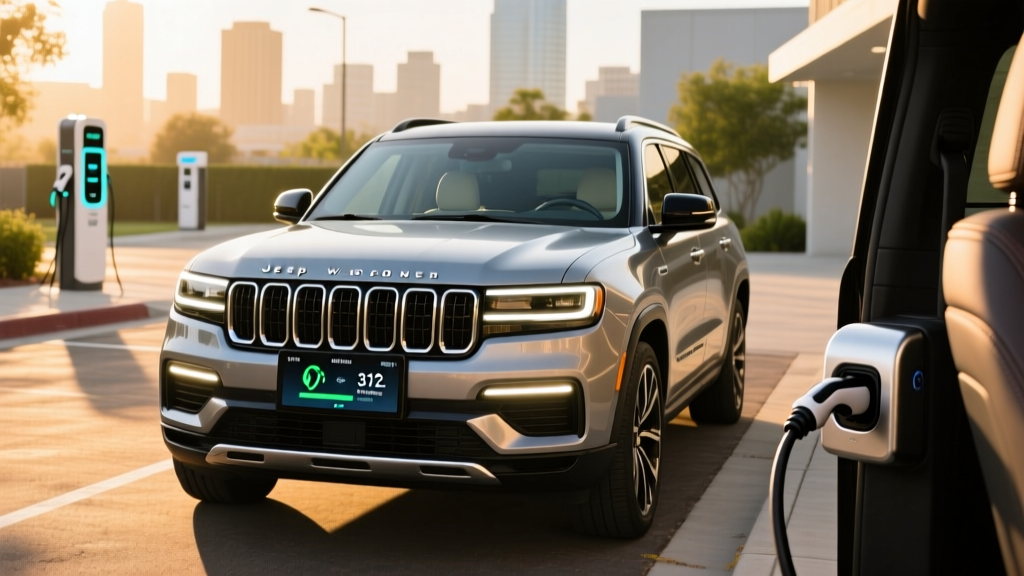
Connector: The Wagoneer S ships with the NACS (North American Charging Standard) port, giving it native access to the Tesla Supercharger network — a major advantage over older CCS1-equipped EVs. For Electrify America, EVgo, and other networks, a NACS-to-CCS adapter may be needed depending on the station's connector configuration.
Home charging setup: With an 11.5 kW onboard charger, you'll want a 48-amp Level 2 home charger on a 60-amp dedicated circuit. A full charge from empty takes roughly 9 hours — fine for overnight charging. Budget $800–$2,000 for professional Level 2 installation (equipment + electrician + permit), and potentially $2,000–$5,000 more if your home needs an electrical panel upgrade to 200 amps. Consult a licensed electrician for your specific situation.
Performance & Driving Dynamics
The dual-motor all-wheel-drive powertrain produces 600 horsepower and 617 lb-ft of torque, launching the Wagoneer S to 60 mph in an estimated 3.4 seconds. That puts it in serious performance territory — quicker than a BMW X5 M Competition and only a few tenths behind the Tesla Model X Plaid.
Jeep has tuned the STLA Large platform for a balance of on-road composure and light off-road capability. Expect adaptive air suspension, multiple drive modes (including a Selec-Terrain system with Sand, Snow, Rock, and Eco settings), and a low center of gravity thanks to the under-floor battery pack. However, this is not a Wrangler — ground clearance and approach/departure angles are moderate. Think of it as a premium grand-touring SUV that can handle a gravel driveway or snowy mountain pass, not serious rock crawling.
Towing capacity is rated at approximately 5,000 pounds when properly equipped — adequate for a small boat or utility trailer but below the Ford F-150 Lightning or Rivian R1S.
Interior, Tech & Standout Features
The Wagoneer S Launch Edition comes fully loaded — there are no options packages to navigate. Key technology and interior highlights include:
- Infotainment: Uconnect 5 with a 12.3-inch digital instrument cluster, a 12.3-inch center touchscreen, and a 10.25-inch passenger display — three screens across the dash.
- Audio: 19-speaker McIntosh premium sound system (a Launch Edition exclusive).
- Driver assistance: Active Driving Assist (SAE Level 2) with adaptive cruise control, lane centering, and hands-on-wheel monitoring. This is not autonomous driving — the driver must remain engaged at all times.
- Exterior: Distinctive illuminated seven-slot grille, power-folding side mirrors, panoramic glass roof with electrochromic dimming.
- Seating: Five-passenger layout with heated and ventilated front seats, heated rear seats, and premium leather upholstery.
- Frunk: A front trunk (frunk) adds approximately 3.0 cu ft of secure, weatherproof storage — useful for charging cables or groceries.
Notable drawbacks: The Launch Edition is a five-seat configuration only — no third row is available, which limits its appeal for larger families. The cargo area at 30.5 cu ft behind the second row is modest for a vehicle of this size (the BMW iX offers 35.5 cu ft). And the electrochromic roof, while impressive, does not include a traditional retractable shade, which some owners find too bright in direct summer sun.
Pricing, Tax Credits & Ownership Costs
The 2026 Jeep Wagoneer S Launch Edition carries a base MSRP of $71,995, including destination charge. Since this is the only available trim for the 2026 model year, the as-tested price remains $71,995 (excluding dealer-installed accessories or state registration fees).
| Item | Amount |
|---|---|
| Base MSRP (Launch Edition) | $71,995 |
| Federal §30D EV Tax Credit (if eligible) | Up to $7,500 |
| Effective Price (with full credit) | ~$64,495 |
| Point-of-Sale Transfer | Available — credit applied at purchase |
Federal tax credit caveats (IRS §30D): The $7,500 credit is not guaranteed. Eligibility depends on multiple factors that change annually. For 2026, key requirements include:
- MSRP cap: SUVs must have an MSRP at or below $80,000 — the Wagoneer S at $71,995 qualifies.
- Buyer income cap: Modified adjusted gross income must not exceed $150,000 (single), $225,000 (head of household), or $300,000 (joint filers).
- Battery sourcing: A percentage of critical minerals and battery components must be sourced from the US or free-trade-agreement partners. Stellantis has been working to localize its STLA Large battery supply chain, but final 2026 sourcing compliance depends on the specific battery cell lot. Check the latest IRS qualifying vehicle list before purchasing.
- Point-of-sale transfer: As of 2024, buyers can transfer the credit to the dealer at the time of purchase, effectively reducing the out-of-pocket price by $7,500 rather than waiting to claim it on a tax return.
Always verify current eligibility on irs.gov and consult a tax professional before making a purchase decision based on the credit.
5-year ownership cost estimate: Compared to a similarly priced gas SUV (e.g., BMW X5 xDrive40i at ~$67,000), the Wagoneer S will save approximately $4,000–$6,000 in fuel costs over five years (assuming 12,000 miles/year and national average electricity/gas prices), but may carry higher insurance premiums (EV insurance averages 15–25% above comparable gas vehicles). Depreciation for premium EVs remains higher than for established luxury ICE vehicles, though the gap is narrowing.
Pros & Cons
Pros
- 600 hp and 3.4-sec 0–60 — genuine performance SUV acceleration
- NACS port with native Tesla Supercharger access
- Fully loaded at MSRP — no confusing options packages
- Distinctive Jeep styling with illuminated grille and premium interior
- 8-year/100,000-mile battery and powertrain warranty
- McIntosh 19-speaker audio system is class-leading
Cons
- 300-mile EPA range drops to ~230 mi on the highway, less in cold
- Efficiency at 39 kWh/100 mi is below segment leaders
- 200 kW peak DC charging is adequate but not best-in-class
- Five seats only — no third-row option for families
- $71,995 price is steep; tax credit eligibility not guaranteed
- Stellantis/Jeeep EV service network is still maturing
How It Compares: Wagoneer S vs. Key Competitors
| Spec | Jeep Wagoneer S | BMW iX xDrive50 | Tesla Model X LR | Audi Q8 e-tron |
|---|---|---|---|---|
| EPA Range | 300 mi | 324 mi | 335 mi | 285 mi |
| Battery (kWh) | 100 | 111.5 | 100 | 114 |
| HP | 600 | 516 | 670 | 402 |
| 0–60 mph | 3.4 sec | 4.4 sec | 3.8 sec | 5.6 sec |
| Peak DC kW | 200 | 200 | 250 | 170 |
| 10–80% DC | ~23 min | ~31 min | ~20 min | ~31 min |
| Seats | 5 | 5 | 5/7 | 5 |
| Base MSRP | $71,995 | $87,250 | $79,990 | $74,400 |
The Wagoneer S undercuts the BMW iX and Tesla Model X on price while delivering more horsepower than both (except the Model X Plaid variant). Its weakness is range and efficiency — the Model X and iX both deliver more real-world miles per charge. The Audi Q8 e-tron is the closest competitor in price and positioning but is significantly slower.
Who Should Buy the Wagoneer S Launch Edition?
Buy the Wagoneer S Launch Edition if:
- You want a fast, distinctive electric SUV and don't need a third row
- You value native Tesla Supercharger access and NACS compatibility
- You primarily drive in suburban/city environments where the 300-mile range is sufficient
- You prefer a fully loaded, single-trim purchase with no options negotiation
Look elsewhere if:
- You regularly drive 300+ miles between charges on highway road trips (consider the Model X or iX)
- You need seating for six or seven passengers
- You want maximum efficiency and lowest cost-per-mile (the Model Y or Ioniq 5 are far more efficient)
- You live in a cold climate where 200-mile winter range would cause anxiety
Frequently Asked Questions
What is the real-world range of the Jeep Wagoneer S Launch Edition?
The EPA-estimated range is 300 miles. In real-world driving, expect 280–310 miles in city conditions, 230–260 miles on the highway at 70+ mph, and as low as 200–240 miles in freezing temperatures. Plan road trips around 200–220 miles between stops for a safety margin.
How fast does the Wagoneer S charge at home and on the road?
At home on a Level 2 (240V) charger, the 11.5 kW onboard charger adds about 32 miles per hour, reaching a full charge in roughly 9 hours. On a DC fast charger, it peaks at approximately 200 kW and charges from 10–80% in about 23 minutes, though the rate tapers significantly above 80% SoC.
Does the Wagoneer S qualify for the $7,500 federal EV tax credit?
It may. The $71,995 MSRP is under the $80,000 SUV cap, but eligibility also depends on your income (≤$300K joint, ≤$150K single) and whether the battery meets 2026 critical-mineral and component-sourcing thresholds. Check the IRS qualifying vehicle list and consult a tax professional before relying on the credit.
Is the Wagoneer S Launch Edition worth buying over the Tesla Model X or BMW iX?
It depends on priorities. The Wagoneer S offers more horsepower than the iX at a lower price, and undercuts the Model X by $8,000. But both competitors deliver more real-world range and better efficiency. If performance and style are your top criteria, the Wagoneer S is compelling. If range and road-trip flexibility matter most, the Model X or iX are stronger choices.
What is the battery warranty on the Wagoneer S?
Jeep covers the battery pack and electric powertrain for 8 years or 100,000 miles, whichever comes first. The warranty guarantees the battery will retain a minimum percentage of its original capacity (typically 60–70%, per Stellantis policy) throughout the coverage period. This is consistent with industry standards set by federal mandate.
Can the Wagoneer S use Tesla Superchargers?
Yes. The Wagoneer S is equipped with a native NACS (North American Charging Standard) port, providing direct access to the Tesla Supercharger network without an adapter. It can also use Electrify America, EVgo, and other networks — though some CCS1-only stations may require a NACS-to-CCS adapter.
Sources: fueleconomy.gov (EPA estimates), IRS §30D qualifying vehicles, Stellantis/Jeep official specifications.
Note: Specifications reflect announced 2026 model-year data. Final EPA certification figures and tax credit eligibility may vary. Always confirm with the manufacturer and IRS before purchasing.