Quick Answer: Is the Jeep Wagoneer S Worth Buying in 2026?
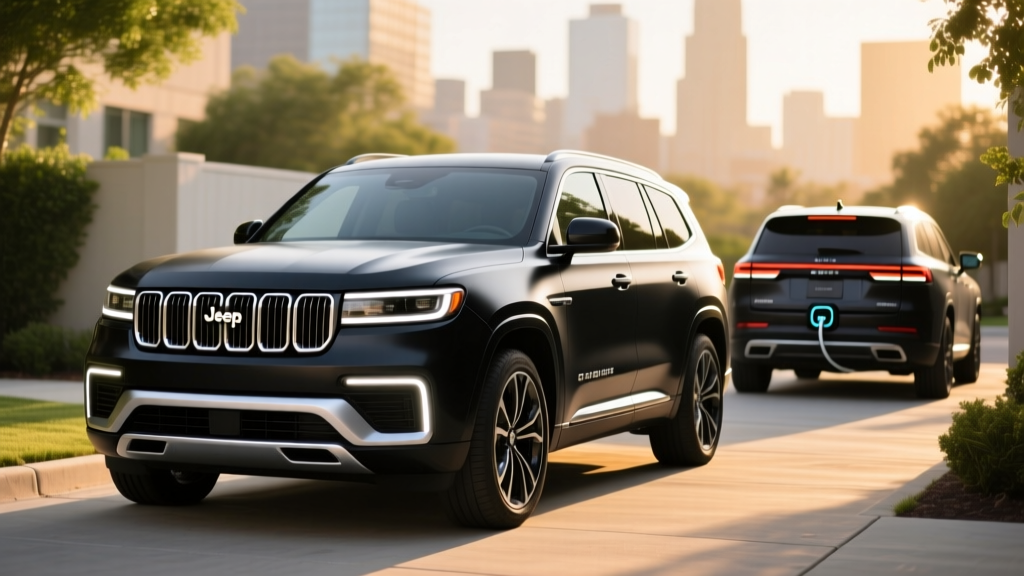
The 2025 Jeep Wagoneer S is Jeep's first fully electric vehicle — a performance-oriented luxury SUV built on Stellantis' STLA Large platform. It offers an EPA-estimated 300 miles of range, 600 horsepower, and a starting MSRP of $65,200 (before incentives). It qualifies for up to $7,500 in federal tax credits under §30D (subject to income and sourcing rules), potentially bringing the effective starting price near $57,700. However, its 100 kWh battery charges at a peak of only ~115 kW on DC fast chargers — slower than competitors like the Hyundai Ioniq 5 or Tesla Model Y — and real-world highway range drops to roughly 250–270 miles. It's a strong pick for Jeep loyalists wanting instant torque and luxury, but road-trippers and cold-climate drivers should weigh the charging-speed trade-off carefully.
Jeep's Electric Vehicle Lineup: What's Available Now
As of the 2025 model year, Jeep offers one fully electric vehicle in the U.S. market: the Wagoneer S. The previously announced Jeep Recon — a boxy, Wrangler-inspired off-road EV — has been delayed and is now expected for the 2026 model year with preliminary specs. Jeep also sells the Wrangler 4xe and Grand Cherokee 4xe plug-in hybrids (PHEVs), which we'll compare below.
This guide focuses on the Wagoneer S as Jeep's sole production BEV (battery electric vehicle), with Recon details noted as preliminary where relevant.
Range, Battery, and Charging: The Numbers That Matter
The Wagoneer S uses a 100 kWh (usable) lithium-ion NMC battery pack with a dual-motor all-wheel-drive layout. Here's the full spec breakdown:
| Spec | 2025 Wagoneer S Launch Edition | 2025 Wagoneer S Limited |
|---|---|---|
| EPA Range | 300 miles | 300 miles |
| Battery (usable) | 100 kWh, NMC | 100 kWh, NMC |
| Horsepower | 600 HP | 600 HP |
| 0-60 mph | 3.4 seconds | 3.4 seconds |
| Peak DC Fast Charge | ~115 kW | ~115 kW |
| 10-80% DC Charge Time | ~23 minutes (est.) | ~23 minutes (est.) |
| Level 2 (AC) Charge Rate | 11.5 kW | 11.5 kW |
| Level 2 Full Charge (0-100%) | ~9.5 hours | ~9.5 hours |
| Drivetrain | Dual-motor AWD | Dual-motor AWD |
| MPGe (combined) | ~100 MPGe (est.) | ~100 MPGe (est.) |
| Base MSRP | $71,995 | $65,200 |
| Battery Warranty | 8 years / 100,000 miles | 8 years / 100,000 miles |
Real-World Range vs. EPA Sticker
The EPA estimates 300 miles of combined range. In real-world conditions, expect:
- Highway driving (75 mph): ~250–270 miles — the large frontal area and heavy curb weight (~5,800 lbs) hurt efficiency at speed.
- Cold weather (below 32°F): ~220–250 miles — NMC chemistry loses 15–25% range in freezing temps, even with thermal preconditioning.
- City/commute driving (moderate climate): ~290–310 miles — regenerative braking recovers energy in stop-and-go traffic.
For reference, the EPA's testing methodology blends city and highway cycles. If your commute is mostly highway, plan around 250 usable miles between charges.
Charging Speed Reality Check
The Wagoneer S peaks at roughly 115 kW on DC fast chargers — respectable, but notably slower than the Hyundai Ioniq 5 (peak 240 kW, 10-80% in ~18 min) or Tesla Model Y (peak 250 kW, 10-80% in ~15 min). On a road trip, that ~23-minute 10-80% session means longer stops. The charge curve also tapers above 80% SoC, as with all lithium-ion packs, so plan to charge to 80% and go rather than topping off.
At home on a Level 2 charger (11.5 kW / 48A), a full 0-100% charge takes about 9.5 hours — easily achievable overnight. If you're installing a home Level 2, budget $800–$2,000 for the charger unit and $1,000–$3,500 for electrical work (240V/60A circuit), depending on your panel capacity and run length.
Wagoneer S vs. Gas Jeep and Competitor EVs
How does Jeep's first EV stack up against its own gas models and rival electric SUVs? Here's a data-driven comparison:
| Spec | 2025 Wagoneer S (EV) | 2025 Grand Cherokee L (Gas V6) | 2025 Tesla Model Y LR | 2025 Hyundai Ioniq 5 Limited |
|---|---|---|---|---|
| Powertrain | Dual-motor AWD BEV | 3.6L V6 AWD | Dual-motor AWD BEV | Dual-motor AWD BEV |
| EPA Range / MPG | 300 mi / ~100 MPGe | 21 MPG combined | 320 mi / 122 MPGe | 290 mi / 110 MPGe |
| Horsepower | 600 HP | 293 HP | 384 HP | 320 HP |
| 0-60 mph | 3.4 sec | 7.1 sec | 4.8 sec | 4.5 sec |
| DC Fast Charge (10-80%) | ~23 min (115 kW) | N/A | ~15 min (250 kW) | ~18 min (240 kW) |
| Starting MSRP | $65,200 | $46,035 | $46,630 | $54,600 |
| Federal Tax Credit (§30D) | Up to $7,500 | $0 | Up to $7,500 | Up to $7,500 |
| Est. Annual Fuel/Energy Cost | ~$750 | ~$2,400 | ~$700 | ~$780 |
Fuel/energy costs based on 15,000 miles/year, $3.50/gal gas, and $0.16/kWh electricity (national average). Your costs vary by local rates. Source: fueleconomy.gov.
Total Cost of Ownership: 5-Year Breakdown
The Wagoneer S has a higher sticker price than a gas Grand Cherokee, but lower running costs. Here's a realistic 5-year / 75,000-mile ownership projection for the Wagoneer S Limited ($65,200 MSRP) versus the Grand Cherokee L Summit Reserve ($58,000 MSRP):
| Cost Category | Wagoneer S Limited (EV) | Grand Cherokee L (Gas V6) |
|---|---|---|
| Purchase Price (MSRP) | $65,200 | $58,000 |
| Federal Tax Credit (§30D) | -$7,500* | $0 |
| Effective Purchase Price | $57,700 | $58,000 |
| Home Charger Install (one-time) | $2,500 | $0 |
| 5-Year Fuel/Energy Cost | $3,750 | $12,000 |
| 5-Year Maintenance | $1,200 | $4,500 |
| 5-Year Insurance (est.) | $12,500 | $9,500 |
| Estimated 5-Year Depreciation | $22,000 | $18,000 |
| Total 5-Year Cost | $99,650 | $102,000 |
*Tax credit eligibility depends on buyer income caps ($150K single / $300K joint), MSRP caps ($80K for SUVs), and battery sourcing requirements. Verify current-year rules at IRS.gov §30D. Point-of-sale transfer is available at participating dealers.
Key takeaway: Over 5 years, the Wagoneer S costs roughly the same as a comparably equipped Grand Cherokee L when you factor in the tax credit, energy savings, and lower maintenance — despite the higher MSRP. However, insurance is notably higher (EV insurance premiums run 15–30% more than equivalent gas vehicles), and depreciation remains uncertain for Jeep's first EV.
Real-World Ownership: What First-Time EV Buyers Should Know
If you're considering the Wagoneer S as your first electric vehicle, here's what the spec sheet doesn't tell you:
Home Charging Is Essential
The Wagoneer S's 100 kWh battery makes Level 1 (120V) charging impractical — it would take ~100+ hours for a full charge. You'll need a Level 2 home charger (240V) to wake up to a full battery daily. If you live in an apartment or lack garage access, public DC fast charging at 115 kW means roughly 2–3 stops per week to stay topped up, which gets expensive ($0.35–$0.55/kWh at networks like Electrify America or EVgo).
Cold Climate? Plan for Range Loss
The Wagoneer S uses NMC battery chemistry, which is energy-dense but more susceptible to cold-weather range loss than LFP. If you live in the Upper Midwest or Northeast, expect a 20–25% range reduction in sustained sub-freezing temperatures. The thermal management system and preconditioning help, but physics wins. Garaging the vehicle and preconditioning while plugged in will recover some of that loss.
Towing and Cargo Trade-Offs
Jeep hasn't published a towing rating for the Wagoneer S as of early 2026 — a notable gap for SUV buyers. Cargo space is competitive at roughly 30 cu ft behind the second row and ~60 cu ft with seats folded, but there's no front trunk (frunk), as the STLA Large platform allocates that space to HVAC and power electronics.
Driver Assistance: Level 2, Not Self-Driving
The Wagoneer S comes with Jeep's Active Driving Assist, a SAE Level 2 system combining adaptive cruise control and lane centering. This requires your hands on the wheel and eyes on the road at all times. It is not autonomous driving — it's a convenience feature similar to Toyota Safety Sense or Honda Sensing.
⚠️ What the Wagoneer S Does NOT Do
- Does not charge at 350 kW: Peak rate is ~115 kW. Don't expect 10-minute top-ups at ultra-fast chargers.
- Does not have a frunk: All cargo goes in the rear.
- Does not qualify for everyone: The §30D tax credit has income caps ($150K single filer, $300K joint) and battery-sourcing requirements that change annually.
- Does not have confirmed off-road capability: Despite the Jeep badge, the Wagoneer S is a street-oriented luxury SUV. The Recon is the off-road EV (when it arrives).
Common Misconceptions About the Jeep Wagoneer S
| Myth | Fact |
|---|---|
| "It's a Wrangler-style off-roader" | The Wagoneer S is a unibody luxury SUV focused on on-road performance. It lacks solid axles, locking differentials, or serious ground clearance for trail use. |
| "300 miles of range means 300 miles highway" | EPA range is a blended estimate. Sustained 75 mph highway driving yields ~250–270 miles. Cold weather reduces this further. |
| "I'll save $7,500 no matter what" | The §30D credit requires meeting income caps, MSRP caps ($80K for SUVs), and critical-mineral/battery-component sourcing thresholds. Eligibility varies by buyer and model year. Check IRS.gov or consult a tax professional. |
| "DC fast charging is always 115 kW" | Peak rate only applies at optimal SoC (~10–40%) and battery temperature. Above 80% SoC, charging tapers significantly to protect battery health. |
| "EVs cost more to own long-term" | With the tax credit, lower energy costs, and reduced maintenance (no oil changes, fewer brake replacements due to regen), the 5-year TCO is competitive with gas equivalents — but insurance and depreciation are wildcards. |
Decision Framework: Should You Buy the Wagoneer S?
Choose the Wagoneer S If:
- You want a performance luxury SUV with 600 HP and 3.4-second 0-60 times — it's one of the quickest SUVs in its price class.
- You have home charging access (garage or driveway with 240V capability) and drive under 250 miles daily.
- You qualify for the §30D federal tax credit (income under $150K single / $300K joint) and can apply it at point of sale.
- You're a Jeep/Stellantis loyalist who wants to stay in the brand ecosystem and values the Wagoneer luxury positioning.
- You prioritize instant torque and AWD traction over maximum charging speed or off-road capability.
Look Elsewhere If:
- You take frequent road trips over 300 miles — the 115 kW peak charge rate means longer stops than a Tesla Model Y or Hyundai Ioniq 5.
- You need serious off-road capability — wait for the Jeep Recon or consider the Wrangler 4xe PHEV.
- You live in an apartment without charging access and rely entirely on public charging — the slower DC rate and 100 kWh battery make this costly and time-consuming.
- You want the lowest entry price — the Model Y starts ~$19K lower, and even with comparable trims, the Wagoneer S is a premium play.
- You need three-row seating — the Wagoneer S seats five. Look at the Kia EV9 or Rivian R1S for three rows.
Jeep Recon Preview: The Off-Road EV (Announced)
The Jeep Recon is Jeep's upcoming off-road-oriented EV, also on the STLA Large platform. It's expected to feature:
- Selectable 4x4 modes with electronic locking differentials
- Removable doors and a fold-down windshield (Wrangler heritage)
- Estimated EPA range: ~280–320 miles (preliminary)
- Expected MSRP: ~$55,000–$65,000 (preliminary)
- Expected availability: 2026 model year (orders not yet open as of early 2026)
These specs are preliminary and subject to change. Jeep has not published final EPA or pricing data for the Recon.
Frequently Asked Questions
Does the Jeep Wagoneer S qualify for the $7,500 federal EV tax credit?
It may. The Wagoneer S Limited ($65,200) falls under the $80,000 MSRP cap for SUVs. However, the §30D credit also requires the buyer to meet income caps ($150,000 single / $300,000 joint filer) and the vehicle must meet critical-mineral and battery-component sourcing thresholds that tighten annually. Verify eligibility at IRS.gov or ask your dealer about point-of-sale transfer availability.
How long does it take to charge the Wagoneer S at home?
On a Level 2 home charger (11.5 kW / 240V), a full 0-100% charge takes approximately 9.5 hours. For daily use, most owners plug in overnight and wake up fully charged. A standard 120V outlet (Level 1) would take over 100 hours — not practical for a 100 kWh battery.
Is the Wagoneer S good for off-roading?
No. Despite the Jeep badge, the Wagoneer S is a street-focused luxury SUV with unibody construction, modest ground clearance, and no locking differentials or low-range gearing. If off-road EV capability is your priority, wait for the Jeep Recon or consider the Wrangler 4xe plug-in hybrid.
What's the real-world highway range?
Expect approximately 250–270 miles at sustained highway speeds (70–75 mph) in moderate temperatures. In cold weather (below freezing), that drops to roughly 220–250 miles. The EPA's 300-mile estimate reflects a blended city/highway cycle under ideal conditions.
How does the Wagoneer S compare to a Tesla Model Y?
The Model Y Long Range costs ~$19,000 less, offers slightly more EPA range (320 vs. 300 miles), charges significantly faster (250 kW peak vs. 115 kW), and has access to Tesla's Supercharger network. The Wagoneer S counters with far more horsepower (600 vs. 384 HP), a quicker 0-60 (3.4 vs. 4.8 sec), and a more traditional luxury SUV interior. It comes down to whether you prioritize value and charging speed (Model Y) or performance and brand cachet (Wagoneer S).
Will the battery need replacing? What does it cost?
The Wagoneer S battery is warranted for 8 years or 100,000 miles (whichever comes first) against capacity loss below 70%. NMC batteries typically degrade 10–15% over 150,000–200,000 miles. A full battery replacement outside warranty would likely cost $15,000–$22,000 based on current 100 kWh pack pricing, but most owners will never need one within typical ownership periods.