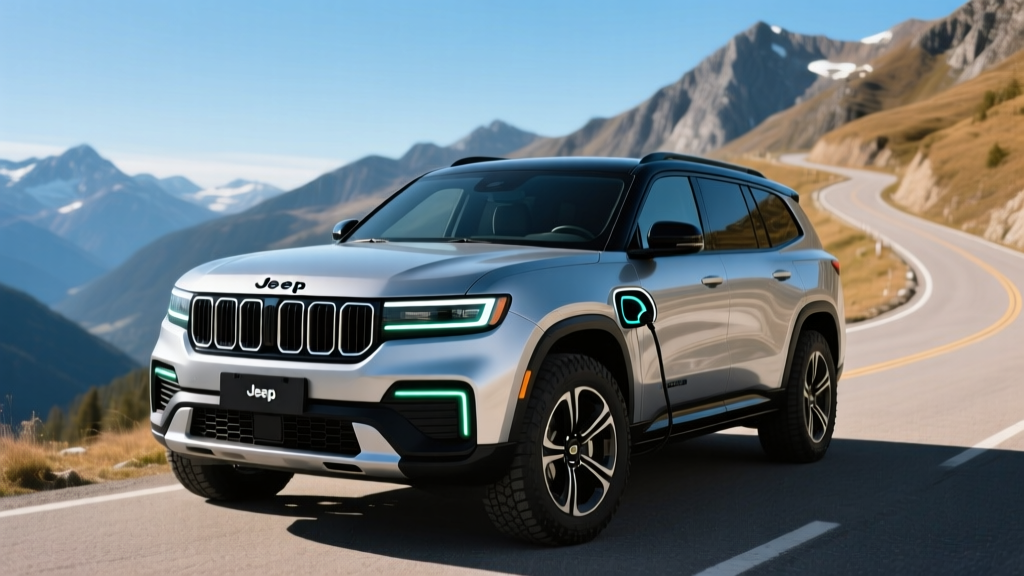
Jeep's first global battery-electric vehicle, the Wagoneer S, lands in a crowded premium electric SUV segment with a bold promise: Wrangler-badged heritage fused with 600 horsepower, 300 miles of range, and a sub-4-second 0-60 time. But with a starting MSRP over $65,000 and a luxury EV market packed with rivals like the BMW iX, Audi Q8 e-tron, and Tesla Model X, finding genuine Jeep Wagoneer S deals requires understanding exactly what you're getting — and what you're paying for after incentives.
This profile breaks down the 2026 Wagoneer S with the data that matters: real-world range versus the EPA sticker, charging-curve realities, federal tax credit eligibility under IRS §30D rules, and whether this electric Jeep actually earns its premium price tag.
Range, Battery, and Real-World Efficiency
The Wagoneer S uses a 100 kWh usable lithium-ion battery pack built on Stellantis' STLA Large platform. Jeep engineers opted for an NMC (nickel-manganese-cobalt) chemistry, which delivers higher energy density than LFP — important for fitting 300+ miles of range into a vehicle with serious off-road structural reinforcement. The pack operates on an 800-volt architecture, enabling the faster charge speeds we'll cover next.
Real-World Expectation: Plan for ~260–280 miles on highway-heavy trips at 70+ mph. In freezing temperatures (below 32°F), expect a 20–30% reduction, dropping effective range to ~210–240 miles. The standard heat pump helps mitigate cabin energy draw in cold weather, but battery chemistry still suffers in extreme cold.
Efficiency: 2.0–2.2 kWh/mile (approximately 100 MPGe combined, per EPA fueleconomy.gov data)
The 300-mile EPA figure is competitive with the BMW iX xDrive50 (307 miles) and slightly behind the Tesla Model X Long Range (335 miles). However, the Wagoneer S is heavier than both — its body-on-frame-inspired unibody with skid-plate-ready underbody protection adds mass that shows up in the kWh/mile consumption. Around town with regenerative braking set to maximum, you'll see numbers closer to the EPA estimate or slightly better. Sustained highway driving above 75 mph is where the aerodynamic penalty of a Jeep-profile SUV becomes visible.
Charging Speed: DC Fast and Home Level 2
The 800V architecture is the Wagoneer S's charging ace. On a capable 350 kW DC fast charger (like Electrify America's latest stalls), the pack peaks at approximately 270 kW. Here's what the charge curve actually looks like in practice:
| Charging Level | Power / Rate | Time / Speed | Notes |
|---|---|---|---|
| Level 1 (120V household) | ~1.4 kW | ~3–4 mi/hr | Emergency/trickle only; ~70+ hrs for full charge |
| Level 2 (240V, 48A home charger) | 11.5 kW | ~30 mi/hr; full in ~9 hrs | Overnight charging; requires NACS or J1772 adapter |
| DC Fast Charge (peak) | 270 kW (peak) | 10–80% in ~23 min | 800V architecture; tapers significantly above 80% |
| DC Fast Charge (sustained avg.) | ~180 kW avg (10-80%) | ~23 min to 80% | Peak holds to ~55% SoC, then steps down |
Peak charge rate is only part of the story. The Wagoneer S holds its 270 kW peak until approximately 50–55% state of charge, then steps down to ~175 kW through 70%, and further drops to under 100 kW above 80%. This is standard NMC behavior — if you're road-tripping, plan your stops to charge from 10–80% and move on rather than waiting for a full top-off. Charging from 80–100% can add another 25–30 minutes.
The Wagoneer S ships with a NACS (North American Charging Standard) port, granting native access to Tesla Supercharger stations via the expanding network. This is a significant advantage for road-trip charging reliability over CCS-only vehicles in 2026.
Performance: 600 Horsepower, Sub-4-Second Sprints
The dual-motor all-wheel-drive powertrain produces 600 horsepower and an estimated 617 lb-ft of torque. Jeep targets a 0–60 mph time of 3.4 seconds — putting the Wagoneer S in sports-car territory and ahead of the BMW iX M60 (3.6 seconds). The STLA Large platform's low-slung battery pack keeps the center of gravity lower than any Wrangler or Grand Cherokee has ever achieved, and the result is an SUV that corners with composure its upright silhouette doesn't suggest.
Drivetrain details include a front and rear permanent-magnet synchronous motor with torque vectoring. Jeep has also engineered a disconnecting front axle motor for highway cruising efficiency — when AWD traction isn't needed, the front motor decouples to reduce drag losses. This is a feature BMW and Hyundai have used to good effect, and it contributes to the Wagoneer S's respectable highway efficiency.
Ground clearance sits at approximately 8.0 inches, with Jeep's Selec-Terrain traction management system adapted for electric torque delivery. Snow, Sand, Mud, and Eco modes adjust regen strength and torque split. Don't expect Wrangler Rubicon articulation, but this is a genuinely capable light-trail and snow SUV — more so than most electric crossovers.
Pricing, Trims, and Federal Tax Credit Eligibility
The 2026 Wagoneer S launches in two primary trims:
| Trim | Base MSRP | As-Tested (w/ options) | Est. After §30D Credit* |
|---|---|---|---|
| Launch Edition | $65,200 | $67,500–$70,000 | $57,700–$62,500 |
| Limited (expected late 2026) | $72,000 (est.) | $78,000+ | $64,500+ |
*Federal tax credit estimates assume full eligibility. See rules below.
Destination charges add approximately $1,795. Dealer-installed accessories and the available panoramic glass roof, 20-inch wheels, and premium McIntosh audio system can push a Launch Edition past $72,000 before incentives.
- MSRP Cap: SUVs must not exceed $80,000 MSRP. The Wagoneer S qualifies on base trims; heavily optioned Limited models could exceed the cap — confirm with your dealer.
- Buyer Income Cap: Modified adjusted gross income must not exceed $150,000 (single), $225,000 (head of household), or $300,000 (married filing jointly).
- Battery Sourcing: Critical minerals and battery components must meet escalating domestic/free-trade-partner sourcing thresholds. Stellantis has indicated the Wagoneer S battery pack meets 2026 critical-mineral requirements, but component sourcing rules tighten annually. Verify with the dealer using the VIN-specific IRS clean vehicle credit lookup at the time of purchase.
- Point-of-Sale Transfer: You can transfer the credit to the dealer at purchase, reducing your out-of-pocket price immediately rather than waiting for tax filing.
- Assembly: Final assembly must occur in North America. The Wagoneer S is assembled at Stellantis' Brampton, Ontario plant — which, as a USMCA partner, satisfies the requirement.
State incentives vary widely and are not covered here. California, Colorado, New York, and several other states offer additional rebates or HOV-lane access — check your local DMV or energy office for current programs.
Finding Actual Jeep Wagoneer S Deals
Here's where buyers need a clear-eyed view. The Wagoneer S is a low-volume, high-profile launch for Stellantis. In its first model year, genuine discounting is unlikely. However, several levers can reduce your effective price:
- Point-of-sale §30D transfer: Applying the $7,500 credit at the dealership drops a $65,200 Launch Edition to ~$57,700 before state incentives or trade-in value.
- Stellantis loyalty cash: Existing Jeep/Chrysler/Dodge owners have historically received $1,000–$2,000 loyalty incentives on new launches. Watch for these in Stellantis' monthly incentive guides.
- Dealer floorplan pressure: If inventory builds by late 2026 or early 2027, dealers may offer below-MSRP pricing or subsidized lease money factors. This is more likely on the higher-trim Limited.
- Lease loophole: Some luxury EVs leased through captive finance companies pass through commercial clean vehicle credits (§45W) as lease cash, bypassing the §30D MSRP and income caps. Monitor Stellantis Financial Services lease offers.
- Timing: End-of-quarter and end-of-year sales events (especially December and model-year changeover) are the most likely windows for genuine Wagoneer S deals.
Interior, Cargo, and Technology
The Wagoneer S cabin seats five (not seven — there is no third row) and leans heavily into screen real estate. The dashboard features a combined 45 inches of display area: a 12.3-inch driver cluster, a 12.3-inch passenger display, and a 12.3-inch central touchscreen running Stellantis' Uconnect 5 EV software. A dedicated EV route-planning feature integrates charging stops into navigation automatically, factoring in battery state, terrain, and charger availability.
Cargo volume is approximately 30 cubic feet behind the second row and 60 cubic feet with the rear seats folded — competitive with the BMW iX (31.5 / 56.6 cu ft) but less than the Tesla Model X's maximum. A small front trunk (frunk) adds roughly 2.5 cubic feet — enough for a charging cable bag and small groceries.
Legroom is generous at 40.9 inches front and 38.5 inches rear, with a flat floor thanks to the skateboard-style battery layout. Materials on the Launch Edition include synthetic leather (Jeep calls it "Sahara" eco-suede) with real leather available on the Limited.
Driver Assistance: The Wagoneer S includes Jeep's Active Driving Assist, a Level 2 system per SAE classification, providing lane centering and adaptive cruise control. Hands-free highway driving is available on mapped divided highways via Active Driving Assist with hands-off capability (eyes-on monitoring required). This is not autonomous driving — the driver must remain attentive and is legally responsible at all times.
Warranty, Ownership Costs, and Reliability Outlook
| Coverage Type | Term |
|---|---|
| Basic / Bumper-to-Bumper | 3 years / 36,000 miles |
| Powertrain | 5 years / 60,000 miles |
| Battery Pack | 8 years / 100,000 miles (minimum 70% capacity retention) |
| Roadside Assistance | 5 years / 60,000 miles |
The 8-year/100,000-mile battery warranty meets the industry standard set by federal mandate. The 70% capacity retention threshold means Stellantis will repair or replace the pack if it degrades below 70 kWh usable within that window. Based on NMC degradation data from similar platforms, most owners will see 8–12% capacity loss over 8 years under normal use — well within warranty tolerance.
Insurance premiums for the Wagoneer S are expected to run 15–25% higher than a comparably priced gas SUV due to repair costs for aluminum body panels and the high-voltage system. Get quotes before purchasing — this is a line item many EV buyers overlook.
Maintenance costs are significantly lower than ICE vehicles: no oil changes, no transmission fluid, fewer brake replacements thanks to regenerative braking. Expect annual maintenance of $200–$400 versus $800–$1,200 for a gas-powered Grand Cherokee.
Pros and Cons
- 3.4-second 0-60 with 600 hp — genuinely thrilling acceleration
- 270 kW peak DC fast charging; 10-80% in ~23 minutes
- NACS port = native Tesla Supercharger access
- 800V architecture for sustained fast-charge performance
- Jeep brand cachet with genuine light-off-road capability
- Flat floor, spacious 5-passenger cabin with 38.5" rear legroom
- Qualifies for $7,500 federal tax credit (eligibility-dependent)
- $65,200 base MSRP is steep — rivals offer more range for less
- 300-mile EPA range trails Model X (335 mi) and iX (307 mi)
- No third row; strictly a 5-passenger SUV
- Small 2.5 cu ft frunk
- Real-world highway range closer to 260-280 miles
- First-year model — no long-term reliability data
- Insurance premiums likely 15-25% above gas equivalent
Who Should Buy the Wagoneer S?
- You want Jeep brand identity with serious electric performance
- You need fast DC charging for road trips (270 kW peak is top-tier)
- You value Supercharger network access via NACS
- You want a premium 5-seat SUV with light off-road capability
- You qualify for the full §30D credit and can bring effective price below $60K
- You need 3-row seating (consider the Kia EV9 or Rivian R1S)
- Maximum range is your priority (Tesla Model X or Lucid Gravity offer more)
- Budget is under $55,000 after incentives
- You want proven long-term reliability data (this is a first-year model)
Frequently Asked Questions
What is the real-world range of the Jeep Wagoneer S?
The EPA rates the Wagoneer S at 300 miles combined. In real-world highway driving at 70-80 mph, expect 260-280 miles. In cold weather below freezing, plan for 210-240 miles. Always build in a 10-15% buffer for unexpected detours or HVAC demand.
How fast does the Wagoneer S charge at home and on the road?
At home on a 48-amp Level 2 charger (240V), the Wagoneer S adds roughly 30 miles per hour, fully charging overnight in about 9 hours. On a 350 kW DC fast charger, it peaks at 270 kW and charges from 10-80% in approximately 23 minutes.
How much does the Wagoneer S cost after the federal tax credit?
The Launch Edition starts at $65,200. If you qualify for the full $7,500 §30D credit and apply it at point of sale, the effective price drops to approximately $57,700 before state incentives. Eligibility depends on income caps, MSRP limits, and battery sourcing requirements — verify at IRS.gov.
Does the Jeep Wagoneer S qualify for the $7,500 federal EV tax credit?
The base Launch Edition at $65,200 MSRP falls under the $80,000 SUV cap, and Stellantis has indicated compliance with 2026 battery-sourcing rules. However, eligibility also depends on your income (single filers must earn under $150K MAGI; joint filers under $300K) and final VIN-specific battery component sourcing. Always confirm with your dealer and a tax professional before relying on the credit.
Is the Wagoneer S worth buying over the BMW iX or Tesla Model X?
It depends on priorities. The Model X offers more range (335 mi) and a third-row option. The BMW iX delivers slightly better range (307 mi) and a more refined interior. The Wagoneer S counters with faster 0-60 times, native NACS/Supercharger access, genuine Jeep off-road DNA, and a distinctive design. If brand identity, fast charging, and NACS access matter to you, it's a strong contender. If range-per-dollar is paramount, the Model X or iX may serve better.
What are the biggest drawbacks of the Wagoneer S?
The main complaints will likely center on the $65,200 starting price for 300 miles of range (the value equation trails some rivals), the lack of a third row, a small frunk, and first-model-year risk with no long-term reliability track record. Insurance costs will also be higher than a gas equivalent.
Can the Wagoneer S tow?
Jeep rates the Wagoneer S for up to 4,000 pounds of towing capacity — adequate for a small boat, motorcycle trailer, or light camper. Keep in mind that towing will reduce effective range by 30-50%, depending on trailer weight and aerodynamics.