Quick Answer: Is the 2025 Jeep Wagoneer S EV Worth Buying?
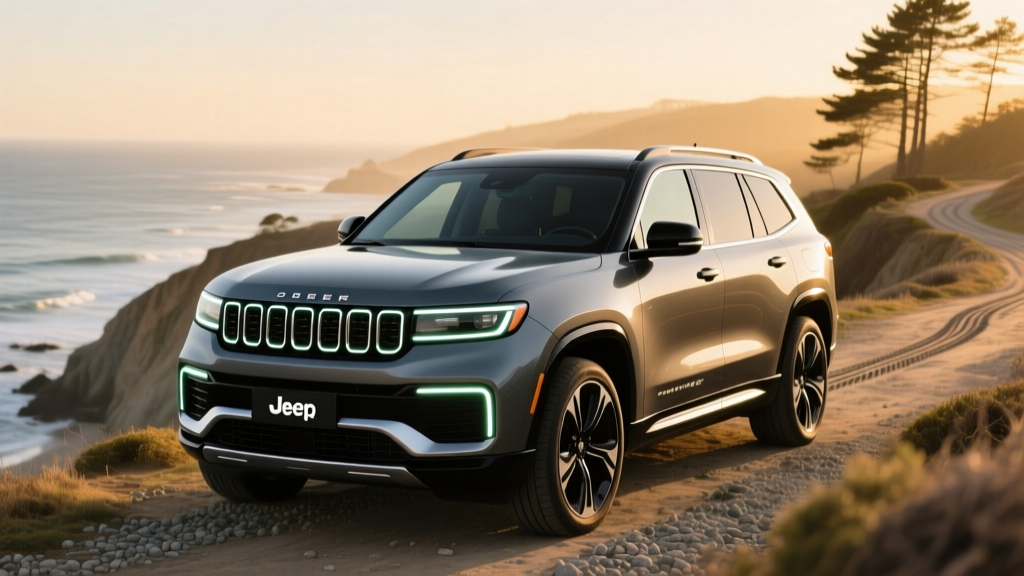
The 2025 Jeep Wagoneer S is Jeep's first global battery-electric vehicle, built on Stellantis' STLA Large platform. It offers an estimated 300+ miles of EPA range, a 100 kWh battery pack, and up to 600 horsepower in the Launch Edition. Starting at approximately $65,000, it competes directly with the Tesla Model X, BMW iX, and Rivian R1S. It's best suited for buyers who want a premium electric SUV with genuine off-road credibility and don't need three rows of seating. Federal tax credit eligibility under §30D remains uncertain pending final battery-sourcing compliance — check the IRS's current qualified vehicle list before purchase.
Range, Battery, and Efficiency: What the Numbers Actually Mean
The Wagoneer S packs a 100 kWh (usable capacity) lithium-ion battery using NMC (nickel manganese cobalt) chemistry, chosen for its higher energy density compared to LFP. Jeep targets an EPA-estimated range of over 300 miles, though final EPA certification figures were still pending at the time of the vehicle's launch.
EPA Estimate: 300+ miles (final certification pending)
Real-World Expectation: Plan for approximately 240–270 miles on sustained highway driving at 70+ mph. In cold weather (below 32°F), expect a 20–30% reduction, bringing usable range to roughly 210–240 miles. The boxy SUV profile and all-terrain tires on certain trims increase aerodynamic drag and rolling resistance, which directly impacts efficiency at speed.
Efficiency is estimated around 85–90 MPGe combined (roughly 36–39 kWh/100 miles). For context, the Tesla Model X Long Range achieves 101 MPGe combined, while the heavier Rivian R1S lands around 73 MPGe. The Wagoneer S sits between these benchmarks, which is reasonable given its performance targets and off-road hardware.
| Specification | 2025 Jeep Wagoneer S |
|---|---|
| Battery Capacity (usable) | ~100 kWh (NMC) |
| EPA Range | 300+ miles (est.) |
| Peak DC Fast Charge Rate | ~200 kW |
| 10–80% DC Fast Charge Time | ~23 minutes (est.) |
| Level 2 Charging (240V, 48A) | ~11.5 kW |
| Horsepower (Launch Edition AWD) | 600 hp |
| 0–60 mph | ~3.5 seconds |
| Drivetrain | Dual-motor AWD |
| Starting MSRP | ~$65,000 |
| Battery/Powertrain Warranty | 8 years / 100,000 miles |
Charging Speed and Infrastructure Reality
The Wagoneer S supports DC fast charging at an estimated peak rate of around 200 kW via the CCS1 connector (North American standard for non-Tesla EVs, though NACS adoption across Stellantis brands is underway for future models). At peak rate, a 10–80% charge takes approximately 23 minutes. However, peak rate is not sustained rate — the charge curve tapers significantly above 80% SoC to protect battery health. Expect a full 10–100% session to take closer to 40–45 minutes.
For home Level 2 charging at 11.5 kW (48 amps on a 240V/60A circuit), a full 0–100% charge takes roughly 9–10 hours. This is practical for overnight replenishment, and most owners will rarely charge from 0% at home. Daily driving of 30–50 miles requires only 3–5 hours of Level 2 charging.
| Charging Level | Power | Miles Added per Hour | Use Case |
|---|---|---|---|
| Level 1 (120V household) | ~1.4 kW | ~3–4 miles | Emergency / overnight trickle |
| Level 2 (240V, 48A) | ~11.5 kW | ~28–32 miles | Daily home charging |
| DC Fast Charge | Up to ~200 kW | ~500+ miles/hr (peak) | Road trips, 10–80% in ~23 min |
Home charging installation cost: A Level 2 home charger (such as a ChargePoint Home Flex or Emporia Level 2) costs $500–$700 for the unit. Professional installation by a licensed electrician typically runs $800–$2,000 if your electrical panel has capacity for a 60A circuit. If a panel upgrade (to 200A service) is needed, add $1,500–$3,000. Total home charging setup: $1,300–$5,700 depending on your home's electrical infrastructure.
EV vs. Gas Wagoneer: Cost and Capability Comparison
The gas-powered Jeep Grand Wagoneer starts around $90,000 and achieves just 14–17 MPG combined. Let's compare the real operating costs over 5 years and 75,000 miles.
| Cost Factor | Wagoneer S EV (est.) | Grand Wagoneer (gas, 15 MPG) |
|---|---|---|
| Base MSRP | $65,000 | $90,000 |
| Federal Tax Credit (§30D) | Up to $7,500 (if eligible)* | $0 |
| Effective Purchase Price | ~$57,500 | $90,000 |
| Fuel/Energy (75k mi) | ~$4,500 (home L2, $0.14/kWh avg) | ~$17,500 ($3.50/gal avg) |
| Maintenance (5 yr) | ~$1,200 (tires, cabin filter, fluid top-offs) | ~$4,500 (oil, brakes, transmission, filters) |
| Insurance (5 yr avg) | ~$12,000 | ~$10,500 |
| 5-Year Total Operating Cost | ~$17,700 | ~$32,500 |
*Federal §30D tax credit eligibility depends on MSRP caps (SUVs: $80,000), buyer income limits ($300k MFJ / $150k single), battery component and critical mineral sourcing requirements, and point-of-sale transfer availability. Always verify current eligibility at IRS.gov qualified vehicle list before purchasing.
The fuel savings alone — roughly $13,000 over five years — are substantial. EV maintenance savings add another $3,000+. However, EV insurance premiums run 10–20% higher on average due to repair costs and battery replacement risk. Factor that in.
Real-World Ownership: What First-Time EV Buyers Must Know
Home Charging Access Is Non-Negotiable for Convenience
The Wagoneer S ownership experience is dramatically better with reliable Level 2 home charging. If you live in an apartment without charging access, or in a neighborhood where street parking is the norm, you'll be dependent on public DC fast chargers. While the Electrify America and EVgo networks have expanded significantly, public charging still costs $0.35–$0.55/kWh — nearly 3–4x the cost of home charging. Without home access, your 5-year energy cost jumps from ~$4,500 to $12,000–$15,000.
Cold Weather Hits Range Hard
The Wagoneer S's NMC battery will lose capacity in freezing temperatures. Expect 20–30% range reduction in sustained sub-32°F driving. The dual-motor AWD system and available heat pump (check trim-level availability) help mitigate cabin energy draw, but battery chemistry is physics — cold slows ion movement. If you live in Minnesota, Montana, or upstate New York, plan your road-trip charging stops with a 25% range buffer in winter.
Preconditioning Matters for Fast Charging
When navigating to a DC fast charger, the Wagoneer S's thermal management system should precondition the battery — warming it to optimal temperature for maximum charge acceptance. If you arrive at a fast charger with a cold-soaked battery (especially in winter), your peak charge rate may drop from 200 kW to 80–100 kW, adding 10–15 minutes to your stop. Always use the vehicle's built-in navigation to route through chargers, which triggers preconditioning automatically.
Charging Deserts Still Exist
While the U.S. DC fast-charging network has grown to over 50,000 ports, rural corridors in the Mountain West, Great Plains, and parts of the Southeast still have gaps exceeding 100 miles between stations. If your regular routes include I-70 through Kansas or US-93 in Nevada, map your charging stops in advance using A Better Routeplanner or PlugShare.
Myths vs. Facts: Common Misconceptions About the Wagoneer S EV
| Myth | Fact |
|---|---|
| "EV batteries need replacing every 5 years." | The Wagoneer S battery carries an 8-year/100,000-mile warranty with a capacity retention threshold (typically 70% of original capacity). Real-world data from similar NMC packs shows 10–15% degradation over 100k miles — meaning you'll still have ~255+ miles of range. |
| "It can't handle real off-road use." | The Wagoneer S includes Jeep's Selec-Terrain system with specific EV drive modes, over 10 inches of ground clearance, and available all-terrain tires. Instant torque from dual motors actually improves low-speed rock crawling. However, sustained high-load off-roading will drain range quickly — plan accordingly. |
| "The $7,500 tax credit applies to everyone." | §30D has strict requirements: buyer AGI caps, vehicle MSRP caps ($80k for SUVs), and battery sourcing rules that have eliminated several competitors from eligibility. Always check the IRS qualified list for the current model year. |
| "Charging takes too long for road trips." | A 10–80% DC fast charge in ~23 minutes aligns with a typical rest stop (bathroom, food, stretch). On a 600-mile trip, you'll add roughly 45–60 minutes of total charging time versus a single gas fill-up. |
Decision Framework: Should You Buy the 2025 Jeep Wagoneer S EV?
Choose the Wagoneer S EV if:
- You have Level 2 home charging (or can install it)
- Your daily driving is under 100 miles round-trip, with occasional 300–500 mile road trips
- You want a premium 2-row electric SUV with genuine off-road capability
- You value instant torque and a 3.5-second 0–60 time in a family vehicle
- You want to eliminate oil changes, transmission service, and brake pad replacements (regen braking saves pads)
- You qualify for the §30D tax credit (check income and sourcing requirements)
Look elsewhere if:
- You need 3-row seating (consider the Rivian R1S or Kia EV9)
- You lack home charging access and your area has sparse public infrastructure
- You regularly tow over 5,000 lbs (towing cuts EV range by 30–50%; a gas or diesel SUV may be more practical)
- You live in extreme cold and regularly drive 250+ miles between charging stops in winter
- Your budget is under $55,000 (consider the Hyundai Ioniq 5, Chevrolet Equinox EV, or used EV market)
Pricing, Trims, and What You'll Actually Pay
The 2025 Wagoneer S launches in two initial trims:
- Launch Edition: ~$70,000 MSRP — fully loaded with 600 hp dual-motor AWD, premium interior, panoramic sunroof, advanced ADAS suite, and off-road package. Includes destination charge.
- Base trim (expected later): ~$65,000 MSRP — slightly reduced equipment, same powertrain and battery.
Both trims fall under the $80,000 MSRP cap for SUVs under §30D. However, buyer income limits apply: Modified Adjusted Gross Income (MAGI) must not exceed $300,000 for married filing jointly, $225,000 for head of household, or $150,000 for single filers. The credit can be transferred to the dealer at point of sale, reducing your purchase price directly — but only if the vehicle's battery components and critical minerals meet domestic sourcing thresholds. Stellantis has not publicly confirmed full §30D compliance for the Wagoneer S battery supply chain as of this writing.
For the latest qualified vehicle list, consult the IRS Clean Vehicle Credit page. For official vehicle specifications and availability, check Jeep.com.
Frequently Asked Questions
What is the real-world range of the 2025 Jeep Wagoneer S EV?
While the EPA estimate targets 300+ miles, real-world highway driving at 70–80 mph typically yields 240–270 miles. In freezing temperatures, expect 210–240 miles. Efficiency-driven habits (moderate speeds, preconditioning, regen braking) can push you closer to the EPA number.
Does the Wagoneer S support Tesla Superchargers?
As of 2025, the Wagoneer S uses the CCS1 connector. Stellantis has committed to adopting the NACS (Tesla) connector across its EV lineup, but the 2025 Wagoneer S ships with CCS1. A CCS-to-NACS adapter may be available for Supercharger access — check with Jeep for official adapter compatibility and network agreements.
How does the Wagoneer S compare to the Rivian R1S?
The Rivian R1S offers 3-row seating, up to 410 miles of EPA range (Max Pack), and a starting price around $79,900. The Wagoneer S is quicker (3.5s vs 4.5s 0–60), starts lower at ~$65,000, but only seats five and offers less maximum range. Choose the R1S for family hauling and maximum range; choose the Wagoneer S for performance, price, and Jeep brand heritage.
What happens if the battery degrades significantly?
Under the 8-year/100,000-mile federal battery warranty, if capacity drops below the stated retention threshold (typically 70%), Stellantis must repair or replace the battery at no cost. Replacement cost out of warranty is estimated at $15,000–$22,000 for a 100 kWh pack, though prices are expected to decline as battery manufacturing scales.
Is the Wagoneer S good for towing?
Jeep targets a towing capacity of approximately 5,000 lbs. However, towing at or near max capacity will reduce range by 30–50%, potentially dropping your effective range to 150–200 miles. For frequent heavy towing, a gas or diesel platform remains more practical until DC fast-charging infrastructure fills in along towing corridors.
What ADAS features does it include?
The Wagoneer S includes Jeep's Active Driving Assist, a Level 2 (SAE) driver-assistance system offering adaptive cruise control with stop-and-go, lane centering, and traffic sign recognition. This is not autonomous driving — the driver must remain engaged with hands on the wheel and eyes on the road at all times. Hands-free highway driving features may be available on higher trims or via OTA updates.