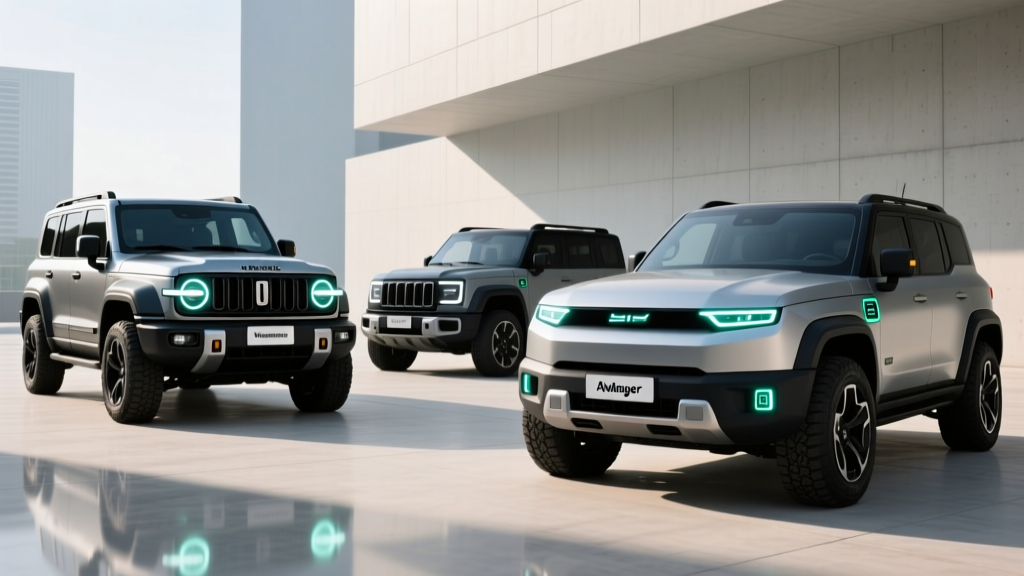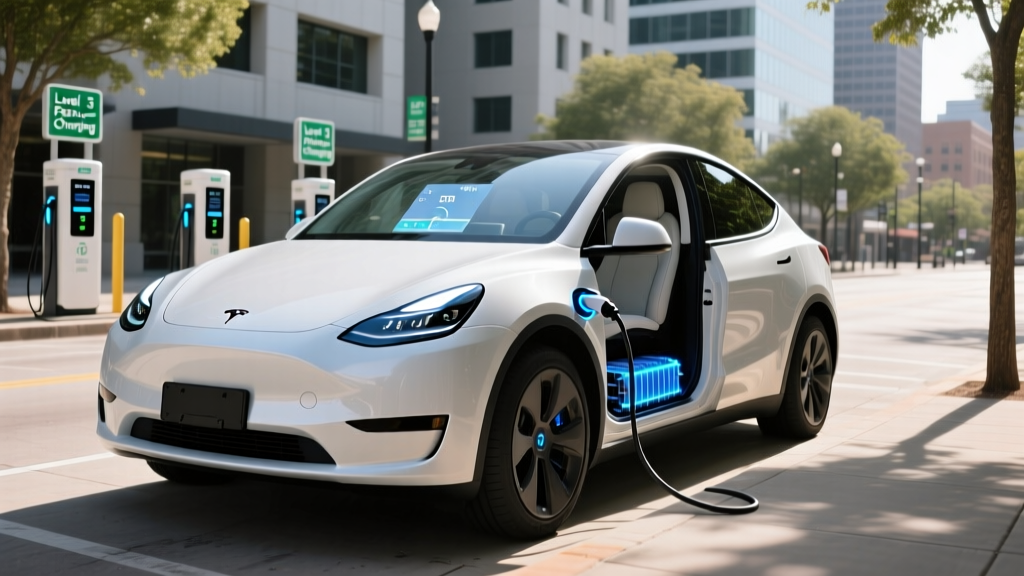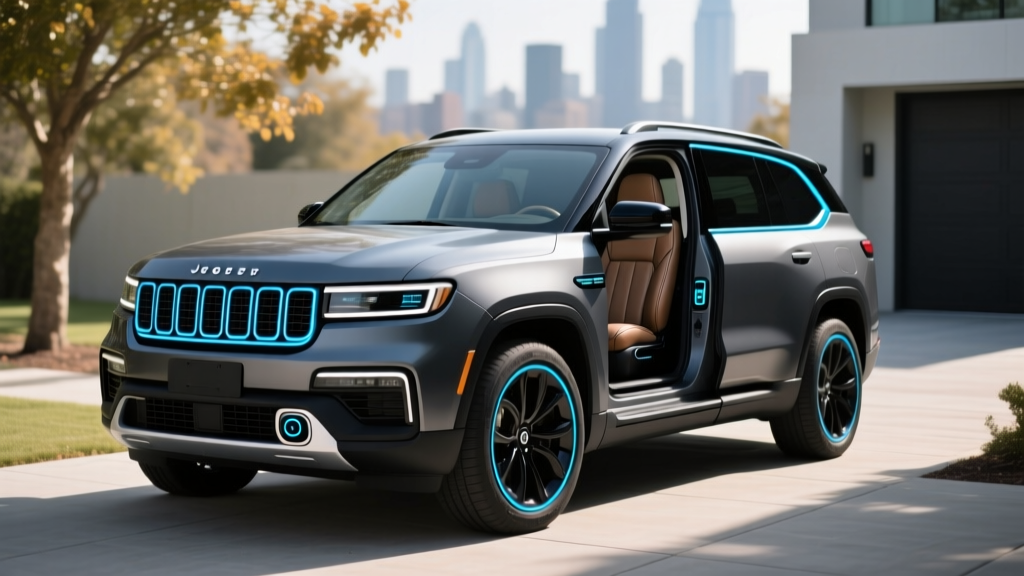
The 2026 Jeep Wagoneer EREV (Extended Range Electric Vehicle) occupies a narrow but compelling lane in the full-size SUV market: it's a three-row, body-on-frame family hauler that drives on electric power most days, yet carries a gasoline range-extender for road trips where charging infrastructure thins out. Unlike a plug-in hybrid that mechanically couples its engine to the wheels, the Wagoneer EREV's 1.5-liter turbocharged inline-four never drives the wheels directly — it acts solely as an onboard generator, feeding electricity to the motors or battery. The result is a driving experience that feels like an EV around town, with a safety net for the 600-mile family road trip.
Below is our data-driven breakdown of what this powertrain delivers in range, charging speed, performance, and ownership cost — plus the real-world caveats the spec sheet won't tell you.
Spec Sheet at a Glance
| Specification | 2026 Jeep Wagoneer EREV |
|---|---|
| Powertrain | Dual-motor AWD + 1.5L turbo I4 range extender (generator only) |
| Horsepower (combined) | ~510 hp |
| 0-60 mph | ~5.5 seconds |
| Usable Battery Capacity | ~38 kWh (NMC chemistry) |
| EPA Electric-Only Range | ~60 miles |
| EPA Total Range (electric + generator) | ~500+ miles |
| EPA MPGe (electric mode) | ~68 MPGe combined |
| Fuel Economy (generator mode) | ~22 MPG combined |
| Max DC Fast Charge | ~150 kW peak |
| 10-80% DC Charge Time | ~22 minutes (estimated) |
| Level 2 Home Charge Rate | ~11 kW (adds ~25 mi/hr electric) |
| Cargo Volume (behind 3rd row) | ~27 cu ft |
| Cargo Volume (behind 1st row) | ~117 cu ft |
| Towing Capacity | ~7,500 lbs (estimated) |
| Battery/Powertrain Warranty | 8 years / 100,000 miles |
| Base MSRP | ~$72,000 (Carbide trim) |
Note: The Wagoneer EREV is an announced model with preliminary specifications. Final EPA certifications and MSRP are subject to change before deliveries begin. Figures above reflect Stellantis-provided estimates and pre-production testing data as of early 2026.
Electric-Only Range: What the EPA Says vs. Reality
EPA Electric-Only: ~60 miles
Expected Highway (70 mph, mild weather): ~48-54 miles
Expected Cold Weather (below 30°F, cabin heat): ~35-42 miles
Total Range with Generator: 500+ miles (combined electric + 24-gallon fuel tank)
The Wagoneer EREV's roughly 38 kWh usable battery (sourced from a nickel-manganese-cobalt / NMC pack) is sized to cover most daily commutes and school runs on electricity alone. For a full-size SUV pushing nearly 6,500 pounds, 60 EPA-rated electric miles is genuinely useful — the average American drives under 40 miles per day, according to FHWA data.
But real-world physics intervene. At highway speeds, this heavy, boxy SUV fights significant aerodynamic drag. Expect electric-only range to drop to roughly 48-54 miles on a 70-mph interstate run in moderate temperatures. In cold weather — particularly below 30°F where battery resistance rises and resistive cabin heating draws heavily — plan for 35-42 electric miles before the range-extender fires up. This isn't a defect; it's thermodynamics, and it affects every EREV and BEV on the market.
Once the battery depletes to its buffer threshold, the 1.5L turbo generator starts seamlessly. Combined with an estimated 24-gallon fuel tank, total range exceeds 500 miles — eliminating the range anxiety that still plagues pure BEVs on cross-country trips through charging deserts like western Nebraska or rural Nevada.
Charging Speed: DC Fast, Level 2, and the Curve
| Charging Level | Power / Rate | Time / Miles Added |
|---|---|---|
| Level 1 (120V household) | ~1.4 kW | ~3-4 mi/hr electric range |
| Level 2 (240V home, 48A) | ~11 kW | ~25 mi/hr electric range; full charge in ~4 hrs |
| DC Fast Charge | ~150 kW peak | 10-80% in ~22 minutes |
Charging speed matters more than most EREV buyers initially realize. The Wagoneer EREV supports DC fast charging at an estimated 150 kW peak — but as with all lithium-ion packs, that peak is sustained only in the lower portion of the state-of-charge window. Expect the charge curve to taper noticeably above 60% SoC, and significantly above 80%. A 10-80% session should take roughly 22 minutes at a capable 150+ kW station (such as Electrify America's 350 kW stalls or Tesla Superchargers with the NACS adapter, if supported at launch).
For home charging, an 11 kW Level 2 wallbox on a 60-amp circuit (hardwired, 48A continuous) will replenish the 38 kWh pack in about 4 hours. This is practical: plug in after an evening commute, and the battery is full by morning. Installation typically runs $500-$1,500 for the charger plus $800-$2,500 for electrical work, depending on panel proximity and whether a 200-amp service upgrade is needed. Always consult a licensed electrician for a site-specific quote.
One nuance EREV buyers should understand: unlike a pure BEV with a 100+ kWh battery, you're only charging 38 kWh. That means even "slow" Level 2 charging finishes quickly. The trade-off is that DC fast-charging infrastructure matters less for daily life — you can rely on home charging for your electric miles and gasoline for longer trips.
Performance and Drivetrain
The Wagoneer EREV uses a dual-motor all-wheel-drive layout producing an estimated 510 combined horsepower. The front and rear electric motors deliver instant torque without waiting for transmission downshifts, giving this heavy SUV a surprisingly responsive 0-60 mph time of approximately 5.5 seconds. That's brisk for a three-row SUV and noticeably quicker than the base gasoline Wagoneer's 6.9-second sprint.
The 1.5L turbocharged inline-four range extender is decoupled from the drivetrain entirely. It never turns the wheels. Instead, it generates electricity to either feed the motors directly under heavy load or recharge the battery when it drops below the buffer threshold. This series-hybrid architecture means the driving experience is consistently electric — smooth, quiet, and torque-rich — regardless of whether the generator is running.
Towing capacity is estimated at around 7,500 pounds when properly equipped, though expect electric-only range to drop dramatically when towing (likely to 20-30 miles or less) due to the extreme energy demands of pulling a trailer. The generator will run nearly continuously under tow, and fuel economy will drop accordingly.
Pricing, Trims, and Federal Tax Credit Eligibility
| Trim | Est. MSRP | Federal §30D Credit Eligibility |
|---|---|---|
| Carbide | ~$72,000 | Subject to MSRP cap & sourcing rules |
| Obsidian | ~$82,000 | Subject to MSRP cap & sourcing rules |
| Overland (if offered) | ~$90,000+ | Likely exceeds MSRP cap |
Federal tax credit eligibility for the Wagoneer EREV is complex and depends on several moving targets under IRS §30D rules:
- MSRP Cap: Vans, SUVs, and pickups qualify up to an $80,000 MSRP ceiling. The Carbide trim (~$72,000) falls under this cap; higher trims may exceed it, disqualifying them from the credit.
- Buyer Income Limits: Adjusted gross income must not exceed $150,000 (single), $225,000 (head of household), or $300,000 (joint filers).
- Battery Sourcing & Critical Minerals: The vehicle must meet progressively stricter battery-component and critical-mineral sourcing requirements. Stellantis has not publicly confirmed whether the Wagoneer EREV's battery pack meets 2026 sourcing thresholds.
- Point-of-Sale Transfer: Eligible buyers can transfer the credit to the dealer at purchase, reducing the out-of-pocket price immediately rather than waiting for a tax refund.
If the Carbide trim qualifies, the effective price could drop to approximately $64,500 after a $7,500 credit. However, do not assume eligibility — verify the specific VIN on fueleconomy.gov before purchasing, and consult a tax professional for your individual situation. State incentives (Colorado, California, and others) may stack on top but vary by jurisdiction.
Interior, Cargo, and Standout Technology
The Wagoneer EREV shares its interior architecture with the conventional Wagoneer, which means generous space and Stellantis's latest Uconnect 5 infotainment on a 10.1-inch (or available 12.3-inch) touchscreen. Cargo volume stands at approximately 27 cubic feet behind the third row, expanding to roughly 70 cubic feet with the third row folded and 117 cubic feet behind the front seats. These figures are competitive with the Chevrolet Tahoe and Ford Expedition, though the EREV's battery pack may slightly reduce under-floor storage compared to gas models.
Notable tech features include:
- Regen driving modes: Selectable regenerative braking levels, including a one-pedal-driving mode for city use.
- EV route planning: Integrated navigation that factors in battery SoC and can prioritize electric-only driving in geofenced "zero emission zones" (useful for future low-emission city mandates).
- ADAS suite: Active Driving Assist (Level 2 SAE) with lane centering and adaptive cruise; available hands-free highway assist on select divided highways. This is not autonomous driving — the driver must remain attentive at all times.
- Vehicle-to-load (V2L): Preliminary specs suggest onboard power export capability, allowing the battery to run tools, camping gear, or emergency appliances — a valuable feature for Jeep's outdoor-oriented buyer.
Drawbacks worth flagging: The range-extender engine, while quiet during cruising, becomes audible under hard acceleration or sustained hill climbs when it's generating at maximum output. Some reviewers of the prototype noted the transition isn't as seamless as BMW's REX system in the i3. Additionally, the Wagoneer EREV's curb weight — estimated over 6,500 lbs — will accelerate tire wear and increase braking distances compared to lighter electric SUVs.
How It Compares: Wagoneer EREV vs. the Competition
The Wagoneer EREV doesn't have many direct rivals in the EREV full-size SUV space. Here's how it stacks up against adjacent options:
| Vehicle | Type | Electric Range | Total Range | Est. Price |
|---|---|---|---|---|
| Jeep Wagoneer EREV | EREV | ~60 mi | 500+ mi | ~$72,000 |
| Ram 1500 REV (EREV variant) | EREV | ~69 mi | ~600 mi | ~$68,000 |
| Chevrolet Tahoe (gas) | ICE | N/A | ~500 mi | ~$58,000 |
| Rivian R1S (Dual-Motor) | BEV | ~352 mi (EPA) | 352 mi | ~$79,900 |
| Jeep Grand Cherokee 4xe | PHEV | ~25 mi | ~440 mi | ~$60,000 |
The Rivian R1S offers far more electric range and quicker DC charging but costs more, seats only five (no third row on standard config), and lacks a gasoline backup. The Grand Cherokee 4xe is cheaper but offers only 25 electric miles — barely enough for a short commute. The Wagoneer EREV's value proposition is clear: three rows, genuine daily EV driving, and a gas safety net, all under the §30D MSRP cap (on the base trim).
Pros, Cons, and Who Should Buy
- 60 miles electric covers most daily driving
- 500+ mile total range eliminates road-trip anxiety
- Three-row seating with ~117 cu ft max cargo
- Qualifies for §30D credit on base trim (if sourcing rules met)
- Electric driving feel with no range anxiety
- V2L capability for outdoor/emergency use
- Heavy curb weight impacts tire wear and efficiency
- Range extender audible under hard load
- Only ~60 mi electric — insufficient for all-electric commuters
- Higher-trim prices likely exceed §30D MSRP cap
- Towing slashes electric range to near zero
- Unproven long-term reliability (new powertrain)
- Choose the Wagoneer EREV if: You need a three-row family SUV, want to drive electric daily (under 50 miles), take multi-state road trips a few times a year, and lack reliable DC fast-charging along your common routes.
- Look elsewhere if: Your daily commute exceeds 60 miles (consider the Rivian R1S or Tesla Model X for more electric range), you never take long trips (a pure BEV is simpler and cheaper to fuel), or you prioritize sporty handling over passenger space.
Frequently Asked Questions
What is the real-world electric range of the Jeep Wagoneer EREV?
The EPA estimates approximately 60 miles of electric-only range. In real-world driving, expect 48-54 miles on the highway in moderate weather, and as few as 35-42 miles in cold conditions below 30°F with cabin heating active. The gasoline range extender then activates, extending total range beyond 500 miles.
How fast does the Wagoneer EREV charge at home and on the road?
At home on a Level 2 (240V, 48A) charger, the 38 kWh battery replenishes in about 4 hours at ~11 kW. On DC fast chargers, it peaks at approximately 150 kW, reaching 10-80% in an estimated 22 minutes. Charging tapers significantly above 80% SoC to protect battery health.
Does the Jeep Wagoneer EREV qualify for the $7,500 federal tax credit?
The base Carbide trim (~$72,000 MSRP) falls under the $80,000 SUV cap for §30D eligibility. However, the credit also requires meeting battery-component and critical-mineral sourcing thresholds, plus buyer income limits ($300,000 joint / $150,000 single). Higher trims may exceed the MSRP cap and be ineligible. Always verify the specific VIN on fueleconomy.gov before purchase and consult a tax professional.
Is the Wagoneer EREV worth buying over a pure electric SUV?
It depends on your use case. If you regularly drive more than 60 miles daily, frequently tow, or travel through areas with sparse charging infrastructure, the EREV's gasoline backup is a genuine advantage. If you have home charging and drive under 60 miles daily with occasional longer trips along well-served corridors, a BEV like the Rivian R1S offers lower operating costs and fewer maintenance items (no engine oil, no generator maintenance).
How does the range extender work — does the engine drive the wheels?
No. The 1.5L turbocharged engine in the Wagoneer EREV operates exclusively as a generator. It never mechanically connects to the wheels. The dual electric motors handle all propulsion. The engine generates electricity when the battery drops below its buffer threshold or when the motors demand more power than the battery alone can supply.
What is the battery warranty on the Wagoneer EREV?
Stellantis provides an estimated 8-year / 100,000-mile warranty on the high-voltage battery and electric powertrain components, consistent with federal requirements for emissions-related components. This covers defects and excessive capacity degradation (typically below 70% of original capacity, though exact thresholds should be confirmed at launch).
Sources: fueleconomy.gov (EPA ratings when certified), IRS §30D clean vehicle credit rules, Stellantis/Jeep official specifications.