The Quick Answer on the Jeep Wagoneer Electric
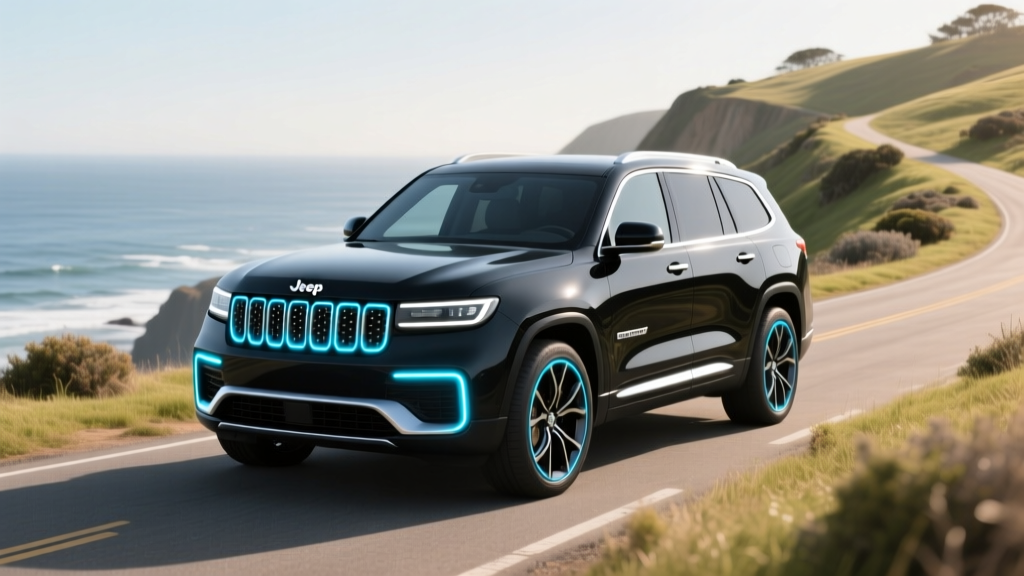
As of early 2026, the all-electric Jeep Wagoneer S (built on Stellantis' STLA Large platform) is the brand's flagship electric SUV. It targets an EPA-estimated range of approximately 300–320 miles from a ~100 kWh usable battery pack, with dual-motor AWD producing around 600 horsepower and a 0–60 mph time near 3.5 seconds. Pricing starts in the mid-$60,000 range for base trims, climbing past $80,000 for fully loaded editions. DC fast charging peaks at roughly 175–200 kW, delivering a 10–80% charge in approximately 25–30 minutes. Federal §30D tax credit eligibility depends on your income, the vehicle's MSRP cap status, and battery-component/critical-mineral sourcing — check IRS.gov before counting on the full $7,500.
What Is the Jeep Wagoneer Electric, Exactly?
Stellantis has been rolling out its STLA Large electric architecture across multiple brands, and the Wagoneer nameplate — traditionally reserved for the brand's most premium, full-size SUVs — is receiving an electrified variant. The electric Wagoneer (sometimes referenced alongside the Wagoneer S lineup) positions itself as a luxury three-row-capable electric SUV competing against the BMW iX, Rivian R1S, Cadillac Escalade IQ, and the Tesla Model X.
This is not a plug-in hybrid. It is a battery-electric vehicle (BEV) with no internal combustion engine, meaning zero tailpipe emissions and no gasoline engine to maintain. For buyers cross-shopping the gas Wagoneer (which returns a dismal 13–17 MPG combined depending on trim and engine), the electric variant represents a fundamentally different ownership proposition.
Range, Battery, and Charging: The Numbers That Matter
Range is the first question every EV buyer asks, and the answer requires separating the EPA sticker from real-world driving. Here is what the data tells us based on announced STLA Large platform specs and comparable Stellantis BEVs:
| Specification | Estimated / Announced Value |
|---|---|
| Battery Capacity (Usable) | ~100 kWh (NMC chemistry) |
| EPA Range (Target) | 300–320 miles |
| Real-World Highway Range (70–75 mph) | ~250–280 miles |
| Cold-Weather Range (20°F, cabin heat) | ~210–250 miles |
| Drivetrain | Dual-motor AWD |
| Horsepower | ~600 hp |
| 0–60 mph | ~3.5 seconds |
| Peak DC Fast Charge Rate | 175–200 kW |
| 10–80% DC Fast Charge Time | ~25–30 minutes |
| Level 2 (AC) Charge Rate | ~11.5 kW (240V / 48A) |
| Level 2 Full Charge Time (0–100%) | ~9–10 hours |
| Connector | CCS1 (NACS adapter expected) |
| Efficiency (Estimated) | ~2.0–2.2 kWh/mile (~95–105 MPGe) |
Real-World Range Reality Check
An EPA estimate of 310 miles sounds reassuring, but large, heavy luxury SUVs with big frontal areas lose efficiency quickly at highway speeds. Expect roughly 250–280 miles on a flat, 70-mph highway drive in moderate temperatures. In winter conditions (below 30°F) with cabin heating active, plan for 210–250 miles of usable range. The battery's thermal management system and available heat pump (if equipped on your trim) mitigate but do not eliminate cold-weather losses. If your typical road trip is 200 miles one-way, this SUV handles it comfortably in most conditions — but a 350-mile leg will require a DC fast-charge stop.
Understanding the Charge Curve
A peak rate of 200 kW does not mean the battery charges at 200 kW the entire session. Like all lithium-ion packs, the Wagoneer electric's charge rate tapers as the state of charge (SoC) climbs. You will see peak speeds between roughly 10–40% SoC, with a noticeable taper after 60% and a steep slowdown past 80%. This is why manufacturers quote 10–80% times rather than 0–100%. On a road trip, the practical strategy is to charge from 10% to 80% (adding roughly 220 miles of range in ~25 minutes), then drive on.
Electric Wagoneer vs. Gas Wagoneer: Cost & Efficiency Comparison
The gas-powered Wagoneer (5.7L V8 or 3.0L Hurricane inline-six twin-turbo) is a fuel-thirsty proposition. Let's run the numbers over 5 years and 75,000 miles:
| Factor | Gas Wagoneer (2025/2026) | Electric Wagoneer (Est.) |
|---|---|---|
| Combined Fuel Economy / Efficiency | 14–17 MPG | ~2.1 kWh/mile (~100 MPGe) |
| Fuel/Energy Cost per Mile | $0.22–$0.27 (at $3.50/gal) | $0.06–$0.14 (home vs. public DC) |
| 5-Year Fuel/Energy Cost (75k mi) | $16,500–$20,250 | $4,500–$10,500 |
| Maintenance (5-year est.) | $3,500–$5,000 (oil, plugs, trans) | $1,000–$1,800 (tires, cabin filter, fluid) |
| Purchase Price (Starting MSRP) | $62,000–$70,000+ | $65,000–$85,000+ |
| Federal Tax Credit (§30D) | None | Up to $7,500 (if eligible) |
| Estimated 5-Year Total Cost | $38,000–$52,000 (fuel + maint.) | $12,000–$24,000 (energy + maint.) |
The gas Wagoneer's fuel costs alone can exceed $18,000 over five years at national-average gas prices. The electric variant, charged primarily at home on a Level 2 setup at roughly $0.13/kWh, drops that energy cost to approximately $5,000–$6,000 over the same period. Even factoring in a higher purchase price and potentially higher insurance premiums, the fuel and maintenance savings are substantial — typically $15,000–$25,000 over five years for high-mileage drivers.
Total Ownership Cost Breakdown
| Cost Category | Electric Wagoneer (5-Year Est.) | Notes |
|---|---|---|
| Purchase Price (before incentives) | $65,000–$85,000 | Varies by trim; destination charge additional |
| Federal §30D Tax Credit | Up to –$7,500 | Subject to income, MSRP cap, sourcing rules |
| Home Level 2 Charger Install | $500–$2,500 | Equipment + electrician; panel upgrade may add $1,500–$3,000 |
| Electricity (75,000 mi, mostly home) | $4,500–$6,500 | At $0.12–$0.15/kWh average |
| Public DC Fast Charging (road trips) | $1,500–$3,500 | At $0.35–$0.50/kWh; ~20–30% of total charging |
| Insurance (5-year total) | $9,000–$14,000 | EV premiums run 10–25% higher than gas equivalents |
| Maintenance & Repairs | $1,000–$1,800 | Tire rotation, cabin filter, brake fluid, wipers |
| Tire Replacement (1–2 sets) | $1,600–$3,200 | Heavy EVs wear tires faster; expect 25,000–35,000 mi per set |
| Estimated 5-Year Total | $82,100–$116,500 | Inclusive of purchase, energy, insurance, maintenance |
Key insight: The electric Wagoneer's total cost of ownership is heavily influenced by how much you charge at home versus on public DC fast chargers. If 80%+ of your charging happens at home on Level 2, your per-mile energy cost stays around $0.06–$0.08. If you rely primarily on public fast charging, that number can climb to $0.14–$0.18 per mile — still cheaper than gas in a Wagoneer, but the savings gap narrows significantly.
Federal Tax Credit: What You Actually Qualify For
The §30D Clean Vehicle Credit offers up to $7,500 for qualifying new EVs, but eligibility is a multi-factor test, not an automatic discount. Here is the current checklist under 2026 IRS rules:
- Buyer Income Cap: Modified AGI must not exceed $300,000 (joint), $225,000 (head of household), or $150,000 (single).
- MSRP Cap: SUVs, vans, and pickups must have an MSRP at or below $80,000. Sedans are capped at $55,000. Higher-trim Wagoneer electric models may exceed this threshold — verify the specific trim's MSRP.
- Battery Component Sourcing: A percentage of battery components must be manufactured or assembled in North America. This threshold increases annually.
- Critical Minerals Sourcing: A percentage of critical minerals must be sourced from the US or a free-trade-agreement partner. This also tightens yearly.
- Point-of-Sale Transfer: You can transfer the credit to the dealer at purchase, reducing your out-of-pocket cost immediately rather than waiting to claim it on your tax return.
Because battery sourcing requirements tighten each year, a trim that qualifies in 2025 may not in 2026, or vice versa. Always verify current eligibility at fueleconomy.gov and consult a tax professional before making a purchase decision based on the credit.
Common Misconceptions — Myth vs. Fact
| Myth | Fact |
|---|---|
| "The electric Wagoneer will tow just as much as the gas version." | EVs can tow, but towing cuts range by 40–60%. Expect ~130–180 miles of range while towing near max capacity. The gas Wagoneer tows up to 10,000 lbs; the electric variant's rating is expected to be lower (~7,500 lbs est.). |
| "I'll save $7,500 no matter what." | The §30D credit has income caps, MSRP caps, and sourcing requirements. Many luxury-trim buyers exceed the $80,000 SUV MSRP cap or the income threshold. |
| "EV batteries need replacing every few years." | Modern NMC packs are designed for 200,000+ miles with 70–80% capacity retention. Stellantis typically warrants the battery for 8 years / 100,000 miles (or 8/160,000 in CARB states). |
| "I can charge at any station I find." | Connector compatibility matters. The electric Wagoneer is expected to use CCS1 natively. Tesla Supercharger access requires a NACS adapter (often included or available). Always check the network's connector before driving to a station. |
| "Home charging is too expensive to install." | A basic Level 2 (240V/48A) hardwired install runs $500–$1,500 if your electrical panel has capacity. Even with a panel upgrade ($1,500–$3,000), the install pays for itself in fuel savings within 1–2 years for most drivers. |
| "Regenerative braking means I never use my brake pads." | Regen handles most deceleration, but friction brakes are still present and needed for hard stops. Expect brake pads to last 80,000–120,000+ miles — far longer than a gas vehicle — but they still require eventual service. |
Who Should Buy the Electric Wagoneer — and Who Shouldn't
Decision Framework: Is This EV Right for You?
Choose the electric Wagoneer if:
- You have reliable access to Level 2 home charging (garage or driveway with a 240V circuit).
- Your daily commute and errands total under 200 miles round-trip — well within the battery's comfort zone.
- You want luxury-SUV acceleration and refinement without $3.50/gallon fuel bills.
- You take road trips 3–5 times per year and are comfortable planning one DC fast-charge stop per 200–250 miles of driving.
- You qualify for the §30D credit (income under cap, trim MSRP under $80,000).
- You value lower routine maintenance costs and fewer drivetrain components that can fail.
Stick with the gas Wagoneer (or a PHEV alternative) if:
- You regularly tow heavy loads (boats, large trailers) over long distances — range loss while towing makes EV road trips impractical without frequent stops.
- You live in an apartment or condo with no charging access and your area has limited public DC infrastructure.
- You frequently drive in extreme cold (below 0°F) on long rural routes where charging stations are sparse.
- Your preferred trim exceeds the $80,000 MSRP cap, eliminating the federal credit and pushing total cost significantly higher.
- You need maximum third-row cargo space — battery packaging can reduce under-floor storage versus the gas platform.
First-Time EV Buyer: What You Must Know Before Purchase Day
1. Home Charging Is Non-Negotiable for Satisfaction
The single biggest predictor of EV owner satisfaction is reliable home charging. If you wake up every morning with a "full tank" (100% SoC), range concerns virtually disappear for daily driving. Budget $500–$2,500 for a quality Level 2 charger (ChargePoint Home Flex, Emporia Level 2, or Wallbox Pulsar Plus) plus professional installation. If your home has a 200-amp electrical panel with spare capacity, installation is straightforward. Older homes with 100-amp panels may need a $1,500–$3,000 panel upgrade — factor this into your purchase decision.
2. Learn the Difference Between kW and kWh
This trips up many first-time buyers. kWh (kilowatt-hours) measures battery capacity — think of it as the size of your "fuel tank." A ~100 kWh battery holds 100 kWh of energy. kW (kilowatts) measures power flow — how fast energy moves into or out of the battery. A 200 kW DC fast charger delivers energy at a rate of 200 kW. Confusing the two leads to unrealistic expectations about charging times.
3. Plan for Cold-Weather Range Loss
Lithium-ion batteries are less efficient in cold temperatures, and cabin heating draws significant energy. In sub-freezing conditions, expect 20–35% range reduction. Preconditioning the battery while plugged in (a feature available on most modern EVs) warms the pack before you drive, improving efficiency and enabling faster DC charging on your first stop.
4. Insurance Will Likely Cost More
EV insurance premiums run 10–25% higher than comparable gas vehicles, driven by higher repair costs, specialized parts, and the vehicle's higher purchase price. Get quotes from your insurer before finalizing your purchase — the difference can be $300–$800 per year.
5. Battery Degradation Is Slow and Warranted
Modern EV batteries degrade gradually, typically losing 10–15% capacity over 100,000–150,000 miles. Stellantis provides an 8-year/100,000-mile battery warranty (10 years/150,000 miles in CARB states like California, New York, and others) guaranteeing a minimum capacity retention threshold (usually 60–70%). Full battery replacement, while rare, can cost $15,000–$25,000 out of warranty — but this is a last-resort scenario, not a routine maintenance item.
Frequently Asked Questions
What is the real-world range of the Jeep Wagoneer electric?
The EPA target is approximately 300–320 miles, but real-world highway driving at 70–75 mph yields roughly 250–280 miles in moderate temperatures. In winter conditions below 30°F, expect 210–250 miles. Heavy towing or aggressive driving further reduces range.
How long does it take to charge the electric Wagoneer at home?
On a Level 2 home charger (240V, ~11.5 kW), a full 0–100% charge takes approximately 9–10 hours. Most owners plug in overnight and wake to a full battery. On a standard 120V Level 1 outlet, expect roughly 3–4 miles of range added per hour — suitable only for emergency top-ups or very low daily mileage.
Does the electric Wagoneer qualify for the $7,500 federal tax credit?
It depends on the specific trim's MSRP, your modified adjusted gross income, and the vehicle's battery component and critical mineral sourcing. SUVs must have an MSRP at or below $80,000 to qualify. Higher trims may exceed this cap. Verify at IRS.gov and fueleconomy.gov for the latest eligibility data.
Can I use Tesla Superchargers with the electric Wagoneer?
The Wagoneer electric is expected to ship with a CCS1 connector. Access to Tesla's Supercharger network requires a NACS adapter. Stellantis has indicated adapter compatibility for its EVs, but confirm whether the adapter is included or must be purchased separately (~$200–$250).
How does the electric Wagoneer compare to the Rivian R1S?
The Rivian R1S (Dual-Motor, ~128 kWh Max Pack) offers an EPA range of up to 410 miles, tows up to 7,700 lbs, and starts around $79,900. The Wagoneer electric targets a lower entry price but with less range. The R1S has a more established charging ecosystem and proven off-road capability. The Wagoneer leans more toward traditional luxury-SUV comfort and brand heritage.
What is the battery warranty?
Stellantis provides an 8-year/100,000-mile high-voltage battery warranty (extended to 10 years/150,000 miles in CARB-adopting states). The warranty guarantees the battery will retain a minimum percentage of its original capacity (typically 60–70%) over the warranty period.
Is the electric Wagoneer good for off-road driving?
Jeep's brand identity centers on off-road capability, and the electric Wagoneer is expected to offer terrain-select modes and respectable ground clearance. However, serious rock-crawling and deep-water fording remain challenging for heavy EVs due to battery-pack vulnerability. For dedicated off-road use, the gas Wrangler or a PHEV variant may be more practical.