The Short Answer: Should You Buy the Jeep Wagoneer Electric?
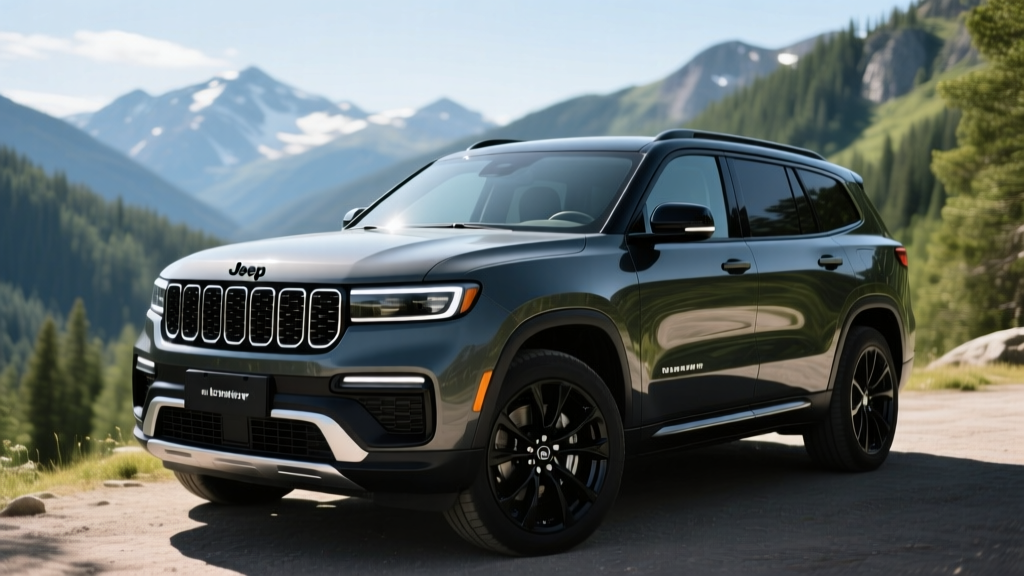
The 2026 Jeep Wagoneer S is Jeep's first fully electric vehicle — a luxury SUV targeting 300+ miles of EPA range, 800-volt DC fast charging (10-80% in roughly 23 minutes), and 590 horsepower in its top Launch Edition trim. Starting around $65,200 before incentives, it undercuts the gas Wagoneer on fuel and maintenance costs but carries a higher upfront price. It's best for buyers who want a premium, tech-forward Jeep with home Level 2 charging access and primarily suburban or highway driving. If you regularly tow heavy loads, drive in extreme cold, or lack reliable charging, the gas Wagoneer or a plug-in hybrid alternative may serve you better.
What Is the Jeep Wagoneer S? The First All-Electric Jeep
Announced as part of Stellantis's Dare Forward 2030 electrification strategy, the Wagoneer S rides on the STLA Large platform — an 800-volt architecture shared with upcoming Dodge Charger Daytona and other Stellantis EVs. This is not a converted gas Wagoneer; it's a purpose-built electric SUV with a shorter wheelbase than the body-on-frame Wagoneer, positioning it closer to a BMW iX or Cadillac Lyriq in size and mission.
For 2026, Jeep offers two primary configurations:
- Wagoneer S Limited: Single-motor rear-wheel drive, ~340 HP, estimated 350-mile EPA range
- Wagoneer S Launch Edition: Dual-motor all-wheel drive, 590 HP, estimated 300-mile EPA range
| Spec | Limited (RWD) | Launch Edition (AWD) |
|---|---|---|
| EPA Range (est.) | ~350 mi | ~300 mi |
| Battery Capacity | ~100 kWh usable (NMC) | ~118 kWh usable (NMC) |
| Horsepower | ~340 HP | 590 HP |
| 0-60 mph | ~5.5 sec | ~3.4 sec |
| Max DC Fast Charge | ~200 kW | ~270 kW |
| 10-80% DC Charge Time | ~27 min | ~23 min |
| Level 2 Charge Rate | 11.5 kW | 11.5 kW |
| Starting MSRP | $65,200 | $71,200 |
| Warranty (battery) | 8 yr / 100,000 mi | 8 yr / 100,000 mi |
Real-World Range vs. EPA Sticker
The EPA range figure is measured under controlled conditions. In real-world driving, expect:
- Highway (70-75 mph): ~260-280 mi (AWD Launch Edition) — aerodynamic drag cuts efficiency roughly 15-20%
- Cold weather (below 32°F): ~220-250 mi — NMC chemistry loses 20-30% range in freezing temps without preconditioning
- Mixed suburban/commute: ~290-310 mi — closest to EPA sticker
The Wagoneer S's 800V architecture and heat pump (standard on Launch Edition) help mitigate cold-weather losses, but physics still applies. If your daily round-trip commute exceeds 150 miles, plan charging stops accordingly.
Jeep Wagoneer S vs. Gas Wagoneer: The Cost Breakdown
Most Wagoneer shoppers cross-shop the traditional gas-powered Wagoneer. Here's how the numbers stack up over a 5-year, 75,000-mile ownership period:
| Cost Category | Wagoneer S Launch Edition (AWD) | Wagoneer L Carbide (Gas) |
|---|---|---|
| Purchase Price (MSRP) | $71,200 | $73,645 |
| Federal Tax Credit (§30D) | Up to $7,500* | $0 |
| Effective Purchase | ~$63,700 | $73,645 |
| Fuel/Energy (75K mi) | ~$4,875 (home L2 @ $0.13/kWh) | ~$11,250 (gas @ $3.50/gal, 18 MPG) |
| Maintenance (5 yr) | ~$1,200 | ~$3,500 |
| Insurance (5 yr avg) | ~$12,500 | ~$10,800 |
| Estimated Depreciation | ~$28,000 | ~$32,000 |
| Total 5-Year Cost | ~$110,275 | ~$131,195 |
*§30D tax credit eligibility depends on MSRP caps (SUVs: $80,000), buyer income limits ($300K MFJ / $150K single), and battery critical-mineral sourcing requirements. Verify current-year rules at irs.gov. The credit can be transferred to the dealer as a point-of-sale discount.
The EV Wagoneer S saves roughly $20,900 over five years in this scenario, driven primarily by fuel savings (~$6,375) and the federal tax credit. Insurance costs more for EVs — typically 10-20% higher premiums due to repair complexity and parts costs — so factor that into your budget.
Charging the Wagoneer S: Home Setup and Public Networks
The 800V architecture is the Wagoneer S's biggest practical advantage. At a 350 kW-capable DC fast charger (like Electrify America or EVgo's newest stations), the Launch Edition can accept up to 270 kW peak. However, charging follows a curve — peak speed is sustained only between roughly 10-40% state of charge, tapering significantly above 80%.
| Level | Power (kW) | Miles Added Per Hour | Full Charge Time (0-100%) | Best For |
|---|---|---|---|---|
| Level 1 (120V outlet) | 1.4 kW | ~4 mi/hr | ~85 hours | Emergency / trickle only |
| Level 2 (240V, 48A) | 11.5 kW | ~33 mi/hr | ~10 hours | Daily home charging |
| DC Fast (350 kW station) | Up to 270 kW | ~750+ mi/hr (peak) | 10-80% in ~23 min | Road trips |
Home Level 2 Installation: What to Expect
Charging the Wagoneer S at home on Level 2 is the most cost-effective and convenient method. Here's what a typical installation involves:
| Component | Cost Range | Notes |
|---|---|---|
| Level 2 Charger (hardware) | $400 - $750 | ChargePoint Home Flex, Wallbox Pulsar Plus, Emporia |
| Electrician (240V/50A circuit) | $800 - $2,500 | Depends on panel proximity and conduit run length |
| Electrical panel upgrade (if needed) | $1,500 - $4,000 | Required if existing panel is 100A or maxed out |
| Permit & inspection | $100 - $400 | Varies by municipality |
| Total (typical, no panel upgrade) | $1,300 - $3,650 | |
| Total (with panel upgrade) | $2,800 - $7,150 |
Have a licensed electrician evaluate your panel's available amperage before purchasing a charger. The Wagoneer S's 11.5 kW onboard charger requires a 50-amp circuit for maximum Level 2 speed. A 200-amp panel with spare capacity is ideal; a 100-amp panel will almost certainly need upgrading.
For public charging, the Wagoneer S uses the NACS (Tesla-style) connector for DC fast charging, aligning with Jeep parent Stellantis's decision to adopt the North American Charging Standard. This grants access to Tesla Superchargers (via adapter or native port, depending on trim year) plus Electrify America, EVgo, and other networks.
Real-World Ownership: What First-Time EV Buyers Should Know
If the Wagoneer S is your first electric vehicle, these ownership realities matter more than horsepower figures:
Charging Access Is the Deciding Factor
EV ownership satisfaction correlates directly with home charging access. If you can install a Level 2 charger at home (garage or driveway with a 240V circuit), the Wagoneer S will be effortless — plug in overnight, wake up to 300 miles. If you rely solely on public charging, expect to spend 30-45 minutes at a DC fast charger 1-2 times per week and budget $0.30-$0.48/kWh (roughly double the home rate).
EVs Don't Eliminate Maintenance — They Shift It
The Wagoneer S has no oil changes, no spark plugs, no transmission fluid. But you'll still replace tires (EVs wear tires 15-25% faster due to weight and instant torque), cabin air filters, brake fluid, and wiper blades. Regenerative braking preserves brake pads — expect 80,000+ miles on original rotors.
Towing and Payload: A Real Limitation
Jeep has not yet published a maximum towing rating for the Wagoneer S, but based on comparable STLA Large platform EVs, expect 3,500-5,000 lbs — significantly less than the gas Wagoneer's 10,000-lb rating. Towing also devastates EV range: plan on losing 40-50% of rated range when pulling a trailer near max capacity.
| Myth | Fact |
|---|---|
| "The battery will need replacing in 5 years" | NMC batteries with active thermal management retain 85-90% capacity at 100K miles. The warranty covers below 70% retention for 8 years/100K miles. |
| "EVs are worse in cold weather" | Range drops 20-30% in sub-freezing temps, but the Wagoneer S heat pump and battery preconditioning recover much of that. Remote start warms the cabin without idling emissions. |
| "I can't take road trips" | With 10-80% in ~23 minutes at a DC fast charger, a 600-mile trip requires one 25-minute stop. Plan routes via PlugShare or the Jeep app's built-in charger routing. |
| "The tax credit is $7,500 for everyone" | §30D has income caps, MSRP caps, and battery sourcing requirements that change yearly. Verify at irs.gov before purchasing. |
Wagoneer S vs. Competitors: Where It Fits
The Wagoneer S enters a crowded luxury electric SUV segment. Here's how it compares to key rivals:
| Spec | Jeep Wagoneer S AWD | BMW iX xDrive50 | Cadillac Lyriq AWD | Tesla Model X LR |
|---|---|---|---|---|
| EPA Range | ~300 mi | 324 mi | 307 mi | 335 mi |
| Horsepower | 590 HP | 516 HP | 500 HP | 670 HP |
| 0-60 mph | ~3.4 sec | 4.4 sec | 4.6 sec | 3.8 sec |
| Max DC Charge | ~270 kW | 200 kW | 190 kW | 250 kW |
| 10-80% Time | ~23 min | ~31 min | ~34 min | ~25 min |
| Starting MSRP | $71,200 | $87,250 | $66,795 | $79,990 |
| §30D Credit Eligible | Likely* | No (price cap) | Likely* | Likely* |
*Credit eligibility subject to annual IRS sourcing and income rules. The BMW iX exceeds the $80,000 SUV MSRP cap in most trims.
The Wagoneer S's standout advantage is charging speed — its 800V architecture delivers faster DC fills than the iX or Lyriq. The Tesla Model X offers more range and Supercharger network maturity, but at a higher price and with polarizing styling. For Jeep loyalists who want brand identity, Trail Rated aspirations (details on off-road capability TBD), and best-in-class charge times, the Wagoneer S occupies a compelling niche.
Decision Framework: Is the Wagoneer S Right for You?
Choose the Jeep Wagoneer S If:
- You have Level 2 home charging (or can install it)
- You want a luxury performance SUV under $75K with 300+ mile range
- Most of your driving is suburban commuting or highway trips under 300 miles
- You value fast DC charging for occasional road trips
- You qualify for the §30D tax credit (check income and sourcing rules)
- You want Jeep brand identity in an electric package
Look Elsewhere If:
- You need to tow more than 5,000 lbs regularly (consider the gas Wagoneer or Ford F-150 Lightning)
- You live in an apartment without charging access and your area has sparse public DC infrastructure
- You regularly drive in temperatures below 0°F and need guaranteed 300-mile range
- You need three-row seating (the Wagoneer S is a two-row SUV; the Lyriq is also two-row — look at the Kia EV9 or Rivian R1S for three rows)
- Your budget is below $60K (consider the Hyundai Ioniq 5, Tesla Model Y, or Chevy Equinox EV)
Frequently Asked Questions
Is the Jeep Wagoneer S available to order now?
As of early 2026, the Wagoneer S Launch Edition is in production with limited dealer allocations. The more affordable Limited trim is expected to follow later in the model year. Check with your local Jeep dealer for availability — wait times vary by region and trim.
Does the Wagoneer S qualify for the $7,500 federal tax credit?
It is expected to qualify, but final eligibility depends on battery critical-mineral and component sourcing requirements that the IRS updates regularly. The MSRP is under the $80,000 SUV cap. Buyer income must not exceed $300K (married filing jointly) or $150K (single). If eligible, you can transfer the credit to the dealer for a point-of-sale price reduction.
What connector does the Wagoneer S use?
The Wagoneer S uses the NACS (North American Charging Standard) connector — the same standard used by Tesla. This provides access to Tesla Superchargers, Electrify America, EVgo, and other major networks without an adapter.
How much does it cost to charge the Wagoneer S at home?
Charging from 10% to 100% at home on a Level 2 charger uses roughly 105-130 kWh (depending on trim battery size). At the US average electricity rate of $0.16/kWh, that's about $17-$21 per full charge, or roughly $0.06 per mile. Compare that to the gas Wagoneer at $0.19-$0.22 per mile.
Will the battery degrade and need replacement?
All lithium-ion batteries degrade, but modern NMC packs with active liquid cooling — like the one in the Wagoneer S — typically retain 85-90% of original capacity after 100,000 miles. Stellantis warranties the battery for 8 years or 100,000 miles against dropping below 70% capacity. Full battery replacement (rarely needed) would cost $12,000-$18,000 out of warranty based on current NMC pack pricing trends.
Can I off-road in the electric Wagoneer S?
Jeep has hinted at Trail Rated variants of the Wagoneer S, but initial Launch Edition and Limited trims are oriented toward on-road performance and luxury. AWD models offer decent traction in snow and light trails, but serious rock crawling or water fording capability has not been confirmed. If off-roading is a priority, the gas Wrangler 4xe (PHEV) remains the more capable choice today.
How does the Wagoneer S compare to a plug-in hybrid like the Wrangler 4xe?
The Wrangler 4xe offers 22 miles of electric-only range before the gas engine kicks in — great for short commutes with no charging anxiety on longer trips. But it gets only 20 MPG combined on gas and lacks the Wagoneer S's performance and tech. If you can charge at home and rarely exceed 300 miles between stops, the full-electric Wagoneer S delivers lower running costs and a smoother drive. If you regularly drive 400+ miles in rural areas with poor charging infrastructure, a PHEV or gas vehicle remains more practical.
Sources: EPA efficiency data from fueleconomy.gov; federal tax credit rules from irs.gov; average electricity rates from the U.S. Energy Information Administration. All specifications are based on manufacturer-provided preliminary data for the 2026 model year and are subject to change upon final EPA certification.